Tag: leadership

  • Titus 1 & 1 Timothy 3: Six Things the Bible doesn’t say

    Here are the two most often quoted passages from the New Testament about the qualifications of a pastor.

    Titus 1:5-9 [Brackets, mine]

    The reason I [Paul] left you [Titus] in Crete was that you might put in order what was left unfinished and appoint elders [some translations use the word leader] in every town, as I directed you. An elder must be blameless, faithful to his wife, a man whose children believe and are not open to the charge of being wild and disobedient. Since an overseer manages God’s household, he must be blameless—not overbearing, not quick-tempered, not given to drunkenness, not violent, not pursuing dishonest gain. Rather, he must be hospitable, one who loves what is good, who is self-controlled, upright, holy and disciplined. He must hold firmly to the trustworthy message as it has been taught, so that he can encourage others by sound doctrine and refute those who oppose it.

    1 Timothy 3:1-7 [Brackets mine]

    Here is a trustworthy saying: Whoever aspires to be an overseer [elder, pastor, overseer are basically the same word] desires a noble task. Now the overseer is to be above reproach, faithful to his wife, temperate, self-controlled, respectable, hospitable, able to teach, not given to drunkenness, not violent but gentle, not quarrelsome, not a lover of money. He must manage his own family well and see that his children obey him, and he must do so in a manner worthy of full respect. (If anyone does not know how to manage his own family, how can he take care of God’s church?) He must not be a recent convert, or he may become conceited and fall under the same judgment as the devil. He must also have a good reputation with outsiders, so that he will not fall into disgrace and into the devil’s trap.

    6 things that Paul doesn’t say that American church culture often says are qualifications to be considered a pastor.

    1. You have to be a leadership expert, a proven leader with years of experience, a reader of books on leadership, aspiring to be a leader, and a regular at Willow Creek’s Leadership Summit and/or somehow tangentially related to John Maxwell.
    2. You have to be an employee of the church. The same passage describes the biblical qualifications for a pastor as they do positions the American church almost never considers staff-level. (Elder, overseer)
    3. Aspiring to be a well-known preacher. “Able to teach” is a pretty low standard. I am fully “able to run” but you won’t catch me out there doing it too often.
    4. Be in possession of an Masters in Divinity from a denominationally approved seminary prior to seeking ordination. That said, education was a high priority in the early church. You couldn’t even be baptized or label yourself a Christian until you’d gone through about a one year process of intense discipleship. (Prior to baptism, new believers were called catechumen.)
    5. Be a great manager of programs and projects. Since the early church was organized around the idea of family, you didn’t need to take classes in organizational leadership to understand the dynamics of a family.
    6. You have to be an amazing self-promoter of both the church and your “personal brand.” Paul didn’t have a blog, Twitter, or Facebook. And yet he somehow managed to be spur on the most powerful viral message of all time.

  • Megachurches canceling services today?

    Last night my friend Gavin Richardson posted an interesting quandary on Twitter. To paraphrase, “Why is it that in some parts of the world people die trying to go to church while here in the states megachurches are canceling services because they did a big service Christmas eve?

    Here was my response, “Easy. It’s a different Gospel. The Gospel of convenience/comfort bears no resemblance to one of suffering.

    Let’s unpack this

    In Iraq, Christians gathered for Christmas Eve services in defiance of people who threatened their lives. (And had proven the threat just 60 days ago!)

    Throughout Iraq, churches canceled or toned down Christmas observances this year, both in response to threats of violence and in honor of the nearly 60 Christians killed in October, when militants stormed a Syrian Catholic church and blew themselves up. Since the massacre, more than 1,000 Christian families have fled Baghdad for the Kurdistan region in northern Iraq, with others going to Jordan or Syria or Turkey. Though the exact size of Iraq’s Christian population is unclear, by some estimates it has fallen to about 500,000 from a high of 1.4 million before the American-led invasion of 2003. Iraq’s total population is about 30 million.

    Read the rest at the New York Times (Here’s the article Gavin linked to in his tweet)

    Unfortunately, Iraqi’s aren’t alone. There are Christians killed for worshiping Jesus every day. Throughout the world believers in Jesus suffer daily. If you’d like to hear their stories and understand their struggles more, I’d recommend subscribing to the Persecution Podcast published by Voice of the Martyrs.

    For a large part of the world loving Jesus is tied closely to suffering. Many are expelled from their families for following Jesus. Some are sold as slaves. Some are imprisoned. Some experience economic inequity. Many are breaking the law by meeting– even in private. Many are left as outcasts. Many go hungry while their neighbors do not.

    In the United States, some Christians won’t gather for services the day after Christmas because their leaders want to give everyone a day off. Their Bible apparently includes an out-clause in Exodus 20:8-11. Their Bible reads, “Remember the Sabbath and keep it holy, except after Christmas when we give everyone the day off so they can spend time with family.

    After gearing up for Christmas services throughout this week, several megachurches will wind down by canceling Sunday worship on Dec. 26th.

    Pastors and church leaders say taking that day off allows the staff and volunteers more time to spend with their family during a traditionally busy season.

    Read the rest at Christian Post

    For a large part of the United States loving Jesus is tied closely to convenience. We do things when it works for us. But when it is more convenient to not do something, we pretend like we don’t even see it.

    To summarize: In some parts of the world people risk death threats to worship while in other places in the world we’re taking the Sabbath off so we can spend time with family.

    Two different worlds

    We, in the United States, dishonor those in the persecuted church when we decide not to meet because it’d be more convenient. Any time you hear a pastor justify something like this by saying “we are putting families first,” you need to call them out. We are called to put God first. Period. 52 Sunday’s per year. 365 days per year. 24 hours per day.

    Why?

    The church is our real family. Coming to church, small group, or other forms of community is real family time. Partnering with those who suffer for the sake of Christ by continuing to worship no matter what is a real family expression of love. Healthy families get together. We suffer together. It is what we do. It is who we are. More importantly, it is who Jesus told us we need to be.

    Those who heard this asked, “Who then can be saved?” Jesus replied, “What is impossible with man is possible with God.”

    Peter said to him, “We have left all we had to follow you!” “Truly I tell you,” Jesus said to them, “no one who has left home or wife or brothers or sisters or parents or children for the sake of the kingdom of God will fail to receive many times as much in this age, and in the age to come eternal life.” Luke 18:26-30

    Taking the Sunday after Christmas off to spend time with family? What a slap in the face to the concept that the church is your family! This is the churches way of telling its congregant… “You aren’t my real family.

    This is what happens when church becomes staff-driven and about programs as opposed to the simple expressions described in the New Testament. (Where one person, maybe, was employed… per city!) Church becomes about doing what is best for the staff and what is convenient to the programs. Staff and programs aren’t bad– they are good. But the organization isn’t and shouldn’t ever be about them. They are there purely to serve the family.

    We are to be real family to those without family. We are to be about the business of loving neighbors. We are to take care of widows and orphans. We are to feed the poor. We are to be about suffering alongside our brothers and sisters. We are to be about sacrificing for their sake.

    Be reminded that the early church spread fastest, furthest, and had the deepest impact when we had no paid staff, no property, and met in homes or borrowed spaces.

    Instead, they depended on one another as equal. Paul paints the picture again and again that the church is a body. We are inter-dependent. When one part suffers we all suffer. And when another part rejoices we all rejoice. Let no one in the church be more important than the other!

    My brothers and sisters, believers in our glorious Lord Jesus Christ must not show favoritism. Suppose a man comes into your meeting wearing a gold ring and fine clothes, and a poor man in filthy old clothes also comes in. If you show special attention to the man wearing fine clothes and say, “Here’s a good seat for you,” but say to the poor man, “You stand there” or “Sit on the floor by my feet,” have you not discriminated among yourselves and become judges with evil thoughts?Listen, my dear brothers and sisters: Has not God chosen those who are poor in the eyes of the world to be rich in faith and to inherit the kingdom he promised those who love him? But you have dishonored the poor. Is it not the rich who are exploiting you? James 2:1-6a

    In the end, the megachurches who take today off (and the myriad of churches who follow their lead, since they are “church growth experts“) are exhibiting the hole in their Gospel. Not to vilify them– but to expose the places we need to help them repair. It seemed like the right thing to do at the time but they got it wrong.

    No more groupthink in church leadership. Instead, let’s move forward by compassionately living out what God has clearly told us to do in the Bible.

  • Rejecting the priesthood of the staff

    And Reaffirming the priesthood of all believers.

    That the pope or bishop anoints, makes tonsures, ordains, consecrates, or dresses differently from the laity, may make a hypocrite or an idolatrous oil-painted icon, but it in no way makes a Christian or spiritual human being. In fact, we are all consecrated priests through Baptism, as St. Peter in 1 Peter 2[:9] says, “You are a royal priesthood and a priestly kingdom,” and Revelation [5:10], “Through your blood you have made us into priests and kings.”

    Martin Luther, To the Christian Nobility of the German Nobility, 1520

    Most people on church staff have no idea how to turn the reigns of their ministry over to the church. It seems counter-productive to lead without holding the reigns. The attitude is generally that church staff are the experts, seminary trained, denominationally ordained and battle-experienced to do the work. And the people in the pews won’t do anything even if you asked them to. On most church staff’s the concept of the priesthood of all believers is taken figuratively, dismissed as impossible in the literal sense.

    Hogwash.

    There is an inverse relationship in the church today between the increase in church staffing/overall spending and the decrease in the number of people we reach per capita.

    The Vortex We Created

    Somewhere along the line we, as church staff, started to think that we could do ministry better than people who don’t work at the church. We bought the lie that because people are busy that they can’t be functional body parts described in 1 Corinthians 12. Instead of leaning on Scripture to correct, rebuke, and train in righteousness to call believers to their responsibilities– we assigned them books on Christian leadership which affirmed that we were the ones called to do the work and they were called to write checks.

    Worse yet, we started to believe that being a pastor was a vocation of leadership and not a holy calling.

    We turned saints into spectators. Then we handed them literature that told them to pursue excellence in leadership and got mad when they left our hard-working church of 500 for a megachurch of 10,000.

    Many Luthers Wanted!

    We need brave men and women to publicly state the obvious– the current strategy isn’t working. It’s not a liberal thing. It’s not a conservative thing. It’s not an emergent thing. It’s not an old-fashioned thing. It’s no modern. It’s not post-modern.

    It is the church, universally failing to reach more than 10% of the population on any given Sunday.

    There is no hope that a staff-led church can reach your community much less the world. (My pastor has only been to my house once, he doesn’t know the names of any of my neighbors.) It is not mathematically possible because it is outside of the design. The hope of the world is not that we flock to bigger and bigger megachurches with more refined experts. It is the opposite.

    The hope of the world lies in individuals and families embracing a simple strategy of neighbors loving neighbors. As we, the body of Christ– messy, broken, and dependent– embrace our role as the God-ordained priests on our block, the church can get back to the designed multiplication strategy.

    Thought questions

    1. How is the identity of your pastoral calling tied to the responsibilities of being church staff? If you weren’t on staff would you still feel like a pastor?
    2. I make the argument that there is an inverse relationship between increased spending/staffing/programs and reaching people. Looking back at the last 30 years of history in your congregation, do you find that to be the case? Why or why not?
    3. Read 1 Corinthians 12. What are spiritual gifts lacking on your staff team? What are ways your current staff structure may be handicapping your church?
    4. What are ways that your staff’s ecclesiology or even church polity are getting in the way of the priesthood of all believers?
    5. What are practical ways you and your staff team can reaffirm the priesthood of all believers in 2011?
    6. Do you know the names of all the neighbors whose property touches or is adjacent to your own residence? What are ways you can love your neighbors better in the next 14 days?
  • Sabbath Breakers

    “Remember the Sabbath day by keeping it holy. Six days you shall labor and do all your work, but the seventh day is a sabbath to the LORD your God. On it you shall not do any work, neither you, nor your son or daughter, nor your male or female servant, nor your animals, nor any foreigner residing in your towns. For in six days the LORD made the heavens and the earth, the sea, and all that is in them, but he rested on the seventh day. Therefore the LORD blessed the Sabbath day and made it holy.”

    Exodus 20:8-11

    Kristen and I are drawing more and more clear lines around Sunday– the culturally accepted Sabbath day.

    Our new family rule is:

    Church activities on Sunday are limited to the worship service and children’s church only. No meetings. No nothing.

    There have been two general reactions to mentioning this new rule on my Facebook profile.

    1. People who don’t work at a church applaud. They feel the same pressure to get involved with everything at church and want to reclaim Sunday morning as a time of worship-only as well.
    2. People who work at churches don’t appreciate my sentiment quite the same. (Staff at my church get it.) The over all impression I’ve gotten from church staff is that they wish they could make Sunday a Sabbath for themselves, but they have too much work to do and try to turn either Saturday or Monday as a Sabbath.

    Now… let me be fundamentalist for a second.

    Under what circumstances is it OK to willfully break the 4th commandment?

    None. The principle of Sabbath is just as clear and relevant today as all of the other commandments. It’s not OK to covet my neighbors wife if it grows the congregation, is it? It’s not OK to steal if I do good, is it? It’s not OK to create an idol for the sake of expanding a ministry, is it?

    So why is it OK to willfully break the Sabbath by doing a million things on Sunday morning in the name of church?

    I don’t think it is. Hence, we’ve drawn a line. (Here is a good time to mention we’re not asking anyone else to do this, it’s our personal conviction.)

    This is where the grey area comes in

    The command of Sabbath is a trust issue. You work the fields six days a week and you trust God to provide for you and your family on the 7th. Generations of God followers have taken that literally. But we’ve entered into an age where that is seen as a figurative command.

    Jesus talked about the Sabbath a few times and he seemed to have a non-legalist perspective on the Sabbath. (See Mark 3:1-6)

    In fact, Jesus gave 11 examples of when it was lawful to break the Sabbath. (source)

    1. Pulling an ox out of a ditch on the Sabbath was permitted.
    2. Circumcision is permitted on the Sabbath.
    3. It is lawful to do good on the Sabbath.
    4. The precedent of David and his men eating the shewbread.
    5. Priests work on the Sabbath and are blameless.
    6. The ministry of the Messiah is greater than the ministry of the Temple.
    7. God desires mercy from His people and not sacrifice.
    8. The son of man is Lord of the Sabbath.
    9. The Sabbath was made for man, not man for the Sabbath.
    10. It is lawful to lead animals to water on the Sabbath.
    11. The Father works on the Sabbath.

    Back to my house, bring this home

    The principle of Sabbath is abundantly clear. All throughout the Old Testament we see that God’s people struggled to maintain the Sabbath (trust issue) and God punished His people as a result. (Numbers 15 is the most extreme example for habitual individual Sabbath breakers, for an en masse examples, just look at the exiles.)

    I’m audacious enough to believe that God still cares about the Sabbath. I can’t lead my family to sin by working seven days a week and in turn expect God to bless my family. (Just like I couldn’t expect God to bless me financially if I didn’t manage my money well. Or other areas of clear trust/sin issues. You can’t expect God to bless areas of your life in which you exhibit willful sin.)

    As I talk with church leaders– we all treat Sunday morning as our big day. It’s the day we try to cram as much as we possibly could into the service as well as the opportunity people’s attention and presence afforded us. Sunday morning is anything but Sabbath.

    And for people in the pews its inborn hypocrisy. We say, “Put God and His ways above the ways of the world.” And yet, by our actions as leaders, we put the ways of the world ahead of the 4th commandment. By our desire to cram as much into Sunday as possible, we exhibit willful disobedience.

    Our words say, “Run to the Lord of the Sabbath and He will give you rest.”

    Our actions say, “Flee these crazy church people who want to make your Sunday even crazier!”

    As I think of the hundreds of staff meetings I’ve attended, planning hundreds of worship services, I want to go back and ask myself this simple question: “Instead of trying to maximize what we can do on Sunday morning, why don’t we talk about how little we can do? What would happen if we modeled Sabbath on Sunday’s by doing the maximum 6 days a week and called our people to a minimalist experience of worship?

    There is another way

    This is where our family is headed. We want to trust God with our church life. We trust Him with our money. We trust Him with our children. We trust Him with our marriage. We trust Him for safety, security, and most importantly… our salvation.

    So now we’re going to trust Him with our church. We trust that as we turn Sunday into a Sabbath day for our family and willfully skip the busyness our church provides… that God will bless our church.

  • Fearing the right things

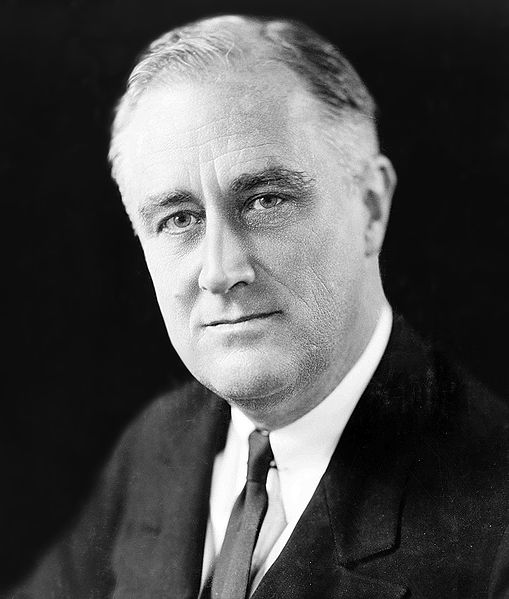
    Franklin D. RooseveltContrary to popular belief– I do have fears.

    Every day I ride my bike to work, I’m fearful of getting hit by a car.

    When I’m out bodyboarding, I’m fearful of getting killed by a shark.

    When my kids are late coming out of school, I’m fearful that something happened to them.

    I have the same fears as everyone else. I recognize that there are things with which it is healthy to have fear.

    But I refuse to be defined by my fears

    Fears are often irrational. I’ve got a pretty slim chance of getting hit by a car, or killed by a shark, or that my kids will be kidnapped from their school.

    That’s the rational reality.

    So, I chose to not have my life defined by paralyzing fear of those things.

    I have no fear of opportunity

    The lens of fear is the wrong lens to judge an opportunity. You can’t worry about failure. You can’t worry about getting emotionally hurt. You can’t worry if people will like you. And you can’t worry about what people will think if you say yes or say no.

    You need a better lens than that. You need a level head to determine whether an opportunity is good for you or not.

    I often say no to ideas presented to me. But I never allow fear to be a part of the equation.

    Why?

    Deep down I know that I shouldn’t fear what could happen if something goes wrong. Instead, I fear what could happen if I don’t try.

    As Franklin D. Roosevelt said, standing before the world on his inauguration day. With everything to fear– from wars on two continents looming, a depression lasting nearly a decade, and even his private battle with paralysis:

    The only thing we have to fear is fear itself. listen

  • Lead Me

    • To lead is to serve.
    • To lead is to listen.
    • To lead is to suffer.
    • To lead is to give.
    • To lead is to offer yourself.
    • To lead is selfless.
    • To lead others means taking people where they would otherwise not go.

    To lead isn’t to tell others where they need to go or what they need to do in order to be like you.

    To lead is a willingness to go to that place I’m afraid I can’t go on my own, and ask others to go with you. Their action of following is what makes you a leader.

    Until they follow you’re just a dude waving his hands and saying some words.

    Too many people think that they are leaders. They think that because they have a microphone in their hand they are a leader. They think that because they got hired to a leadership position, they are a leader. They think that because they have a great education or once led people somewhere great, they are a leader. They think because they have a skill set or a nice smile, they are a leader.

    The world is full of fake leaders.

    And the world is in desperate need of men and women who are willing to lead.

    The only measurement of a leader which truly matters is whether or not people are following.

    Want to be a leader? Figure out how to get people to follow you somewhere they need to go, but won’t.

  • Leading Your Church to Reflect its Neighborhood

    It’s been more than 40 years since Martin Luther King, Jr. quipped, “Eleven o’clock on Sunday morning is the most segregated hour of the week.

    If we are honest with ourselves– churches are nearly as divided today as they were 40 years ago. We call it culture and we call it personal preference. But the truth of the matter is that we just don’t want to rock the boat. (We like the comfort, staff members like their paychecks.)

    So we allow racism, sexism, and a lack of cultural diversity to run rampant in our congregations.

    It’s time those of us called to lead, lead our churches into a new paradigm.

    And it starts with a sober assessment of where our congregations are at.

    Simple measurement tool

    Make a written observation the demographics of your congregation this Sunday morning. (Age, marital status, socio-economic status, race, gender) Then compare what you observe at your church against what the data set of your churches zip code as provided by the U.S. Census Bureau.

    • Does your congregation reflect its neighborhoods demographics?
    • Does your church staff reflect the demographics of the zip code?
    • If there is a disconnect, is your church leadership making serious, active efforts to close the divide?

    Cutting to the chase: While most evangelical congregations don’t have white, middle class theology. They predominantly attract white, middle class congregations. And it’s scary how many church staffs are filled with white, middle class males. (Go ahead, look at the staff pages of 10 of your favorite churches.) That disconnect you observe should lead you to make changes!

    Changing your behavior: If you are like me, a child of the 1980s, you were raised in a dogma of multiculturalism.

    From kindergarten I was taught that all the cultures in my community have value, deserve equal rights, and should be given access to the same things I am given access to as a member of the dominant culture. That value may have been taught to me from a secular perspective, but I believe it also reflects a biblical perspective on how Christians are to live in society as well!

    If you want to express that same value on Sunday morning you need to take some steps (maybe radical ones) towards that value.

    In other words– Maybe you need to change churches? Maybe you need to stop funding something that doesn’t reflect your values and start funding a congregation that does? Maybe you need to lead the way and stop waiting for church leadership to lead you?

    Personal testimony– This is what I’ve done. For the past 2+ years my family has been a part of a congregation that works hard to reflect its neighborhood. At times, it is simply beautiful and at other times it is wholly awkward. But it’s been a radical transformation for my walk with Jesus. So, know that I’m not just pushing an idealism, I’m encouraging you to participate in something that I’m finding tremendous joy in.

    If you are a church leader who is taking a serious look at bridging the divide between the Sunday morning demographic you have today and the one you’d like to see in 12 months, may I suggest some action steps?

    5 Radical Steps Towards Becoming a Congregation which Reflects its Neighborhood

    1. Hire staff members that reflect the demographics of your zip code. (Race, gender, marital status, age)
    2. Require all paid staff, from the janitor to the senior pastor, to live within the zip code of your congregation. (Give them a few months to move, make it financially possible, remove staff members who won’t move within 12 months.) Take it a step further by requiring all board officers to do the same.
    3. If you live outside of the neighborhood, lead the way by moving into the community your church is trying to reach. Don’t contribute to the disconnect– lead the way!
    4. Get involved in neighborhood issues. Lead the way on issues of justice, advocate for the poor, let your congregation be a voice in the community. (Here’s 10 suggestions for your church to be good news to the neighborhood)
    5. Adopt a local public school. The local schools are the access point to the people your church is called to reach. Get involved, not as an agent of adversary, but as a community partner. (Here’s 10 suggestions for your church to be good news to the local schools)

    Is this a magic growth formula? Of course not. But as you take these steps you will earn the trust of a community who has learned to ignore you. When you care about what they care about and when you reflect who they are, you will be amazed at the social currency this will earn your congregation.

    I recognize that these steps may seem extreme. (And I’m certain someone will tell me that firing staff for this is unbiblical) But that’s the nature of leadership, isn’t it? Sometimes God asks you to push past what you are comfortable with or what feels right to do what is right. Remember the rich young man in Matthew 19? He asked Jesus how he might enter the Kingdom of God, but he left disappointed because the cost was too high.

    The reality is that if those in leadership don’t take radical positions so that their actions reflect their theology, the church will never change.

    We simply cannot survive as a viable faith if we continue to act as agents of discrimination on Sunday morning. The church cannot be the most segregated place in our culture. It is time that the church take a good, hard look at who they are in their community and make some radical changes.

    It’ll never get any easier or cheaper to do so than it is today.

  • You’ve got to finish

    My little football heart got broken last night. First, San Diego State gave up a touchdown with 50 seconds left to giveaway a victory to #25 Missouri. That would have been their best start in 30+ years. Then, a few hours later, Notre Dame gave up a silly trick play for a touchdown to lose to Michigan State.

    In both cases, it was about finishing the game. Both teams were sloppy. In one game, a lack of tackling discipline cost them the game. In the other, being over-aggressive cost them an embarrassing lose and landed them on Sportscenter for all the wrong reasons.

    For those of us who lead, both games were a powerful reminder for finishing.

    In life, just like in football, your last play leaves a lasting memory. No one cares how well SDSU or Notre Dame played on Saturday. We’ll only remember the embarrassing finish.

    Do you have a strategy for finishing a project well?

  • Making the Bible Accessible

    “The Bible isn’t for people outside of the church to understand. So it isn’t your place to make the Gospel accessible.

    That may be the dumbest quote I’ve ever heard in relation to using sound missiological principles to reach a dead and dying people group. And yet, this quote apparently came from the mouths of smart, biblically authoritative evangelicals upset with the work of a young leader.

    Just so people know: This isn’t the position of middle-of-the-road evangelicals. It’s not even the position of anyone reasonably conservative in the evangelical world. It’s a radically fundamentalist position which denies the very presuppositions of evangelicalism!

    History counters this statement: The evangelical missions movement of the 19th and 20th century saw hundreds of thousands give their lives in work and thousands more give their lives as martyrs making the Gospel accessible to unreached people groups. Such a statement slaps those people in the face.

    Such a statement devalues the activity of nearly every evangelical in their daily workplace. It denies the action of church planting. It denies the the very notion that we, as believers, can impact the Kingdom with our actions.

    In short– its not an orthodox position. We must rally behind those who are reaching the lost!

    It is our job, as believers, created in Christ Jesus to do good works, to bring the Bible to the lost and see the Gospel renew the people and their land. (Ephesians 2:10)

    The statement above is why the church needs a change in leadership. We need people with level heads who are smart, savvy, and reasonable. Those holding extreme positions are not bad people. They just shouldn’t be in authority.

    Middle-of-the-road evangelicals are tired of culture wars. We are longing for fresh voices and fresh leadership. We simply want to right wrongs, reach the lost, and love their neighbors. (All in the name of Jesus, under the power of Jesus, and for the purpose of making Jesus known) We will continue to distance ourselves from extremist.

    While extremists lament and pontificate, we will continue to reaching the lost, righting wrongs, and loving our neighbors.

    People at high levels who say/think/perpetrate these thoughts devalue the entire purpose of the Gospel in order to protect their own self-interests. At the end of the day, that’s what the statement must be about. Protecting their self-interests. The statement isn’t true and doesn’t represent the tenants of our movement— so to say such a thing reveals that they are putting their own interests above all else.

    The lesson is– if you take a stand for truth you must be willing to stand up against the religious establishment, and continue to speak the truth in love despite their sneers and allegations of heresy.

    Today is no different than the time of John Wycliffe, who died shunned by the religious establishment.

    Sadly, shunning is part of reforming.

    For those who are bringing fresh wind into the sails of the movement, my encouragement is to boldly ask those people set aside what they are comfortable with for the sake of the Gospels spread.

    The spread of the Gospel to unreached people groups, whether home or abroad, is never comfortable. It has never been comfortable. And we cannot win hearts until we are willing to walk in the tension of discomfort for the sake of others.

  • Success Secret: Serve Your Way to the Top

    Photo by Kris Haamer via Flickr (Creative Commons)

    The third time he said to him, “Simon son of John, do you love me?”

    Peter was hurt because Jesus asked him the third time, “Do you love me?” He said, “Lord, you know all things; you know that I love you.”

    Jesus said, “Feed my sheep. I tell you the truth, when you were younger you dressed yourself and went where you wanted; but when you are old you will stretch out your hands, and someone else will dress you and lead you where you do not want to go.” Jesus said this to indicate the kind of death by which Peter would glorify God. Then he said to him, “Follow me!” John 21:17-19

    The path to success in life, ministry, relationships, career, and darn near everything else is paved with service. (Gasp, probably pain and suffering, too!)

    I’m sorry it has to be that way. It’s not my fault that this is true. Blame the other Adam.

    To Adam he said, “Because you listened to your wife and ate from the tree about which I commanded you, ‘You must not eat of it,’ “Cursed is the ground because of you;
    through painful toil you will eat of it
    all the days of your life.

    It will produce thorns and thistles for you,
    and you will eat the plants of the field.

    By the sweat of your brow
    you will eat your food
    until you return to the ground,
    since from it you were taken;
    for dust you are
    and to dust you will return.”
    Genesis 3:17-19

    Back to the John passage. Did you notice what Jesus said Peter had to do to show that he loved Jesus? Feed my sheep. That’s grunt work. That’s work without honor. That’s work that isn’t sexy. That’s not the cover of a magazine or leads to a book deal or getting invited to speak at a conference.

    Feeding sheep means arguing with stubborn animals all day. Feeding sheep means you get bit. Feeding sheep means that you step in doo-doo. Feeding sheep means you occasionally have to scare off a predator.

    And yet…

    On Peter, the one Jesus told to grunt it out by feeding sheep, Jesus also said “And I tell you that you are Peter, and on this rock I will build my church, and the gates of Hades will not overcome it.” (Matthew 16:18)

    If you are into church history you know Peter was a key leader in the early church. While he wasn’t perfect he indeed fed Jesus’ lamb from that moment until the moment he was nailed to a Roman cross himself. He served his way to the top of church leadership.

    Note: My list of verses above is just the beginning. There are lots. And there are many good books which can give an exhaustive word study. But the point is clear, Jesus flipped the script on how to be a leader.

    Universal path to success in any organization

    Photo by Christian Paul via Flickr (Creative Commons)

    Do you want to know how you lead people and change any organization?

    People ask me all the time: What’s the secret?

    You serve. You grunt it out. You get bit. You are faithful to the task you’ve been given. You master that task. You own that task. You serve that task. Just like a shepherd you keep your head up on the task in any circumstance. Just like a shepherd you always keep an eye on where you are leading the next day. You take responsibility. You take the compliments and the criticisms to heart.

    Ultimately, you meet the needs of the sheep. You serve the owner. You put the rights of the owner above the rights of yourself. You keep the abuse in mind but you don’t let that own you. In doing that you win hearts and earn influence from the top to the bottom.

    It’s not magic. It’s not a secret. It’s taught in the Bible!

    Note: Church staff– you have rights. See this post, Labor Day Remembrance for Youth Workers.

    Alternate path to success in any organization

    Photo by Vearl Brown via Flickr (Creative Commons)

    It’s not going to be popular to mention this, but it is worth mentioning. There is another path to success. One that is faster in accession. And one that is definitely easier. But it’s not as the servant-leader.

    It’s as the lion.

    In truth, many of the most successful “leaders” in the world are not servant-leaders. (The Christian world is, sadly, filled with lions.)

    They didn’t get to their position in life by serving their way to the top.

    They got there by brute force.

    And they keep it when they kill, destroy, and intimidate day-to-day.

    They travel in packs which devour prey.

    We kind of turn our noses up at this style of leadership. But it is entirely functional. What’s more interesting is that plenty of people are drawn to this style of leadership. It’s quite popular in the Evangelical world!

    (There’s a third animal-styled leader. That’s the hyena. He mocks and steals his way to the top. But that’s for another day)

    The heart makes the difference

    What’s different between servant leadership and lion leadership?

    • The weakness of lion leadership: The pride knows no loyalty. You only have power so long as you can keep it. One day, another member of the pride will take leadership from you.
    • The strength of servant leadership: Loyalty runs thick and deep. When you have served your way to the top, people will be loyal to you, even to a fault.

    Choose to serve

    Let’s be obvious. Each day, those of us in leadership, must make a rational choice. Do we want to serve or do we want to use our muscle to create a pride?

    My advice, while it might not be the fastest way to get things done, ultimately Jesus asks us to choose to serve.