
College sports fans might be too close to notice it but the world of college athletics seems to be coming apart at the seams.
(more…)Tag: media
-
The News Stand and the Farm Stand
I used to say that my life was really big and really small.
It was really big because 100 days per year I lived out of a suitcase, flying around the world meeting people, promoting my business, and towards the end of that period living out my Savior Complex in a foolish attempt to reform the Christian tourism industry.
It was really small because the other 250 days per year I lived within the square mile of Rolando, our neighborhood in San Diego where we worked, ran a small dog sitting business, kept busy with our gardens, and walked Jackson back and forth to elementary school.
Now my life is just small. Recently, I took Jackson to Fresno to get a haircut and realized it was my first time in the megalopolis of Fresno, population 450,000, in about 4 months. Otherwise, our daily lives in Ahwahnee, population 400, ping pong between Oakhurst, population 5,945, and Mariposa, population 1,800.
These days my life has gotten very small geographically but Super Sized in other ways. Addition of fulfillment by subtraction of meaningless work travel.
My Stand Against News
One aspect I love about starting up The Farm at Worman Mill is that I have no time for television. Specifically, I have no time to watch cable news.
I still pay attention to national news here and there. I enjoy the AP News app on my phone, the BBC app provides a nice dip-of-the-toes into an international perspective. But that’s about it. I’m more attuned to what’s covered by the Mariposa Gazette than I am the LA Times.
Largely, I’ve Tuned In to the world around me while Tuning Out to the world beyond my tiny town.1
- See what I did there? I just referred to a book that no one bought, Tuning In, which is now only available in my garage because no one bought it. Screw you Amazon. ↩︎
Tuning out of the daily news cycle has provided me some clarity and a whole lot of inner peace.
For example, the media has been reporting that Kamala Harris has raised over $1 billion in her campaign to become the first president under 70 years old since Barack Obama. Coincidentally, since that was reported, the polls have shown her lead narrowing from 4% nationally to 1.8% nationally— which is still within the margin of error for 4% but gives her campaign enough fear to spend that $1 billion on ads in swing states, that money flowing to– you guessed it– the same damned companies who do the polls showing that the race is tightening even though she is out-fundraising-and-out-campaigning her opponent 2:1.
If you turn on the news you’re convinced by the people on television selling ads to campaigns that the world is enraptured with a Presidential campaign. We could have voted a year ago and the outcome will basically be the same. The difference? The 3 big media companies have a bottom line fueled by extracting ad money spent only if they convince a roomful of politicos to buy ads. Ads don’t swing voters. Relationships do.
The media machine is just trolling you to get you to sit there and watch more ads.
Let me share a little farmer secret with you. If you turn off the news your world gets much more quiet, you hear the birds chirping, the frogs frogging, and the bees buzzing.
You begin to realize that what happens on the TV isn’t that important. That shit isn’t even real. Nothing on TV or in your news feed is nearly as important as the world right in front of you.
And in the world right in front of you people don’t really care about the bullshit on TV that divides us. Everyone in the real world is looking for a good price on bread and a really flavorful tomato.
It doesn’t matter who you vote for or what you think about the war in Gaza, we all want some good bread and tomatoes.

The Farm Stand
I spent more than a decade of my life talking about being “Good News in the Neighborhood” to impact my community when all I ever needed to do was start growing some vegetables and put a farm stand at the end of my driveway.
The Good News jargon was never really about religion to me. It was more about being something good in my community.
For a million reasons, this little farm startup in this little 400-person corner of this little 20,000-person corner of middle of nowhere of California, has begun to meet a utilitarian need.
In the first year of our farm startup we grew veggies and plants and then packed them into our white pickup truck and drove them to the big city of Fresno to try to sell them.
On the one hand I loved it. I liked meeting people and enjoyed the thrill of growing something, setting up my little tent, then enticing them to come look at the vegetables I grew. It’s fun because you’re hoping to convince a stranger to buy my tomatoes instead of the bacon-wrapped-churro-dipped-in-caramel thing the booth next door to me was selling.
But on the other hand I didn’t enjoy the driving. And too often we spent more money going on this adventure than we made at the farmers market. Along the way it dawned on me that I was out selling vegetables more than I was growing them and that felt completely backwards for a person starting a farm.
So in June we stopped going to farmers markets and got the farm stand. 96 square feet of freedom for less than $2000. What a deal!
[This is where the camera zooms in on Adam in the middle of the TED Talk stage. He pauses dramatically, allowing the audience to think about the waste of time farmers markets are for vendors, he clinches his pen, bends his elbow… they switch to camera 2, a close up of Adam’s face. Then he continues.]
Then something magical happened. Something that made no sense. Something that made every Seth Godin trained, Google Analytics informed, marketing-guru’d blood vessel in my brain pop– people drove up the road.
And they kept coming. Every dang day. All summer long. Now well into fall.
We learned that people are
willinghappy to drive to the edge of nowhere, where we live, to buy flowers and honey and baked goods and tomatoes and microgreens and nursery starts.Why? I HAVE NO IDEA! But also why? Because it makes sense.
In a world where nothing makes sense. In a world where television and social media seek to divide us. In a world where no one talks. In a world where everyone is afraid of everyone else.
In that world, there’s a place you can go where things are simple and make sense.
You drive up the road. You park. You pick out some eggs or veggies or cake pops. You put money in a red box. You snap a picture for the gram. And you get what you want. Or not because we’ve sold out.
Everyone, and I mean everyone, comes to a farm stand.
People who drive Teslas and people who drive beater pick-ups. It doesn’t matter if you’ve lived on this mountain your whole life or you’re visiting here from the UK– you see a sign on the side of the highway that says “farm stand” and you drive way-the-hell-up this little winding road to a farm stand and buy yourself some eggs.
I used to fly 100,000 miles per year in search of something that I now find daily 200 feet from my pillow.
It’s beautiful. It’s simple. And maybe it’s ephemeral.
But in moment in our history, in this moment in my life, where nothing makes sense and the media is fueled by our desire to seek division, our little farm stand is there to bring us microgreens and a little bit of hope. (And a damned good heirloom tomato.)
At least that’s what it does for me.
And that’s good enough for me right now.
-
Open Journalism
So this is how The Guardian, a U.K.-based news entity, would like to see themselves. They are the hero allowing justice to flow through the free and open exchange of information. In their vision The Guardian isn’t necessarily a news agency but rather a conduit by which emerging facts and opinions flow. In their vision, as a conduit for new media, people get the information they need to revolt against the government.
It’s a very slick commercial. And it’s not a bad vision for a news agency.
But does anyone really believe that this is who the big players in the news work?
-
What have you done for me lately?
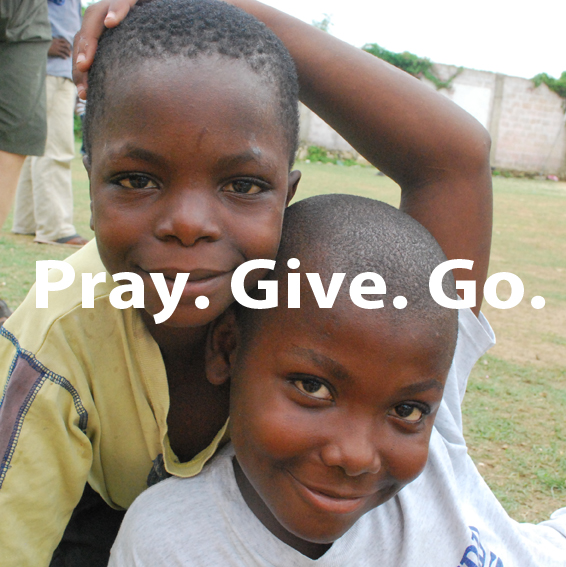
A year ago the earth shook and the world changed.
Billions were given.
Tens of thousands have gone to help.
Yet not much has changed.
- The poor suffered.
- The rich got richer.
- More people died needlessly.
- The UN has effectively lied, spending money studying and asking questions while accomplishing little.
- And America sleeps in their comfy beds tonight feeling like they did something because they texted a donation to the Red Cross.
We’re left now with more questions than answers.
- If the international aid organizations aren’t going to do something, who is?
- People are stealing aid given while government pockets are filled with bribes, who will prosecute perpetrators when the government is the worst offender?
- How can we help this country get back on its feet while at the same time lessening dependencies on the outside world?
- When will the colonial view on international missions be put away and replaced with working alongside of Haitians to build housing for people in tent cities, advocates standing for justice, and training of teachers, city planners, and tradespeople begin?
- Where is the army of Sean Penn-like camp managers?
- Who will hold accountable those who make empty promises?
The answer to all of these questions is you. The cameras will shine on Haiti today. And you will feel sorry for what is going on.
Don’t.
Our Haitian brothers and sisters don’t ask for your pity today.
But they are asking for you to help them in ways that answer the questions I’ve posed above.
Know that the media elite will leave tomorrow; having satisfied their ratings and your curiosity, they will board private jets tomorrow and go back to New York, while children still sleep on muddy cardboard beds.
1.5 million people are asking the question, “Who is helping us?”
The answer is you.
Turn off the TV and do something.
-
Sarah Palin in Haiti and Me
The other day I got connected to Emily Troutman, a reporter working for AOL News in Port-a-Prince, Haiti. She was looking for Americans who had travelled to Haiti since the earthquake and I fit that description. After a quick exchange of emails, she told me she was just looking for a couple of quotes about an article covering Sarah Palin’s visit last week. I was happy to comply.
I thought it would be interesting to share the final essay she published and also share my full responses to her questions.
First, her essay:
“Haiti has been a country that has suffered in the past and is going to continue to suffer until some fundamental changes are being made here,” said Palin, who was accompanying the Rev. Franklin Graham, director of Samaritan’s Purse, an evangelical charitable organization operating in Haiti.
If Sarah Palin wants change for Haiti, though, I hope she will first be changed by Haiti.
Tuesday night, a roving gang, setting fire to a car, aimed rocks at my head when I attempted to take a photo. I just threw my hands in the air, in surrender. By today, I was catching photos of Palin’s cheerful, determined grin. And again, I was tempted to throw my hands in the air. The country was catapulted further into crisis this past week, after many felt the presidential election, mired in fraud, failed to reflect the democratic vote of the people. For three days, Port-au-Prince was shuttered and innocent bystanders sprinted through the streets to find safety.
My name never really appears in the article. Which is fine… I knew that going in. If you read the whole essay though, you’ll see some themes that I brought up appearing scattered throughout. I thought it was pretty cool.
Here are my answers to her questions:
Happy to help. And I didn’t know Sarah was coming to PaP. Very cool of her. I hope her heart is changed the same way mine was.
Feel free to use my name or not. It’d be cool if you could send me back a link if you publish something. (Even if you don’t use my stuff.)
Adam McLane
San Diego, CAWhy did you come to Haiti?
I came immediately following the January earthquake to minister to survivors in tent cities and evaluate what further opportunities there could be for American college students and young adults to serve those displaced.Did you choose Haiti over another impoverished place? If so, why? Or was it always just Haiti that you wanted to visit? Why?
No, I responded to a specific invitation from an NGO to come to Haiti after the earthquake. Such a trip had never been on my mind before the invitation.How did you feel when you were here?
I had a lot of fear in coming to Haiti. My whole adult life I’d only heard terrible things. I’d heard it was a place of violence. I’d heard horror stories of those who practiced the Voodoo religion. What shocked me was that my experience was the exact opposite. From my arrival (driving in from the Dominican Republic) until the time I left, I had never been to a place more friendly, and more hospitable. We were greeted everywhere with warm, generous smiles. Surely, when we encountered tent cities who had nothing to eat or drink there was desperation. But we never felt in danger, never saw expressions of anger, and were warmly received. (Whether we came just to help people process what they were going through, praying with them, participating in worship services, or coming to deliver aid, we were treated the same.) As I left in February I cried because my time had ended too quickly. I vowed that I’d be back to serve again. (And fulfilled that vow in July)I expected Haiti to be a nation heavy with mourning and instead found it a place of hope!
Did anything surprise you?
Lots of things! I didn’t expect to enjoy the food so much. From fresh fruit bought on the street to amazing meals of rice, beans, and goat.On my return trip in July, what surprised me was how little progress had been made. The tent cities were filled with the same people and the rubble was in the same place. Likewise, the people in the tent cities were frustrated by the big NGOs promises to help. They knew billions of dollars had been given in aid but only a few things had happened. (I wasn’t there with Oxfam, but in several of the camps we worked in we were impressed by the sanitation/water systems installed by Oxfam.)
How did you feel when you went home?
On both trips I was sad to leave Port-au-Prince. I feel strangely alive while I’m there. It’s hard to explain how amazing of a community it is, even amidst the great disaster. I had a hard time explaining to people what I’d experienced. Their minds were filled with the horror stories portrayed on the news while I wanted to share stories of the great hope for rebuilding the nation we felt as we met with people in tent cities, pastors, and various community leaders.Did you feel different? Culture-shocked? Grateful? Tired? How long did it take for that feeling to subside, or did it?
Coming back, first there were the silly things. On both trips I was overcome with emotion in the airport upon coming back to the States. On my first trip, our team sat down for lunch and collectively felt guilty. We had each just spent $10 on lunch… enough money to feed a family for 10 days. On my second trip, it just didn’t make any sense to me that a short two-hour flight from Port-au-Prince took me a world away. It was trivial, but after going through customs and checking in to my homeward flight, I cried in the bathroom. It was just too clean and unused to make any sense. That was definitely reverse culture shock.Did it subside? Of course. But I’ve been changed forever.
Will you come back? Why or why not?
I will come back. Why? There is too much work to be done. And for anything I’ve given it’s been returned to me ten times in blessing.I originally had plans to return after Christmas but they’ve since fallen through. I’m currently looking for an opportunity to come back with an NGO to continue working in the tent cities. I would love to be a camp manager.
Are you glad you went to Haiti?
Absolutely. Haiti is a place that intrigues you with its paradox. It has a rich, proud history of being the first free black nation. It’s people speak a beautiful language and love to learn. But it’s also defined by a history of corruption and deep poverty. That paradox sets it apart and calls me back!Here’s the deal: Haiti still needs help. It still needs people like you. If God is calling you there and you aren’t quite sure why. Let me know.
-
Fear Makes You Stupid

Yesterday morning I woke up to the news of a massive earthquake in Chile. The world seemed to hold its breath and wonder how bad the damage would be. “If a 7.0 earthquake killed 200,000+ people and flattened Port-au-Prince, Haiti– what would an earthquake 500 times stronger do?”
Those fears and concerns were legitimate.
Fortunately, as news reports flooded in, we later learned that while there is widespread damage and hundreds of thousands displaced– Chile was well prepared for such an emergency. In fact, it appears that Chile may be able to handle the relief efforts largely on their own. The New York Times is reporting, “Although the United States had offered aid, Chile’s government had not yet requested assistance. All international relief groups were on standby, and the International Federation of Red Crosses and Red Crescents said the Chilean Red Cross indicated that it did not need external assistance at this point.”
Chile’s disaster was not equal to Haiti’s disaster– and as those fears began to ease and you could see the media looking for a story to scare people.
Later in the morning, the media attention shifted from the earthquake in Chile to a tsunami the earthquake spawned. This is when the full on fear mongering went nuts.
- Fact: 750,000 people in greater Port-au-Prince are starving and homeless while billions of dollars of aid sits on tarmacs because NGOs and governments are paralyzed.
- Fact: The president of Haiti has said it will take 1,000 trucks 1,000 days to clear the rubble from Port-au-Prince. The muscle part of recovery hasn’t even begun.
- Fact: 46 days after the earthquake in Haiti, starvation and disease are happening just 2 hours south of Miami by plane. Thousands of orphans are undocumented and at risk of being trafficked. Widows and elderly have no protection.
- Fact: 2 million people in Chile were displaced as their homes were destroyed.
And twelve hours after the Chile quake all of the news media’s attention shifted from actual news stories to a potential tsunami in Hawaii.
Fact: Tsunami warnings had gone out for more than 4 hours all over Hawaii. There was no danger to life.
Fact: A potential tsunami is not equal to an actual tsunami. A potential tsunami was used to cover up the real story in Haiti. (The real story is that the church is meeting people’s needs while the NGOs and governments have meetings at the airport.)
Fact: The news was reporting on lines at Costco/Wal*Mart/Safeway, showing live video of a camera pointed at a computer screen of a Ustream.tv feed, and anchors desperately trying to convince experts that although scientific instruments were saying the tsunami was only creating a 2-3 foot wave– the wave must really be 30-50 feet.
Fact: This was worse than Geraldo opening Al Capone’s secret vault.
And yet every news agency was showing live video from all over the state, showing sunshine and waves, interviewing tourists on vacation– all for a natural disaster that had not even happened yet! One reporter asked a tourist, “What is the situation like up at Diamond Head?” The tourist, confused, looked at the reporter and told the truth. “It’s a party up there.” They couldn’t go to commercial fast enough.
Something is wrong with us. The fear of a natural disaster outweighs an actual natural disaster? The fear of damaged vacation property outweighs the reality of millions of people’s homes in Chile and Haiti? The fear that a tsunami might hit outweighs the reality that a significant disaster has actually happened.
Fear makes us stupid.
When will we recognize that fear is our god? When will we stop living in fear? When will we be motivated by compassion that overcomes fear?
-
What’s all the fuss about sexting?
 There have been a lot of newspaper articles about sexting lately.
 What in the world is sexting? Simply put, sexting is using your mobile device to send a sexy note to someone.
What’s the big deal about it? It’s nothing serious. As long as kids have communicated there have been kids who passed naughty notes, instant messages, emails, and now… text messages. (text, picture, and even video)
But let’s get real for a second. As long as there have been kids talking dirty to one another there has always been an adult fascination with their pillow talk. And since news agencies know that nothing sells better than teens talking about their sex life every newspaper in the country picked up on the study.
Next thing you know there will be a Christian company perpetrating a lie that their cell phone network screens and blocks anything inappropriate! Jesus Talk, 400 minutes and 400 bible verses per month. $129.99!
Do kids really send naughty things to one another via their cell phones? Probably. But, in my experience, this is no where near what everyone things it is. What it typically is relates more to pornography than sexting. In other words, kids send dirty notes to one another, share videos, and share pictures with their phones. (And computers, and xbox’s, and PS3s, and ipods, and any device you can imagine!)
But let’s get real. This isn’t a big deal. We need to put away our facination with adolescent sexuality and focus on teaching the kids in our lives how to value other people. No one wants to be exploited by their boyfriend/girlfriend. Doesn’t education on this really just boil down to the Golden Rule?
-
Finding culture from within four walls
 I’ve been thinking a lot lately about the culture we live in as well as how we discover the culture we live in. Some of it comes from observation, some of it we naturally pick up without noticing it, but a lot of our culture comes from outside.
Think about the cultural things you pick up at a camp or even on a vacation with friends. You develop new lingo and special norms. That’s fascinating to me about human nature. Why did God make us that way?
And what does our ability to adapt and learn culture so quickly say about our God. We are made in His image, aren’t we? Does that mean that God is super-adaptable? Does that mean that God uses new lingo or norms to reach us? I think it does.
And what about this. Have you ever thought about your own personal role in culture? Have you ever thought that you were put into a culture or sub-culture or micro-culture to infect, affect, or defect that culture?