Tag: parenting

  • Sticky Faith Book Club, Chapter 2

    This is part 2 in an 8 part series on Sticky FaithJoin our book club by signing up here. (part 1)

    The Heart of the Matter

    I read chapter 2 with a heavy heart. As a lifelong youth worker I had a hard time fully concentrating on what the words had to do with my family. Instead, my imagination ran wild with examples of students, core students, who walked away from their faith. Great students from great families whose seemingly solid faith evaporated in college.

    Like you, I know families who have zero of their children walking with Jesus. (Or one out of four; two out of five, etc.) I’ve drank that bitter coffee with those tearful parents. I’ve heard their lamentations. I’ve even seen some of them start to doubt Jesus because “he wasn’t there for their kids.” Those are tough meetings and we’ve all had them. We wish we had answers but all we can offer is compassion and shared frustration.

    If you are like me those meetings end and you get in your car and cry. Sure, those are tears for those students. But they are also tears of resolve. “Not my kids. What do I have to do? How can I do things differently? I can’t afford to go 0-3 in my own home.

    That’s the heart of the matter. Am I wiling to change the trajectory of my parenting for the sake of their faith? Am I willing to forego my “non-negotiables” for the sake of my children wrestling with their faith in my home? (As opposed to pushing that until college.)

    Inarticulate, sin managing, parent pleasers

    Kara and Chap were too nice to put it this way but that’s essentially what their research reveals. Their research showed that Christian students can’t articulate in their own words or testify from their own lives what walking with Jesus means. And since we’ve elevated the role of rules to a place higher than faith, our children know how to act like a Christian without knowing what it means to truly have faith in Christ.

    We assume that if our child walks like a duck, sounds like a duck, and acts like a duck they must be a duck. Unfortunately, that’s not how it works with trusting Christ.

    Kristen’s thoughts

    Trusting God is a discipline necessary for sticky faith development. Reading this chapter has helped me realize that I need to be a stronger communicator. In not wanting to over-share certain decisions or events in our lives, I’ve missed opportunities to articulate how decisions are made based on my trust in Christ. As our children grow older, I see the value of creating discussions and activities to help develop their framework of trust.

    I specifically recall a conversation last year when I asked Paul if he had ever made a decision to trust Christ. His response – “every week!” Digging deeper, what he meant was that every week in Sunday school his teacher made the class pray with along with her to “accept Jesus”. Defining what it means to trust Christ is a challenge after sorting through all the do’s and don’ts thrown their way, even (and perhaps especially) at church.

    Discussion Questions

    1. Sometimes it helps to start with a goal and work backwards. Have you ever stated goals for your children’s faith development? What is the goal of toddler faith? Of elementary-aged faith? Of middle school faith? Of high school faith? Or college faith?
    2. As ministers our kids feel extra pressure to perform as “professional Christian kids.” What are ways you’ve seen your children practice “sin management?”
    3. The book stated that “obedience is a response to trust.” Why is it better to begin with trust and then respond through obedience? Is it ever good to go the other direction: obey first and hope that trust follows? Have you ever experienced either of these in your faith journey? If so, what was it like, and what happened?
    4. How do you see your child’s faith in light of this chapter? Where do you see them growing in what it means to trust Christ, and where do you see them living out the do’s and don’ts of Christianity?

  • We need non-digital adventure

    Photo by Christine K via Flickr (Creative Commons)

    A couple weekends ago I told Megan and Paul to get in the car, we were going on a secret adventure.

    Anticipation in the car was high. Were we going for ice cream? Was dad taking us to a movie? Were we going to buy new video games?

    All were possibilities. But none were realities.

    Dad’s plan– Spend an hour at Barnes & Noble picking out books.

    I thought you were taking us on an adventure, dad. This sucks.” Those were the words of my 8 year old son as we entered the store.

    I explained, “You need to take your brain on a non-digital adventure. And books can take you there.” Every time they picked up a book it was tied to a video game or cartoon. “Non-digital adventure. Longer, older, think about the classics.” They complained, “I don’t want to read an old book. I want to read something new. New stuff is good, old stuff is boring.” 

    In the end we made a compromise. They could each pick out whatever book they wanted. And dad picked out two books for them. (The first two books in the Narnia series.)

    Megan took the compromise. Paul didn’t pick out a book and went home empty handed on principle.

    I went home and planned our camping trip– A non-digital adventure of the mind, body, and soul.

    Besides restricting use, what are ways you help your kids take their brain on non-digital adventures? 

  • Jackson and Dad, 5 months in

    20110726-061043.jpg

    No DNA test required, right? This is my boy.

    JT has fit into our family from the first moment. We never knew he was missing from the family make-up until he invited himself to the party. He completes our little family.

    This baby is proof that there are no accidents in God’s eyes, just emerging possibilities.

    When an emerging possibility rocks you world, throw your hands in the air and enjoy the ride. His way is way more fun than your way.

  • The Big Picture of Parenting

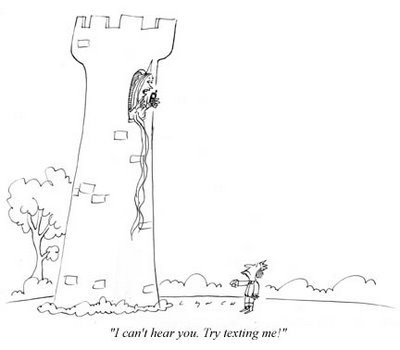
    Original Cartoon published in Wall Street Journal (July 2008)

    Thinking about this– I know I have two huge handicaps.

    1. I didn’t grow up under “ideal circumstances” but I still turned out just fine.
    2. My own kids are only ten, almost eight, and five months.

    I’m not a parenting expert by any means. In fact, because I didn’t grow up with a strong relationship with my own dad (or any male whom I’d label a role model) I’m still learning how to dad.

    While I might not be there yet as a parent, and while I might not have the best native skills as a dad, I still have the power of observation.

    Here’s what I know from doing youth ministry and ministering to adolescents and their parents for my entire adult life: Parents who focus on the Big Picture have a higher success rate than parents who get lost in the daily battles.

    They win the battle but lose the war.

    What do I mean?

    Parents who are highly controlling, who don’t let their adolescent children experiment and find themselves in middle and high school, tend to see their children go wild in their 20s. The mistake seems to be that they focused on managing behaviors instead of trying to parent a teenager trying to figure out who they are. (The primary task of adolescent development.)

    So they freak when their 14 year old makes out with a girl at a dance. Or put them on lockdown when they try alcohol at a party at 12. Or force them to attend a church camp when they are 15 “to fix that nasty attitude.As if Repunzel-ing them were going to work.

    Sidenote: Isn’t the plot of every Disney movie a struggle to find ones self against the wishes of controlling parents? Ever wondered why those stories connect so strongly with adolescents? It’s powerful to them because it’s their life! 

    What’s the Big Picture?

    I like to look at my children with a long lens. What are the types of things I’d like them to be as adults? And then I work backwards.

    • I want them to be strong, independent thinkers. Not yes men. –> Arguing about things will be normal. Questions like “Why?”, my authority, and fairness are annoying, but fostering that.
    • I want them to enjoy simplicity. Reject the desire of plenty for the joys of saying no. –> While we live a pretty simple life, we allow them to experience luxuries. They want things, earn them, get them. In order to reject that stuff they’ll need to discover for themselves that there is no happiness in things.
    • I want them to have happy, healthy, and simple adult relationships. –> That means I can’t freak out about everything. They are going to like who they want to like. And they may make some mistakes along the way. But I don’t want them carrying around a daddy-phobia when they think about a partner. Is dad going to approve of this person? I want them to be happy. To have a healthy marriage. And to have simple adult relationships.
    • I want them to find pleasure in what they do. –> That means we want our kids to pursue their dreams for them, not ours. Not surprisingly, my kids are into nerdy things. (I mean, I’m kind of a nerd, right?) We’ve been open to letting the kids explore what they’re into. We exposed them to soccer early, I loved soccer growing up. But they hated it. So we didn’t force them to love it for us. Well beyond childhood we want to rally behind what they want to do vocationally. Sure, I have dreams for them. But their dreams for themselves are so much cooler than my dreams for them.
    What’s the Big Picture for Your Kids? Can you articulate it? And do you allow your Big Picture to overrule your cultural desires to over-parent?
  • When Daddy is Away

    It’s inevitable.

    All of the chaos happens when I leave town. 

    On Monday afternoon Kristen dropped me off at the San Diego airport. All was calm and under control in the McLane clan. Leaving Kristen for 5 days with Megan, (10) Paul, (7) and Jackson (4 months) was hard. I really didn’t want to leave them. We all wished I didn’t have to do this trip. Not because I was dreading going on the trip or being in Minnesota but simply because it’s been so long since I’ve been away. And I’ve really loved being home more.

    At the same time we were prepared for daddy to be gone for a few days and for Kristen to manage the kids, and the house, and her job, and the kids school. (They go year-round, getting out July 15th) The older two are growing very independent… helpful even. In many ways, when I’m gone is like an exam. Can they handle more responsibility? Let’s hope so because they need to! 

    I checked in with Kristen Monday night when I landed in Minneapolis. All was calm and everyone was tucked in and sleeping away.

    My Tuesday was rushed in visiting with all of my fellow co-workers at YouthWorks, meetings, the normal. Then I got a call from a weird 619 number. I let it go to voice mail but quickly checked it. It said, “Mr. McLane, this is the nurse at Darnall Elementary School. We have Paul here in the office and he’s been injured on the playground. We’ll need you to come get him as soon as possible. Please call us right away.”

    My heart leapt and sank at the same time. My instinct told me to grab my keys and go get him. But my reality was that I’m a 4 day drive away. I quickly connected with Kristen, who was dashing to get him.

    He had broken his arm in an accident on the playground. Our first ER trip as parents and I missed it.

    Kristen and I exchanged a hundred text messages while they were at the ER. Paul and Amy, dear friends, came to the rescue and took Megan and Jackson for the afternoon. While Paul waited nearly 3 hours to get an x-ray and a cast… I wasn’t there. 

    It seems like this always happens. Important things happen when daddy is out-of-town. Last year, Kristen was rear-ended while I was on a trip to Washington state. I’ve missed kids losing teeth. Or winning an award at school. Or epic small group nights with major breakthroughs. Doctors appointments when Kristen was pregnant. Bed times, quiet times, crazy times, thrills, spills, shrills, and the immediate stills of realizing it’d all be OK.

    When daddy is away stuff happens. Life doesn’t stop at home. It’s inevitable. And it kills me. And while I know Kristen is a trooper/super power mom/amazingly strong woman who can handle it all I want to be there, with her, when these things happen. I want to be there.

    What does this have to do with you?

    Our Heavenly Father is the same way. While He never leaves us sometimes we go far from Him. And life moves on. Stuff happens, chaos reigns, victories occur, and sometimes bones break. For every bed time, quiet time, crazy time, thrills, spills, shrills, and the immediate stills of realizing it’ll all be OK– Our Heavenly Father wants the intimacy of sharing those moments with us.

    His heart breaks for His children when they are away from Him. He wants to be there.

    Maybe it’s time for you to come home? 

    So he got up and went to his father. But while he was still a long way off, his father saw him and was filled with compassion for him; he ran to his son, threw his arms around him and kissed him. Luke 15:20

    I’m going home tomorrow to Kristen and the kids. But maybe today you need to go home and be with your Father? 

  • The Parent Gap

    As a kid, my parents weren’t that involved in church. There was a time when half of my family had some friends in church and did some stuff around the church. But by and large I was the church-e-est of the bunch from about 5th grade until now.

    I think my reality as a high school student has peppered my entire career in youth ministry.

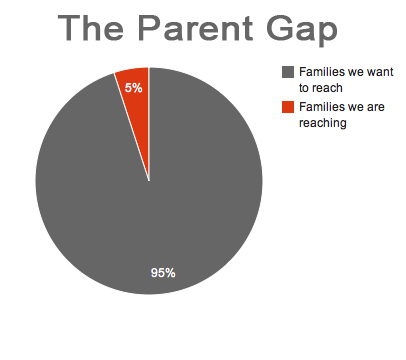
    • We are paid by, and charged to serve, the needs of 5% of the population who pay our salary.
    • We are called by, and charged by Jesus, to reach the 95% of the populations with our very lives. (Romans 12:1)

    It’s not truly an either or situation. It isn’t that you need to make a choice to only serve Christian families or only serve non-Christian families.

    Yet it is that you need to bear in mind that your youth ministry can’t assume that every family is like your “best” Christian families. My parents were actually very supportive of my church-life. They drove me to stuff. They paid for stuff. And even though they were only passively interested in the Christian life for themselves, they were highly appreciative that men and women were investing in my faith development.

    Ultimately, Christian families aren’t your primary target audience. God is holding them responsible for their faith development of their children. Research shows that the biggest influence on the faith development of a child growing up in a Christian home is the parent… not the church. (No matter how cool the youth pastor is.)

    How can we expect students who aren’t from Christian homes to bridge that gap and be a part of a ministry with constant parental involvement demands? That’s just not realistic.

    To reach more people we don’t need a new program. We need a new strategy.

    Questions:

    1. Am I just off my rocker here?
    2. What are some ways you’ve had success engaging the general parent population in your community?
    3. Do you see Christian parents in your ministry as those you serve or those you empower to reach their peers with the Gospel?
    4. How do you, as a youth pastor or youth ministry volunteer, hold Christian parents of teenagers accountable to their responsibilities in the home?
  • The role of adolescent consent in parenting

    Kristen and I now officially see the precipise on our horizon.

    Megan, our oldest child, turned 10 yesterday. Within a few years we will be in the thick of adolescence. (And all of the parents I’ve worked with over the years will simple laugh. Not a polite giggle. An evil laugh because now I will know the terror they have gone through!)

    OK, not quite that dramatic. But change is definitely on the horizon for our family. And we know we’ll have to adjust our parenting skills as Megan enters into this new developmental stage.

    I recently read an article in Psychology Today that gives a high-level look at how parenting needs to adjust as you shift from having “a kid” to having “an emerging adolescent.”

    Thus, offensive though it may feel, the resistant adolescent’s words of advice to his parent have a ring of truth: “Get used to it!” Come the teenage years, compliance with parental authority is less automatic. This is why it’s easier to parent the dependent-minded child than it is the independent-minded adolescent. The harder “half” of parenting comes last.

    The formula for obedience to parental authority is simply this: command + consent = compliance. Parental authority is not automatic or absolute. It is not a matter of parents being able to control adolescent choices; it’s a matter of controlling their own choices in ways that allow them assert influence. And this takes work, working for consent.

    Consent can be secured by a variety of parental approaches – declaring your need for cooperation, making a serious and firm request, attaching consequences to compliance or noncompliance, repeated insistence to show you mean business, explaining reasons that are persuasive, negotiating a deal to get what you want.

    Read the rest

    I think it’s important for us to focus on the long-term goal. We want our kids to develop into strong, independent adults. In their relationships, we want them to have healthy, happy, and simple adult relationships.

    So, as we enter the precipice of the next 10 years, we are going to try to keep a long-lens on things. We know in the granular, day-to-day grind, that won’t be easy. And as soon as I wrote that down and looked back at it my youth pastor self said to my parent self, “Uh huh.”

    Parents of adolescents: Is the Psychology Today article on-point? Or do you just try to muscle your authority over your children through middle/high school?

  • Printable Lent Signs

    Click to see full-size

    This week we taught our kids about lent. So now that lent has begun, we wanted to make sure that we kept the long 40 days in front of us.

    With that in mind I made some sweet signs to hang up around the house. That way, if we see someone cheating we can kindly remind them of their commitment to fast from the thing we have chosen as we prepare, as a family, for Easter.

    If you’d like to download your own sign, I’ve added both a generic pdf and the original Photoshop files to my free downloads page. (Click the image below)

    [download id=”14″]

    For the record, here is what our family is giving up:

    • Megan – Reading in bed
    • Paul – Creamy peanut butter
    • Jackson – Everything but milk
    • Dad – Carbonated beverages
    • Mom – Twitter
    • Stoney (dog) – Chasing Lovely
    • Lovely (cat) – Bringing rodents in the house
    • Radicate (hamster) – Hiding treats
  • When your kids hate church

    When your kids hate church

    My kids don’t get excited about going to church most Sunday’s. That’s putting a nice bow on it, isn’t it?

    Let’s take the pretty bow off for the sake of this post.

    They hate going to church.

    Yesterday, I sat in the car with a child who refused to participate. Not all Sunday’s are like that. But sometimes the feet literally stop moving and the tears start flowing. It’s hard to look in your child’s eyes and see them tearfully say “please don’t make me go,” and then force them to go.

    I can’t stomach it. That is, clearly, not the type of relational connection I want my children to have with Jesus.

    To my dismissive friends– it’s not just our church. It’s pretty much any church we’ve tried out. Trust me, we tried to blame the churches we attended. It’s not their fault. And it’s been going on for a very long time. Yeah, they even hated churches I worked at.

    I don’t know any other way to say it. They hate going to church.

    [Insert our painfully banging of heads against the wall.]

    [Insert the fear of all the comments I’ll get with suggestions for how to make them love going to church. I know, it’s easy for you. Thanks in advance for reminding me I’m a failure.]

    [Insert Freudian comments and Freudian comments veiled as Bible verses– trust me when I say we’ve thought them all already.]

    As a parent I could get lost in the emotions of this. I mean, how is it that mom and dad can have a first love… Jesus and his church… and our kids aren’t loving what we love?

    This is where the rational side of our brains takes over and comforts us.

    • We don’t want them to fake it for our sake.
    • We want to raise independent, critical thinkers. That includes giving them the freedom to question us within the boundaries of our authority over them.
    • We believe Jesus wants to capture their heart, not their body. It’s OK if that takes time. Jesus’ offer to love the church stands the test of time, he is patient.
    • We recognize that there is a difference between rejecting Jesus and not liking the action of going to church. They don’t hate Jesus, they hate going to church.
    • We believe ultimately that it’s more important that the kids go to a church their parents love than one that the kids love and the parents tolerate. I find church strategies that try to hook parents with a McDonald’s approach to kids ministry often have equally crappy methodology elsewhere.
    • We recognize that some of the reason they don’t like church is that daddy used to work at one, like 60+ hours a week. And repairing the equation that church equals dad loving other people’s kids and making other people’s kids a priority over them will take years to repair.
    • We are willing to find expressions of church they might love. We’ve introduced Awana on Wednesday nights. It is is so developmentally appropriate for them that they are really digging it. (Even though it makes dad cringe a bit.) And this summer they will go to camp. For Kristen, Awana was a big part of her middle childhood. And for me, camp was huge from about 4th grade through high school. (Even though letting them go for a week makes Kristen cringe a little bit)
    • We are willing to look in the mirror enough to recognize that being compliant at church does not equate to loving church. When I went to church as a child, I hated it and swore that I’d hate it forever.
    • We aren’t going to give up simply because they don’t count down the days until Sunday. Their attitude towards church doesn’t drive us to make stupid decisions as parents. So it’s not like we’re going to stop going to church as a family.
    • We are willing to lose the occasional battle for the sake of hopefully one day winning the war. That’s a crude way of saying we don’t force them to participate. We expect that they will, but allow them some ability to say no.

    Maybe I’m not supposed to talk about this? Maybe writing this makes me look bad? Or maybe, just maybe, my kids are normal?

  • The Baby-god Myth, part four

    I don't want you to suck as parents!

    In part four of this series, I’ll offer some conclusions and solutions for reversing the trend of deifying our children. To catch up on the series, check out part one, two, and three.

    Where do we go from here?

    This is the important question. Hopefully you’ve read through this series and reflected on the situation, the parents you know, or even your own habits as a parents and thought, “There must be another option.” When baby Rex pops out of his mom’s womb he doesn’t deserve to be worshipped. He’s a child. To deify him really messes him up. And making baby Rex the center of your life really messes parents up, too.

    It wasn’t always this way. It’s not meant to be this way. And our society just can’t move forward with it being this way.

    Reflect on the goal of parenting

    I actually think most parents never stopped to think about the goal of their parenting. Just like an engaged couple only thinks about the wedding day (and night) and not the marriage, that same couple thinks about becoming parents but not the goal of raising a child. Then the kid comes and their life gets upside down in a pile of photos and dirty diapers. The default goal becomes the American dream. They never stop to think that maybe pursuing the American dream will be a nightmare.

    For me the goal is simple: I’d like my kids to become healthy, happy, and independent adults.

    Certainly, I’d love to see Megan or Paul grow up to be more successful than me. I’d love it if they chose a career path that I can brag about to my friends. But as think about that last statement… “that I can brag about to my friends” I guess I really mean that I want to brag about how satisfied my kids are. Are they pursuing their dreams the way I did? Have they found a spouse they adore? Is their work fun and fulfilling?

    Wow! That changes everything, doesn’t it? If my goal for raising my kids is that they are healthy, happy, and independent… I really can work backwards from that.

    That affords me a working backwards action plan that is reasonable and in line with what I know of God’s plan.

    God first, adults second, kids third

    You don’t have to be a psychologist to know this is true:

    • Healthy kids come from a healthy home.
    • Happy kids come from a happy home.
    • Independent kids come from parents who allow them to take care of themselves.

    Rather than try to offer advice for raising a healthy, happy, and independent child– I’ll just off the questions that we wrestle through. We don’t have it all figured out. But we have determined that we will not have a baby Rex. Our relationship with God is primary in our marriage. Our marriage flows from our relationship with God. And we believe (hope, pray, beg!) that if we get that right, there’s a pretty good chance that our kids will become healthy, happy independent adults.

    Healthy homes

    What does a healthy home look like? What role does church play? What are the rules? Are they comfortable and safe in their role as a child? What are the boundaries? What are the rewards? How does a healthy home talk to one another? How does a healthy home motivate children? What type of schedule does a healthy home maintain? How many nights of activities does a healthy home have?

    Happy kids

    What is the profile of a happy kid? Do they have chores? How are they treated? Are they given autonomy? Do they have friends? Are their lives scheduled? How is success measured? Are they a project to be managed? Are they trusted? How do they acquire stuff? What role does church play in a happy kids life? What role does discipline play?

    Independent kids

    Can they make choices for themselves? Can they care for themselves? Do they know how to clean? Do they know how to earn money? Save money? Budget money? Do they know what to look for in a friend? Can they handle social dynamics? Do they bear the weight of the consequences for their choices? Can they have conversations with adults?