Tag: Science

  • Discover something brand new

    One of the biggest lies floating around is that there is nothing new under the sun.

    That’s only true if your name is God.

    But God is creative and He has shown us before that He can create something brand new whenever He wants. (Genesis 1) Yes, Ecclesiastes 1:9 does say, “there is nothing new under the sun.” Again, it’s all about perspective. If you’re God that is true. If you’re a finite being we learn and discover new things all the time.

    Case in point, check out this tiny chameleon discovered off the coast of Madagascar recently.

    Read more.

    There is lots more to discover in this world. Whether you are a parent trying to figure out how to best raise your children. Whether you are a pastor trying to learn how to best communicate the Gospel in your community. Or whether you’re a biologists looking to cure a disease. Keep seeking. Keep chasing. Keep hunting for new stuff.

    There’s lots of new stuff to discover in this world. And you are perfectly positioned and equipped to discover it.

    We’re typically not held back by the capacity of what’s possible so much as we’re held back by the smallness of our dreams.

  • The high cost of tomatoes

    1. The Unsavory Story Of Industrially-Grown Tomatoes – Clip from Science Friday, August 26th 2011     

    Source: Science Friday – August 26th 2011
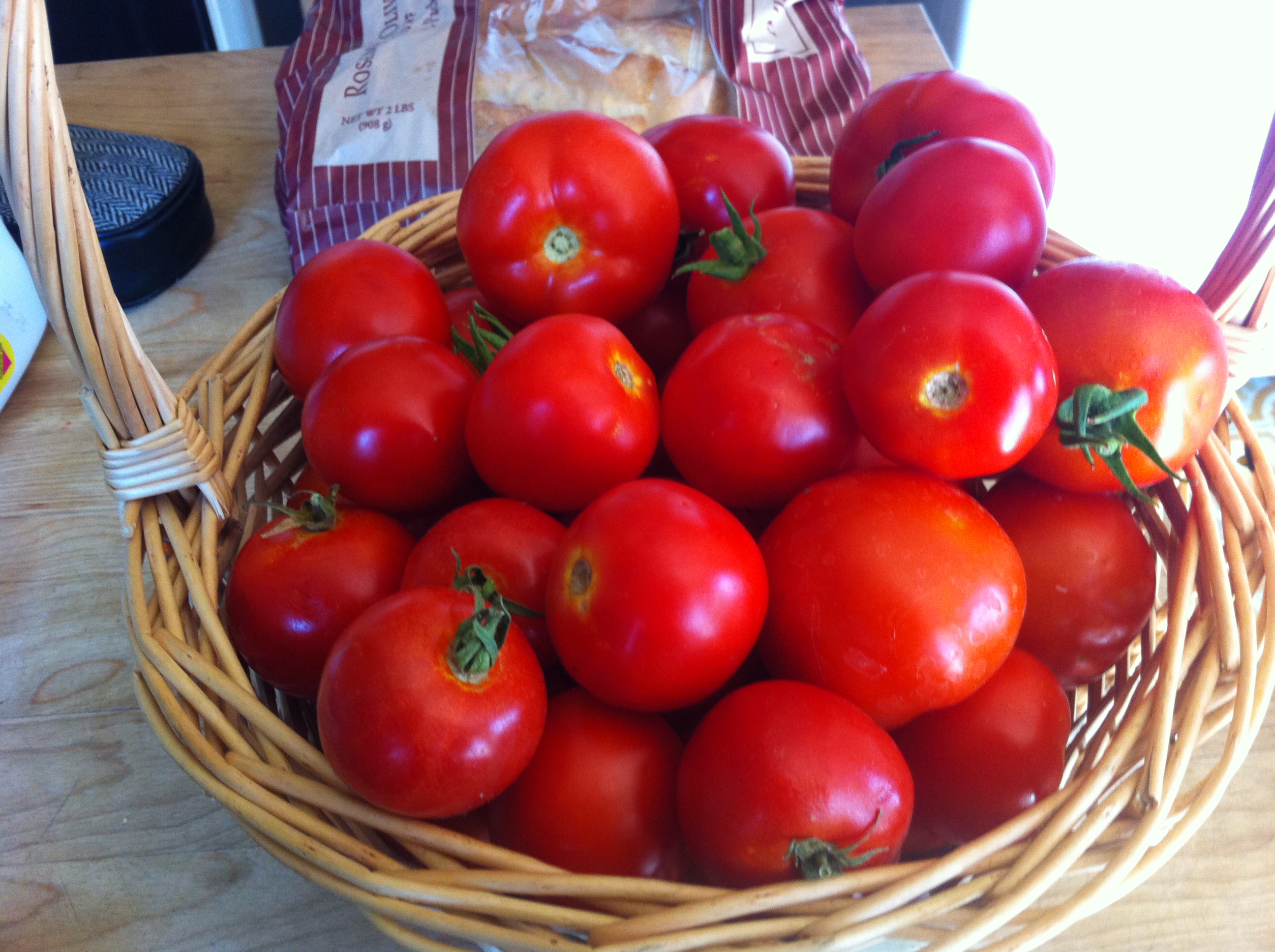
    I love tomatoes. They are a seasonal treat I grow in my garden. At the peak of the growing season we were getting 50+ per week from our garden.

    Key word: Seasonal.

    Americans have no concept of seasonal food. We want what we want 12 months per year in complete denial of natural growth cycles. In other words, if you want a tomato on your salad to start your annual New Years diet, you just go to the grocery store and get it.

    Here’s the thing: Tomatoes don’t grow naturally that time of year. There are places in the world where tomatoes grow well during a season. But in the middle of the winter your typical beaf steak tomato doesn’t grow anywhere in North America. At least not naturally.

    So why can I buy them year-round? 

    Supply and demand has a dark side. As the audio from the August 26th version of Science Friday documents, those low taste, high cost winter tomatoes you buy at the supermarket come at a very high cost.

    • About 120 chemicals are needed to make those tomatoes grow in Florida.
    • 8x’s the pesticides are needed for Florida winter tomatoes that aren’t needed for ones grown in California.
    • Many are hand picked and cultivated by modern-day slaves…. in Florida. (More than 1200 cases of such have been documented in recent years.)
    • They are picked when they are completely unripe and bright green. Then they are gased to turn them bright red, even though they aren’t ripe.
    • The reason your store bought tomatoes have no flavor is that they aren’t raised in soil, they are raised in sand. (No natural nutrients, sorry)

    What’s the point?

    If you knew that you were buying something produced by modern-day slavery in your own country, would you still buy it if it were a good deal?

    My advice? Next time you sit down to eat something or make a meal ask yourself… where did this food come from? What were the farmers who produced it paid? And was this food made under conditions that honor God?

    You might not want to know. But the reality is that there is an entire industry out there who doesn’t want you to think about where your food comes from, they just want to get rich off of your ignorance.


  • I need this. Vortext Cannon!

    I can think of at least 100 ways this is useful for ministry.

  • Humans and the pentatonic scale

    This absolutely blew my mind. Check out what Bobby can do via audience participation. Not only is this facinating showmanship, it’s fascinating science. How does everyone in the audience just know what to do?

    World Science Festival 2009: Bobby McFerrin Demonstrates the Power of the Pentatonic Scale from World Science Festival on Vimeo.

    HT to Cory

  • Dogs & Polar Bears Playing

    This video is crazy cool.

  • Planning for Entropy

    entropy exampleA key component to the second law of thermodynamics is entropy.

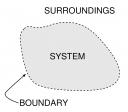
    Entropy is the scientific principle that all systems will eventually go from order to disorder. Entropy allows mathematics to explain dissipation within a system boundary. In the first law of thermodynamics, energy is never lost in a macrosystem. But in a microsystem, entropy explains why stuff breaks down. The classic example of entropy is a glass of ice water. Water, a system where water is in a mixed state of solid and liquid, is constantly system boundariesbreaking down. Entropy explains that eventually the glass of ice water will break down. The ice will melt into the water because of the heat energy outside of the glass or the liquid will freeze because of the lack of heat. But entropy will not allow the glass of ice water system to stay the same.

    In short, entropy is one of the variables that explains that stuff (a system) breaks over time. Pressure, stress, strain, temperature… all are variables. It’s why cars don’t last forever. It’s why toys eventually break. It’s why today’s superfast computer will be slow in three years. If you are a scientist designing a closed system… a car or a medicine or anything scientific you have to plan for entropy… that system will break down over time. If a scientist has no plan for entropy in his system he has failed on a professional level.

    But what about entropy in social organizations? Does social entropy exist within systems?

    (more…)