Tag: Television

  • The News Stand and the Farm Stand

    The News Stand and the Farm Stand

    I used to say that my life was really big and really small.

    It was really big because 100 days per year I lived out of a suitcase, flying around the world meeting people, promoting my business, and towards the end of that period living out my Savior Complex in a foolish attempt to reform the Christian tourism industry.

    It was really small because the other 250 days per year I lived within the square mile of Rolando, our neighborhood in San Diego where we worked, ran a small dog sitting business, kept busy with our gardens, and walked Jackson back and forth to elementary school.

    Now my life is just small. Recently, I took Jackson to Fresno to get a haircut and realized it was my first time in the megalopolis of Fresno, population 450,000, in about 4 months. Otherwise, our daily lives in Ahwahnee, population 400, ping pong between Oakhurst, population 5,945, and Mariposa, population 1,800.

    These days my life has gotten very small geographically but Super Sized in other ways. Addition of fulfillment by subtraction of meaningless work travel.

    My Stand Against News

    One aspect I love about starting up The Farm at Worman Mill is that I have no time for television. Specifically, I have no time to watch cable news.

    I still pay attention to national news here and there. I enjoy the AP News app on my phone, the BBC app provides a nice dip-of-the-toes into an international perspective. But that’s about it. I’m more attuned to what’s covered by the Mariposa Gazette than I am the LA Times.

    Largely, I’ve Tuned In to the world around me while Tuning Out to the world beyond my tiny town.1

    1. See what I did there? I just referred to a book that no one bought, Tuning In, which is now only available in my garage because no one bought it. Screw you Amazon. ↩︎

    Tuning out of the daily news cycle has provided me some clarity and a whole lot of inner peace.

    For example, the media has been reporting that Kamala Harris has raised over $1 billion in her campaign to become the first president under 70 years old since Barack Obama. Coincidentally, since that was reported, the polls have shown her lead narrowing from 4% nationally to 1.8% nationally— which is still within the margin of error for 4% but gives her campaign enough fear to spend that $1 billion on ads in swing states, that money flowing to– you guessed it– the same damned companies who do the polls showing that the race is tightening even though she is out-fundraising-and-out-campaigning her opponent 2:1.

    If you turn on the news you’re convinced by the people on television selling ads to campaigns that the world is enraptured with a Presidential campaign. We could have voted a year ago and the outcome will basically be the same. The difference? The 3 big media companies have a bottom line fueled by extracting ad money spent only if they convince a roomful of politicos to buy ads. Ads don’t swing voters. Relationships do.

    The media machine is just trolling you to get you to sit there and watch more ads.

    Let me share a little farmer secret with you. If you turn off the news your world gets much more quiet, you hear the birds chirping, the frogs frogging, and the bees buzzing.

    You begin to realize that what happens on the TV isn’t that important. That shit isn’t even real. Nothing on TV or in your news feed is nearly as important as the world right in front of you.

    And in the world right in front of you people don’t really care about the bullshit on TV that divides us. Everyone in the real world is looking for a good price on bread and a really flavorful tomato.

    It doesn’t matter who you vote for or what you think about the war in Gaza, we all want some good bread and tomatoes.

    The Farm Stand

    I spent more than a decade of my life talking about being “Good News in the Neighborhood” to impact my community when all I ever needed to do was start growing some vegetables and put a farm stand at the end of my driveway.

    The Good News jargon was never really about religion to me. It was more about being something good in my community.

    For a million reasons, this little farm startup in this little 400-person corner of this little 20,000-person corner of middle of nowhere of California, has begun to meet a utilitarian need.

    In the first year of our farm startup we grew veggies and plants and then packed them into our white pickup truck and drove them to the big city of Fresno to try to sell them.

    On the one hand I loved it. I liked meeting people and enjoyed the thrill of growing something, setting up my little tent, then enticing them to come look at the vegetables I grew. It’s fun because you’re hoping to convince a stranger to buy my tomatoes instead of the bacon-wrapped-churro-dipped-in-caramel thing the booth next door to me was selling.

    But on the other hand I didn’t enjoy the driving. And too often we spent more money going on this adventure than we made at the farmers market. Along the way it dawned on me that I was out selling vegetables more than I was growing them and that felt completely backwards for a person starting a farm.

    So in June we stopped going to farmers markets and got the farm stand. 96 square feet of freedom for less than $2000. What a deal!

    Then something magical happened. Something that made no sense. Something that made every Seth Godin trained, Google Analytics informed, marketing-guru’d blood vessel in my brain pop– people drove up the road.

    And they kept coming. Every dang day. All summer long. Now well into fall.

    We learned that people are willing happy to drive to the edge of nowhere, where we live, to buy flowers and honey and baked goods and tomatoes and microgreens and nursery starts.

    Why? I HAVE NO IDEA! But also why? Because it makes sense.

    In a world where nothing makes sense. In a world where television and social media seek to divide us. In a world where no one talks. In a world where everyone is afraid of everyone else.

    In that world, there’s a place you can go where things are simple and make sense.

    You drive up the road. You park. You pick out some eggs or veggies or cake pops. You put money in a red box. You snap a picture for the gram. And you get what you want. Or not because we’ve sold out.

    Everyone, and I mean everyone, comes to a farm stand.

    People who drive Teslas and people who drive beater pick-ups. It doesn’t matter if you’ve lived on this mountain your whole life or you’re visiting here from the UK– you see a sign on the side of the highway that says “farm stand” and you drive way-the-hell-up this little winding road to a farm stand and buy yourself some eggs.

    I used to fly 100,000 miles per year in search of something that I now find daily 200 feet from my pillow.

    It’s beautiful. It’s simple. And maybe it’s ephemeral.

    But in moment in our history, in this moment in my life, where nothing makes sense and the media is fueled by our desire to seek division, our little farm stand is there to bring us microgreens and a little bit of hope. (And a damned good heirloom tomato.)

    At least that’s what it does for me.

    And that’s good enough for me right now.

  • Fixing College Football

    Mark Cuban is admirable for trying to fix college football.

    Let’s start with this: It’s broken.

    2010 is case in point. In mid-January Oregon will play Auburn in a game labeled “the BCS championship game.” But, if TCU wins the Rose Bowl they deserve to be co-national champions, too. We’ll simply never know who is the best team in the college football in 2010.

    This isn’t the first time this has happened. It’s happened a lot in college football. And it’s always the big money conferences shutting out the Little Sisters of the Poor. (As Ohio State president & chairman of the board of the foot-in-mouth council calls them.)

    It’s about the money

    We all know it. No one believes that it is about the athletes academic calendar… as the NCAA so stupidly claims. They certainly allow a playoff in every other sport, regardless of academic issues.

    It’s about TV rights, protecting lesser bowls, visitor bureau’s, guaranteed payouts, conference affiliations, and a whole litany of people who are getting paid on the side.

    It’s not about championships

    We will never know who the football national champion is until we have a playoff. Why? We are leaving it up to computers and polls and fluke plays to determine who the champion is. Are Auburn and Oregon the best teams right now? Ask Ohio State, Michigan State, and Stanford that question.

    Imagine just putting Duke vs. Kansas every year in the finals and calling that a basketball championship? What makes March Madness so fun for the whole country is that we take the best teams and let them decide who the champion is by playing the game.

    The solution– Keep all of the bowls; have a 16 team playoff

    First, shorten the regular season to 10 games. Then have a conference championship game determine who gets the automatic bid. Allow 5 at-large bids, top 11 conferences get an automatic bid.

    That would be: ACC, Big 12, Big East, Big 10, Conference USA, MAC, Mountain West, Pac 10, SEC, Sun Belt, and WAC.

    Second, identify the top 8 bowls the week of Christmas. Play in a 2 day rotation of 4 games each day.

    That would be: Independence Bowl, Little Caesar Bowl, (formerly Motor City Bowl) Las Vegas Bowl, Gator Bowl, Champs Sports Bowl, New Orleans Bowl, New Mexico Bowl, and Holiday Bowl.

    Third, the round of 8 would be played on January 1st. The Final 4 would be played the second Saturday of January. These would be the six big games we all love. They’d be competitive and they would mean something. This would make January 1st an incredible day of college football. A rotation of the top 6 bowls would cover these.

    That would be: Sugar Bowl, Fiesta Bowl, Orange Bowl, Cotton Bowl, Rose Bowl, and Gator Bowl.

    Fourth, the championship game would be played the 3rd Saturday of January. (Or, maybe more ideally, the Saturday between the AFC/NFC Championship & Super Bowl game.) I would argue that the game should be played annually in Pasadena at the Rose Bowl. Let’s face it, the Rose Bowl is the most amazing place in college football to play a big game. It’s perfect in every way.

    Two ideas for fixing the money problem

    1. Each participating school would earn an equal share of tickets, television, and all other monies paid to the NCAA for the coverage of this, just like in basketball.
    2. The rest of the remaining teams & bowls would be invited to play in the exact same system we already have. That’s 20 bowls left untouched! A 16 team playoff only effects and enhances 15 bowl games. We all know everyone would make more money.

    This shows this isn’t just about money. It’s about pride. The SEC, Big 10, Pac 10, Big East, and Big 12 are just plain scared to play teams from other conferences. I don’t know how fans of those conferences can be proud of teams who are afraid to play anyone on any day.

  • Economy of Words

    Good communicators are aware of an economy of words.

    Whether its blogging or public speaking or preaching– you must have a constant awareness of how many words your audience is capable of processing in the amount of space/time you have.

    Too many words and people get overloaded and tune you out. (or navigate to another website) Sloppy word usage or a lack of creativity? You’ve lost them. They may be present, but their minds are gone.

    Have you ever wondered why people can recount exactly what happened during an episode of their favorite show but can’t remember the three main points of your last sermon?

    The secret? Editing.

    Television shows, movies, magazine articles and even songs are all edited to maximize your retention of the words.

    They go through a process. Someone writes it. It gets edited. It gets rehearsed. It gets edited again. Then it gets performed. (If its recorded then it gets edited one more time.)

    Let’s review:

    1. Unimportant messages, things flowing from the entertainment industry, are edited to maximize impact with an understanding that the audience can only handle so many words before they stop taking it in. (Entertainment is passive in response, by nature. But looks at it’s impact in moving people!)

    2. Important messages, let’s say… things that are taught in youth group or Sunday morning at church… are almost never edited, rehearsed, or vetted in any way. (The Gospel message is active in response, by nature. But look at it’s impact in moving people!)

    And we wonder why the message doesn’t get through?

  • How to Stop Being Boring

    Photo by Ryan Heaney via Flickr (Creative Commons)

    Most people are boring.

    Thirteen years ago, in our first apartment, Kristen and I lived on the 15th floor of a high rise apartment building. If you looked at just the right spot you could see Lake Michigan. And if you hung your head out the window you could look south down LaSalle Boulevard towards the loop or north towards Lincoln Park.

    You could also see directly across the street into your neighbors apartment. (And I’m sure they could see directly into our apartment, too.) It’s hard to describe how fascinating it was to know that 50 feet away were people living life– just like you. All you had to do was look outside and you could see into the apartment windows of hundreds of neighbors.

    It was like a human safari right outside your window.

    Let me say this. We weren’t perverts who spent all night staring out the window. But it was just one of those things, you’d get up to go to the kitchen, walk by the window, and something would catch your eye…. so you’d stop and stare for a minute without even thinking about it. A light would turn on or something would move just enough to catch your attention. So you stopped and looked until you realized how creepy you must look to other people looking out their window at you.

    At first we were curious that we’d see ultra-interesting things. Like crazy parties or people having sex on balconies. All our lives we’d been told that people were freaky in their private lives and here were hundreds of people’s private residences completely open for us to look at if we wanted to.

    A couple weeks of living there we both came to the same conclusion: People are pretty boring.

    There were times each week where something would capture your attention. But pretty quickly you’d realize that it was just a light turning on or something like that and your curiosity would lessen.

    In the year that we lived there were only 3 things that were worth looking out the window for:

    1. To show visitors the view. We’d point and say, “Yup, there’s Lake Michigan. Cool, huh?”
    2. Car accidents. I vividly remember the sound of crunching vehicles in the middle of the night.
    3. The Chicago Marathon. It was really cool to look out our window and see people filling the street all the way down LaSalle Blvd.

    Other than that– it was people watching television.

    On any given night you could look out the window and see the same thing. Half the windows were dark. (Meaning people weren’t home or were sleeping.) 25% of the windows were mostly dark with the flickering glow of a television. 25% of the windows had lights on, but with people watching television on the couch.

    Kristen and I concluded– most people’s lives are as boring as our own.

    One of my favorite bloggers, Mark Cuban, wrote about this the other day.

    TV is the best cure for boredom.  That is what makes TV so popular.

    TV is the path of least resistance alternative to doing nothing. When you do nothing. Time passes too slowly. When you are doing something, even something that barely requires consciousness, like watching TV, there is the chance that time will go by more quickly. We look for the path of least resistance to passing time whenever we are bored. All it takes is a click of the tv remote. The boredom ends and there is even the chance that we will be entertained and really like what we are watching. So there is also significant upside to watching TV. So we watch a *&$#load of TV .

    I bump into this phenomenon in a few different ways related to my blog. I love meeting blog readers… especially when someone tells me for the first time that they follow. Typically, people want to know when I have the time to write so much. (I don’t watch much TV.) People tell me that I do really interesting things. (Maybe, but maybe I just write about things that are interesting and 90% of my life is pretty boring?) People ask me where I get all of my ideas. (I’ve written about that before. It’s not that I have more ideas than anyone else. It’s that I’m disciplined to write them down for later.)

    I don’t think its that my life is especially interesting. But I’ve come to my own simple conclusion: My life is boring by default.

    So I make a conscious choice to not be boring.

    How to Stop Being Boring

    1. Put down the remote.
    2. Do something. Anything.
    3. Put aside any excuse you can think of. (“But I don’t have money to do something interesting!”)
    4. Understand this axiom: There is nothing more fascinating than doing something interesting with nothing. Isn’t that what reality TV is? Think about the things you find interesting enough to watch on television and at their core they are typically things you could do for free.
    5. BONUS: You can stop being boring by doing nearly anything. But it’d be awesome if you fought boredom by doing good.
  • Little Guitar Hero

    Two thoughts.

    • It doesn’t surprise me that much that North Korea has television. But someone actually got something up on YouTube? That’s a miracle.
    • Maybe I’m just mean-spirited. But makes me think Michael Jackson would have asked this kid to visit the ranch.
  • Google TV: Who is it good for?

    Hmm… bringing all the video you can find on Google, which isn’t already on Hulu or YouTube or Netflix? Sounds like Google TV was made for the porn industry.

    Dear Lord, let this thing come with a very strong filter for the sake of our children. (And college students)

    What am I missing? What’s worth watching that isn’t already able to be streamed to my TV via a device?

  • The Man Who Punk’d the World


    It’s becoming increasingly clear that this family punk’d the world.
    In fact, it looks as if the man who scripted the whole incident, less the involvement of the child, sold his story to Gawker.

    What isn’t clear is why they tried to play it this way. OK, so you pulled a fast one with the world’s media? Awesome! Why not use the spotlight to look into the camera and say to Wolf Blitzer, “You just got punked!

    Sure, he’d be opening himself up to a big bill from the agencies who wasted taxpayer money playing pawn-like roles in his publicity stunt.
    But, if he got the last laugh on CNN and then told Wolf that he had a place where people could chip-in to cover his impending legal problems– all of this would have been funny, he would have collected a million dollars, and the Heene family would have pulled something off which would have made Ashton Kutcher blush.

    In that moment Richard Heene’s held choice in his hands which would change his family forever. Would he tell the truth and become a legendary prankster? Or would he lie and become a legendary mook?

    Richard Heene chose to try to keep the hoax a secret. Even after 6 year old Falcon Heene spilled the beans on live TV. And now the family looks horrible. And now the parents may get arrested. And now the fame they so eagerly wanted will be replaced by visits by the Child Protective Services.

    The hoax had the potential to live out an example of Seth Godin’s blog post from the same day. Instead, we’re stuck with this sad story of 3 little kids who may now see their family encounter hard times.

    I just wish Richard Heene had chosen the other option.
    Now that would have been captivating television. “Wolf, the truth is that you… and the whole world… just got punked!

  • Alone in the Wild

    wide shot ed walking

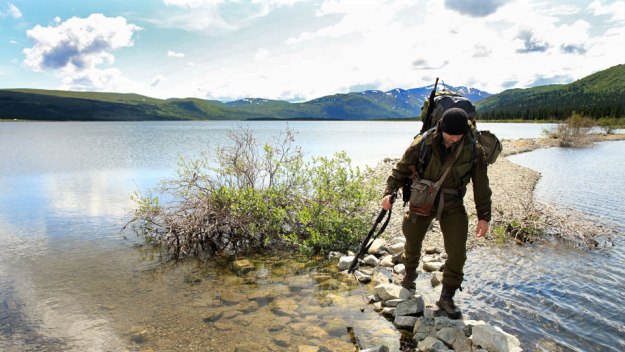
    Last night I watched a fascinating documentary on the National Geographic Channel called, “Alone in the Wild.

    It was difficult to watch. Here was this outdoorsmen named Ed Wardle. He wanted to test himself to see… can I live completely independent of others and survive in the Yukon wilderness? He intended to make it 90 days. He made it 50. And the last few weeks weren’t pretty. As time wore on, as hunger set in, as the reality that he could contact people but was choosing not to set in, the pain set in. It was agonizing TV. He cried a lot. He dealt with a lot of emotional pain. And of course he documented his unraveling. With the pressure of shooting a film on his mind all the time and the reality that he was lonely– he was paralyzed. He was in the wild, all by himself trying to prove that he could do it on his own, and he realized he needed people. He could technically do it but he chose to give up.

    Deep exhale on that. He needed people. He had the skills to do it on his own. But we just aren’t wired that way. We’re hardwired to need one another.

    And so he quit. He couldn’t do it. Check out what he said:

    The isolation was the most difficult element of this adventure. With no contact I immediately began to lose direction and reason. Without food I lost concentration and the ability to think straight. I worked hard from week one to keep myself motivated and keep going and by the end I was spending hours every day just convincing myself to carry on one day at a time. When I was travelling or doing something physically hard I had a military voice superimposed on my thoughts keeping me going and getting me organised, other times I had a female voice that would tell me to be sensible, breathe and take it easy on myself. They helped and I could feel them getting stronger and more necessary as time went on. link

    I doubt Kristen would remember saying this to me but when we were dating in college she wrote in a letter, “I love you because you don’t need anyone but you chose to let me into your world. True– I was raised to be independent. One of my parents goals in raising my brother and I was that we’d be able to take care of ourselves. (I don’t think they ever meant this emotionally, but physically we knew how to take care of ourselves with food, laundry, cleaning up, and stuff like that pretty young!)  When things got rough in high school and college I took that desire to be independent to an extreme. In my dysfunction I translated “you can do it on your own” to “I will do life with no ones help, I will muscle through anything, I don’t need to depend on anyone.

    Kristen was right. Back then, I didn’t need or want anyone in my life. It was amazingly fulfilling to find my own way, take care of myself, and go from absolutely nothing to paying my way through college. But it was also dysfunctional. And it took someone I loved calling that spade a spade to motivate me to change.

    This is where Kristen has completed me in a powerful way, though. She reminds me, in words and deeds,  that we need others in our lives. We need good friends. We need the wisdom of our peers. We need to be open in these relationships. She has taught me that while we don’t “need” others to survive… life is infinitely better with people than without.

    Doggone it if she wasn’t right, too. Life is way better surviving in the wild with friends.

  • Comedy and the Human Condition

    Last night I was watching a PBS piece of the history of comedy on television in our country. While the documentary itself wasn’t all that interesting or funny there was a cultural parallel there which caught my attention.

    In times of peace, comedy is introspective and makes fun of the human condition. In times of war, comedy is external to the self and makes fun of politicians and the enemy.

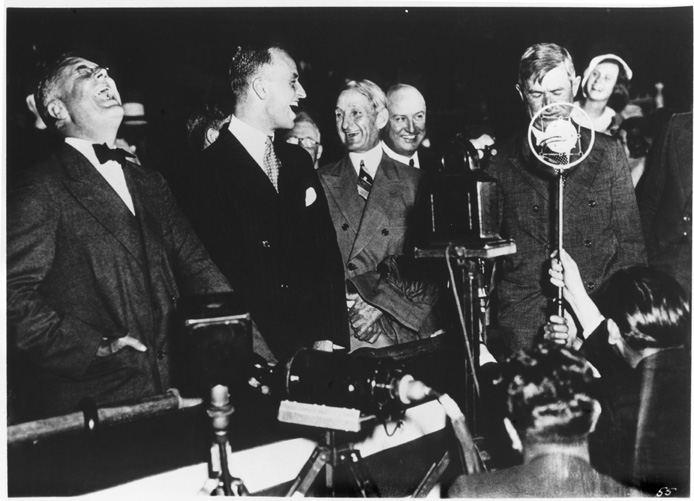
    This explains why the video I posted yesterday isn’t as funny today for its content as it was 15 years ago. The piece pointed to Will Rogers as being hilarious in the 1920s-1930s [Seen above mocking FDR to his face!] but immediately falling out of “funny” when Pearl Harbor was attacked. Likewise, Jon Stewart and Stephen Colbert would seem out-of-place if we were not at war in the Middle East.

    But I wonder how much that the condition or war and peace effects how we think of ourselves? I wonder if times of peace make us introspective while times of war make us look at external things to ourselves?

    As the culture gets more individualistic I wonder if we can take it a step further. (This is where it gets purely hypothetical) I wonder if what’s funny to you or I is dependent upon war or peace in our own lives?

    If I’m depressed, is my sense of humor darker?

    If I’m generally happy, is my sense of humor jovial?

    I’m probably reading way too much into this. But it does have me thinking about what is funny to whom and when.

  • Open Letter to the NCAA

    Dear NCAA,

    Congratulations on another year of controversy! Congrats to Tim Tebow and the Florida Gators. They are the BCS Champions but not the National Champions. This year we clearly don’t have a National Champion because your system is broken.

    Congrats to USC. Congrats to Texas. Congrats to Utah. Congrats to Florida.

    Each legitimately claim they are National Champions this year! That’s right, with 5 BCS games, 4 of them ended with a team legitimately and openly claiming they should be the National Champion. (The fifth game played by Cincinnati and Virginia Tech didn’t deserve to be a BCS game. The Holiday Bowl was really the fifth BCS game. Did you watch it? It was a great game! How did the Orange Bowl go? I didn’t hear anything about it. Was it on TV?)

    And yet the BCS claims this is somehow fair? Just because the bowls make bucketloads of money doesn’t make them right! It’s time you, the NCAA, kicked the BCS to the curb.

    We all know that in every other NCAA Division IA sport there is a playoff. And we also know that in every other division in college football there is a playoff which ends with a national champion. It’s time the players of Division IA determined who the champion will be on the field instead of in a vote.

    Here’s are two simple solutions:

    Option A: After Thanksgiving weekend take the top 16 teams based on the AP/Coaches polls and put them in a simple bracket based purely on their rankings. #1 plays #16 and so on. With 4 rounds the best team may not win, but the hottest team will. Since win did the #1 team in the AP/Coaches poll win the Division IA basketball championship?

    Option B: Set up a system where each of the top 11 conference champions get an automatic bid to the playoff. Then have a committee chose 5 at-large teams and place them in a 16 team bracket. Just to clarify, that’s the Big 10, Big East, Big 12, ACC, Conference USA, Mountain West, MAC, Pac 10, SEC, Sun Belt, and WAC. Yes, that means that teams like Notre Dame don’t get an automatic bid. Tell the Irish to get over the 1960s slight and join the Big 10. How will those conferences determine who is their champion? It seems like most of them are smart enough to figure that out. Playoff. Conference Champion. Rock, paper, scissors, who cares? They pick their best team and you take that.

    What about the money? In case you didn’t know… March Madness makes a bucketload of money for everyone involved. Just share it. Champion gets 4 shares. 2nd place 3 shares. Final 4 teams get 2. Everyone else gets 1 share. How is that not fair?

    For the bowl games not included in the playoff allow them to pick teams like they do now and have exhibitions. Their fans will still come. They will still be on TV.You know that line of arguement is

    What about the big bowls? Do what you do now! Pick 8 bowls to be the Saturday of Christmas. In case you haven’t noticed all of the non-football fans will go to the mall and all of the football fans will stay home and watch TV. You’ve got 4 BCS games on New Years so that’s covered. Then the Championship game could be the weekend between the NFC/AFC Championship and the Super Bowl. I don’t know about a lot of other football fans, but I’m willing to move New Year’s day to line those final 4 games up with the NFL’s schedule. Do we have to talk to Congress about that? Let me know… I know some people over there. President Obama emails me all the time.

    It’s about the money! Fair enough… trust me… give us a playoff and it’ll be just as big as March Madness. Rabid fans really will go to 3 bowl games! Ask the guys in Vegas to kick in a few bucks.

    Who gets the championship? This is where the fairness ends. Make the championship game the Rose Bowl every year. It really is the grand daddy of them all. The Rose Bowl is beautiful… make it there every year. Tell the Big 10 and Pac 10 to earn their way in and get over it.

    Thanks for your consideration. Get to work on that and let me know.

    God Bless America and God Bless the NCAA,

    Adam McLane