
Month: August 2009

  • An idea for your church

    church-baby

    Looking for something new, fresh, and hot? How about doing something practical, instead? How about changing lives forever?

    This is worth looking into:

    METRO ATLANTA, Ga. — Last weekend an Atlanta pastor made a promise that stunned his congregation and most of the people who heard it.

    In a speech that discussed abortion, the President, and the sanctity of life, the most provocative statement from Pastor Vic Pentz of Peachtree Presbyterian Church came towards sermon’s end:

    “I make a promise to you now and I don’t want you to keep this a secret,” the pastor pronounced, “the Peachtree Presbyterian Church will care for any newborn baby you bring to this church.

    “We will be the family to find a home for that child, and there’s no limit on this. You can tell your friends, you can tell your family, you can tell the whole world …”

    Reflected Pentz a week later, “I seem to have touched a nerve by saying that to the congregation.”

    Honestly, this is what the church has always done. This is what the church in many parts of the world does today. Wouldn’t it be amazing if your church issued the same challenge?

    HT to Church Marketing Sucks

  • Podcasts for Preachers

    podcasts-for-preachers

    Since April, I’ve been a regular commuter using San Diego’s excellent public transit system. Essentially, it takes me an hour to get to work and I use this as me time. While walking, riding my bike, standing on the platform, or riding the trolley I am typically listening to music or podcasts.

    My weekly repertoire includes exactly zero “Christian” podcasts. (Unless you count my own!) What I’ve found that I enjoy listening to most are shows that tell stories really, really well. The other day it hit me that some of the shows I listen to every week would actually be excellent to listen to for those who craft messages each week.

    So, here’s my list of shows I’d recommend preachers listen to in order to sharpen their delivery: (add you own in the comments)

    1. This American Life. I’ve joked around in saying that Ira Glass is the best preacher in America. Clearly, Ira is not a pastor– he’s Jewish. But TAL regularly tells the best stories out there. The pace, the clarity, the way that the commentators often get out of the way and allow the subject to speak. If you are serious about crafting an oral story… you need to list to this show.

    2. 60 Minutes: Listen to the audio version of this show. (Available on iTunes) This show is always good on TV, but there is something about listening to it as audio only that makes it better. I love the manner in which they track a story. Almost every story uses the same pattern but it never gets old. Also, I love how they tease the stories up front to keep the listening intruiged. The worst part of the show is Andy Rooney. But just hear him as the old man who grabs your hand every week and annoys you.

    3. The Moth: I love this show for two reasons. First, it’s first person stories. Second, it’s a single story per episode. These are stories told live on their mainstage in LA or New York. If you like to integrate testimony into your messages, this will help you.

    4. This I Believe: More stories told in the first person. This concept has been around for decades and has captured the core beliefs about famous people, everyday people, and people in-between for that entire time. Essentially, people write an essay about something they believe to be true and then perform it in their own voice.

    5. TEDtalks: If you had 18 minutes to present your life’s work, what would you say? This is the premise of TED.  This is like the Willow Creek Leadership Conference for everyone else. Each week you’ll see a well-known person make the presentation of their life.

    What would you add to this list?

    I think evangelicals are just coming back to the concept of story. For whatever reason we’ve gotten into a habit that preaching ought to be a lecture instead of a story. But with our cultures fascination of story, many leaders are seeing that in order to preach into people’s lives they have to be a better storyteller.

  • The Dark Side of Attractional Ministry

    dark-side-attractional-ministry

    The dark side of attractional ministry is that it’s a short term strategy.

    True confession–

    I was a perveyor of an attractional ministry model. It never permeated any youth group that I’ve been a part of, but the structure of our last ministry was– at it’s very core– an attractional model within our two biggest demographics. (Children and adults 40+) Time and time again here on the blog I’ve made generalizations about attractional ministry, not just as an outside observer, but as someone who has participated and performed within the model. I critique because I know!

    Three quick reasons attractional ministry doesn’t work:

    1. A life with Christ isn’t entertaining. At the end of the day, a day-to-day walk with Jesus isn’t filled with flash pots, set design, video screens, and compelling skits, and crafted messages for the heart. So the premise itself presents a well-intentioned lie about Jesus.

    2. When the lights go out, people feel empty. Whether its an amazing kids program or a great event for adults. The reality is that people leave feeling empty and longing for more. Just like 2 hours of television doesn’t fill the soul quite like an intense conversation with a good friend, an amazing night of Jesus-y entertainment just leaves you tired and empty. The attractional model had the same effect as a visit to a casino. A huge build up and a huge let-down. (With free drinks along the way.)

    3. It’s unsustainable. This goes in a few directions. It isn’t sustainable in that a single church cannot entertain all the demographics/age groups you will attract. Also, it isn’t sustainable among volunteer and paid staff. (People don’t volunteer to entertain, they volunteer to minister) Lastly, it isn’t sustainable as it doesn’t prepare people to leave your church and fulfill the Great Commision.

    You can’t sustain it as a church

    When we first began our attractional ministry to children it seemed so innocent. The idea was if we could make the kids program awesome, kids wouldn’t want to miss church. We’d target kids knowing that parents would follow and support something that was great for their kids. It wasn’t about attracting money, it was about attracting families. Our hearts were in the right place as less than 5% of our communities families were part of a church. It wasn’t a false Gospel, it wasn’t evil or about self, it was just a short-term strategy that worked very well at first.

    The dark side of that is that entertaining people is an ever-hungrier dragon. Our initial efforts were simple and fun. But expectations quickly swelled. It didn’t take long for us to rethink our plan… we needed bigger casts, more production money, more planning, and if we just upped our game a little bit we could attract more people. When we got to the next level, people were excited and wanted more. Within a very short time people were expecting an experience we couldn’t create. They’d watch television or go on vacation and their expectations increased as they wanted those experiences with a Jesus-twist. More money, more people, more production… this is not a model for sustainability. I don’t care if your congregation is 200 or 20,000. You simply cannot compete in a sustainable fashion with the entertainment industry.

    Your leadership can’t sustain it

    The same truism played out among the leadership. The folly of turning one area of the church into mini-Disney quickly caused unintended consequences. Within a few months I went from ministering to the hearts of people to the host of a three ring circus. I had a hard time getting into spiritual conversations. It always came around to “I loved what you guys did, what’s happening next?” It was such a time-sucker that in all reality… I was the host of a three ring circus who did the bare minimum relationally to be called a minister. The community recognition was useful, the day-to-day reality wasn’t useful.

    Among the leaders, people turned on one another when one attractional ministry got more attention or funding than another. Remember that dragon? He always needs to be fed and as he grows he gets hungrier and more demanding. And a church only has so much talent that is functional for entertainment. As expectations for better entertainment attracted new and more people– competition for resources began. Feelings were hurt. Rank pulled. Volunteers stolen. Guilt laid. Moral shrank. Frustration set in. We all wondered in our silence, “How can we spend the same amount of time and money and get a bigger and better product?” We had fed a dragon that now spit fire.

    That’s right… the church staff began thinking of worship services, kids ministries, and adult outreach as product to be perfected and sold to an audience. Before we could figure out what was happening, it all turned into one tragic game a bigger or better. The problem this model was created to solve really just made the original problem ten times worse.

    The whole time I knew we couldn’t sustain it forever. There wasn’t more money. There weren’t more people. The questions went from “what are we looking to do in the next 3-5 years?” To “what are we trying to do this year?” To “what are we doing this quarter?” To “what are we doing this month?” To “what are we doing this week?” In desperation you just get into a survival mode of… how can we get through this week? No one entered into this foreseeing this problem. But that’s how dragons go, I guess.

    Ever increasing expectations + lack of resources + staff frustrations = burnout. I wasn’t alone in feeling burnt out. All of our staff and volunteers felt it. But none of us would admit to it because we were all too busy feeding the dragon. He wanted more.

    You can’t sustain it as a model for walking with Jesus

    The model itself sounds so Christ-like when you start. We justified, “Hey, this is exactly what Jesus did. He drew a crowd, then invited them in to a relationship.” But our theology was short sighted. We forgot John 6, didn’t we? When Jesus confronts those following him with the reality that following him was going to mean they’d have to carry His burden and that in order to follow Him lont-term they’d have to eat his flesh and drink his blood… John writes... “From this time many disciples turned back and no longer followed him.

    Within a year, the most dedicated volunteers were still following us but the majority had pulled a John 6:66 and gone home. Who could blame them? The leaders were defeated, but still had people coming– expecting to be entertained. Pride set in as we doubled down to say, our plan MUST WORK! We couldn’t admit our mistake or tell those people that ultimately our vision failed. We knew a walk with Jesus wassn’t about fun skits, silly songs, games, and great music. Ultimately, our attractional-style of ministry worked in one way and had devastating effects in another. All the staff hated what we had created. All of the staff lied to themselves that it was worth it. All of the staff openly questioned themselves, “Is this what ministry is all about?

    A life with Jesus isn’t about making it from one event to the next. It isn’t about getting inspired by an event. Teaching people that by depending on entertainment to draw people is ultimately not the Gospel. It looks like Jesus. It smells like Jesus. But its just a shadow of the real thing. Luke documented this phenomenon in Acts 8.

    Now for some time a man named Simon had practiced sorcery in the city and amazed all the people of Samaria. He boasted that he was someone great, and all the people, both high and low, gave him their attention and exclaimed, “This man is the divine power known as the Great Power.” They followed him because he had amazed them for a long time with his magic. But when they believed Philip as he preached the good news of the kingdom of God and the name of Jesus Christ, they were baptized, both men and women. Simon himself believed and was baptized. And he followed Philip everywhere, astonished by the great signs and miracles he saw.

    I share this story as a warning to my friends in ministry— tough times make us all look for easy solutions. It’s Fall. A lot of churches are in the same position we were in when we started our attractional ministry. They have vision, they have unreached people, but right now money is tight and you think… “If we could only attract 20 more families, we’d be OK. We wouldn’t have to lay off staff.” That’s right where we were when we brought the dragon into our church.

    That dragon may be cute and cudely today– but trust me, it will breathe fire soon enough. He will eat you up, spit you out, and leave you quoting Ecclesiastes.


  • Pointing towards Captain Obvious

    I love this video for two reasons. First, the guy teaches a skill that I didn’t know but would have saved me a lot of time and frustration. How many times have I laid out a 100 foot extension cord and spent 20 minutes untangling it? Second, I love how this guy almost talks down to the audience. You can imagine what’s going on in his head, “You idiots don’t know how to do this?

    Intuitive is not Intuitive to Everyone
    Yesterday, I went on a bike ride with Megan. She’s a little late coming to the bike riding club, but she took of the training wheels yesterday and just got it. As she zoomed around the park I rode behind her sharing some encouragement and advice. To her it seemed counter-intuitive that by riding faster she was able to go straight easier. I tried my hardest to not talk down to her because I know she’s like me… she’d rather figure it out on her own than have me telling her.

    It’s really the same for any new skill. There is a master teacher, who does it more by intuition than being aware of each step. And there is the learner who has to wrestle his mind and body through the steps. You get through it once, it’s usually slow and tough, and it gets a little easier until you master it.

    Chances are that you’ve mastered a skill that you just do intuitively and that there are others who marvel at it. The trick is, getting intuitive at handing over those skills.

  • The Youth Pastors House

    3836277637_a71864988e

    Yesterday, I was riding my bike to the trolley when I spotted this beauty. While the saran wrapping of the cars is very well done, the TP job leaves a lot to be desired.

    My first thought? Hey, I wonder what church this person works at?

    Of all the church staff, the one thing that youth workers get right more often than anyone else… good  ministry happens in the home. I’d take that a step further to say, the best ministry happens in the home. It doesn’t have to be your house. But the best stuff typically happens in a house.

  • Youth Ministry Today

    ymtodaySome months ago I chatted with Tim Baker about utilizing some of my posts from this blog over at Youth Ministry Today. I was happy to see the first one pop up today. I love what they’re doing over there, and if they can take stuff that I write here and make it useful for others… awesome.

    Check it out here.

    One of the things I deeply appreciate amongst various youth ministry organizations is that there may be a perception of competition, but in actuality we all know we’re in the same business. My goal in working in youth ministry is simply to encourage others to keep going. Anyway, it’s fun and I’m interested to see what they will pick to publish next!

  • When the lowest common denominator matters

    number-oneI often live in a lofty world of ideals, philosophy, whimsy, and sweeping generalizations. Phrases like “vision drives decision” and “you need to find a place where your dreams, skills, and income converge” all sound well and good. People like those phrases. They share them on Facebook and Twitter. They quote them in blogs posts. They fit nicely into talk outlines. They send me emails letting me know how meaningful that was in their situation. But there are definitely times when the lowest common denominator matters.

    – When your ministry is out of money…

    – When the boss is deciding the budget…

    – When no one shows up…

    – When moral is at an all-time low…

    – When you’ve just been laid off…

    – When your start-up is almost bankrupt…

    – When your child gets sick…

    – When war breaks out in your backyard…

    What’s interesting about a recession, about crisis, about personal turmoil– is that you learn that at the end of the day that the lowest common denominator is more important than ideals, vision, and philosophy. You could have a great vision for your church. But, without cash that vision is just a dream, that philosophy is just an academic exercise, and your ideals are just snotty.

    A person swears up and down that they are a pacifist. But when war rages in their neighborhood and takes the life of a loved one, they will fight. People will say that numbers don’t matter in youth ministry. But when no one comes to their retreat, the boss is looking to cut their budget, and the board is looking to fire them… they will quote numbers like a Baptist after and altar call.

    A person will say, “I’d never work do that kind of work.” But, if you get hungry enough you will.

    When crisis hits people get tribal. They protect what is most core to them. And they lash out to defend. They make decisions that seem out of character. That’s when lowest common denominator becomes all that really matters.

  • What’s Next for Tiger Woods

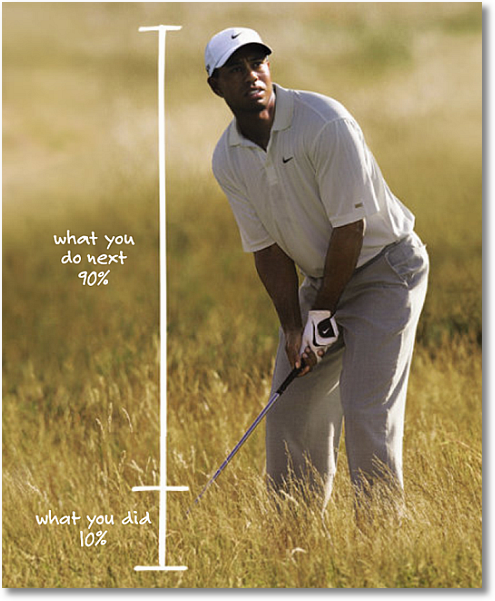
    tiger-woods-focus-on-what-to-do-next-accenture

    The inevitable happened on Sunday. Tiger is officially over-the-hill. The once invincible has been defeated by the South Korean. There’s a new sheriff in town and Tiger Woods needs a job.

    So, when Tiger runs out of money I have a few jobs I think Tiger might be good at in his later years.

    1. A caddy: He’s pretty good at reading greens. And he seems to have a decent sense of humor. And with 14 majors under his belt I think he’d be pretty good on the bag for one of the younger guys on tour.

    2. A repo man: You know, Mr. Woods is a bit mouthy. And if he swings a baseball bat half as well as he swings a golf club I think he may be able to be pretty good at the repo biz.

    3. A real estate agent: Tiger is a heck of a sales person. I mean, he helped convince tons of rich people to buy ocean front property in the deserts of Dubai. Something tells me he could sell a condo to couples looking to retire in Boca.

    4. A golf pro: Tiger has gotten more lessons and practice time than anyone else in human history. He’s probably be good teaching people how to play the game of his youth.

    5. A politician: One of Tiger’s most endearing qualities has always been that in the face of victory he reminds those he defeated that it could have been worse. This is useful for a U.S. Senator or governor. I think he’d be good at getting nothing done at the cost of tax payer money.

    So, with condolences to Tiger for a great career. I hope these 5 ideas give him some hope that it’s going to be OK.

    Alright, everyone back to talk about how Tiger can break out of this slump.

  • The wedding celebration

    Looks just like them!
    Yesterday, I was happy to perform a wedding ceremony for some new friends. It was a perfect day. Everyone smiled from ear to ear.  I said the couple’s last name correctly after practicing it hundreds of times. Independently, all of the “staff” hired for the wedding said the same thing to me, “I love working with couples like them, their #1 goal is that they want to be married.” It was a complete pleasure to be a part of the day, everything went off without a hitch.

    Well, one slightly embarrassing moment for me that no one really noticed. The audio guy for the golf course handed me this cheap little wireless microphone and told me to stick it on my tie. When I took it to the bathroom to properly hide the wiring I could tell it was going to be a problem. (Really, why does a place that invests $500,000 in their wedding business buy a $300 microphone?) Then, when I did a quick sound check with him he told me that the trick was that I needed to turn the mic’s power on right when the bride comes down the aisle since it pops and has feedback on mute mode. Cute. I’m worried about pronouncing their last name correctly and now I have this to worry about? So, while everyone turns to look at the bride in her big moment, the fat pastor starts fishing for the power button and in the process the mic pops out of its cheap clip and dangles down to my groin. I quickly fish it back up and stick it back into the clip right as she gets to the front. No one notices, all eyes on the bride. Awesome. Well, 30 seconds into the ceremony I make a gesture to the groom to go retrieve his bride from his father-in law and the mic comes out of the clip again and plops on my open Bible. Thud. Thankfully, I’ve done enough stuff to just adjust my voice and project a tad and move on. It was one of those little things that happens that isn’t a big deal but you can make a little scene about if you keep fiddling with it. We moved past it, no one ever noticed, and I got to share a laugh with the audio guy… it’s all good. (If that’s the worst thing that happened it was an awesome wedding!)

    Back to more serious stuff.

    Here’s my new revelation about marriage that I weaved into the fabric of the ceremony. It’s not a private act between a man and a woman, it’s a public act of community recognition of a private decision. The couple has rights and responsibilities, in taking a public vow they affirm certain things about what will happen in the privacy of their home. And the witnesses who participate in the ceremony have rights and responsibilities to the couple as they act on behalf of the community at-large. If you buy into the idea that God institutes who lives where and that the Gospel breathes life to spiritually dead places, this makes sense as we all join together in community under common laws, practices, mores, and other social rules… then this makes total sense.

    To affirm this relationship between the witnesses and the couple I added this paragraph into the closing of the ceremony:

    It’s our responsibility, as witnesses to this marriage, to do two things. First, I ask that you join me in loving and supporting this couple as they join together as husband and wife. Second, you have a responsibility to celebrate with this couple today! Please join us for the party and join them in making today a wonderful celebration of their new life together.

    What do you think? Is this better off stated or implied as part of a wedding? Is it implied by witnessing, participating in the celebration, and giving gifts to the couple that you are publicly affirming their private decision and contract? Or am I just making too much of this?