• Death by information

    We have objectified the accumulation of facts and ideas. Likewise, we have marginalized the importance of applying learning to our everyday lives.

    Like any objectification, this endless accumulation of information is deeply rooted in a perversion.

    Dozens of times per week people suggest books I ought to read or movies I need to see or hour-long sermons I need to hear. And I think… when am I supposed to do all of this reading or watching? And what am I supposed to do with all of that?

    And let’s say I read that book or watch that movie or listen to that sermon? Doesn’t James say that if I learn something and don’t do anything with it… I’m a fool?

    Readers are lifelong learners.” I’ve heard that my entire life. If we are talking about educational material or books that you’ll actually apply to your life right now, I can give you a nod there. 100% agreed.

    But reading for the sake of reading is just entertainment. It’s of the same value as watching TMZ or playing video games or something else you do to relax alone. It’s just that reading books carries a stigma of being “smart” while playing 6 hours of Madden 2012 carries a stigma of wasting time.

    But acquiring information for the sake of acquiring information without any intent to do something with it? I just don’t think that’s healthy.

    Want to know what’s really important? Doing something. Want to know what will really change you? Get involved in something local. Want to be an expert on something? Give up the learner posture for a posture of try-er. Want to honor your pastor? Don’t just take notes– do something. Want to make the most of all that money you spent on college? Give up the acquisition of information and lean into the application of what  you know.
  • Revolve: Camera Dolly on Kickstarter

    I love Kickstarter projects. And I especially dig the design stuff which brings great products to the market.

    Why did I back this project? Well, I love video and want to take my skills to the next level. Plus, I’ve got some big trips planned for the next 12-18 months and I want to have right-sized gear to capture it all.

    As someone who fancies himself a bit of an entrepreneur, I love the practical support and networking backing a project provides.

    If you do video or know someone who does check out this project. This guy is right up the road in Orange County. I might just have to pick up my new dolly in person!

  • Do Do Do… Why Do I Do What I Do?

    We know that the law is spiritual; but I am unspiritual, sold as a slave to sin. I do not understand what I do. For what I want to do I do not do, but what I hate I do. And if I do what I do not want to do, I agree that the law is good. As it is, it is no longer I myself who do it, but it is sin living in me. For I know that good itself does not dwell in me, that is, in my sinful nature. For I have the desire to do what is good, but I cannot carry it out. For I do not do the good I want to do, but the evil I do not want to do—this I keep on doing. Now if I do what I do not want to do, it is no longer I who do it, but it is sin living in me that does it.

    Romans 7:14-20

    Saturday? How did you get here again? I did great on Monday and Tuesday, went to bed with most of my todo list under control Tuesday night and I wake up and it’s Saturday again? 

    Paul captures my week so well. Though, I can’t say my issue was a particular sin. More like, a whole lot of good stuff got in the way of what I needed to do this week.

    And so it’s Saturday. Here we go again. Next weeks tasks are looming over my head while last weeks tasks remain mostly undone.

    Deadlines. Expectations. Obligations. Hopes. Friendships. Promises. Emails. Reminders. Push notifications. Ra-ah!  

    I know what I wanted to do last week and I know what I needed to do. But I did what I did and not what I needed to do and now I’m stuck needing to do what I don’t want to do, work through the weekend to catch-up.

    But when I do that– who pays the price? Not the ones who deserve to pay that price. (My family.) So I don’t do it and I’ll just deal with being behind on Monday.

    Welcome to my world.

    Can you feel me? 

  • Is anybody out there?

    Yesterday Walt Mueller posted this video on his blog, it’s a lot to chew on. I hadn’t seen it but I’m glad I have. As youth workers, it’s both heart-breaking and knowledge we share that too many teenagers feel this way.

    My reflections

    • It looked like a mature town… so lots and lots of churches. The church wasn’t part of the question of the video nor the answer.
    • What would be Good News to the characters in the video?
    • What if students in my neighborhood saw me as someone who could help in that situation?

    What are your thoughts? 

  • The Deep End of the Pool

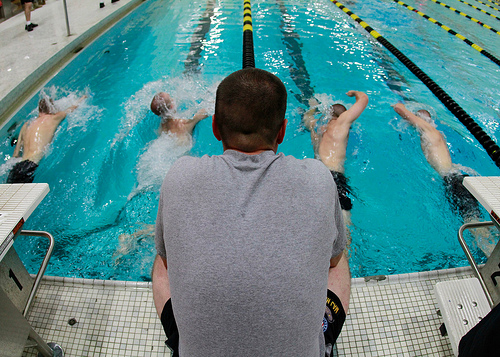
    Universally, the first day of summer camp includes a swim test. For the safety of everyone the adults needs to know who can swim and who can’t.

    Those who can swim can go into the deep end while those who can’t need to learn.

    We need to teach our students to swim

    As Jon and I began working on the Good News in the Neighborhood curriculum we agreed on a driving principle: Our curriculum cannot be prescriptive. It sickens me that so many curriculums dumb things down to “3 easy steps to application.” I hate the “easy” lie in ministry stuff. As if following Jesus were easy? As if becoming Good News in your neighborhood were going to be easy? It’s not, as we describe in the introduction… if you take the task of walking with Jesus seriously, you’re life will get jacked. 

    One of the great failures of the church is the silent driving force of dependency. We’ve made one of the core things we teach that we need to keep coming to church in order to grow. That’s keeping students and adults in the shallow end with their floaties on. So, as the line of reasoning goes, to step into “pseudo maturity” you have to become more and more involved (read dependent) on the ministry of your local church. Whereas, that might be the case for some people– but for the vast majority of people, a sign of maturity would be less dependency on the ministry of the church. Consequently, worship services primary focus has become teaching stuff you’ll never be held accountable to apply instead of celebrating what God is doing in our collective.

    The Push

    Instead of keeping students in the shallow end and dependent on our teaching we need to push some students into the deep end of the pool. (So we can better invest our time on people who can’t actually swim!) Sometimes, at least in my ministry, I’ve had students who grew up in the church, who won every Awana award, who come from great families. And I want to tell them the truth… the best way for you to mature in your relationship with Jesus is not to be a part of youth group but to apply all of that stuff to your life! You’re competent, now get out.

    Conversely, one of the biggest things holding students back is that we let them come back to the shallow end of the pool forever without ever forcing them to apply what they’ve learned. (And what does that say about their parents? Are they hanging out in the shallow end after 30 years of walking with Jesus?)

    No more mommies

    As we move forward with youth ministry into our next 50 years, I’m hoping we drop the mommy stance. “Oh sweetie, stay in the shallow end as long as you want. Lots of people wear floaties forever.

    Hogwash.

    It’s time to kick that stance to the curb. If we really want to see our ministries become Good News in our context… we need to push the people who are ready into the deep end as the most loving thing we can do. Go, swim, let’s celebrate your success in the deep end.

    Wanna flip the script? Let’s give them a swim test and if they pass, banish them from the shallow end of the pool for a while.

    photo credit: West Point Public Affairs via Flickr (Creative Commons)

    Dig this post? Subscribe via RSS to get new posts.

  • The view from the other side of the fence

    “Give me your tired, your poor,
    Your huddled masses yearning to breathe free,
    The wretched refuse of your teeming shore.
    Send these, the homeless, tempest-tost to me,
    I lift my lamp beside the golden door!”

    The New Colossus

    Seeing these words painted in protest on the newly built, hugely fortified border fence in Playas de Tijuana, was eye opening. What happened to us? How did we get to this place? And where is the America of Ellis Island?

    Here’s what we know. The American society we all enjoy is built on the backs of cheap labor. While we complain about expensive gas we enjoy cheap foods picked by nameless, faceless, undocumented people throughout our country. And that’s just the people who likely went in debt $5,000 to cross our monster border. We so easily forget about the hundreds of thousands of hands that manufacture goods in Tijuana.

    Two weeks ago, I went into Costco and spent $230 on a new flat screen TV. I confess I never thought about the hands who assembled it in TJ or somewhere like it. Their fingerprints were invisible on the box. Their breathe filled space in the box between the styrofoam and the cardboard. But it was their product I purchased. We are enjoying their faceless handiwork.

    I didn’t think that the person who assembled my TV makes less than $60 per week working 60 hours lives just 45 minutes from my home. That person might live in a community like I visited yesterday. It’s a place that doesn’t technically exist though several thousand people live on the flood plain of a river below the plant where toxic waste is routinely dumped. There’s no running water. No toilets. No showers. No electricity. And since they don’t have legal rights to the land the government can decide to move them out whenever they feel like. A team from Centro Romero was there a few years back when bulldozers did just that. They gave families 5 minutes to leave before bulldozing half of the community for a canal project.

    When I bought my TV I didn’t think about the children who will grow up playing in the toxic mess while both parents are off at the assembly plant. I didn’t think about the miles those kids would have to walk to get to school. I didn’t think about the realities of their birth defects caused by heavy metals. I didn’t think about the loan sharks and child traffickers who make their living keeping these young families stuck in these conditions.

    All I know is that I smiled when I bought my $230 TV at Costco that Sunday. It was cheap. I got a good deal. And our TV was broken.

    It’s easy to hear about our nations billion dollar fence and feel good about it. But know that we’ve not stopped the flow of illegal immigration. As one of the signs said, “If you make a 12 foot fence we’ll build a 13 foot ladder.” All our fence has done is made the journey more treacherous. Along one stretch of road we visited a memorial to the 4500 documented deaths of people attempting to cross the border. It’s also gotten more expensive. Until recently, it only cost a few hundred dollars to hire someone to get you across the border. Now the price is around $5,000. How do people making $56 a week afford that? They become indentured servants on American farms. 

    It’s easy to say things like, “I’m all for people immigrating to our country, they just have to do it legally.” Those are easy things to say from this side of the fence. These are easy things to say when you were born here. These are easy things to say when they are nameless and faceless to you. But also think about your $230 TV or your $1.99 fresh strawberries or your $10 t-shirt. It’s easy for you to say those things when you are enjoying the fruits of their oppression.

    My challenge to you is to do what I’ve done. Take the time to learn their stories and walk in their shoes. I’ll take you to these places if you dare.

    And then you’ll ask yourself– which side of the fence are you on? 


  • The generation that won’t grow up

    The generation that brought you Friends, who embody extended adolescence in every way, are now seeking to eliminate the label of of middle age.

    Patricia Cohen, New York Times reporter and author of another new study of ageing, In Our Prime: The Invention of Middle Age, might not be overly sympathetic to Berkmann’s plight. The mid-life crisis, she suggests, is a marketing trick designed to sell cosmetics, cars and expensive foreign holidays; people in their 20s and 30s are far more vulnerable to such a crisis than their parents. Cohen finds little evidence for so-called “empty nest syndrome”, or for the widespread stereotype of the rich man with the young “trophy wife”.

    The New Ages of Man, Tim Walker of The Independent, March 6th 2012

    These are my people. I get it. We are fast-approaching our 40s or now ungracefully fighting our 40s by voluntarily putting ourselves through bootcamp-worthy physical pain with names like Insanity and Crossfit. We are middle-age but desire to see ourselves as young, hip, and virile.

    Last year, I reconnected with a high school friend via Facebook. As we caught up on life she was shocked that I married at 21 years old and had kids at 25. She said, “I’m 35 and I have a hard time keeping a gold fish alive, I’m not ready for marriage or children yet.” As we got to know one another I couldn’t help  thinking… What went wrong here? Why did some of us take on adult responsibilities in our late teens and early 20s and others didn’t? Was I more mature than my peers? (Um, maybe in some ways?!?)

    It’s normal that each generation would morph and change things a bit. But I find it interesting that my peers reshaped adolescence, extending it through our 20s and into our 30s to the point that we now call it emerging adulthood and these same people are now denying the existence of middle age, as if this stage of life were not the middle of our lives. Those ahead of us, our Baby Boomer parents, have lead the way. With their tummy tucks, cougars, and second careers, they could be named Generation Denial.

    Here’s what I know. If my generational peers don’t step up to the plate and embrace who they are… our kids will rename us into what we really are, Generation Regret. 

  • Learning Icons from VocationCARE

    I spent 3 days last week learning VocationCARE practices with the Foundation for Theological Education.

    Here are my 3 take-aways from my time there:

    1. When the pendulum swings, it is most violent to those at the bottom. 

    I get very excited about changing things. Change is fun for me. And envisioning fast change within an organization almost always makes sense in my mind. But as I thought about the power of those pendulum swings of change I was stricken by the reality that a fast swinging pendulum of change is most violent at the bottom of its curve. When we’re talking about people, a change is often most painful to those at the bottom of the organization. That doesn’t make it right or wrong. But leading with compassion requires I’m aware of this.

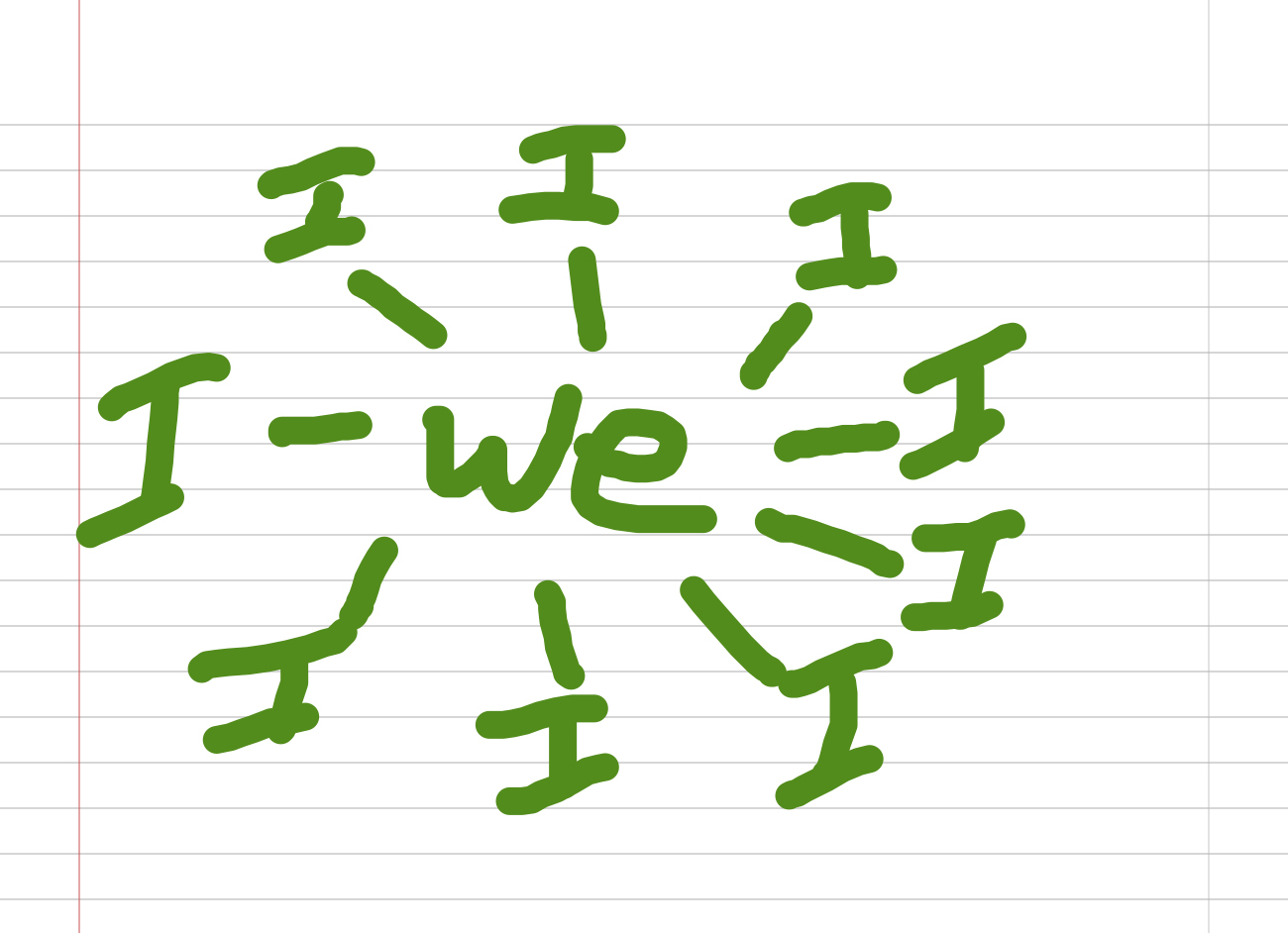
    2. Any group of I’s can become We’s.

    I was way outside of my circle at VocationCARE. And I had to consciously make a choice to be a participant instead of an observer with people I seemingly shared little common ground with. I chose to lean in and chillax on the things we had common ground on for the sake of becoming “we” for a few days.

    If we are going to make a difference in the world we will need to give up a lot of I’s for the sake of We’s.

    3. Make the design process fun

    I started drawing this little guy on things during VocationCARE. Why? These were very serious people who do very serious work. But I learned pretty quickly during our breaks that laughter was just below the seriousness. Laughter releases creativity. And creativity embraces whimsy… the heart of good design.

    If your creative process lacks laughter you’ll never get the best possible design. The output of that process can be serious. But the process of getting there requires creative freedom and the embrace of whimsy.

    Learning Icons

    I have a really hard time tracking with some learning environments. I learn best by doing/experimenting/trying. I learn second best by discussing. And I learn least best by listening.

    When the learning environment is listening I am often lost. There are so many words, so many good things said, and so little time to process or ask clarifying questions. I’ve learned that this method of synthesizing things from doodles (which is where all of these started) to become icons has really helped me retain not just the words from times of learning, but also the application and emotions I felt while hearing that training.

    Discussion: What helps you retain and synthesize learning? When you teach, how aware are you of various learning styles? How much does your learning style impact your teaching style?

  • A terrestrial calling

    “You’re crazy enough to change the world.” 

    Those were prophetic words spoken to me by an elder who wasn’t happy with me. Trust me, he didn’t mean that as a compliment. He said that because I was royally screwing up his country club. His nice little church who loved their closed circle of friends and hid behind and glass walled lie of, “We just want to protect our kids from the world” had been exposed to the realities of some radical transformation that can occur when you challenge students to read God’s Word uninterpretted.

    “What does a plain reading of this tell you to do?” 

    As I taught middle school and high school students how to do  that in a Christian school and the church that hosted it, kids started asking questions that freaked their parents out. And those freaked out parents called the elders. And the elders told me to stop teaching like that.

    Before you can change the world, you better change your block

    This has been a turn in my understanding of that phrase, of late. I can point to specific things that happen in my world and say, “Yes, I had a hand in impacting that. Those things have changed because of my being here.”

    But my conviction is becoming that none of that matters if I don’t love my neighbors enough to help them discover the truths that those middle school and high school students discovered way back when. If I don’t love my neighbors enough to royally mess up their lives by introducing Jesus’ insurrection of the heart, I say I love my neighbors but I really don’t.

    That’s my terrestrial calling. I can think and dream in planetary terms. But in reality? My calling is really, really local.

  • Hard work or working hard?

    We all work hard.

    I can’t think of the last time I met a pastor who was truly lazy.

    Instead, what I most often see, and what took me years to get past…

    I have a tendency to replace hard work with working hard.

    In other words, if I have some hard work to do in my life, things like:

    • Maybe I know I need to invest in a relationship I don’t want to invest in.
    • Maybe I need to repair a relationship I’ve busted.
    • Maybe I need to make a hard decision that will be unpopular.
    • Maybe I need to turn someone away.
    • Or turn down a proposal.
    • Or walk away from something I love.

    In those times, I try real hard to escape the hard work by working real hard.

    I can fill my calendar like a champ. I can make myself look really busy. And I can work really, really hard from dawn until way past midnight.

    But I think God’s revealed to me that I most often do that when I’m avoiding hard work in my life.

    It’s easy to confuse the two because the words are so similar. But one is noble while the other is ignoble.

    Question: What are stop-gap measures for this that have worked for you?