• The Light Went Off

    In January, I was consulting with a group of doctors who specialize in obesity education. As über intelligent people are prone to do, they were speaking in a high-level code language that reminded me of my systematic theology courses. To make it even more confusing they had just reviewed several recently released studies about obesity treatment. I will readily admit I was lost in the conversation and unsure how I could help them with their project.

    I interrupted. “Can you please, in two or three sentences, explain to me why physicians have a hard time treating obesity in their practice? Can you translate all of this into plain English for me? I can’t help you until I wrap my arms around what the problem is.

    The Light Bulb Moment

    [Read the rest of my guest post at RunRevRun.net]


  • Sleep deprivation and the American teenager

    To meet all of these demands, surveys show, high schoolers usually stay up close to midnight on school nights. And then they have to get up early the next morning, typically around 6 or 6:30 a.m., to get to school on time, as most high schools start classes around 7:30 a.m.

    “Most studies show a fairly consistent 9 1/4 hours sleep requirement,” says Emsellem. “So there’s a huge gap between what they’re getting on an average school night and what they require.”

    An adolescent’s biology bears some of the blame for this sleep problem. As teens progress through puberty, unprecedented growth occurs in body and brain that requires a lot of sleep.

    Read the rest

    In youth ministry we joke about all-nighters. I’m quick to point out that when hosting an all-nighter that I take tactical advantage over my students. First, I play with chemical warfare by loading my students full of sugar and caffeine early in the night while I load up on water and fruit, followed by a lot of physical activity. Second, as an adult I actually need less sleep. Third, I sleep well regularly so I’m not tired going into an all-nighter.

    Yet sleep deprivation is a serious ailment for our students. Missing out on 33% of sleep each night (on average) has loads of consequences.

    Here’s a quick list of problems with chronic sleep deprivation that I’ve seen:

    1. Struggling in school academically. Some schools are compensating by starting high school later. A nice step, but doesn’t solve the problem if they just stay up later.
    2. Compensating for tiredness with caffeine & sugar might help them stay alert but leads to weight gain, doesn’t help acne, excessive odor, etc.
    3. Inexperienced drivers + sleep deprivation = recipe for disaster.
    4. Overly dramatic/depressive mood swings. Teenage girls have a unique ability to make a mountain out of a molehill. Staying up late thinking about it isn’t helping.
    5. Laptops in their bedroom and unlimited, unsupervised, broadband internet doesn’t help them make wise decisions.

    With all that a teenager is doing in the areas of social, physical, sexual, and cognitive development the brain is working overdrive. Not giving their brains the time to rest, recover, and work while they are sleeping is just going to lead to being developmentally delayed.

    Discussion questions:

    Parents: What can you do to make sure your kids get the sleep they need?

    Schools: Short of nap time or delaying the start of school, how can you help in this area?

    Youth workers: How can your ministry be “good news” to sleep deprived teenagers in your community?

    All: What do you think this has to do with the elongation of adolescence?

  • The Coronation Ceremony isn’t Coming

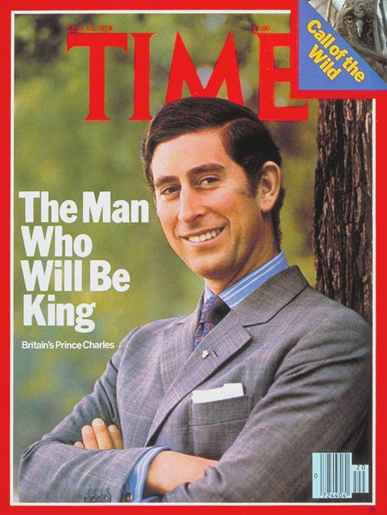
    Prince Charles is a man in waiting. He’s been waiting to be king his whole life.

    It’s a depressing lot in life, isn’t it? Your entire existence is wrapped up in a moment that may never happen… and will only happen when your mom dies.

    Lame.

    In so many ways Charles has proven he isn’t worthy to be king. He didn’t stand up to his family to marry the woman he loved. Instead, he married Diana, and their life turned into a tabloid embarrassment. And while many think he has an amazing book on organic gardening no one takes him seriously as a statesman and would-be king. He’s perpetually this dude politely waiting.

    One way I know he isn’t fit to be king is that he has waited all of these years. History is full of stories where the prince got the queen or king out of the way so he could assume the role he was born to have. Not to be morbid or trite… but couldn’t he have talked his mom into some sort of deal by now? Certainly, she could have retired her role and allowed her son, as the crown prince, to govern?

    Maybe she has just waited this whole time for him to grab the crown instead of pretending to be Hugh Hefner all of these years? Queen Elizabeth has proven herself to be more a man than her son, that’s for sure.

    At some point in his life Charles must have woken up to the reality that there was no coronation ceremony coming.

    Here’s the reality check: There’s no coronation ceremony coming for you, either.

    I used to have this fantasy that I’d be doing my thing and one day someone would walk up to me and say, “Adam, you’re Sunday school lesson today was incredible. Here’s a publishing contract. Why don’t you come and join our team?” Or… “Thanks for coming to our meeting today, why don’t you come back and chair this committee next time?

    That’s not the way the world works. Instead, when given the opportunity to lead you have to go for it and nail it. When an opportunity presents itself you make the most of it.

    Far more people snatch, grab, and maneuver their way to king than will ever assume the role by death or attrition.

    The myth of the open door

    In Christian circles there’s a lot of talk of open doors. There’s a whole pile of people sitting around and waiting for open doors. But here’s the thing about waiting for open doors… I’ve found that most open doors lead to really crappy opportunities! (A church job I can “just have” is not worth having. Or a standing offer to join an organization is probably an organization I don’t want to be a part of.)

    The best opportunities for you might just be doors you have to put a little shoulder in. Or wedge your Nike’s in when the door is cracked open to ask, “Who is there?

    And the very best opportunities in my life have come when I went to my garage and got my Sawzall to make my own door.

    Call me crazy, but I’d rather be the maniac with the Sawzall cutting down doors of opportunity than playing Prince Charles the Polite with my arms crossed on the cover of Time Magazine.

    Why?

    Because at the end of the day I know which person I want to follow.

  • Highlighting a few friends blogs

    Here are three blogs worth checking out. Only one of them is a youth ministry blog, per se. But all of them have strong ties to a vibrant life with Jesus and in one way or another, they have done student ministry. More importantly they are all friends of mine and if you like my writing you’ll probably like theirs.

    Becky Daye – Becky went to college with Kristen and I. She and her husband Dave have served in local churches since they graduated, they now live in Connecticut. We don’t get to hang out with the Daye’s very often, but when we do it’s like we haven’t seen one another in 2 days instead of 5 years.

    What I love about Becky’s blog is she weaves together her life as a mom, her love for her husband, and most importantly her love for God and His Word. When I read her stuff I am impressed by the depth and clarity. So solid.

    Zoe Reyes – Zoe and her husband Manny joined our community group last fall. It took me a while to figure them out but I’m glad they stuck around long enough for us all to fall in love with them. They moved to San Diego from the Bay area for a year, mostly so Manny could do some post-doc work at UCSD and they’d be near family with the birth of their first child, Sofia. And before long they are off to a new adventure in Maine. Crazy!

    What I love about Zoe’s blog is the way she draws your empathetic senses in with her descriptions. She walks with Jesus in a deep way that I’m captivated by. Zoe writes when she has something to write. And when she does she really draws you in. So when I get a notification that Zoe has a new post… I go and make a cup of tea.

    Brian Berry – I’ve been getting to know Brian steadily more over the past 3 years. The more I get to know him the more I respect him as a leader. Not just a leader in youth ministry… like, he’s a strong dude that I learn a ton from each time we hang out.

    What I love about Brian’s blog is that he’s both a thinker and a doer. His role at Journey is HUGE. And yet his mind is wired in such a way that he can take the challenges put before him and describe what is happening and what needs to be done. With about 20 years experience in and around youth ministry, his blog is super helpful.

    These are new blogs (writers) I’m enjoying right now. Who do you want to highlight?

  • The Accidental Sea

    Hmmm… my SoCal friends… can you say ROAD TRIP!

  • The woman at the well and me

    Headphones in, volume up, helmet strapped on, I mounted my bike with a lot on my mind. Already running late and frustrated that my air compressor was not working, I peddled down my block.

    With my rear tire nearly flat I knew I’d have to stop at the nearby gas station and fill it up.

    As the first segment of 60 Minutes played into my ears I pulled up to the air compressor at the corner station, quickly jumped off my bike, propping it up against the machine, took off my backpack, and started fishing around for three quarters.

    My hands were shaking. A quick glance at the time on my phone revealed I only had 6 minutes until the next train and I was at least five minutes away. But I couldn’t go another day riding around with this tire so low.

    I put the coins in the machine and it roared to life. My fingers fumbled to get the rubber cap off and the tire in the right position. All the while listening to the story of Julian Assange cooly tell his side of the story about Wikileaks on 60 Minutes. He’s a character from Superman. But is he Superman or Lex Luther? Seconds go by until I finally got the nozzle attached and squeezed the handle to start pumping air.

    I exhaled a sigh of relief.

    Just then a hand brushed across my neck and shoulder. I instantly cringed and almost fell over into my bike. The hair on my neck stood on end. Who just touched me?!? The fight or flight instinct stood me straight up, unsure which option to take.

    Startled, I looked to my right. Instantly I was put back at ease. A woman, homeless, bent over to grab the spicket to the water nozzle on the air compressor. As her friend looked on with other bottles in hand she began to fill up her water bottle.

    She and her partner live in the bushes behind the gas station and saw me pull in. They know that the water only flows from the spicket when the air compressor has money in it and were simply taking advantage of the opportunity.

    My heart sank back to its normal position. And I tried to act as cool as Assange answering those questions on 60 Minutes. We were both kidding ourselves.

    I kneeled back down to finish filling my tire. As I put the rubber cap back on my now-full tire I looked to my right one more time. Yes, I’d just been startled by a frail, strung out, and harmless woman doing what women for centuries have been doing… fetching water.

    Ashamed, I put my backpack on, mounted my bike, and peddled off.

    Jesus said to her, “Everyone who drinks of this water will be thirsty again, but whoever drinks of the water that I will give him will never be thirsty again. The water that I will give him will become in him a spring of water welling up to eternal life.” The woman said to him, “Sir, give me this water, so that I will not be thirsty or have to come here to draw water.John 4:13-15

    Just another day, reminded early in the morning, that Jesus is King and I’m just a jester.

  • Take it like a man

    Last night I watched an hour-long interview with Jesse James. (West Coast Choppers, ex-husband to Sandra Bullock)

    Pier Morgan, who conducted the interview, did his best to find an excuse that Jesse could latch onto as to why he had behaved the way he had.

    • Was it because your father beat you?
    • Were you lonely when Sandra was away working on movies?
    • Were you trying to maintain an image of being a bad boy?
    • Do you blame the paparazzi for shining light on the situation?
    • Were you using drugs?

    Down the list Mr. Morgan goes, trying to find a psychobabble-worthy reason why this man had cheated on his wife.

    Jesse’s answer?

    Here’s a summary of what he said during the interview: It was my fault. I take 100% responsibility. It’s no ones fault but mine. I’ve hurt her. I’ve asked for forgiveness from her. She has given it. I was a horrible person unfit to love anyone and I’ve had to learn to love myself. My upbringing didn’t lead me to this, I made my own choices.

    The level of honesty displayed was refreshing. No spin. No softening the blows. Just take it like a man because you brought it on yourself.

    When asked if he thought that discussing this stuff and writing about it might hurt Sandra’s feelings he acknowledged that it might, but that she understood he was just out to promote his book. Who admits that?

    Dealing with Failure

    Dealing with failure is part of life. It is unavoidable that you will mess up. It probably won’t be as blatant or as messy or as public as Jesse’s affair but you will have to deal with the ramifications just the same.

    One thing I’ve learned over the years is that I need to fail well. Hiding from mistakes, oversights, and outright bad things I’ve done doesn’t help anything. It just makes it worse.

    I had a mentor early in my career that taught me how to talk about my own failures in a team setting.

    • Lead with the failure – Don’t bury it in agenda. Come right out and say it because it’s the #1 agenda item.
    • Follow up with how it happened – Don’t just gloss it over, explain how it happened in as much detail is needed. Others might learn from how you got to your mistake.
    • Tell us how you’re fixing it – If you don’t know than ask for help. But you better have a plan for how you’ll fix it or else your silence is giving the team the most logical solution…
    • End with apologizing/taking ownership of the mistake – Don’t weasel out of it. Don’t accept someone else’s apology. Own that mistake, learn from it, and move on.

    In short, while failure may display a lack of character which defines you for a moment, dealing with failure well displays the type of character that can define you for a lifetime.

    What have you learned about dealing with your mistakes?

  • Billboards & False Prophets

    Photo by Geoff Sloan via Flickr (Creative Commons)

    You’ve likely seen this billboard. People nationwide are talking about it– especially as the supposed day is quickly approaching. I had largely ignored the signs until this variation appeared… “The Bible Guarantees It.

    What does the Bible guarantee about impending judgment?

    But concerning that day and hour no one knows, not even the angels of heaven, nor the Son, but the Father only.” — Matthew 24:36

    I’m going to take the words of Jesus over the words of an AM radio prophet any day.

    What does the Bible guarantee for false prophets?

    Beware of false prophets, who come to you in sheep’s clothing but inwardly are ravenous wolves.” — Matthew 7:15

    “I appeal to you, brothers, to watch out for those who cause divisions and create obstacles contrary to the doctrine that you have been taught; avoid them. For such persons do not serve our Lord Christ, but their own appetites, and by smooth talk and flattery they deceive the hearts of the naive.Romans 16:17-18

    The Law of Moses in Deuteronomy 13 commands that false prophets be “purged” from the community. (v. 5) Moses goes on to say that false prophets who lead people astray are to be stoned. (v. 10) Lastly, Moses explains that if a city has been deceived by a false prophet, it is the responsibility of the greater community to put the residents of the city to the sword and burn it. (v. 14-16) In other words– God takes false prophesy seriously.

    Further down the timeline documents times when God’s people dealt with false prophets…

    Micah 3 is one of those times. Here are some descriptions:

    v. 4 – “Then they will cry to the LORD, but he will not answer them; he will hide his face from them at that time, because they have made their deeds evil.

    v. 6b-7 – “The sun shall go down on the prophets, and the day shall be black over them; the seers shall be disgraced, and the diviners put to shame; they shall all cover their lips, for there is no answer from God.”

    Jeremiah 23: 15 explains what God thought of false prophets who lead people astray: “Therefore thus says the LORD of hosts concerning the prophets: “Behold, I will feed them with bitter food and give them poisoned water to drink, for from the prophets of Jerusalem ungodliness has gone out into all the land.”

    Both the Old and New Testament are not amused by false prophets. And so when we see the billboards, we may laugh it off, and we may be embarrassed for the people behind the charade. (Truthfully, because a lot of us are a little bit embarrassed to admit that we believe in a pre-Tribulational rapture. Or we are shy to admit that we believe that we are pre-millennialists.)

    But we have a greater responsibility than that, don’t we?

    Harold Camping has done this before. He last predicted judgment day for September 6th, 1994. Obviously it didn’t happen. Chances are really good that we’re going to wake up next Sunday morning and Jesus will have not returned.

    How do we know that? Jesus said that NO ONE knows the day, not even the Son. Only the Father.

    The question the Christian community should be asking is, “Are there still ramifications about being an overtly false prophet for your own gain?

  • Sober Judgment

    Photo by Cayusa via Flickr (Creative Commons)

    For by the grace given to me I say to everyone among you not to think of himself more highly than he ought to think, but to think with sober judgment, each according to the measure of faith that God has assigned. Romans 12:3

    I struggle with this verse. Paul makes it sound so easy and appealing. Because it ultimately is. However, culture– even Christian culture– tells you to rewrite Paul’s words like this:

    “For by the grace given to me I say to everyone among you to think of yourself more highly than you ought to think, gloss over the bad stuff and judge your life with beer goggles, each according to the measure of faith that God has assigned.” Romans 12:3, the way I want it to read.

    A fail is funny and losing is winning

    Paul’s phrase, sober judgment, is difficult. It involves looking at the hard realities of the goals we have for ourselves and measuring that against the results our life has produced. Sober judgment is deeply honest. A win is a win and a loss is a loss.

    Judging yourself with beer goggles is so much easier. It involves laughing everything off and believing the lie that failure is funny and winning is somehow losing. The crowd tells you, “That’s OK, everyone fails” to make you feel better. But before long their empathetic response becomes your justification.

    Applying Sober Judgment

    Sober judgment involves staring into the mirror at reality. It means is that somewhere in your life you measuring with real math, setting actual goals, and being corrected along the way.

    Are you measuring up against your goals? Are you honest with yourself on what needs to change? And are you willing to take corrective action so that you can celebrate real success instead of the success of merely incremental failure?

  • The role of adolescent consent in parenting

    Kristen and I now officially see the precipise on our horizon.

    Megan, our oldest child, turned 10 yesterday. Within a few years we will be in the thick of adolescence. (And all of the parents I’ve worked with over the years will simple laugh. Not a polite giggle. An evil laugh because now I will know the terror they have gone through!)

    OK, not quite that dramatic. But change is definitely on the horizon for our family. And we know we’ll have to adjust our parenting skills as Megan enters into this new developmental stage.

    I recently read an article in Psychology Today that gives a high-level look at how parenting needs to adjust as you shift from having “a kid” to having “an emerging adolescent.”

    Thus, offensive though it may feel, the resistant adolescent’s words of advice to his parent have a ring of truth: “Get used to it!” Come the teenage years, compliance with parental authority is less automatic. This is why it’s easier to parent the dependent-minded child than it is the independent-minded adolescent. The harder “half” of parenting comes last.

    The formula for obedience to parental authority is simply this: command + consent = compliance. Parental authority is not automatic or absolute. It is not a matter of parents being able to control adolescent choices; it’s a matter of controlling their own choices in ways that allow them assert influence. And this takes work, working for consent.

    Consent can be secured by a variety of parental approaches – declaring your need for cooperation, making a serious and firm request, attaching consequences to compliance or noncompliance, repeated insistence to show you mean business, explaining reasons that are persuasive, negotiating a deal to get what you want.

    Read the rest

    I think it’s important for us to focus on the long-term goal. We want our kids to develop into strong, independent adults. In their relationships, we want them to have healthy, happy, and simple adult relationships.

    So, as we enter the precipice of the next 10 years, we are going to try to keep a long-lens on things. We know in the granular, day-to-day grind, that won’t be easy. And as soon as I wrote that down and looked back at it my youth pastor self said to my parent self, “Uh huh.”

    Parents of adolescents: Is the Psychology Today article on-point? Or do you just try to muscle your authority over your children through middle/high school?