• iPad 2 vs. Kindle review & comparison

    iPad 2

    Pros:

    • Fun to play with.
    • Feel cool in coffee shops.
    • Lots of apps.
    • Perfect for consuming media.
    • Fun for taking short notes, like a giant iPhone.
    • Light, battery lasts a long time, shiny.
    • Lots of apps for kids to play with. (Or entertainment for bored adults on planes)

    Cons:

    • Not going to pay AT&T more money for 3G service, so stuck finding wifi.
    • You can’t read books on this and keep your eyeballs happy.
    • Where did the SD card reader go?
    • You can’t write for a long time on this, need to buy the external keyboard.
    • It’s too heavy/awkward to hold for long periods of time.
    • The camera stinks compared to the iPhone 4.
    • Completely useless in bright light.

    Kindle

    Pros:

    • $139 or less, great entry price.
    • Almost all of the classics are free. And I adore the Kindle Single format.
    • Very light, easy to hold for a long time while reading.
    • Doesn’t feel fragile.
    • The screen is amazing, doesn’t hurt your eyes and you can read it in full sunlight.

    Cons:

    • A lot more money for the 3G version. While doesn’t include a contract, it’s steep.
    • It would be nice to listen to music while you read, I can’t figure out how to do that.
    • Needs a backlight option so I can read in bed without turning on a light.
  • I play for keeps

    I keeps it real. And I play for keeps.

    It’s easy to be in ministry and lose sight of the big and obvious stuff. Such as, “Why the heck do I even do all of this anyway?

    So much of the actual task in youth ministry feels like that of a cruise director. When you lose sight of the bigger picture you start to evaluate by the evidence… Are people having a good time when they are around me? Are they showing up? Do they leave satisfied? Do they like being around me? Do they laugh at my jokes?

    I’ve found those to be shallow evaluation tools. Those are like eating a Twinkie when your body is craving protein. It leaves you feeling temporarily full but hungry and unsatisfied quickly.

    That’s why I say that I play for keeps. Youth ministry is meaningless without evangelism and discipleship at its core. Those two things are ultimately what I’m about in youth ministry. And as much as I like silly games, worship music, and road trips… I don’t do it for that.

    This ain’t the Love Boat, friends. This stuff is for real.

    (more…)

  • I keeps it real

    Let my life be true.

    That sums up my relational strategy with friends, co-workers, and family.

    I keeps it real.

    There’s a tendency among ministry folks to put a happy face on everything. Or worse yet to try to put a leadership face on everything. While I appreciate the desire to try to put on a tough exterior the fakeness they exude often makes the insecurity and deep hurt bubble to the surface even more.

    In order to keep it real you don’t have to wear your heart on your sleeve. Don’t misread that. But somewhere you need to take off that tough exterior to reveal the scared, goofy kid you are.

    Let’s face it– No one in leadership deserves to be there. None of us is more qualified than anyone else. God often puts us in situations where we are in way, often WAY over our heads. While we shouldn’t try to lead from a position of fear… we can’t hide behind our defense mechanisms all the time. Instead, we need to lead from a place of security in who we are and who God wants us to be.

    Keeping it real isn’t a sign of weakness, it’s shows you understand you are in the shadow of the Great leader.

    Longevity tip: Find a group of friends who you can keeps it real with.

    Taking it a step further: I’d love to see a movement of young leaders who commit to one another, “I keeps it real.”

    In a world full of fakes the people are dying for Christian leaders who keep it real.

  • Rejecting the rejection of community life

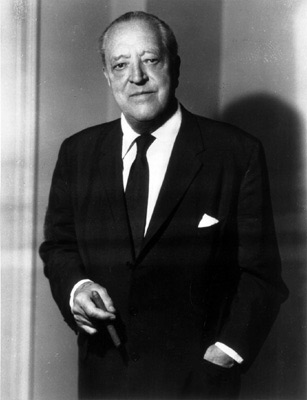
    In the mid-20th century architects like Mies van der Rohe envisioned simplicity and wholeness in urban centers. Into the chaos of the city their residential designs sought to bring wholeness and community. (For reference, see Upton Sinclair’s The Jungle.) They attempted to convince residents that an amazing community life could be had within just a short walk or bus ride from the office, the market, church, or anywhere else you’d need to go.

    This sense of urban holism was central to the phrase van der Rohe is now known for, “God is in the details.” In the chaos of our daily life, when we slow down to notice the small things, we notice God everywhere.

    Urban holism was largely rejected in the late 1960s and 1970s. When racial tensions, riots, crime, and violence increased in urban environments most population centers like Los Angeles, New York, Chicago, Detroit, and Philadelphia experienced a new residential phenomenon– suburbanization. (Or the more loaded term, white flight.)

    Suburbanization completely changed the landscape of American culture. It was a rejection of community life and an embrace of individualism. Explore just about any 1970s suburban development and you will see the contrast from urban life. Instead of communities built around common spaces like parks, markets, and clusters of people who knew one another, homes were constructed like fortresses and oasis for the individual family. The front porch became a façade. The double garage doors became a gate. The home itself was designed for privacy and experiences of the outdoors lead to a fenced backyard. Words that sold these houses were privacy, seclusion, safety. The master bedroom overlooked a spacious backyard of grass. The kitchen window looked into the backyard where mom could watch her kids play on their very own playset in the safety of their encampment, in complete opposition to the community life they experienced as children.

    You had to get into the car to go to the market, to school, to church, or just about anywhere. No longer did city planners include mixed-use development zones, it was Residential zoning on one side of the freeway and Commercial on the other. At the same time, people greatly increased their travel time to work. Instead of a walk or short bus ride, people took to newly created expressways to travel from newly formed suburbs named after forests in England to the dangerous, cold city for work.

    Instead of God being in the details our cars became our gods. As people spent hours and hours alone commuting to and from work or driving our kids from one activity outside of their neighborhood to another. The American Dream was reshaped from opportunity for a better life to opportunity for a better car or bigger, more private home.

    The net result was a complete rejection of life in community with one another. For centuries humans formed community with those they lived near. Now we form communities with people we like and are like us. The acquisition of things overtook the desire to acquire friendships or do what is best for our community.

    It was a dramatic demarkation from van der Rohe’s philosophy.

    Enter new urbanization. Through the 1990s and into today, children raised in the suburbs have stumbled upon centuries old principles of community living.  There is now a reinvigoration of urban living and a rediscovery of community life. (And even adaptations like urban farming.) Initially, this movement wrought havoc on urban communities, bringing gentrification. But in recent years more careful planning has largely kept money-hungry developers from gobbling up cheap property to flip from the urban poor to the yuppy.

    It’s a form of a rejection of individualism. (Or some would say a fulfillment of individualism.) As they seek community in the city they want to affirm their individuality by placing themselves into a complex ecosystem of community where their skills, passions, and ideas have value. The mainstream, suburban-focused, marketing-driven mindset of their parents struggles to understand why their children reject a comfortable, safe life in the suburbs for the chaos of the city. The news media looks at the increased ridership of public transportation and double-digit sales increases of bicycles and blames this on the price of gas. In their eyes, it could never be that people don’t want to have their own cars that they sit in for lonely hours on their way to offices full of people they don’t like.

    That’s exactly what it is. One generation looks at the failure of the generation of their parents and choses another path. That’s the nature of pendulum swings. We go from one wild extreme to the next. And in the process power (and the money that follows) swings wildly from corporate megacenters of suburban idealism to mom/pop shops where community-feel and small town ideals leads to parting with dollars.

    Questions for church leaders:

    1. Do you agree or disagree with this premise that people in America are shifting from a suburban mindset to more of a community mindset?
    2. How are you seeing this trend play out in your area?
    3. How does this impact your church?
    4. What are areas of the church where people currently say, “God is in the details?
    5. How does this impact your definition of community life within your congregation?
    6. Where do you find fear in this trend? Where do you find hope?
  • Love God, Cheat on Tests

    If you believe in a loving, compassionate God you are more likely to cheat than people who believe in an angry, punitive God. This is according to a new study released called, “Mean Gods Make Good People: Different Views of God Predict Cheating Behavior” and covered in the April 30th edition of the L.A. Times.

    In line with many previous studies, it found no difference between the ethical behavior of believers and nonbelievers. But those who believed in a loving, compassionate God were more likely to cheat than those who believed in an angry, punitive God.

    “The take-home message is not whether you believe in God, but what God you believe in,” said Azim Shariff, a psychologist at the University of Oregon. Shariff conducted the study with psychologist Ara Norenzayan, who had been his doctoral advisor at the University of British Columbia.

    Read the rest

    More and more research is being done that youth workers need to unpack and adapt their philosophy of ministries to. There are studies like this, many of them, which show that Christian students aren’t altogether more moral than their non-Christian peers. (They cheat as much, sleep around as much, get in as many fights, etc.) And there are studies like Christian Smith’s work out of Notre Dame which shows that youth group graduates often believe in a god but not necessarily the God of the Bible. (Something he labels moralistic therapeutic deism.) and the Fuller Youth Institute’s Sticky Faith study which will be published later this year. (Based on what I’ve seen/heard from FYI, there seems to be some strong correlations between certain types of ministry/parenting skills and a successful transition from middle adolescent faith development to adult faith.)

    Here’s what we do know:

    • There are plenty of people in America who worship the God they want to believe in instead of the God of the Bible. The first sentence delineates between a punitive God and a compassionate God. In truth, God reveals himself in the Bible as both. While we can’t fully define God with our finite minds, God has shown us that He possesses moral and non-moral attributes, the fullness of which we struggle to grasp.
    • While freedom from bondage to sin is part of the sanctification process, it is not the means nor main point of salvation through Jesus Christ. There’s a difference between being bought and paid for and going on to live a moral life. Christians believe there will be many, many good people in hell. Being good doesn’t make you any more a believer in Christ for salvation than being a Cubs fan makes you eternally optimistic. Somewhere along the way how we are teaching adolescents is leading them to believe that a life with Jesus means we can be happy sinners.
    • Much of our evangelical “nice” culture isn’t changing culture as much as its leaders would like to believe it is. I’ve never met a youth pastor who would admit that her students would cheat on test as much or more than their peers. They will always defer and say, “Not my kids.
    • Something in what we are teaching is awry if it doesn’t lead to high moral standards. While the point of a life with Christ isn’t to have flawless morals… it truly should be the by-product of a life sold out for Jesus! I don’t know what is going wrong, but somewhere, something is lost in translation.
    • Followers look up to their leaders. They behave the way their leaders do and they model their lives after them. So these studies also reveal something deeply wrong and disturbing about church leadership. We each must examine ourselves and ask difficult questions, seeking accountability. How is it that our leadership is leading to a belief that it is OK to lie, cheat, and act immoral?
  • The Receptionist has left the building

    Fair warning: There are naughty words in this video not approved by your mother.

    Travis Betz (guy in the video) and I are two guys from the same high school both living in California and chasing slightly different dreams. I’m working at Youth Specialties, equipping and encouraging youth workers, Travis is making twisted little independent films.

    Travis was one year behind me but we were involved in a lot of the same stuff in school so we crossed paths a bit. If I remember correctly we were both in show choir and some musicals together. [Jazz hands!] I’ll let you make assumptions about a high school that produced both a guy who makes independent horror flicks and a guy who spends most of his time thinking about church stuff. There are some strange correlations.

    Yesterday was Travis’ last day at his day job where he worked as a receptionist. For the last five years he’s combined the relative boredom of answering phones with his passion for making movies, putting together some amazingly fun stuff in a YouTube series called, The Receptionist.

    So here’s to you Travis. Chase those dreams, baby.

  • Dealing with streakiness in the creative process

    I’m finishing my seventh year of daily blogging on May 25th. Over the past 2,555 days I’ve written 3,523 posts or about 2,000,000 words. Nearly every day over the past 2,555 days I have sat down at my computer and written something that was worth my time in the moment.

    Streaks

    So what has changed since 2004? An o-crap-this-better-not-suck-amount of people read what I write every day. And the amount that each post gets shared, tweeted, and emailed around is completely determined by the remark-ability of what I write. In some ways it is a self-created pressure cooker.

    It’s fun that the process doesn’t change but the response does. I have no ability to predict the outcome of each post. There are weeks or even months where my blog experiences a hot streak. Everything I write gets lots of feedback. (Even the stuff that sucks.) Conversely, there are weeks or months when nothing really happens to my posts. I just write and that’s it.

    Many days I press “publish” and I anticipate a massive response to something that seems brilliant to me but nothing happens. Then there are days when I write something flippantly and publish it with almost no thought and it explodes and goes viral.

    Same process. Same style. Different response.

    Some might find that infuriating or that it frustrates the process. Not me. I find it fascinating.

    The creative life

    Everyone claims to have been a Seinfeld fan all along. But, in the moment, the most popular way to talk about Seinfeld was that most people didn’t find it nearly as funny as the people in New York said it was. Seinfeld didn’t really become funny for most people until it hit syndication because when it was fresh they didn’t get it.

    Chances are that Shakespeare’s favorite piece wasn’t Romeo and Juliet. It was just what became most popular. The same is probably true with Hemingway’s Old Man and the Sea or Salinger’s The Catcher in the Rye. Sometimes for a creative what takes off is not what they have the most fun doing.

    Response to creativity is always streaky and unpredictable.

    So here’s a tip: If you want to write, just write. Don’t worry about the response too much. Just write, write, and write some more. Ultimately, you are the audience.

  • Who feeds you?

    On a Sabbath, while he was going through the grain fields, his disciples plucked and ate some heads of grain, rubbing them in their hands. But some of the Pharisees said, “Why are you doing what is not lawful to do on the Sabbath?” And Jesus answered them, “Have you not read what David did when he was hungry, he and those who were with him: how he entered the house of God and took and ate the bread of the Presence, which is not lawful for any but the priests to eat, and also gave it to those with him?” And he said to them, “The Son of Man is lord of the Sabbath.” Luke 6:1-5

    Mishnah

    Photo by Martin LaBar via Flickr (Creative Commons)

    This is one of those passages that I’ve glossed over for years. But recently, I’ve been drawn to its intricacies which unlocked the bigger picture.

    First and foremost, the complaint never made sense to me until I started reading Mishnah. Various rabbis passed down various interpretations and instructions on Sabbath regulations. While the written Old Testament gave general directions for obeying the Law, mishnah was the oral tradition that defined the boundaries. And depending on your rabbi and who trained them, the oral tradition told you how many steps you could take on the Sabbath and not be “work.” Or how to cook in a way that wasn’t work for the cook or work for the animals who provided sustenance. As referred to in the passage, there were disagreements about  pulling an Ox out of a hole to save its life. Was it OK to do that on the Sabbath or should we wait? Was it OK to save a life on the Sabbath? Or was it OK to just save its life but not try to help it once you’ve gotten it out of the hole? Various rabbis had various opinions that were passed down through the mishnah.

    While all agreed that the Law required that farmers left a few rows of grain unharvested along the road for the poor/traveling to glean, there was disagreement as to whether it was lawful for the poor/travelers to glean on the Sabbath. So when Jesus replies back to the Pharisee referring to Old Testament passages, the Pharisees are really trying to figure out which oral tradition gave him permission to glean on the Sabbath.

    He frustrates them by offering a remixed version. He didn’t respond from the perspective of a certain rabbi. Nor did he respond by quoting the Law of Moses. Instead, he asked a question that reframed the inquiry altogether.

    Even if you obey the Sabbathwho is the Lord of the Sabbath? And ultimately– who feeds you from his gleanings, the farmer or the Father?

    Physical food

    Who feeds me physically? Our food chain is so messed up that I don’t think we can even comprehend this question. In my fridge right now are fruits/veggies grown on a farm about 30 miles from me. But there is also milk which came from another farm in California. And that cheese? It came from yet another farm in California. Juice? Well, some of the fruit came from Australia (I think) and the rest came from a chemical plant in Ohio.

    The sad reality is that we are so far removed from our sources of food that this passage is completely foreign to us. We don’t have a clue where our food comes from! Our best guess is that we kind of know the grocery companies that we purchased food from. And we certainly don’t go and glean from farmers fields when we are out of cash or on the road. They’d shoot us!

    Ultimately, God provides the food. As messed up and distorted as our food chain is, God is the ultimate source of food. While I don’t think He is the author of high-fructose-corn-syrup, grain filler, and the other GMO crap most of our food is laced with, He is the ultimate provider of both the food that we eat and the money we use to buy it. It all comes from Him.

    Emotional food

    If we zoom out the lens just a little bit we can ask a deeper question. Are you free to eat emotionally on the Sabbath? Are you slowing down enough to listen? Not just to the preacher or the Sunday school teacher or to other people in your small group. But are you slowing down enough on the Sabbath to hear the voice of the Holy Spirit in your life? Is He feeding you words of instruction, comfort, and rebuke? Or are you drowning the Spirit out by turning the volume up too loud with the human voices in your life?

    Are you slowing down enough on the Sabbath to listen to your own voice? Are you taking time to process the stuff that is happening? Are you taking time to rest your body? Are you taking time to rest your mind by doing recreational stuff?

    That’s emotional food. The passage evokes a visual of Jesus and his disciples walking along the road, probably quietly as they observe the Sabbath, and the group of them spreading out and gleaning the grain. Each of them plucking heads of grain and grinding away the chaff between their fingers or with their palm before popping the uncooked grain into their mouth. This isn’t tossing a bag of popcorn in the microwave! This took time. And it was likely full of introspection and listening.

    Who feeds you during quiet times of self-reflection? Who speaks to you and gives you emotional food to prepare for the week ahead?

    Spiritual food

    Finally, we zoom the lens on this passage out as far as it goes. With our wide angle lens Jesus asks the question, “Ultimately, who is the Lord of the Sabbath? Who is in charge of the Harvest?

    Jesus is our ultimate source of nutrition. He is the Provider. He gives us life. He made the sun which warms the soil and provides the energy for photosynthesis.

    Spiritually, Jesus is the source of life on the Sabbath. Rather than leaning on the interpretations of man alone… modern day mishnah… Jesus is eternal, alive today, and active among His people bringing nutrition to the poor and sojourners among us willing to glean along the roadside.

    Clearly and obviously, Jesus wants us to gather with fellow believers to corporately worship Him on the Sabbath. But he doesn’t want us to get lost in the granular act of going to church for spiritual food. That’s a supermarket approach when Jesus gave us the example of finding food where we are on the Sabbath. He reminds us again and again, “I am the Lord of the Sabbath. It belongs to me. It’s ultimately about me. You want to rest, it’s found in me. You want to eat, I am the bread of life.

    Who are the farmers in your life? Are they leaving a little on the side for you to feed from?

  • Weeds

    The last couple of weeks have been stressful. Work stuff piled up as an ever growing to-do list was at war with two very firm deadlines. Stress built, tension built, and I was an emotional wreck. One day last week I started working at 6:00 am and largely sat in the same place steadily working until 10:00 pm. And I didn’t feel any closer to being done than I did before.

    I’ve learned that one of the ways I relax is to spend time in our garden. Life can be going a million miles per hour and it all slows when I crouch or kneel next to a bed of vegetables.

    The chores of having a garden are fairly simply and repetitive. Fertilize the soil. Plant things at the right time. Water when its dry. Pull weeds. Harvest. Repeat.

    The back-to-basics simplicity is what brings me so much joy. Fresh, organic fruits and vegetables are merely the by-product of the primary benefit.

    Each weed I pull it releases a little bit of tension. In the past couple of weeks, the warmer weather arriving forced me to water more… which resulted in weeds springing up everywhere. That was perfect! Because I had plenty of tension, frustration, and anxiety to pull out with each weed as well.

    Pulling weeds has a strong tie to my life with Jesus, too.

    Here are a few things I’m reminded of as I weed my garden:

    • You can’t just weed once per week.It’s better to weed a little bit each day.
    • Weeds like fertile soil just as much as crop producing plants. Where there is growth there will be weeds.
    • Sometimes you have to be gentle when you pull out a weed. It’s roots my be intertwined with roots of a good plant.
    • Some weeds have thorns and smell bad. But others are pretty and you’re tempted to keep them. Don’t.
    • Bugs eat your fruits and vegetables. For some reason they leave weeds alone.
    • Even the best gardeners pull weeds. You never get above it… you just get better at it. And some just get better at hiding the evidence.
    • Weeding the garden is work. It’s an easy skill but it is always going to get you dirty and always going to make you sweat.

    What are some other parallels between taking care of your garden and your walk with Christ?