If this election cycle has has revealed anything about the current state of the church it’s these two things:
We’ve taught people what we think at the expense of how to think.
We’ve confused felt needs for our needs.
How did we get here?
Full disclosure. You’re not seeing a 2,000 word rant about why I think “you” played a role, and how we got here, in creating the problem I’ve summarized in the above two statements.
I deleted it.
It’s easy to blame “you.” “You” is a perceived enemy I can easily create. “You” is everyone that’s not me.
“You” is blaming.
“You” is easy. “You” is a bit lazy writing, creating a monster that’s easy to vilify.
What’s my role?
But “you” is also “me.”
It’s much harder to look in the mirror, realize I’ve played as big a role in this as anyone else, and instead say… “What’s my role in making it better?”
So I’m wondering…
What can I do to help encourage independent thinking, celebrate intellectual conversation, and create spaces to facilitate that?
How can I better connect with “them” so I’m not guessing about felt needs? What can I do to truly meet needs for actual people instead of imagined ones?
How can I help us move from “topical” to “full”? In other words, how do we help people see that Scripture isn’t just what’s interesting to us– skipping around from short burst to short burst in 4 or 6 week “series” and instead dive deeply, sometimes into the boring parts, to connect to a deeper narrative?
How do I justify elevating real, researched felt needs above my own needs? You know, because the latter pays the bills sometimes better than the former.
Want to talk to Kristen? She works 50 feet away, too.
It’s as quiet as I want it to be. Want to listen to music from the 90s? No problemo.
Want interaction with others? Do it.
Don’t want interactions with others? Just turn it off.
For better or worse it’s a me-centric way to work. And it has advantages. I don’t sit through pointless meetings and there are no office politics. A little too warm for my liking? Turn on the AC. Too cool? Turn on the heat. I’ve got no co-workers to negotiate that with. No one knows and frankly no one cares.
When you work alone, in your backyard, it’s easy to think only about yourself. Me. Me. Me. Me. Me. Me. Me.
We is Better than Me
In the daytime quiet of my backyard, plugging away on an endless… seemingly self-feeding todo list… I have a rational choice to make.
Is this about me or not?
I have a little mantra that I repeat to myself all the time: We is better than me.
From the earliest moments, from Creation, God recognized this value… We is better than me. When I’m alone, when I’m about myself, it’s not good. (Being about me and having alone time are different)
This mantra, We is Better than Me, expresses itself when I’m frustrated in a we setting. I’ve got this in-born desire for things to be about me all the time, to be awesome, to be for me– to want things my way in my time. And when that doesn’t happen? I’ve got this tiny bit of righteous indignation that feels like I need to not just be frustrated that something isn’t working for me but also the deep-seeded need to tell people, to get people on my side, to declare… “This isn’t working for me and you should do something about it because it’s not working for this person either.”
The mantra is especially helpful in these moments. When I’m feeling my most about me, when I’m wanting to grab the pitch forks and let everyone else know that my needs aren’t feeling met… that’s when I repeat the mantra: We is better than me.
Just because it’s not about me doesn’t mean it’s not good for we. Just because I think I know a better way doesn’t mean my way is better. Usually, it just means I need to learn something new– I need to shut up.
And in a world where everyone can say whatever they want, whenever they want, to whomever they want: Shutting up might just be the most powerful thing you can do.
Lately, I’ve been doing a lot of thinking– more like rethinking— about the nature of work, vocation, and how all of that impacts daily life.
In short, I think I’ve over-specialized and/or overused “calling” as an excuse to embrace work-a-holic habits, expect overwork, and otherwise potentially make work an idol.
With those two statements in mind I’m asking you, my faithful readers and friends, to help me brainstorm some works that I should look into. (Books, articles, blogs, etc.)
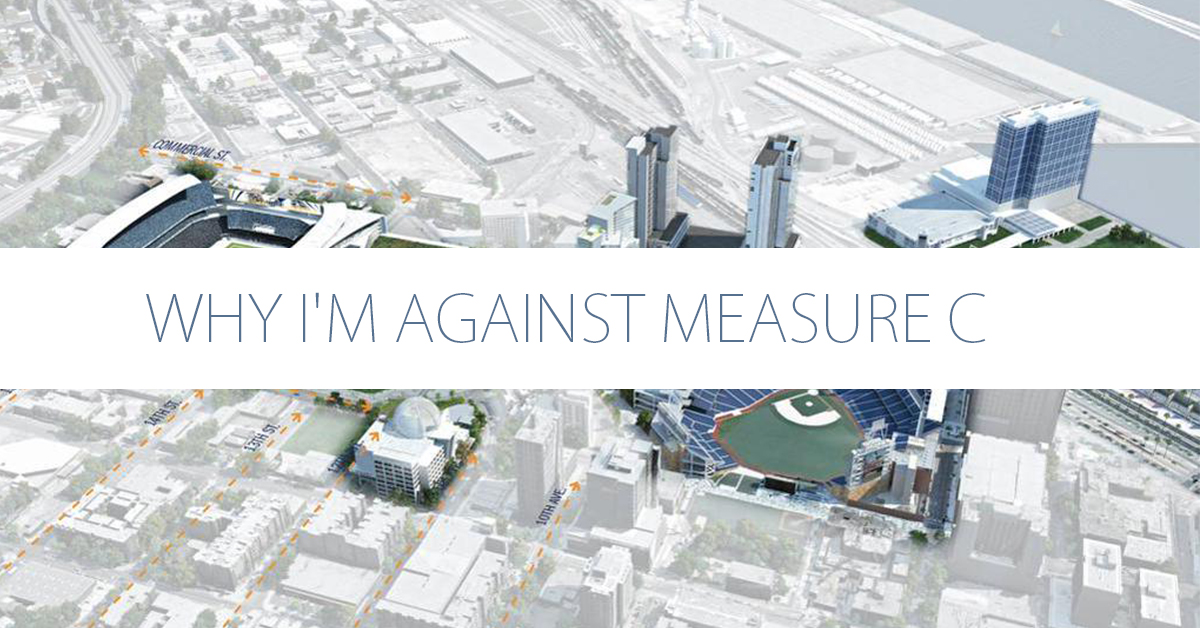
This November, San Diego residents will vote on Measure C, which would raise the Transient Occupancy Tax (TOT or hotel tax for short) from 12.5% to 16.5% in order to partner with the NFL and the Chargers to build a new structure they are calling a “convadium.” (A multi-purpose convention and stadium complex.)
An August 29th poll said that 39% of San Diegans plan to vote for the measure. It needs 67% to pass. So, while it is unlikely to pass I want to share some of the reasons I plan to vote against the measure.
My Top 8 Reasons I’m Against Measure C
1. The public shouldn’t fund private ventures
I’d go into more depth about this point but I think John Oliver pretty much nails it.
I’m actually totally fine with the Chargers getting a new stadium. While I’m not a fan of the team or the NFL I am a football fan. And, as a season ticket holder for the Aztecs at the same stadium, I can affirm that the existing stadium is a dump. They either need to seriously remodel the existing stadium, like gut-rehabbing a 1920s bungalow, or build somewhere else.
2. This is a countywide issue, not just a city one
Have you ever driven around on game day in San Diego? If you have then you know that the San Diego Chargers fanbase doesn’t just come from the city of San Diego. People come from all over San Diego county to attend games. Trains, trolleys, and freeways are packed getting to Mission Valley.
And yet, this measure taxes hotels in the city of San Diego… not the county of San Diego. In other words, why not raise the TOT (hotel tax) on every hotel room in the county, probably at a lower rate, rather than just the city?
It’s been frustrating to me that many of my friends who are Chargers fans, the people who attend the games, don’t live in a place where they can even vote on Measure C.
3. The Lie, Part 1 – Taxation Without Representation
The line you hear repeated is, “This measure won’t cost city taxpayers a dime unless they stay in a hotel.” Dean Spanos, the owner of the Chargers, likes to riff… “Won’t it be fun to know that our stadium is financed by Raiders fans?”
Remember the American Revolution? No taxation without representation? Remember the Declaration of Independence when we rubbed this concept in the nose of the King of England?
Asking voters to levy an increase in tax on tourists to pay for a stadium/convention center that most won’t use is making them pay for something they’ll not benefit in any way.
Think about it like this. The NFL provides 10-12 game days per year. Let’s say the average NFL visitor stays two nights at a San Diego hotel. That’s 20-24 room nights per year generated by the NFL for games… for 30 years.
Over the life of Measure C that’s:
300-360 days where NFL fans pay 4% of their hotel rate towards the stadium (if they stay in a San Diego hotel)
10,590-10,650 days where tourists visiting San Diego will pay 4% of their hotel rate towards a stadium.
I think it’s unfair to tax 100% of tourists visiting our city over the next 30 years for a stadium very few of them will actually benefit from in any way. 3.3% of days over the period of 30 years will be game days, and it’s not like 100% of tourists traveling to San Diego on an NFL weekend are coming to go to a game… realistically we’re talking 3,000-10,000 fans are staying in hotels for NFL games.
That’s a whole lot of non-NFL tourists paying a whole lot of tax for a really, really long time.
4. The Lie, Part 2 – It won’t cost taxpayers a dime
This is true if the new TOT increase covers the burden of loan payments that’ll finance the new construction over the next 30 years.
If there’s a shortfall in the funds generated by the TOT increase the city will either have to default on it’s payment or they’ll have to take the money out of the general fund.
My problem with this financing scheme is that it’s without assurances that this won’t end up costing the city more money than the TOT increase generates. If the NFL and Chargers are so sure that the TOT increase will generate “plenty of money” than they need to offer taxpayers a guarantee that they’ll cover the balance on any shortfalls.
Why? Because it’s easy to spend this kind of money when the money is rolling in San Diego. But you have to know that in the next 30 years there will be multiple recessions where tourism will suffer.
5. You don’t build a pool when you need a new roof
San Diegans are sick of the state of their infrastructure. Sure, we’ve got a lot of beautiful things for tourists to enjoy. But our roads are terrible and our schools are crumbling.
Like a lot of city residents I am sorry– but the Chargers better get in line. If we’re going to raise all of this money to build a new stadium, let’s do that after we invest in things which will benefit 100% of San Diego residents first.
You can say that’s small town thinking. You can say that we are dumb for letting the Chargers go. And I would say only an idiot puts a new swimming pool on a credit card when he’s got a leaking roof.
6. The hotel tax will be too high
Let’s say you come to San Diego for vacation with your spouse. You stay 5 nights at a hotel that’s $200 per night for a hotel bill of $1000. The difference between this measure passing or failing is your total hotel bill being $1125 and $1165. Now, that $40 might not seem like a big deal to you. Especially, since you know that taking your spouse to Sea World for the day would be over $100 or going to the zoo might be more like $125.
So, it is correct to say that paying an extra $40 wouldn’t impact a persons decision to come to San Diego for vacation.
But let’s say you’re the American Association of Cardiologists and you’re signing a convention contract to stay at the Town & Country, 4 nights and 4,000 rooms around Hotel Circle. Presuming it’s $200/night we’re talking an increase of $128,000 difference in that deal for a “convadium” your event won’t even visit.
See, moving to 16.5% is a big deal for event planners. Especially when you consider the hotel tax rate of other cities who might want your 16,000 room night event in their city.
Consider the hotel tax of other cities by comparison:
LA – 14%
Orlando – 6%
Miami Beach – 14%
San Fransisco – 14%
Anaheim – 15%
Portland – 11.5%
State of Hawaii – 13.5%
Chicago – 17.4%
Indianapolis – 17%
Dallas – 15%
Phoenix – 12.57%
Minneapolis – 13.775%
And, don’t forget, this new 16.5% tax is just for hotels in the city of San Diego. All of a sudden the idea of hosting an event or going on a San Diego county vacation gets cheaper… most of San Diego county would stay at just 10% hotel tax. (Carlsbad, Oceanside, Del Mar, Encinitas, etc)
7. Too many promises and not enough contracts
“But building a new stadium will bring the Super Bowl, NCAA Final Four, and other big events to town.”
The only promise in that laundry list that you could actually hold anyone to? A Super Bowl. A single Super Bowl.
Is the NCAA going to host the Final Four in an outdoor stadium in the middle of our rainy season? Not a chance. Would a new NFL stadium in downtown San Diego get a lot of new events? Maybe. We just don’t know. A lot of ideas are being floated around but Measure C doesn’t even have a final price tag, much less contracts to bring in events.
8. The Chargers will leave if this doesn’t pass
Maybe. But it’s unlikely the NFL will leave the second largest city in the largest state in the country. San Diego has proven that it’ll support the Chargers through thick and thin. Even when the team is terrible, like last year, attendance was still strong.
I think what’s about to happen is that this measure will fail with 40-45% of the vote in 2016 and the NFL will find a way to make it happen.
I would suggest they consider PSLs or some other financing scheme which puts the burden of a new $1 billion stadium on the individuals who buy tickets and the benefit financially from having the Chargers here.
It also wouldn’t surprise me that if the measure fails that the NFL would seek new ownership for the Chargers. It’s not that the city doesn’t want the team, it’s that the ownership of the team has written a proposal that the voters are rejecting.
The Final Summary
Proponents of Measure C want to increase the tax on hotels in the city of San Diego from a middle-of-the-pack 12.5% to a on-the-high-end of 16.5% for the next 30 years. I believe that an increase in taxes should benefit 100% of the residents of San Diego, not the few who go to Chargers games.
While I’m in favor of the Chargers staying in San Diego, while I’m in favor of building a new stadium for the Chargers in San Diego, I join my neighbors in firmly voting no for Measure C on November 8th.
From the outside looking in, ministry life is often romanticized. “It must be so cool to spend your days advancing the Gospel.” And yes, there are plenty of moments when you feel that.
But there’s a not-so-hidden dark side to ministry life that act as pitfalls, snares, and traps… these are things that don’t seem like a big deal early on in ministry, but over time they build up and eventually take you out.
Here’s three to highlight my point:
Plagiarism
Christians are ruthless about plagiarism. Had my IP ripped off from college until today like its a birthright to steal or something.
Plagiarism is a sin that creeps in out of convenience. You start off by missing a citation or manipulating the facts to include yourself in a good story that you heard. But, over time, since literally no one is fact checking you or asking where you get your content… you move deeper into it.
See, when you are young and brand new, you really can get away with this. You buy resources sometimes (which definitely isn’t plagiarism!) but other times you lift ideas from stuff you see. You build a series here and there ripping off an idea you saw at a conference or on TV. But before long, you stop buying resources and just start riffing off of podcasts you hear or your favorite preacher’s sermons you grab from their website.
“That’s not wrong, is it? I mean I make it my own…” Actually, it’s a lack of integrity. You are taking someone else’s work, not giving them credit, presenting it as your own, then getting paid. So you’re making money off of someone else’s work without permission, license, or payment?
That’s plagiarism.
And, over time, it’ll catch up to you. Let’s say you preach a sermon in “big church” and someone notices that a story you shared was on a podcast they listen to… but you didn’t give that podcast credit? They might not say anything to you but you’ve lost credibility with that person.
They know your sin.
And so do you.
All I’m saying is have integrity. Give credit where it’s due. If you need a resource, buy it. There’s never shame in being honest about where you get your stuff from. Doing so builds credibility instead of bleeding it away.
And never forget that for every big name lead pastor who drops out because of burn out there are 100 non-famous, regular church staff folks who do the same.
When you see these announcements you hear people say things like, “Pray for pastors. Their life is so hard.” And, of course, people should pray for their pastors because their life is really hard whether you are pastoring in ultra-wealthy Seattle or a very poor city in Haiti like Hinch.
But the thing about burn out? It’s 100% preventable. In every profession you can expect to go through season every once in a while where you go hard. But I think sometimes on ministry staffs “going hard” becomes the mantra.
We make the mistake of thinking we can do a lot to attract people. But don’t forget, eventually those people you are attracting with all that activity are going to look at YOU and ask themselves, “Is this what following Jesus looks like? I don’t want that.” In a post-Christian world how you live is more important than what you believe. If how you’re living isn’t good news to someone they probably won’t listen to the Good News of Jesus.
My thought? Yes, of course pray for pastors. But we need to also expect less from them, too. Ultimately, burn out is about integrity. Do you take care of yourself physically, emotionally, spiritually, and socially? It shocks me how many of my friends in church ministry have no friends outside of their church life, no hobbies, no life. If that’s you… you’re on Burn Out Boulevard. Make a hard turn at the next intersection or you’re next.
Don’t impress me with your ability to go hard. Impress me with your ability to go long-term by taking care of yourself.
HR Violations
I’ve written about this before. While the local church should be the best place to work in town it’s often the place using it’s tax status to violate an abundance of employment laws that a non-church workplace couldn’t get away with. EOE violations, [Only interviewing men for non-exempt positions… SHAME!] age discrimination, racial discrimination, misclassification of employment status, violating overtime rules… these are all the norm, obvious violations of normal workplace standards. Then there are organizations that foster workplace environments that are full of hostility, nepotism, and intimidation that are ripe for lawsuits.
I can’t tell you how many times I’ve heard from church staff that they hate their boss, their job, their church, etc. Yeah… that ain’t good.
Again, these are questions of integrity. If the only thing that matters is growing a big church than why bother with creating an endearing place to work? But when you look at the fallout, thousands of church workers who leave the ministry each year, you need to ask yourself: At what cost?
Like the rest– this is entirely preventable. But these things creep in under the umbrella of “everyone is just doing the best they can.”
So Why Bring These Things Up?
Listen, none of this is news. So why bother talking about it?
Because we need to shine light on the dark places of ministry. We need to work hard on creating space for church workers to take care of themselves, be awesome family members, be active in their community, and be amazing employers. We must give space for this to happen. And, in a lot of ways, we can do this when we lower our expectations to something more realistic.
As I read and reflect on the four Gospels sometimes it just pops off the page to me that their lives weren’t as packed in as ours are. We see being busy as being successful. But is that the measurement we really want for our lives in ministry? I’ll take being faithful over being successful all day, every day. (If I had to chose one or the other! They aren’t mutually exclusive obviously.)
What I see as Jesus interacted with his disciples is that they often times did a lot of ministry… really packed it in… then spent days getting to the next place. Walking for 2-3 days isn’t all that productive, is it? There weren’t strategy meetings or stuff like that… they walked. It was probably pretty quiet sometimes. It was probably sometimes uneventful and introspective. And they took Sabbath really seriously. Maybe even too seriously?
But man, the pendulum has really swung.
Busy is not the answer people are looking for in Jesus.
Again, that’s ultimately about integrity. These are insider things that only people on the inside will ever really know about.
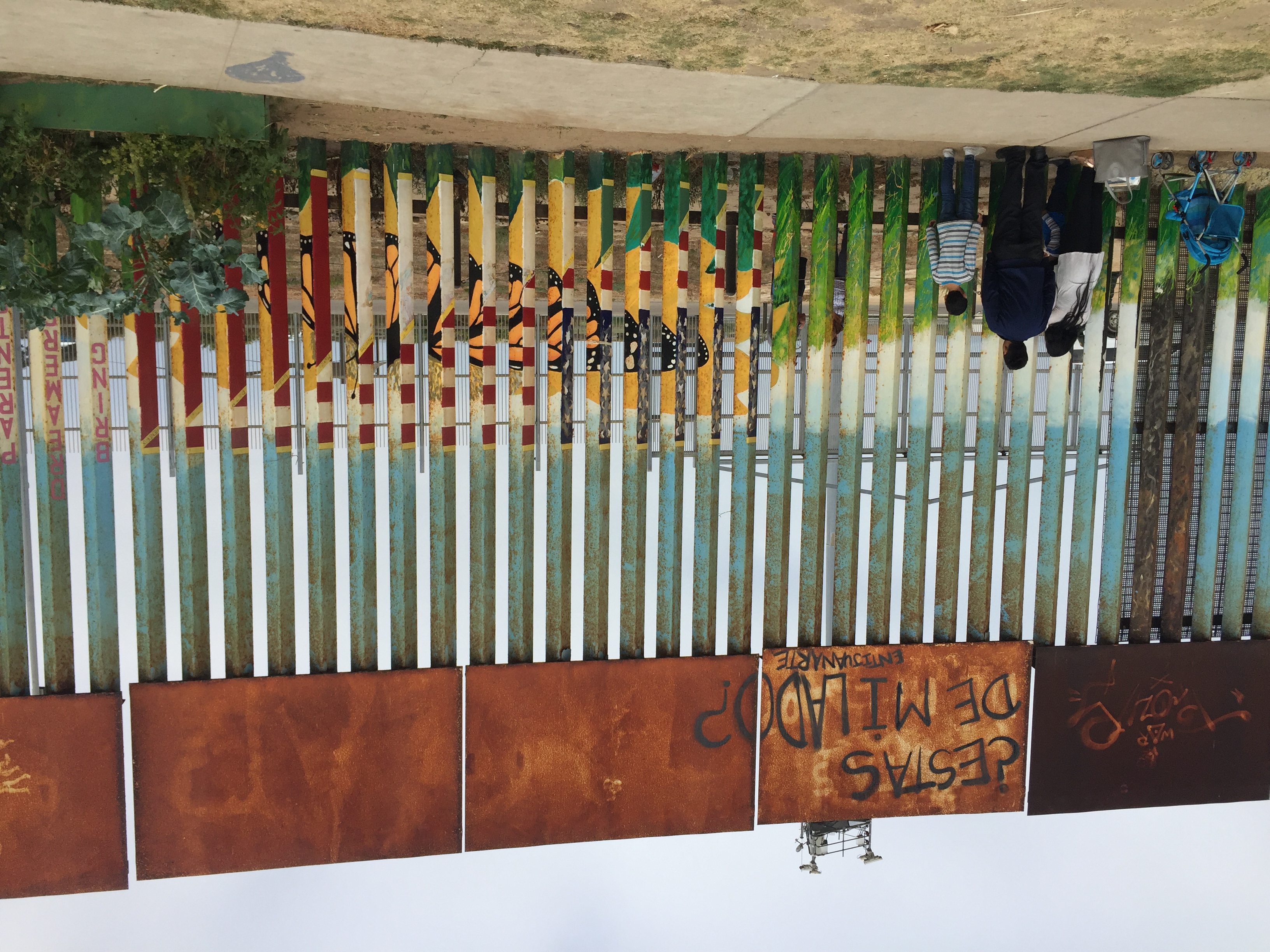
Friendship Park / El Parque de la Amistad is an historic meeting place on the US/Mexico border, overlooking the Pacific Ocean. Each weekend, from 10:00 AM to 2:00 PM, families and loved ones from each side of the border are invited to a small section of the border fence separating the United States from Mexico.
In this photo, a family of four meets from Mexico meets with relatives living in the United States under the careful watch of a U.S. Boarder Patrol agent.
Last weekend was wild. From start to finish we had bowl quality games. It was a great weekend for college football.
Last weekends highlight? Jackson (5) and I got to go on the field at halftime of the Aztecs game. Very cool, thanks again Aztec Club!
https://www.instagram.com/p/BJ6uZ4qB6QB/
https://www.instagram.com/p/BJ6tIs0B7BQ/
And this weekend? Not so much. Pretty much all of the Power 5 teams have headed for a date with Cupcake City. Most of these match-ups are about point differentiation and no one getting hurt… not seeing who has the best team.
San Diego State
Last week, the Aztecs did about what we’d expect them to against an inferior opponent: They kicked their booty.
I was surprised how long it took into the first quarter before said butt kicking was unleashed. But it was unleashed and Aztec fans left happy.
This weekend is a test of another kind with Cal coming to town. Each time we play a Power 5 conference team I go into hoping that we’ll be able to compete and win, and that’s what I’m hoping for here. We’ve got a better all-around team than they do. We should beat them. But will we? That’s why you play the game. The team that wants it more will win.
Week One Results
11-9
Week Two Picks
Maryland @ Florida International – Terps
Louisville @ Syracuse – Cardinals
Nevada @ Notre Dame – Irish
Cal @ San Diego State – Aztecs
Penn State @ Pitt – Nittany Lions
Cincinnati @ Purdue – Boilers
Wyoming @ Nebraska – Huskers
Utah State @ USC – USC
UConn @ Navy – Navy
Tulsa @ Ohio State – Buckeyes
Wake Forest @ Duke – Dukies
Kentucky @ Florida – Gators
SMU @ Baylor – SMU
NIU @ South Florida – South Florida
South Carolina @ Mississippi State – Miss State
Arkansas @ TCU – Frogs
Iowa State @ Iowa – Iowa State
BYU @ Utah – BYU
North Carolina @ Illinois – Illini
Va Tech vs Tennessee – Virginia Tech
Minus a bit of a novelty game last weekend between Cal and Hawaii in Australia this weekend should be an amazing beginning to the college football season. Sure, there are some powder puff games but there are tons of heavy hitters that should make for some good television viewing.
Storylines I’m watching
Conference expansion and realignment – Who will the Big 12 extend invitations to? And will the Big 12 go to 16 teams, which may force other P5 conferences to go to 16 teams?
Is the Pac-12 back? Last year they kind of beat one another up at the end of the season. Will a Pac-12 team emerge for a playoff spot?
Is the best ACC team going to be better than the best SEC team? I think the SEC is the best top-to-bottom conference, but FSU and Clemson have been impressive the past few years.
Does the slipper fit? See below for the Aztec storyline.
San Diego State storylines
It’s all about Donnel Pumphrey. Pumphrey is on target to break nearly every record set by Marshall Faulk. Can this small back, listed as 5-9 and 180 lbs, withstand a season of punishment? If he can– look out. If he can’t– I’m really excited about the guys we’ve got behind him. I think Pumphrey and Rashaad Penny will be among the most explosive backfield in the country.
Beat Cal. We’ve got two non-conference road games that will be tests for the team, Northern Illinois and a payback game for the humiliating loss to South Alabama last season. If we can beat Cal and make a run in the Mountain West Conference we might just break our way into a Group of 5 bowl spot come December. Lose to Cal and we’re stuck right where we’re at… a very good small conference team.
The Chargers and their stadium. While not technically having anything to do with the Aztecs, there are proposals on the ballot that could just impact the Chargers future in San Diego. I think both ballot measures will ultimately fail. But the mere mention of football will link Aztec football to the November elections.
Defense, defense, defense. Just like our basketball team the football team is hanging it’s brand on tough defense. The chatter among the defensive players is that the #1 offense is struggling to move the ball against the #1 defense. That’s good and I’d expect to hear that. I just want to know who will emerge on the field to replace J.J. Whitaker and Jake Feely? We shall see.
I think most people block their own paths to success. They know what they need to do. They have the opportunity. But they put up limits on themselves, thus sabotaging their potential.
Some of it might be external:
They don’t have a family history of success.
They’ve not been empowered or educated to make the right choices.
They might not have had anyone recognize their potential and encourage them.
I’m not a big fan of those external excuses though. Sure, some of us are more advantaged in those categories than others. But, as someone from a disadvantaged past, that’s just as easily an excuse as it is a reality. Plenty of people overcome worse. Plenty.
Most of it is internal:
They self-impose limits on themselves.
They fall into self-destructive habits.
They surround themselves with idiots.
They refuse outside help.
They are overcome by a negative competitive spirit.
And you know what? I find that some people just refuse to succeed. They’ll get on the path towards achieving their goals or seeing their dreams become a reality.
And, for some reason they just… don’t.
It’s self-sabotage.
What’s the point? It’s easy to blame others. It’s easy to blame your history. But it’s real hard to look at yourself as the biggest limiter of yourself.
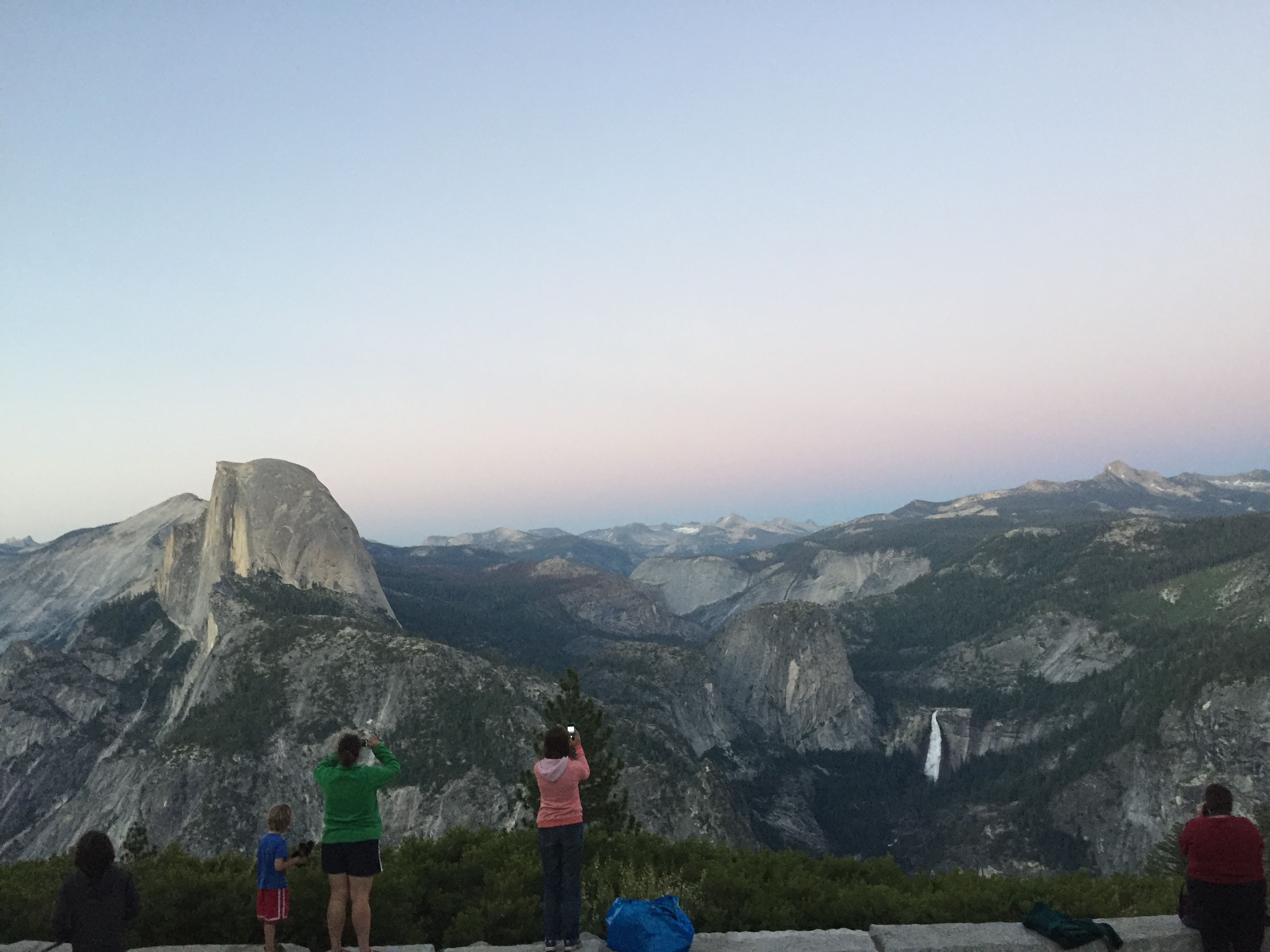
Like millions of people I am in awe of the Sierras. Each summer, our family vacations in Yosemite National Park. And each summer I seem to have a moment where the mountains sing a Sirens tune.
July 2015, wading through an Eastern Sierra creek in search of golden trout. One hand on my fly rod and the other used to stabilize myself scrambling over slippery rocks. In the middle of the creek, out of breath, I sat down and heard nature’s song. Miles from no where and completely alone yet overcome with a profound sense of connection.
A couple summers ago I was swimming with my kids in the middle of the Yosemite Valley when for some reason we all stopped. We held still, staring at the sheer face of El Capitan, barely noticing as a family of ducks swim by.
This summer I woke up early thinking I’d fish the creek by our campground. Heading down a path that disappeared into deer trails, scrambling across offshoots, over loose granite, I was so overcome with discovering beauty around the next bend that I never cast a single line.
This is why so many call our national parks our greatest invention. Countless miles of wilderness, owned by everyone for everyone to enjoy.
New York Times columnist Nicholas Kristof wrote a piece recently highlighting both the wisdom of our forefathers to set aside this land and the potential Congress has to widow our greatest invention to state control:
In an age of enormous inequality, these public lands are arguably our most democratic space. Wealth may buy political influence such that to speak of “one person one vote” seems naïve and incomplete. So the most democratic place in America is perhaps not the voting booth but rather our shared wilderness, as long as we sustain it.
Here, you find yourself in places where everything moves around and yet you’re overcome by the stillness. In an age of 24/7/365 connectedness there’s something profound in being disconnected from technology and intertwined in wilderness.
The Rare Gem of an Open Mind
Like millions of families school is starting for the McLane kids. Paul started 8th grade last week. Megan (tenth) and Jackson (kindergarten) will start next Monday. As Summer fades from our present reality to our memories new realities are setting in… back-to-school shopping and homework replace spontaneous trips to the beach or lazy walks to Yogurtland.
New-ness for school also means the return of people into our lives who want to get to know us better or, far worse, already think they know us based on how we look or how we dress or where we live.
I like the insulation Summer provides our family. Kids invite people into their lives who know them. They don’t have to bother with people who don’t know them or don’t like them. There’s no drama.
But school forces us back into a different, more democratic, reality.
We ask our kids to start the school year off with an open mind. You might get assigned to a class or a teacher you don’t like. Or you might have to sit next to someone or play on the playground with someone who doesn’t like you. Approach those moments with the same open mind we approach our visits to Yosemite. You never know what you might discover around the next bend? It might be that what you don’t already know is better than what you’ve already experienced.
That’s all fine and dandy until reality sets in. As much as I’d like to think our family celebrates open-mindedness, we probably don’t do it very well. Certainly, each day we experience people who are closed-minded.
Truly, an open mind is a rare gem. Like a diamond or emerald, it’s something you have to protect because everyone is out to use it for their own purpose.
Ascending Mount Assumption
Like millions of people I struggle with the assumptions people make about me. (and my family) You can sometimes see the calculations flashing before their eyes. “An overweight white guy, goes to church, drives a minivan, has kids. He must….”
“Don’t assume anything. When you do that it’ll make an ass out of you and me.” I remember my 7th grade English teacher saying that as the class erupted in giggles. She was teaching us to spell the word correctly. But that phrase is also full of truth.
One of the great challenges we all face is our own assumptions.
Like navigating an Alpine meadow trail to the next set of mountains we each ascend Mount Assumption every time we try something new or meet someone new. We assume things that must be true of them because of what they look like, what language they speak, where they went to school, how they dress, the color of their skin, their gender, on and on and on. Likewise, they also assume things about us.
The challenge we all face is ascending the mountain of your own assumptions to get to the heart of the matter. Not all people are ___. Not everything thinks ____. To get there we have to open our minds to new realities.
To find common ground we must both ascend Mount Assumption, on our own paths and at our own pace, to meet at the summit. At the summit, now clear of the hard work of our ascent of Mount Assumption, we truly see one another. Together we forget about the process and enjoy a shared experience.
But this is hard work. It’s a test of character. And failure is an option.
But, just like in hiking, once we’ve gotten to the top the first time it’s easier the second because you know what to expect!
And, I believe, it’s the people who will embrace this hard work– Ascending Mount Assumption– who will truly help us regain a society of shared trust. See, just like our shared ownership of the National Parks binds us together the continual hard work of ascending Mount Assumption to embrace the Sirens tune of a share experience becomes our own Greatest Invention.