Who throws 96 mile per hour fastballs and lives in a camper van for $10,000 per year? The Toronto Blue Jays Daniel Norris.
ht to Tim Mauer

Who throws 96 mile per hour fastballs and lives in a camper van for $10,000 per year? The Toronto Blue Jays Daniel Norris.
ht to Tim Mauer

The Bible Belt.
The None Zone.
Those liberal tree huggers in California.
It’s hard to reach people in the Northeast.
Or was it the Pacific Northwest?
Over the past couple of years I’ve grown increasingly weary of hearing about how one area is especially hard or easy to be a minister of the Gospel.
One group will point to a set of statistics and say how it’s nearly impossible to do ministry– it’s so much harder than ____.
Another group will lay claim that they, of course, live in the hardest to reach region of the country.
It kind of makes my head spin. On the one hand I don’t want to discourage anyone. If pointing to a statistic is somehow motivation for someone to keep going or be more creative or adapt the Gospel to their local context better than that’s great. But on the other hand I think a lot of people miss the bigger, more important point.

But really? What’s the most difficult place for the Gospel in America?
None of those statistics mean anything to the two groups of people you’re actually responsible for reaching with the Good News… and the most difficult.
You can’t make the Gospel big in your community until you make the Gospel small in your life.
For most, you live on the most difficult block in America to reach. It’s the challenge of a lifetime and one we too often ignore for the sake of trying to reach people we aren’t commanded to reach at all.
Reach your own family. Then reach out to your neighbors.

Last fall I had the pleasure of presenting at our event, The Summit.
Here’s the basis of what I’m arguing in this video: Our definition of youth ministry is too small. We (youth workers) make the mistake of thinking that we are the experts, that we “own” ministry to adolescents. This counters a realistic strategy for reaching a theologically appropriate proportion of the adolescent population, counters a core Protestant doctrine, (Priesthood of All Believers) and denies the fact that there are hundreds of thousands of adults currently ministering to adolescents in the places that God has them already.
Youth group is AN answer. It’s not THE answer.
Thoughts?

For the past month or so I’ve had a form in the sidebar of my blog. The intention is for readers to submit their questions about anything tech related. Here’s a few questions that have been submitted.
How do I get in contact with Snapchat? I’ll track these mfs down and then snapchat and my friends can be safe!!
Emma in Australia
Dear Emma, you can always contact Snapchat directly with your user questions and concerns. You could also follow their CEO, Evan Spiegel, on Twitter and connect with him that way.
And if something has gone wrong, let’s say a law has been broken, I’d encourage you to contact your nearest law enforcement agency so they can work with Snapchat to investigate. (Law enforcement can refer to this handy guide)
Can you recommend any books for teenagers entering adulthood, geared towards a 17 year old turning 18 who is making really life changing choices and not good ones?
LaRie in the United States
Sure, over at The Youth Cartel we released a book for exactly that age group called The Amazing Next. It was written for precisely that age.
How do internet companies know so many things and know so much information? Do they make all theses phone apps for kids just to see what there doing and to post there information?
Sasha in Michigan
Sasha, the first part of your question is actually pretty easy… you can find out lots of information about various things and people specifically because they openly and freely share it. Most people don’t read the terms of service to create accounts. But in most cases, you’re agreeing that the information you share on a website or app belongs to the service provider and they can do with it whatever they want within their policies.
The second part of your question is a bit more nuanced. Most developers would argue that their app is about it’s utility… they really want to help people connect with their friends or want their app to help people navigate to where they are going. And the data they collect is merely a byproduct. Most will claim that the sale of that information is merely a secondary market for them… but it’s a $50 billion secondary market annually!
Big data is big business for a lot of reasons, nearly all of them are commercial. Right now, predictive information is what’s hot. Companies want to know what people are talking about today so they know what they’ll buy tomorrow. They buy traffic information so they can know what kinds of people drive by their store. Even hospitals are tapping into big data to predict how many people will visit the emergency room.
I don’t think people really care about Big Data as it’s macro. We don’t care because it’s kind of about us but not about us specifically.
The reason I teach healthy social media habits to parents and teenagers is that it’s not Big Data that gets you in trouble. Instead, it’s bad habits that ruin relationships and it’s micro “Little Data” that can lead to personal problems like you losing your job or your teenager not getting a scholarship.
Got a Tech Tuesday question for me? Head over to my blog and submit your question using the sidebar form.

Yesterday, I spoked at Riverview Community Church in Santee. (About 20 minutes from my house) While I do a fair amount of speaking in churches and schools I’m almost never asked to present brand new material, so it was a fun challenge for me, a throwback to working in the local church and creating brand new stuff all the time.
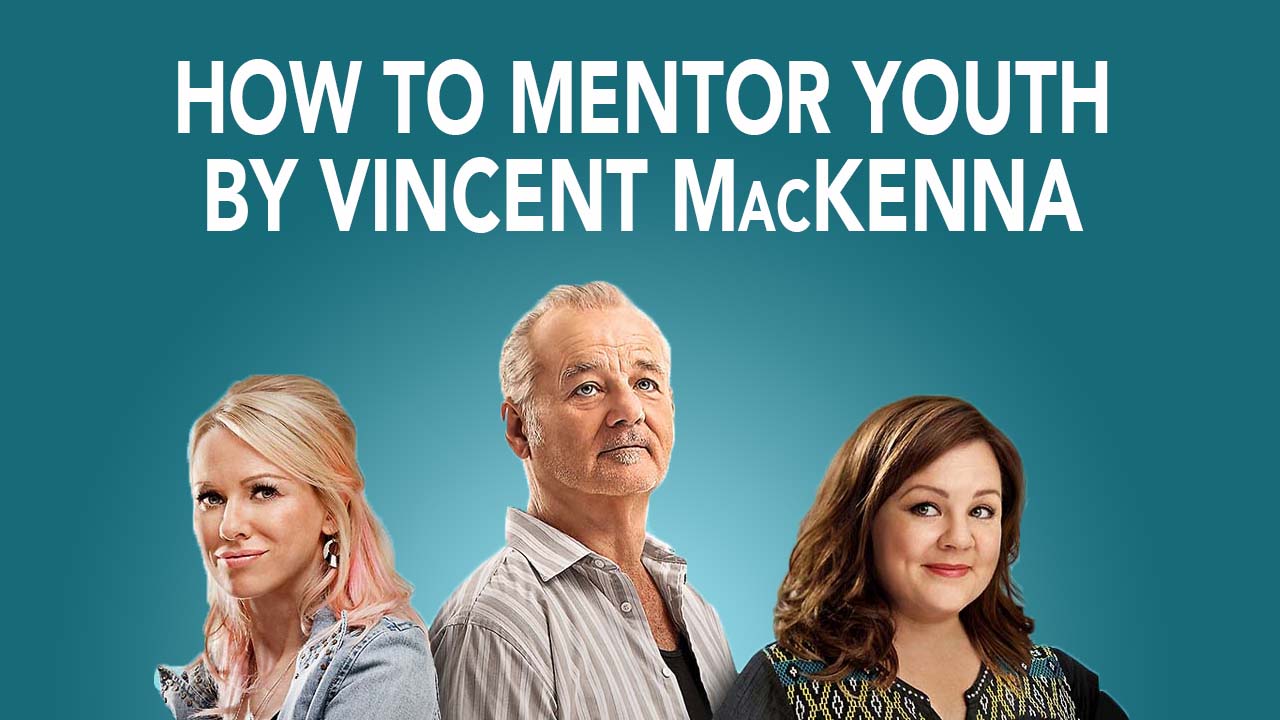
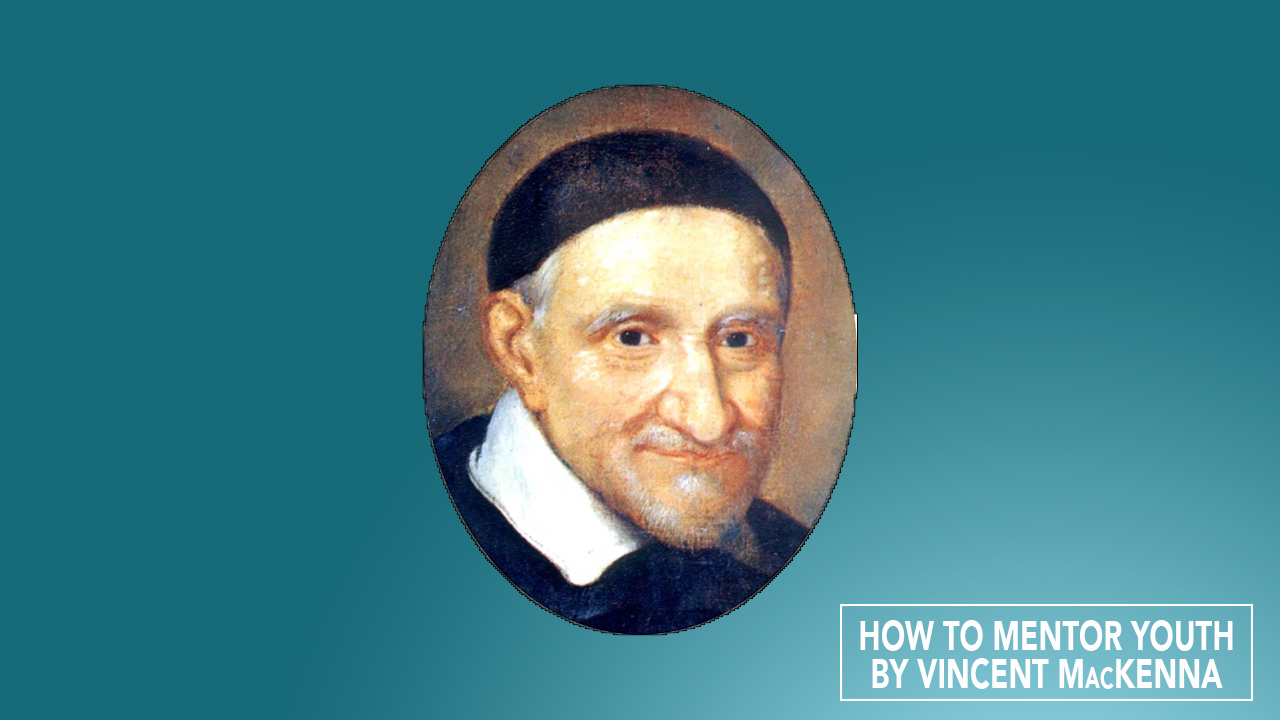
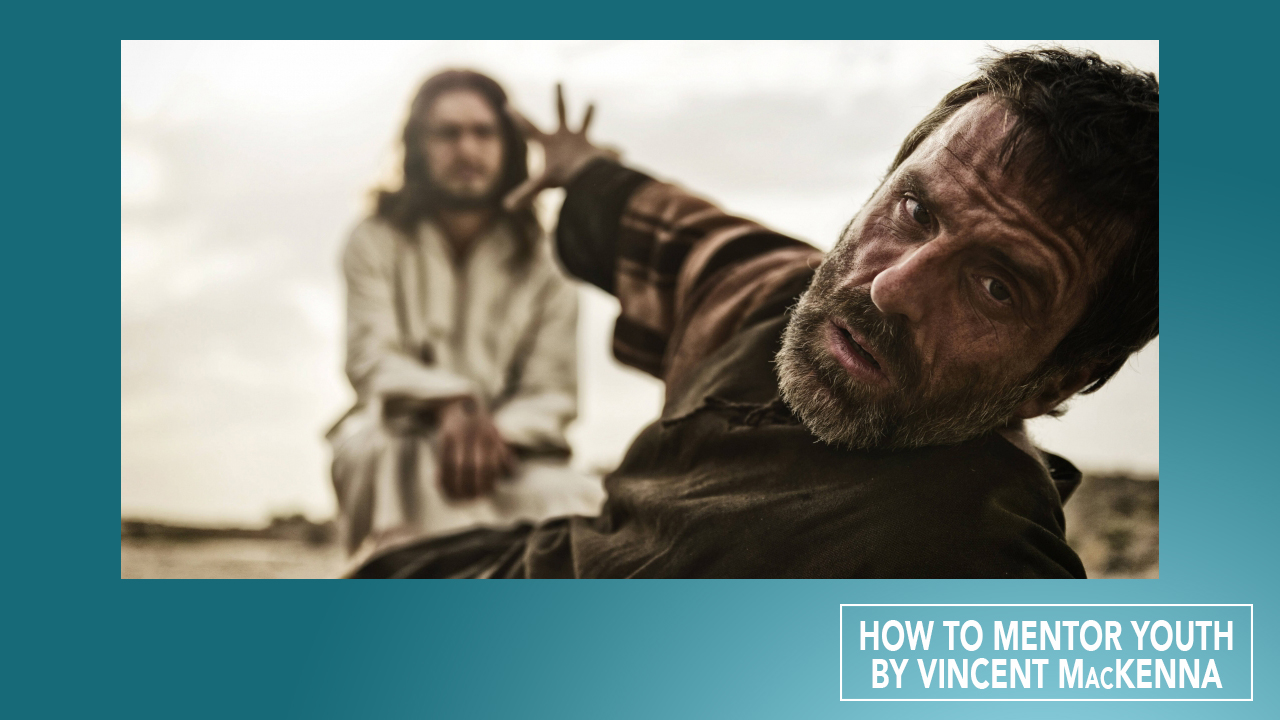
I was asked to do part 2 in their series, Redbox at Riverview, where they take a look at a recent movie and explore a spiritual principle. In my case, I was asked to teach on mentoring youth from the vantage point of St. Vincent.
Note: These are my teaching notes, so not exactly a full manuscript, I’ll post the podcast when it’s available. My slides are included and I’ve added the clipping times for the videos I used. (They are copyrighted videos, so obviously I can’t post those.)
Paul, an apostle of Christ Jesus by the will of God, in keeping with the promise of life that is in Christ Jesus, To Timothy, my dear son:
Grace, mercy and peace from God the Father and Christ Jesus our Lord. I thank God, whom I serve, as my ancestors did, with a clear conscience, as night and day I constantly remember you in my prayers. Recalling your tears, I long to see you, so that I may be filled with joy. I am reminded of your sincere faith, which first lived in your grandmother Lois and in your mother Eunice and, I am persuaded, now lives in you also.
This morning we’re going to look at two relationships…

First century Apostle Paul and first century pastor Timothy
And…
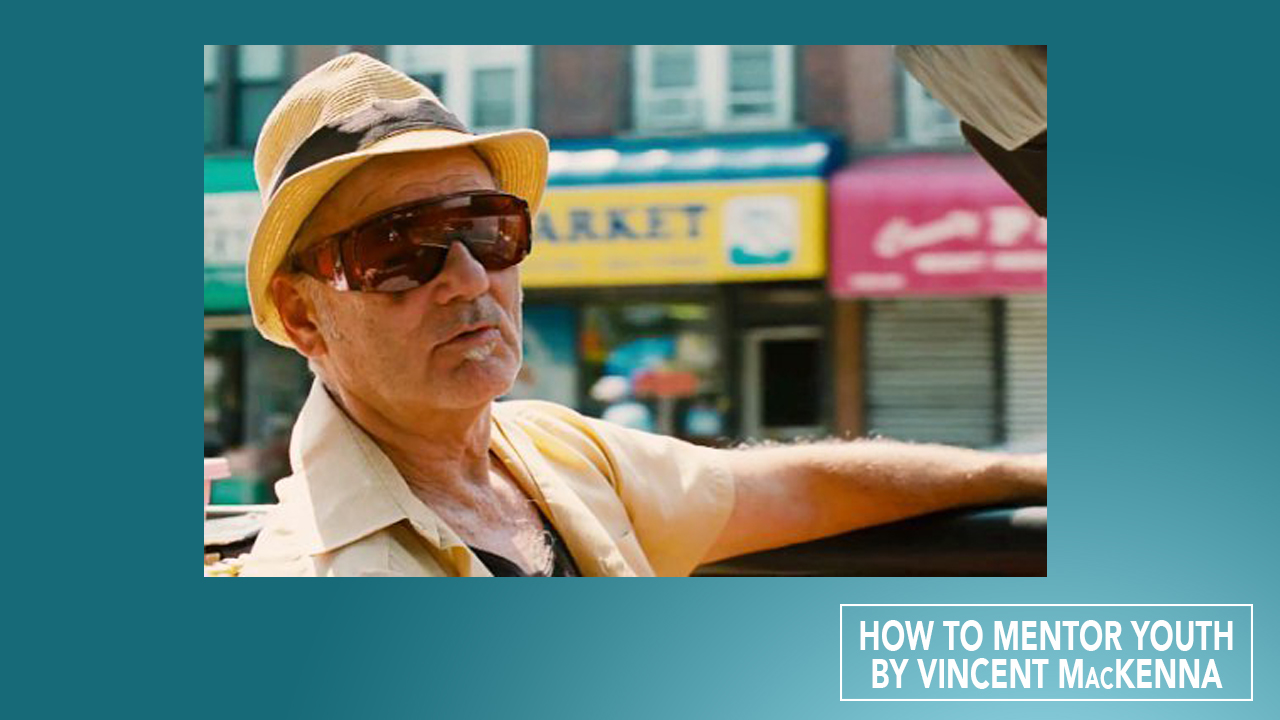
A fictional relationship between a 60-something year old Vincent MacKenna played by Bill Murray and an early adolescent boy named Oliver.
Let’s start with Paul and Timothy, shall we?
Today we’re going to look at the film St. Vincent.
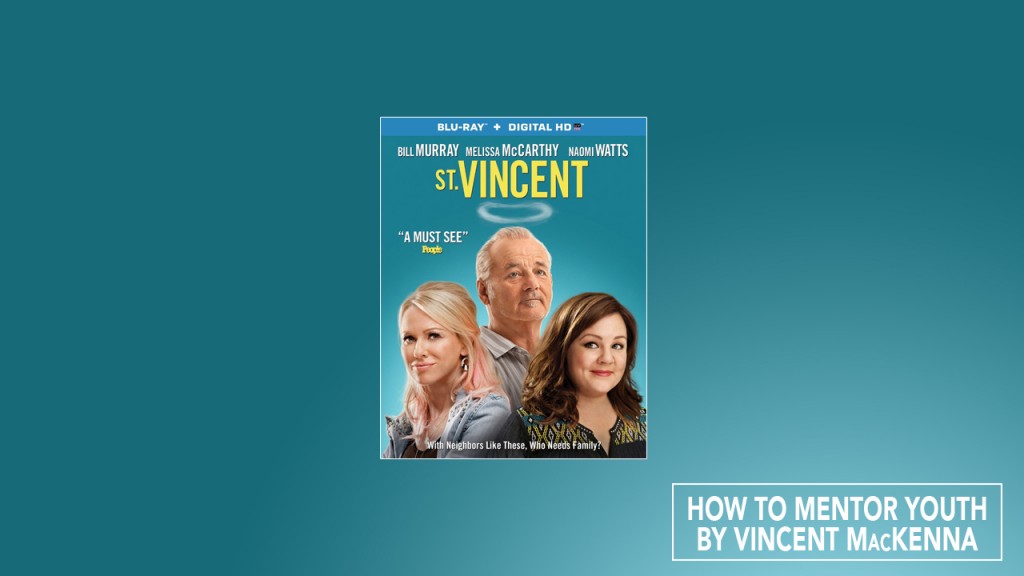
Here’s the official description I stole from IMDB:
Vincent is an old Vietnam vet whose stubbornly hedonistic ways have left him without money or a future. Things change when his new next-door neighbor’s son, Oliver, needs a babysitter and Vince is willing enough for a fee. From that self-serving act, an unexpected friendship forms as Vincent and Oliver find so much of each other’s needs through each other. As Vincent mentors Oliver in street survival and other worldly ways, Oliver begins to see more in the old man than just his foibles. When life takes a turn for the worse for Vincent, both them find the best in each other than no one around them suspects.
Let’s start off by meeting our protagonist… Oliver.
It’s Oliver’s first day at a new school. He and his mom just moved to town to start a new life…
VIDEO: Meet Oliver – (short version) 11:08 – 14:13
Now Let’s Meet St. Vincent of Sheepshead Bay
Video: Vincent Meets Oliver – 19:16 – 21:48 (long version)
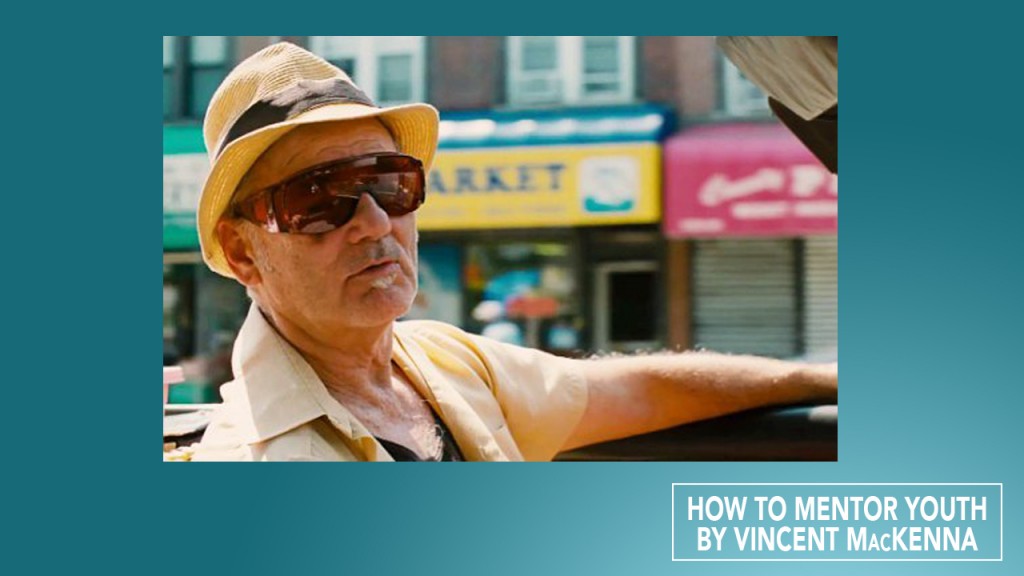
Vincent is…
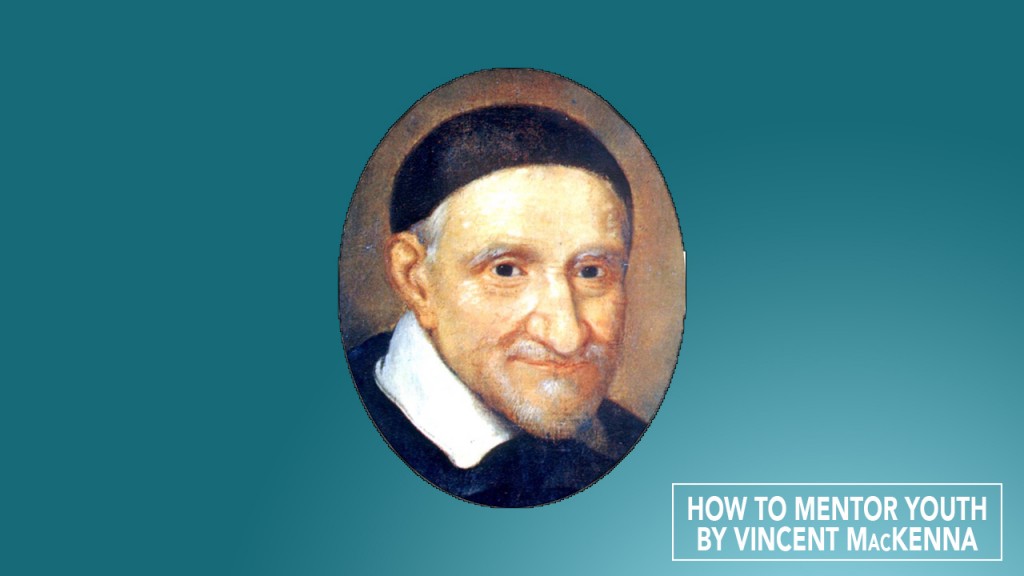
When you look at Vincent of Sheepshead Bay you see the exact opposite of St. Vincent de Paul.
He is a mess. But he’s our main character…
And as circumstances would have it, he’s just gotten himself hired to mentor the boy next door.
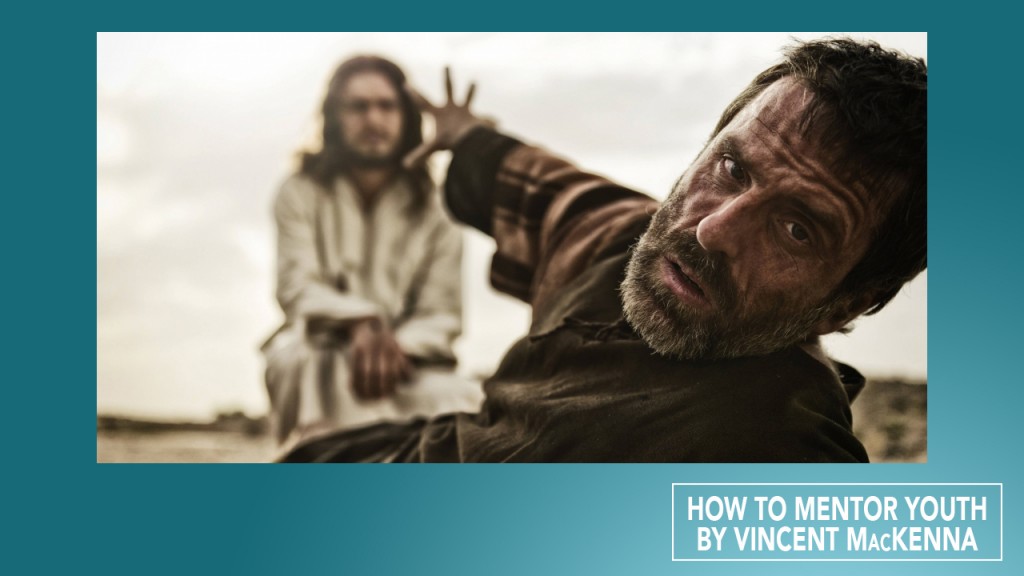
Back to Paul & Timothy
Paul is an unlikely example of the perfect mentor…
But none of those worries panned out. Instead, just like between Oliver and Vincent, this messy man starts to wear off on Timothy in all of the right ways.
Which leads us to…
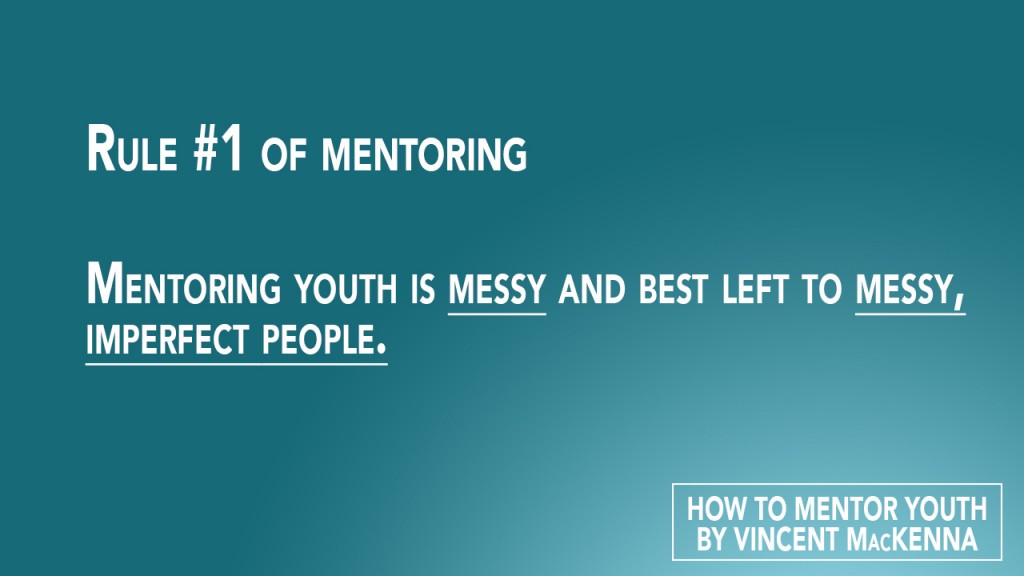
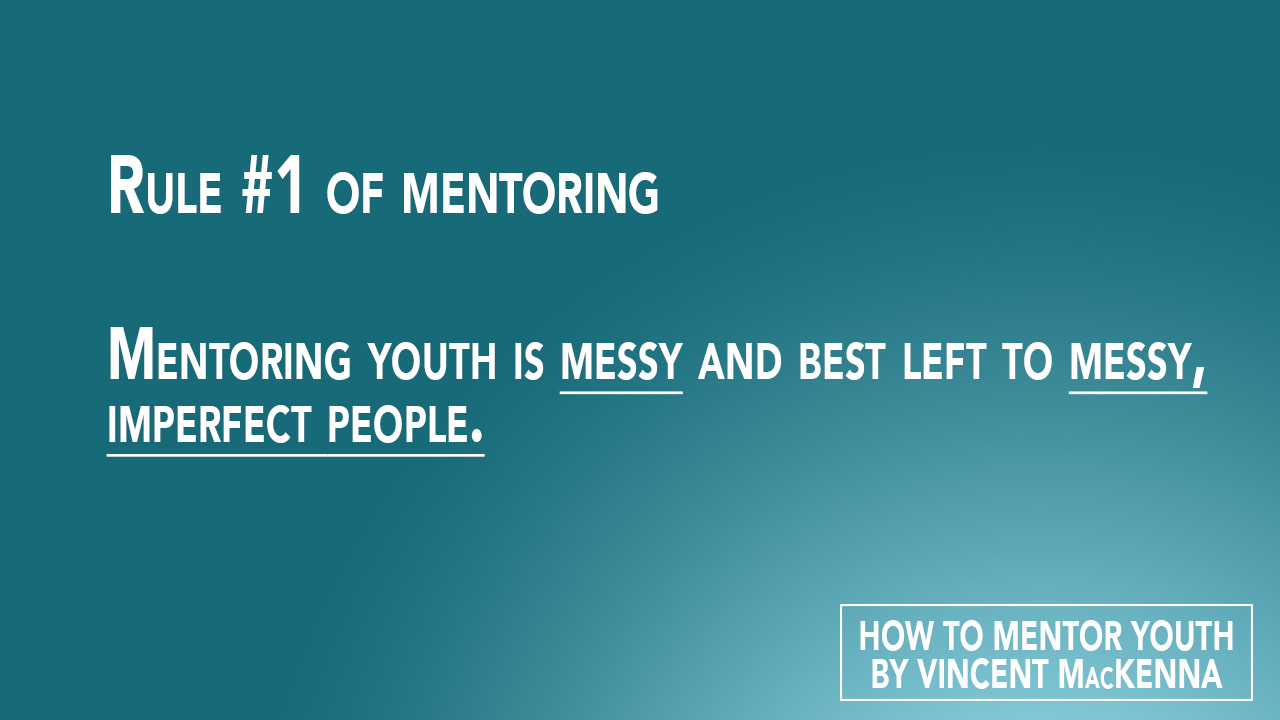
Mentoring youth is messy and best left to messy, imperfect people.
Video: Who taught you to slap? – 32:30 – 33:20
Let’s take a moment to imagine the Apostle Paul and his traveling companion Silas talking in their tent… Acts 16 says..
“Paul came to Derbe and then to Lystra, where a disciple named Timothy lived, whose mother was Jewish and a believer but whose father was a Greek. The believers at Lystra and Iconium spoke well of him. Paul wanted to take him along on the journey”
So let’s imagine a conversation about Paul’s idea of taking Timothy with them…
Paul: Hey Silas, bet you didn’t think we could set up the tent with just the two of us…
Silas: Really, Paul? You’re going to bring this up when you know why it was so hard… you and your fat mouth are the reason John Mark and Barnabas aren’t here to help.
Paul: Yeah, that’s my point. We need help.
Silas: We had help… you don’t play well with others. Remember?
Paul: I heard good things about this kid, Timothy, today. He comes from a good Jewish home.
Silas: Well… not good enough. They didn’t even get him circumcised.
Paul: Yeah, well… I can probably talk him into that. What do you think?
Silas: I guess… I mean… if he’s willing to get circumcised he’s probably going to be able to put up with you…
So that’s probably kind of what Paul’s first impression of Timothy was. Probably, not much. But long term? Paul made an incredible impression on Timothy and Timothy made an incredible impression on Paul.
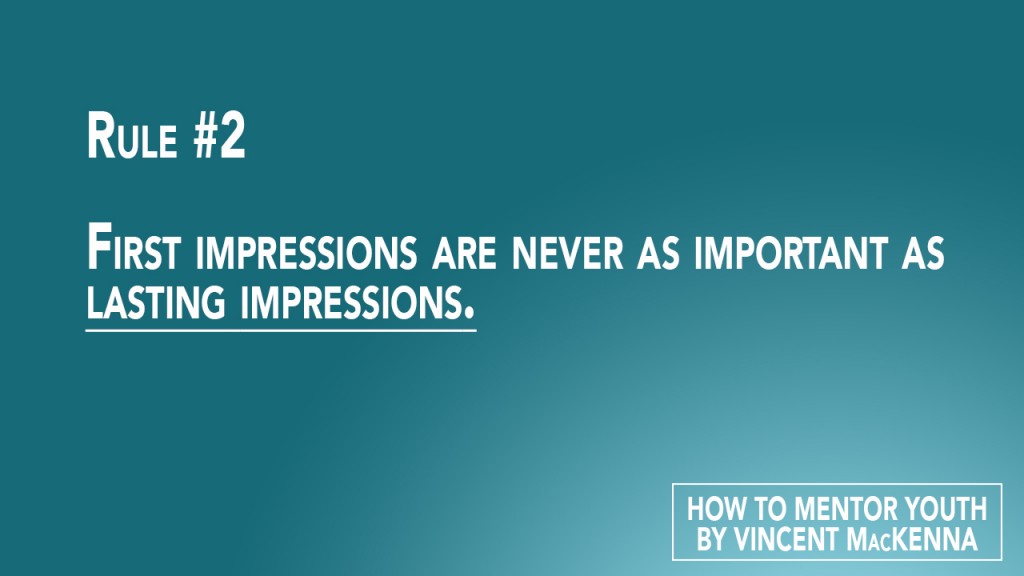
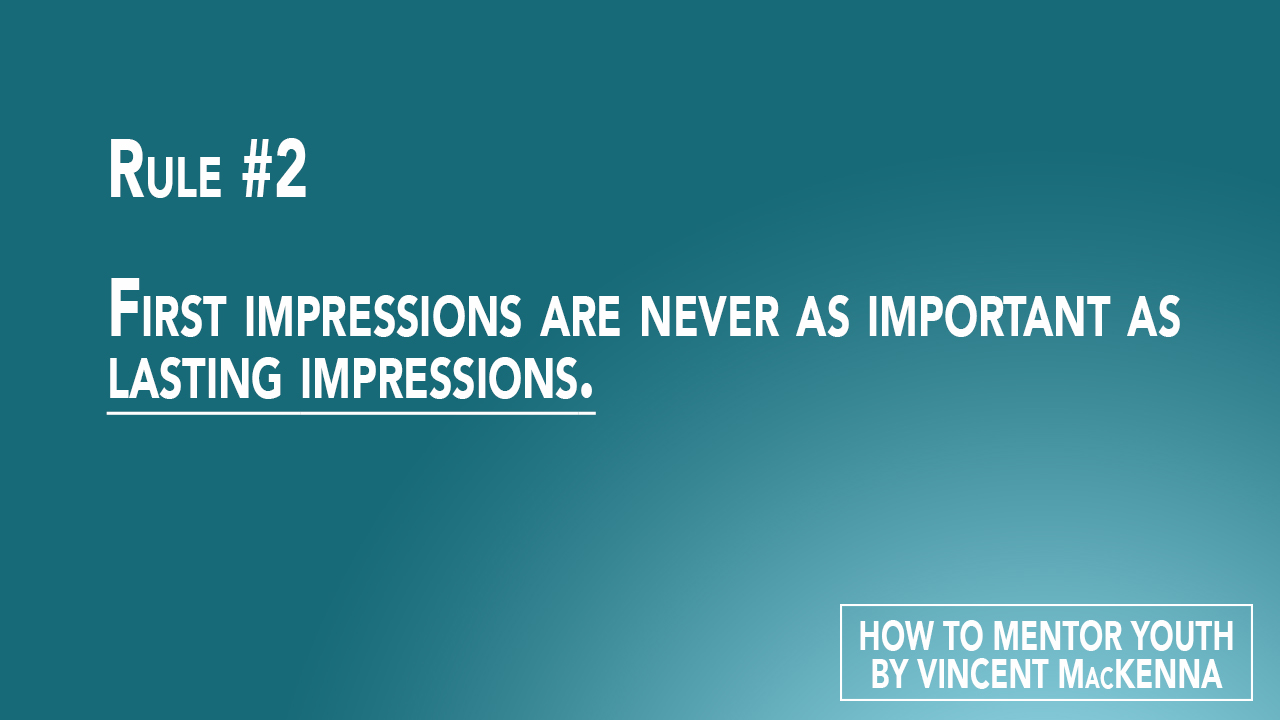
First impressions are never as important as lasting impressions.
Let’s get back to Vincent and Oliver.
Video: First Impressions – 24:49 – 25:51
Their relationship started as a matter of fact.
And let’s be honest. When it comes to becoming a spiritual mentor to a kid in your life… sometimes it starts off matter of fact.
And this is what I know from 20 years of working with middle and high school students. Sometimes, that little sliver of opportunity is all Jesus needs to get something big started.
Video: Vincent Talks to God – 14:21 – 14:39
Rule #3
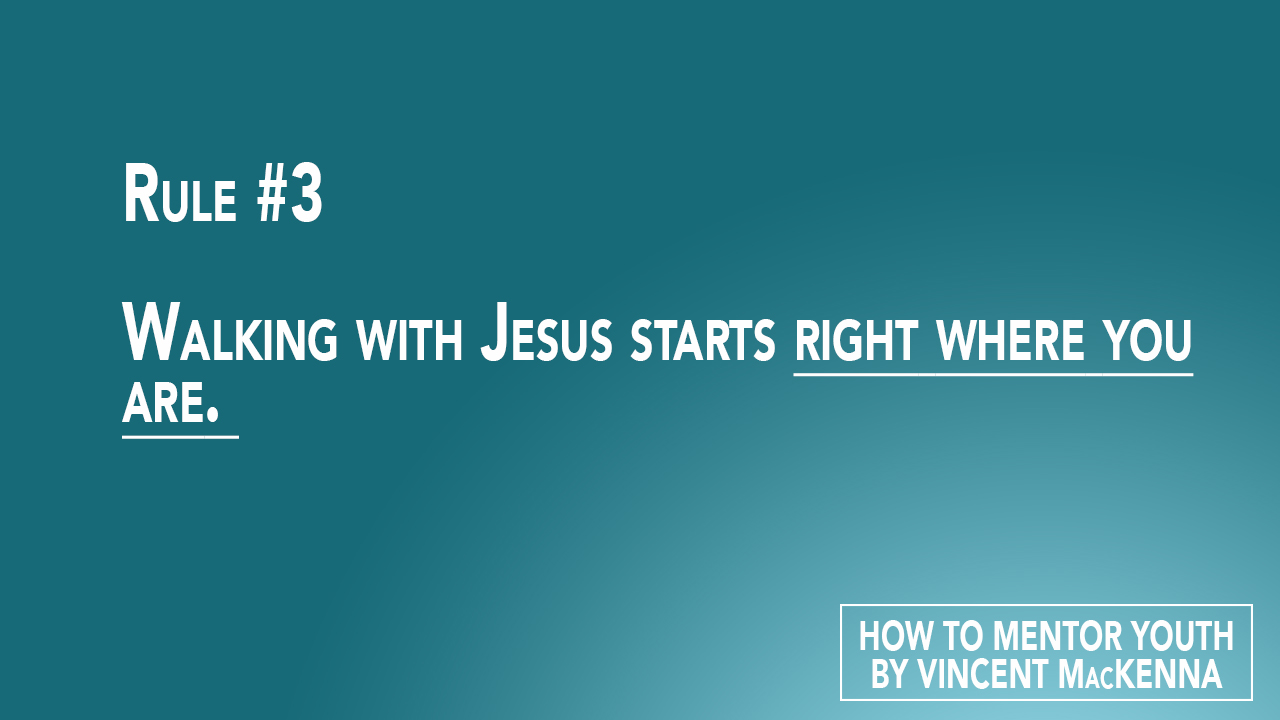
Walking with Jesus starts right where you are.
One thing I know from walking with God… a starting point is just that. A starting point. And together, in a relationship, well… things are going to happen.
When you and a mentee start walking together with Jesus… change is going to happen.
We see in the life of Paul a change with his relationship to Timothy. When you read Acts 10-15 you encounter a man on a mission… there’s a cycle to it.
He goes to a city, he preaches in the synagogue until they won’t listen anymore, he preaches out in the agora… the city center, he builds a group of believers, it starts to grow… but eventually he puts his nose in everyone’s business and gets his butt kicked, he escapes in the middle of the night.
He comes to town, he preaches, he starts a church, he gets his teeth kicked in, he leaves to the next town.
This isn’t how you build long-term relationships.
But somehow he becomes more than merely an apostle to Timothy, he becomes his spiritual father.
2 Timothy 2:1-3 “You then, my son, be strong in the grace that is in Christ Jesus. And the things you have heard me say in the presence of many witnesses entrust to reliable people who will also be qualified to teach others. Join with me in suffering, like a good soldier of Christ Jesus.”
This is something we also see when you mentor someone. You set out to change them, but they change you more.
To be a mentor you have to allow your mentee to mentor you, too.
Video: Are you praying? – 44:47 – 47:39
When we look at the relationship between Paul and Timothy one thing is important to point out.
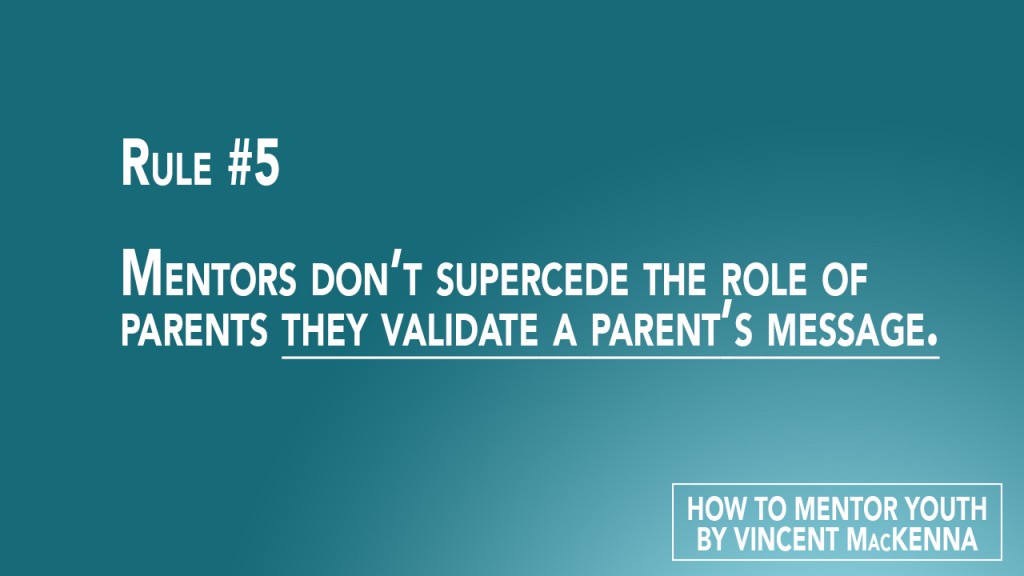
Mentors don’t supercede the role of parents they validate a parent’s message.
Along the way, Oliver somehow manages to weed out the bad stuff he’s learning from Vincent to appreciate the heart behind what grumpiness.
Oliver watches how Vincent loves his wife, who lives in a nursing home, and he learns to love his mom more because of that influence.
Video: I Love You Mom – 1:27:26 – 1:28:25
Let’s take a slightly more voyeuristic look at Paul and Timothy’s relationship.
2 Timothy 4:11-13 “Only Luke is with me. Get Mark and bring him with you, because he is helpful to me in my ministry. I sent Tychicus to Ephesus. When you come, bring the cloak that I left with Carpus at Troas, and my scrolls, especially the parchments.”
There’s so much we DON’T know.
But there are things we DO know.
And so are here today, bearing witness to– recognizing the work of Paul the mentor of Timothy.
Mentors aren’t often recognized for their work, but when they are it is awesome.
Video: Presented for Sainthood – 1:29:52 – 1:28:25
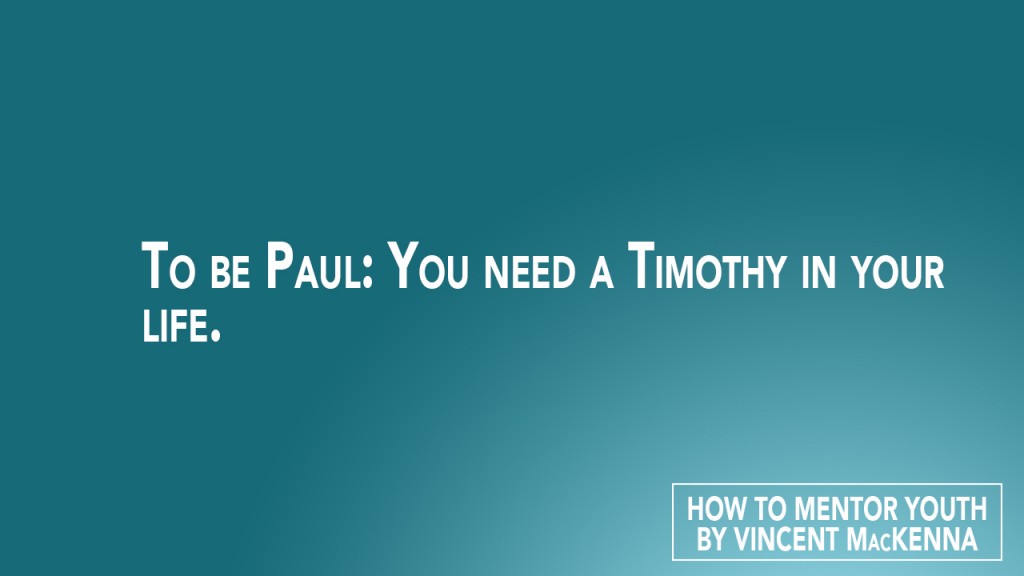
Strive to live like Jesus — to be Paul— you need a Timothy in your life.
We can look to Paul as an example of how to live like Jesus wants us to live
And the next takeaway?
Video: The Assignment – 1:06:09 – 1:07:01
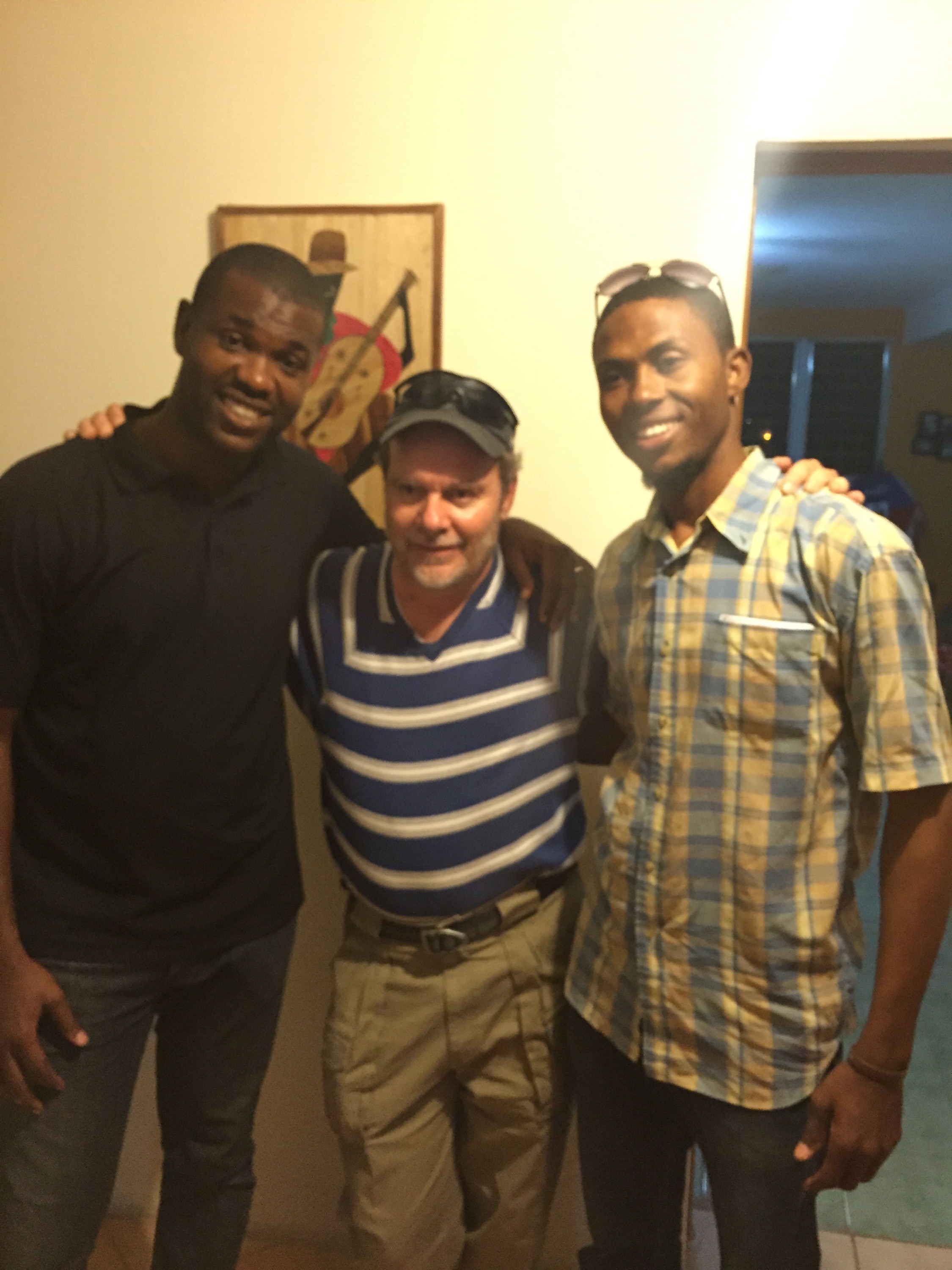
Identify the everyday saints in your life
Amen

In my experience we tease people we like. By that measure the Haiti Vision Team really likes one another.
Wrapping up my third vision trip with PPM is bittersweet. It’s bitter because I love the people. It was so awesome to see a lot of pastors I’ve visited before, to catch up with them about their ministry and family… It’s great to hang with the PPM Haiti staff who are some of the most gracious people on the planet… But most of all it was such an honor to be with a group of youth workers this weekend who caught the vision for what partnering their ministry with a Haitian ministry could look like.
And oh! We teased one another endlessly. From the simple “cool kids sit in the back of the bus” to the endless jokes that I must be a blue state liberal from California, [I prefer granola, for the record] the teasing was playful and a sign that everyone enjoyed the trip.

Today we took a long bus ride to visit to a remote church north of Port-au-Prince about 2 hours out of town.
After we huffed and puffed up a steep and slippery hill to the church [because the bus couldn’t make it], our my complaining ended when we learned that the Haitian staff of PPM had saved their own money and invested their own time to start this building project, Haitians serving Haitians to build the Kingdom of God. We learned that before this building was constructed the church met under tarps on the top of the hill, usually in the mud. And the Pastor humbly told us how he’d ruined his back with years of setting up and carrying the poles and tent to the top of the hill for worship.
From there we took a little pit stop and visited a large park with a waterfall. I love rivers and creeks. So it did my heart some good to have some time in a river. I didn’t make it all the way up the rapids to the waterfall, but I loved cooling off in the water below.
After driving back to Carrefour, we capped off our trip with a special dinner with some pastors we hadn’t yet gotten to meet. For me it was another opportunity to reconnect with several pastors I’d met in the past. And Pastor Samson, the first pastor PPM connected with in Haiti, delivered a powerful message about the strengths of his partnership with PPM and how God is using their relationship to re-invigorate his churches calling to missions. Including plans for his church in Carrefour to send the first PPM team to Cuba as well as a team to their partner church in Mississippi. (Re-read that sentence. Mind blown a little???)

Lastly, we came back to Good Shepherd to do a final debrief. And by debrief I really a mean one last time to tease one another.
Here’s the thing I loved about the people who came on the vision trip: they had no pretension, they had no firmly held opinions about what to expect, and they came with open hearts to hear from God about potentially bringing their church back to Haiti. You simply can’t ask for more faithfulness than that.

I think it’s easy to forget about a place like Haiti. It’s a statistic factory. But one thing you might miss if you’ve never been here is that while they may be known for some things, they are not known for spiritual poverty.
It’s easy to look at Haiti with pity. But if you paint Haiti as a place to pity you’d likely miss what God’s up to here. God is pouring out his grace on the poorest country in our hemisphere. There has been a tremendous spiritual awakening going on here for more than five years.
And so when I think about “Why I come here?” I just look at it rather simply: I want to be where God’s on the move.
And that movement? It’s an invitation. Come here. Just trust me on this. Come.
Want to learn more about serving in Haiti with Praying Pelican Missions? Fill out the form below and let’s chat.
[gravityform id=”10″ title=”false” description=”true” ajax=”true”]

Relaxing in my hammock after a long day of travel and getting to know our group, including meeting with a Pastor over on the opposite end of Port-at-Prince, cool breezes wash over me… Relaxing me as my mind wanders in every direction at once.
I’d never take a cold shower at home but I love them here. There’s something incredible about the cold water splashing you in the face, washing off the grim of a day’s travels, and cooling your body down.
The splashes of water cement the memories of the day in my mind.
Today was one of those days so long it felt like two. Thinking back, my espresso powered layover in Miami couldn’t have been today. Fighting through baggage claim couldn’t have been today. A mid-morning Coke couldn’t have been today. Seeing the progress at Pastor Jacky’s couldn’t have been today. Seeing Sister Mona, having dinner with the team, worshipping on the roof with distance lighting wasn’t today. But it was. Some days are like that… So long and so eventful that as you finally stop to think about it it couldn’t have been just a day
As I swing here I just can’t stop thinking to myself, “I love seeing lightning in the distance, thunder gently rolling by.”
The wind brings the smell of charcoal fires, the echoes of too many loud radios, the shouts of Creole, the honking horns.
I’m left to ask as I drift off… Where is silence? Amidst the chaos is it found in the crickets chirp? Is it found in the droning boat engine noise of a nearby cargo ship loading through the night? Is there silence found in the noise of the chaos? Or maybe silence will come from somewhere else tonight? And why does the swaying door in the wind calm me when it’d annoy me at home?
As I drift off I’m seriously debating sleeping outside in this hammock– reflecting on this long day until sleep comes.
The noise, the smell, the breeze, everything odd, yet familiar. The energy Haiti brings my soul. How is it that a place is so foreign that it feels like home?
Do you have a place like that so other in your life? Yesterday, before the trip began, was so ordinary and wonderful. A day with the kids, my daily work, dinner with the family. And then… 24 hours later… I find silence in the wind, swinging in a hammock, 50 noisy feet from the Caribbean.
Where do you find silence? Where do you rest in the wind? Where do the crickets call you to sleep?
For me, it’s this hammock, this place, this country. Where is it for you?
Want to learn more about serving in Haiti with Praying Pelican Missions? Fill out the form below and let’s chat.
[gravityform id=”10″ title=”false” description=”true” ajax=”true”]

Late tomorrow night I board an overnight flight for Port-au-Prince, Haiti. Once there I’ll spend the next four days with a dozen pastors and youth pastors from across the United States who are coming to explore bringing a team to Haiti with Praying Pelican Missions.
I have a confession to make: Going to Haiti doesn’t make me nervous anymore.
My first trip in 2010 I was really, really nervous. Just a few weeks after the devastating earthquakes that brought Port-au-Prince to it’s knees I nudged against Ian Robertson at the San Diego airport and said, “What in the world are we doing going there right now?” In preparation, I’d stared at the endless devastation on CNN for hours, read and watched everything I could take in, and been warned by a travel doctor of every possible ailment I could contract.
Going to Haiti in 2010 felt death-defying and harrowing and a little ridiculous. Something you survived.
But… I’ve made six trips since then. And a lot has happened in 64 months there.
I’m not nervous about my trip at all. I’m just excited.
I do, indeed, think that one important aspect of youth ministry– one indelible opportunity for every student involved in a youth group— is a missions experience. Living in the United States is incredibly ethnocentric. And adolescence is a crucial time to shape a worldview that is bigger than the United States.
Part of our job as a youth worker is to help teenagers understand that the Kingdom of God is bigger, stronger, more connected, and better than the place that we live. Jesus followers are citizens of the Kingdom… to discover that you have to get out of your culture. You have to be in other places, worshipping with different people, eat different foods, explore different cultures, and fall in love with something outside of what you know.
Whether it’s across town, across the country, or across an ocean I believe a healthy youth ministry includes a healthy dose of missions experiences. It’s good praxis. It’s good theology. It’s good sociology and anthropology.

But I’m 38, not 15.
Frankly, I don’t need another missions experience. I love exploring and visiting new places and meeting new people as much as the next person. But I am at the point in life where I want more than a one-off experience.
I want real relationships. I want to know what I’m doing is sustainable. I want to build partnerships. I want to lift up the local church and strengthen ministries in the things that I do. And I want to make sure that what I’m do is helping and not hurting.
That’s why I’m excited and not nervous about my trip this weekend. I’m going on a vision trip with a dozen folks from around the United States and we’ll spend 4 days with people in Haiti that I know– Eric and Bethany, (get to know Bethany a bit in this post) Cassie and Almando, Rudy, Sister Mona, Pastor Valcourt are people I’ve built relationships with, and have seen how these long-term partnerships lead to sustainable ministry through the local church in Haiti.
To get the opportunity to introduce people to that kind of health? There’s no room for nerves, only excitement.
Want to learn more about PPM’s work in Haiti? Fill out the form below and we’ll talk your ear off.
[gravityform id=”10″ title=”false” description=”true” ajax=”true”]

Back in the old days, 2005 to be exact, I had a problem. I needed an email template to send our very first newsletter for Youth Ministry Exchange.
Email marketing was starting to become a thing and I wanted to send an HTML-based template that looked like I knew what I was doing. (Even if I didn’t.) Back then, we sent email with a little program that ran off our webserver using the PHP mail() function. It was archaic, at best, and usually shut our server down in the process. But it’s what I had and I was determined to make it look as professional as I could.
As I continued to look at templates I kept ending up at a little website, MailChimp.com. It was a paid service, I didn’t want a paid service, but they were offering free templates… for them, this was an early entry into the SEO game… and it was working by drawing me in.
I started using their templates. I’d copy/paste their code into my HTML editor, add our content, then copy/paste their template into our software, and send it out to our customers. Then our server would shut down… and people would freak out because the forums were down or the articles I was linking to weren’t visible because I’d have to call Bluehost and get them to reboot the server, again. On top of that headache I had to create and manage forms for people signing up for our newsletter as well as manually manage people opting out. It was a royal pain.
By early 2006 I’d had enough.
Even though we really didn’t have the money to pay for any service I knew that I could sell an ad on the forums that’d pay for MailChimp. But the downside of paying for something I had been doing “for free” on our webserver was easy to overcome when I could get more uptime for the forums, less complaints, and MailChimp would also offer me some basic reports, handle the opting in and opting out, all of that.
And so, MailChimp became my email marketing platform of choice. They were still kind of small at that time, they had something like 11,000 customers. (They have more than 7 million customers now)
Pretty soon I had questions. Something didn’t work right or I couldn’t figure it out, so I’d hop on live chat or send in an email to ask my question. And instead of “just fixing it” they’d often times point me to their support documents which told me how to fix my problem.
They’d roll out a new feature, I’d try it in my next message, if there was a problem I’d email them, they’d send me a link to a document and I’d fix it. This little loop would continue for the next year or so. With each message I sent I got a little better, our emails got a lot better, and we were rocking and rolling. (Open rates of like 45% were the norm!)
Then in summer 2008, Patti and I sold little YMX to another company and the next thing I knew I re-entered the dark ages as I began working for the larger company on their email marketing.
All-in-all, the emails we were sending at the new company were prettier– the copy was much more snappy. But the open rates were terrible– less than 10%, the click rates virtually non-existent– less than 1%, the lists were full of spam and duplicates, we had a very hard time showing how emails created leads/sales, and we were spending lots and lots of money sending email messages with an array of contractors and over-priced, out-dated systems.
Worse yet, when something went wrong, or we wanted to do something different… the answer was always either no, more money please, or that’s not in our contract.
In 2009, I finally convinced this new company to move to MailChimp. And you know what? Our open rates, click rates, and every other measurable skyrocketed. (Not to mention we saved boatloads of money.)
Here’s what I learned in this:
It’s not just MailChimp that’s taped into this. If you think about it, the driving force behind much of the current internet/app crave is that power has shifted from CEO dictators who control every aspect of how a product is used with their greatest weapon being restricting access to CEOs who act like anthropologists and data-driven analytics monsters whose greatest weapon is granting near limitless access.
YouTube makes very few videos but their platform and reach is massive. Apple’s iPhone struggled until they publicly released the software to build apps and make the entry point for submitting apps just $199. (Android was built from the ground up on this principle.) WordPress is an open source product that runs nearly 1/4 of all the websites on the planet. Want to contribute? Anyway can help make WordPress better.
On and on, most of the most powerful technology companies today have empowered their users to build their own platforms.
This shift in power, from a small group to the masses, presents a problem for the church. Culture demands the power to create, transform, remix, reimagine, innovate.
And the Christian leadership establishment is terrified by this.
Their entire model of subsistence depends on large gatherings where a guru speaks to the masses. Power is equated by how many people listen… a church is deemed as being more powerful if the guru speaks to 10,000 people versus a church of 100.
The challenge for the Christian establishment is to quickly pivot from an organization who finds it’s power/influence in culture where everyone listens to the guru to becoming a place that empowers believers see the local church as a place to become equipped to influence their network wherever they are and with whatever they do.
Fortunately, there’s a playbook. The first century church faced nearly the same challenge as they pivoted away from a Temple-based, hierarchical priesthood to empowering every believer as a priest. The less control the leaders had, the more individual believers were empowered to live out their faith, the faster the church grew.
If you want to know what to do right now to see the local church impact a culture where old-school power doesn’t work, read the book of Acts.

I spent a lot of time in Freshbooks last week. This revealed three important things to me. First, it’s clear that Marko and I have no training in accounting or bookkeeping. We try really hard and we are learning a ton. But it’s way harder than I’d like to admit. Second, while living in the daily grind of our little business makes it hard to see it… there’s no denying the exponential growth of everything we’re doing. Third, there’s a huge need for the position we’re hiring for to help us administratively so that our growth doesn’t stall. I’m actually starting to think of our next couple hires after that.
So what’s the secret to the Cartel’s growth? I think the biggest secret is that we cultivate a healthy ecosystem where growth is a natural byproduct of the health– instead of worrying about creating a home run product. Since it’s opening day in Major League Baseball… I describe what we do at the Cartel as “small ball.”

We do a lot of little things right and success is the outcome. And when we do things wrong… we fail fast and small.
We don’t always get these things right. But when we’re at our best, this is what we’re striving for.
It’s easy to overdo it on consistency. Like, worrying about something being done at a specific time as opposed to being done well. But consistency is a sign that things are going well, that we’re on a good pace, and that things are sustainable. People are naturally drawn to consistency in quality of what you’re doing or consistency about timing on an event or even consistency of how long it takes to follow-up on something.
For instance, we don’t change the size of our books or the paper quality or even the thickness of our covers… ever. It’s not that we can’t do that. It’s that by being consistent people know what to expect from our books. And while we’re still perfecting our editorial process, the process of how a book becomes a book is pretty consistent. Why? Consistency leads to health.
Core to who we are, from the onset, is cultivate playfulness. There’s a fine line between playfulness and corniness… and we make sure we stay firmly on the playful side. This isn’t just something we do on the outside in what we do, it’s kind of who we are as an organization. I won’t extrapolate how that actually plays out on a daily basis, I’ll just leave that to the imagination.
I find that as we’re playful it spreads to people we work with and into the stuff that we do. Last year, at The Summit I had a joke with the woman at our host hotel about wanting a really, really big gift basket because we completely sold out the hotel. Well, we we checked in to our rather modest little hotel room there it was… a candy gram with a hand written note.
It wasn’t over the top ridiculous but she was being as playful as her very serious job would allow.
“Nothing good comes out of a research & development department.”
That’s something I’ve learned over the years.
Fat and happy never leads to innovation… only iteration.
Innovation is directly linked to desperation. One of the key things we do at the Cartel is always keep things a little desperate. We make things work because we have to make them work in order to keep going. Take that away and we get really, really safe.
Desperation is to innovation as safety is to iteration.

So what do I do with these 3 things? Start composting.
Literally, you cannot buy health. You can’t hire health. You can only cultivate a healthy environment and patiently mix these things in over time. The bad news is that you can’t do this overnight. The good news is that once you’ve got it going it’s relatively easy to keep it going… just like a good compost in your garden.