

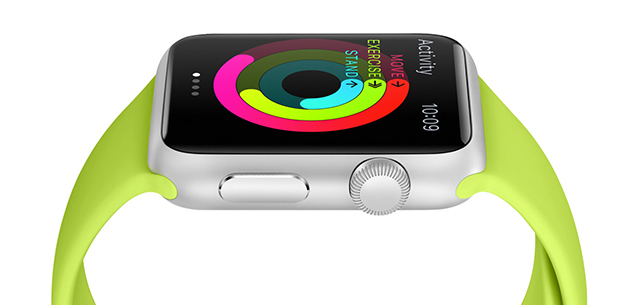
Yesterday was the big keynote for Apple, announcing the sale date and prices for their new product, Apple Watch.
I’m being more cautious about the watch than I was about the iPad. I thought the iPad was a joke but it turns out to have been a great idea. They created a desire where there was none and now everyone has one.
Personally, I just have zero desire to wear a watch. It wasn’t the technology I ditched, it was that I didn’t like having something on my arm all the time. Even now, when I dress up sometimes I’ll slip on my old fancy watch, and it just bugs me. I can’t imaging having something on my arm that might get hot because it’s connecting to things or having to remember to charge it.
But that’s not what worries me about the watch. I’m convinced that people will buy it, especially next year when they release a $99 version. (That’s their habit.) What concerns me about the watch, for Apple, is that they have a monster inventory issue that will eventually kill them.
Think about it like this: They used to have one phone, the iPhone. And in the United States it worked only with AT&T. Great… it’s easy to make and inventory something. This is the Henry Ford model of mass production. (A model that is driving the growth/success of Southwest Airlines, by the way.) But the iPhone 6 has tons of models and options. You can chose different colors, different storage sizes, and different mobile carriers. It’s confusing for customers because they can’t just walk into a store and ask for the latest iPhone… now they have to make a lot of choices. And it is incredibly expensive to stock. Imagine being a retailer… to sell the iPhone 6 you have to stock tens of thousands of dollars in iPhone’s in all of your stores. Think about that from a global perspective and you’ll see that Apple must have BILLIONS of dollars in inventory for products that their own system is constantly making obsolete. (People only want the latest phones.) As an investor this huge shift in business model in the post-Steve Jobs Apple keeps me away from buying their stock. It’s popular. But boy is it risky.
Into that comes the Apple Watch. There are 25 different models currently available, with nearly unlimited options.
 Imagine the risk as the buyer at Best Buy? You have 1050 stores and your customers are going to expect each store to have all 25 models on day one. So let’s say you place and order for all 25 models, starting with 50 units of each of the 25 models at an average wholesale cost of $175. Each store will be starting with $218,750 in inventory on the Apple Watch. That’s an initial order of $229 million to cover just U.S. stores. Sure, that’s the potential for $500 million or more in sales. But that’s a ton of risk for Best Buy because they just have to take a guess at which models will be most popular to customers.
For a retailer, even one as large as Best Buy, putting $229 million on the line for the potential of $500 million in sales is a lot of risk. In 2015, they’ll do about $40 billion in sales… a $229 million risk on just one of their products in their store is a big, big risk.
And that’s just one retailer.
Now imagine you are Apple worldwide? You have to manufacture for orders to sell to thousands of retailers like Best Buy while also serving your own retail Apple Stores and your online customers.
All of that means that they are paying to build billions of dollars in Apple Watch’s various models without ever really knowing if customers are going to buy them. If it works, the world’s largest company just got bigger. If it doesn’t? You’ll have to account for that loss to stockholders.
In my opinion, even for a company that seems bulletproof like Apple, it’s a very risky step.
I’ve had Apple in my personal portfolio in the past. But right now? That’s too much risk for me as an investor.
Maybe you’ve heard this term, the Internet of Everything? It’s kind of a buzz word and the unofficial theme of this years Consumer Electronics Show. Essentially, the trend is to get everything in your home to connect to the internet so that you can monitor it and control it with your phone. There are funny examples… like a device that let’s you know how many eggs you have in the fridge to more serious devices that control the thermostat or your home security system.
The Apple Watch is part of a movement of “wearables.” Companies like Garmin, FitBit, and JawBone have been making devices that people wear for fitness purposes or to talk on a cell phone. It’s big business and no one is blaming Apple for getting into it, even if they are a little late.
The simple reality is that our phone and these devices are starting to track all of our movements, our purchases, or plans, our calendars, and now that we’re connecting our homes and bodies to them… it’s getting to be a lot of data. You, as a user, are literally a network of everything.
Last week, I listened to a fascinating conversation on NPR about wearables and the data they collect called, “Sure you can track your health data, but can your doctor use it?”
The quick answer is… “No.” Your doctor doesn’t want that data as they aren’t trained to use it, don’t know if it’s accurate, and if you are transmitting data to them they somehow become liable for that data legally.
But it brings up a larger, more important question: Where is all of this data going?
I don’t mean literally. Literally, the data is going to servers and it won’t be long before advertisers and marketers are able to purchase all sorts of data about you that you willingly share so that they can hit you with an ad on iTunes Radio just at the time of day you normally take a break and walk over to Starbucks. That’s literally what is happening.
But, more figuratively, what are you doing with that data yourself? And if we’ve gone from desktops to laptops to mobile phones/tablets to wearables… it won’t be much longer until we’re talking about Apple’s new device, an edible / embeddable device charged by the electrolytes in Gatorade that lives in your large intestine.
I mean, neuroscientists are already perfecting technology that can read your thoughts! It won’t be too much longer until the internet of everything is literally, the internet of everything. Won’t it be interesting to have your phone play a song embedded with an ad for your favorite taco shop because your stomach is starting to tell your brain that you’re hungry for lunch?
I don’t know. All of this is starting to feel like too much. And, as I’m out talking to teenagers around the country, they are getting tired of all of it. I am not saying that the technology won’t be there and I’m not saying that I don’t think people will adopt wearables or even ingestibles… I’m just saying there’s going to emerge some questions about how much data is too much data?
I don’t know. But I do know the whole thing is interesting.
And as much as I can’t imagine why I’d need the Apple Watch. Apple has proven, over time, to speak my language and market things to me I don’t really need but eventually want.
Something tells me I’ll be standing in line for a watch sometime in the not-so-distant future.
Peessshhheeeewwww.
The air brakes release on the rental car shuttle at the Phoenix airport last Thursday and a packed bus starts to make its way to the terminal.
Peessshhheeeewwww.
I roll my head back and let out a deep, silent sigh. A great day of training youth workers and talking to people about the Student Justice Conference. In just a few hours I’ll be home.
Business travel is generally a solo activity. People make small talk on shuttles or over a meal at an airport bar. But, largely, I find it’s an insular activity often distracted by keeping up with email, texting, looking at your travel details on Tripit, and stuff like that.
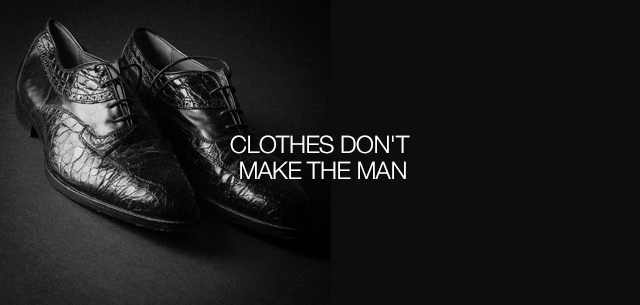
As I tip my head back and let out my end-of-day sigh I noticed something: Everyone in the front of the bus is in a suit. These are men in business suits, with leather bags, expensive watches, and nice shoes. The guy standing directly across from me is wearing high-end shoes made from alligator hide.
I look at my own feet. I’m wearing Tevas. My “business suit” includes casual shorts and an untucked polo. I don’t have a $500 leather briefcase. I have a $50 backpack that a friend gave to me a couple years ago.
Instantly, I feel inferior.
Actually, I feel stupid.
These guys are serious business people. They probably look at me as some schmuck in town to watch Spring Training.
In that moment I felt…. illegitimate.
This little pity party lasted about a block. That’s when I remembered a couple quick facts.
I don’t have to feel inferior. Despite how I felt in that moment I do, indeed– and to the amazement of my parents– have a “real job.”
In fact, I think I have something a lot better than a “real job.” I have a life’s work that I’m fully invested in, that’s fulfilling and fun and provides a decent living for my family.
And yes, there are moments where I look at big houses on Zillow or look at AutoTrader, and yes… I wish I had more and bigger and fancier and whatever.
Seats I think I deserve vs seats I actually have. cc: @AztecClub pic.twitter.com/vOOV3x4Jgp
— Adam McLane (@mclanea) March 5, 2015
I wish I had a boat and a vacation house and… and… and…
But I don’t have anything to complain about. I made my own choices about the kind of life I want to live and the calling I want to pursue.
If I wanted that life it was there for me 15 years ago. I didn’t get kicked out. I quit.
I was there, in the land of suits and gators and big fancy meetings with big fancy people. And you know what? It wasn’t for me.
And just like I had this moment where I felt inferior to the group of men in their fancy business suits… there’s a high likelihood that one of those dudes was looking at me and thinking, “One day I’d like to live a life where I can wear sandals, shorts, a polo, and carry a backpack to work.” Why? Because we all want what we don’t have.
Satisfaction isn’t found in stuff or position or $700 gators.
Satisfaction comes from something far more simple.
“You shall not covet your neighbor’s house. You shall not covet your neighbor’s wife, or his male or female servant, his ox or donkey, or anything that belongs to your neighbor.”
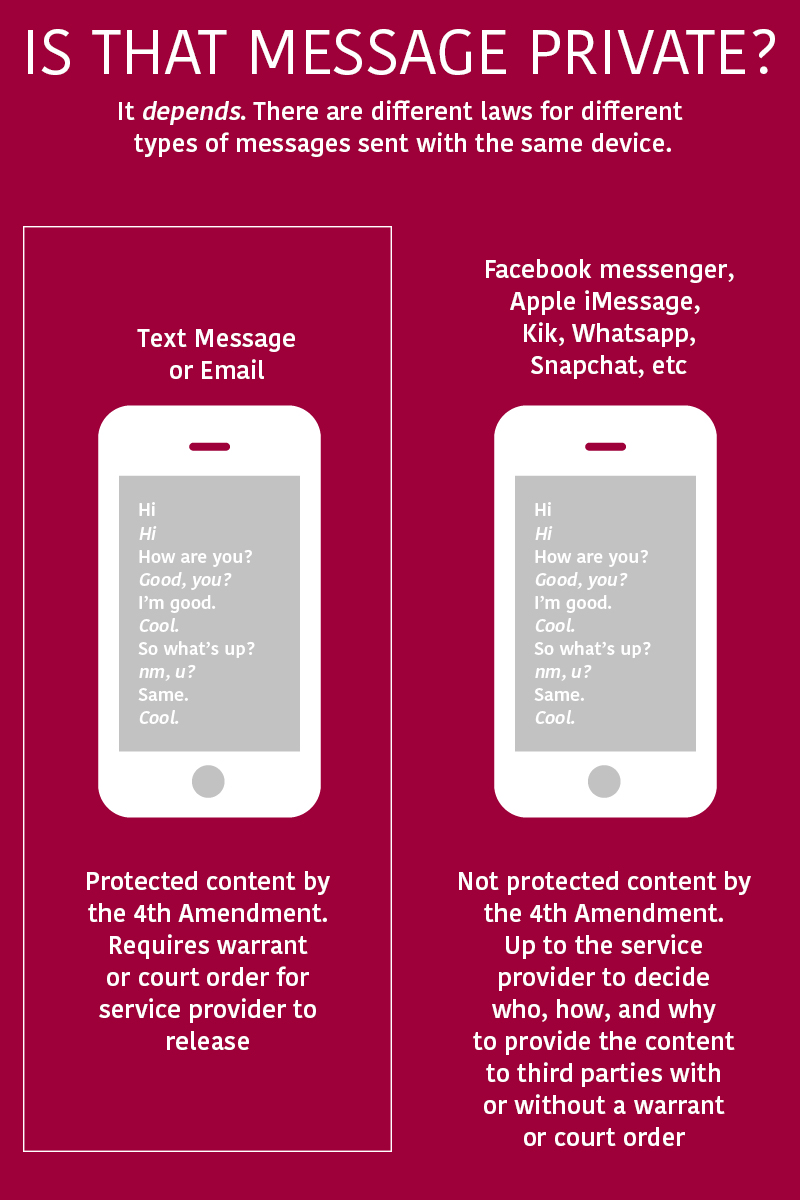
There’s no such thing as internet privacy, only perceived internet privacy.
ACLU – U.S. Surveillance Law May Poorly Protect New Text Messaging Services
Electronic Frontier Foundation – New Ninth Circuit Case Protects Text Message Privacy From Police and Employers

Ever had one of those 3 o’clock in the morning moments of illumination? Well, this is one of those.
I’ve probably heard 20 sermons on John 15 about the vines and the branches. Maybe more. I’ve probably taught on it myself.
There are whole books built on this, I’ve read a bunch of commentaries. It’s one of those core things people refer to.
And, since I don’t know much about grapevines, I tend to get hung up on the idea. Even though we have grapes in our backyard I’ll be the first to admit that the whole illustration Jesus was using is a little lost on me.
A lot in understanding this passage hinges on the word “abide” and that’s not really a word we use in English very often. It’s not even a word I can define off the top of my head.
Abide in Me, and I in you. As the branch cannot bear fruit of itself unless it abides in the vine, so neither can you unless you abide in Me.
Other translations translate that word differently. The Message uses “Live in me.” The NIV, “Remain in me.” But most translations use this antiquated word, “Abide.”
But I woke up with this old Gershwin song on my mind. (Don’t judge me, apparently I dream about show tunes.) If you want to trip out a bit, listen to this Pink Floyd cover of the same song.
The two, the song and the Bible verse, connected for the first time.
Abide… biding my time… Jesus is talking about chilling out on the vine— when the time is right— he’ll pick you. Your job is to chill on the vine until just the right time, when you’re ripe, at just the right time, you’ll get picked.
We live in a RIGHT NOW culture. We want to change the world RIGHT NOW. We want everything to improve RIGHT NOW. We want to see change in ourselves RIGHT NOW. We want to see our enemies cry RIGHT NOW.
Our culture says RIGHT NOW.
Being totally transparent, I’m anxious about sitting on the sidelines at church. It’s totally weird to go to church on a Sunday morning with absolutely nothing to do but sit. And as much as I like my role as a high school small group co-leader… we’re talking about a role pretty tiny in comparison to what I’ve done in the past.
There’s a giant gap between my capabilities in our local ministry and the involvement I can handle with my other roles in life. This is disorienting.
I feel like I’m sitting there, just chilling, because that’s exactly what it happening. It’s weird to know that you could have a different role but your actual role is best compared to darned-near-nothing.
And Jesus says… “Chill. When the time is right I’ll come back and pick you.” (John 15:4, Adam’s 3:00 AM translation)
Until then? Just bide your time on the vine. Get nourished. Push past cultural-induced anxiety. Hang out in the sun with your grape-y friends. And chill.

Randomly recommendation. Have you seen Born Free?
Released in 1966 is shares the story of an absolutely insane woman and her infinitely patient and passive-aggressive husband. Instead of confronting her about replacing an actual child with a wild lion cub, he risks his life and career rehabilitating a lion for release to the wild. But only after the pet lion caused a stampede which destroyed a village.
Really good. Available on Netflix.
Photo credit: Lionne by Raphaël Goetter via Flickr (Creative Commons)

This history of blogging is full of gimmicks to draw cheap traffic. And I’ll be the first to admit that over the last 10 years I’ve been influenced by these gimmicks, tried them out, and ultimately gotten better at recognizing that they aren’t part of my strategy.
“Cheap” blog traffic is non-organic traffic to a blog drawn by gaming the system to get more pageviews while failing to convert visitors to invested readers.
“Cheap traffic” impresses for all the wrong reasons. It’s all numbers and no real impact or quality. On the surface, it’s easy to get impressed with a blog boasting 100,000 daily readers. But when you look into the actual analytic data you’ll see that most of those visitors are coming to a single page and not returning. Often times visitors aren’t even staying long enough to have actually read the post they are visiting.
Let’s say there is a blog post drawing 90,000 daily readers via referrals from Facebook. That is great, right? Maybe. But if the article is 1200 words and the average visitor is staying 9 seconds, only visited that single page, and then went back to Facebook, they didn’t read it and you didn’t gain a new reader. What did you get? Cheap traffic.
As bloggers, we are all influenced by these trends. Whether we intentionally do it or not, these trends continue to emerge and we find ourselves mimicking stuff that seems like it works.
My point in bringing all of this up is to point out that if you are in this to write and establish a long-term relationship with your readers, you need to remember who your audience is. Getting hooked on drawing cheap traffic to look at an image or enter a contest or get “quick ideas” isn’t cultivating an audience that’ll convert into long-time readers. It might seem like it “could” but it doesn’t. I’ve simply seen it too much in both my own work and the work we do for our clients.
My advice is always the same: The biggest reward in blogging comes when you play the long game. Just write good content and the rest will take care of itself.
You really have to know your business. Very few businesses can survive without establishing relationships. Sometimes you need a quick burst of energy that a promotion can generate. And sometimes you do need to do things just for branding or list building.
But long-term growth in almost any field has to do with excellence. A gimmick is just that. Look at a gimmick like Thanksgiving door busters. How many of those people who come at 5 AM to buy a cheap TV also buy something else? How many of those people come back in 2 months to buy something else? How many of those people are your best customers? How many of them become your best customers.
Just like I don’t see “cheap traffic” on blogs converting to long-term readers of a blog, you have to see gimmicks as a short-term strategy and a sign that something is wrong. A healthy business-owner isn’t opening up his shop at 5 AM the day after Thanksgiving. A healthy business owner is sleeping in, giving his workers the day off, and enjoying time with his family.
Somewhere along the line churches started believing that “cheap traffic” days were opportunities for growth. With the Lenten season upon us we’re only days away from churches “announcing” their Easter gimmicks.
Just because you have high attendance on Easter doesn’t mean you have an opportunity.
But before you do that… stop and ask yourself three important questions:
Have you ever noticed that some people seem to care way more about the process than they seem to about the results?
It’s as if “their way” is the “right way” and even if you achieve the same or better results another way…
Why is that? Well, they lose perceived power if they don’t point out that you didn’t do it the “right way.” Meaning– their way.
Every day is filled up with too many messages telling you how to do stuff “the right way“:
Here’s a little secret… and I hope it frees you:
There. is. no. right. path. to. the. right. answer.
Trying to get the process just right, according to a book or some so-called expert, will merely lead you to a lot of stress and anxiety.
Sometimes, to get the results you are looking for, you’ll have to submit yourself to an established process. Say, with the IRS, or something like that.
But… for the most part… you need to figure out how to get results in a way that works for your unique gifts.
I’m ashamed to admit how much time and money I’ve wasted in my life learning “the right way” just to later learn that the way I was already doing it got better results and fit me better.
Skip that.
Get the results.
And make your own process.
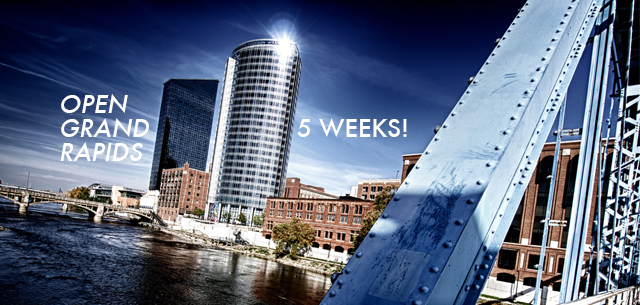
Ah… winter.
A quick scan of social media reveals that folks living in Michigan, Northern Indiana, and the Chicago area are completely sick of winter.
The supreme irony of our living in San Diego is that we’re Midwesterners who love a good midwest winter. We’d get 6 inches of snow and Kristen was ecstatic about shoveling the driveway. I absolutely loved giving people a hard time about canceling things because it was cold or a bit icy.
So, a year ago, I scheduled our very first Open Grand Rapids right in the middle of winter. On purpose! My hope was that people would have a little cabin fever and look forward to something to get out of the house for on a cold Saturday.
Welp, um… I was wrong. The weather was a bit of a sucker punch and we had a very hard time getting people to come out.
Year one was great: But year two will be a lot better!
This year’s Open Grand Rapids is March 28th (SPRING!) on the campus of Cornerstone University. If you aren’t familiar with the format we have a great line-up of presenters presenting on real-life stuff from all over the region. Instead of the “big national organization” bringing in a group of ringers to offer big-box-version youth ministry training without local context, we recruit local youth ministry experts to offer training to fellow workers doing youth ministry right in that same context. So don’t expect polish or production or anything fancy about Open Grand Rapids. But do expect a very full, very high quality day of youth ministry training for just $25. (No one gets paid and most of the money gets donated back to a local organization & the local organizer team.)
The kicker? What our presenters lack in the experience of doing the same seminar dozens of times per year, they more than make up for in real-life experience.
What has became so evident at our 3rd Open Boston a couple weeks ago is that with a little bit of experience, some feedback/coaching, that the quality of training is just as good as any I’ve seen.
So that’s the scoop on Open Grand Rapids. I hope to see you there.
[button link=”http://grandrapids.openym.org”]VISIT THE WEBSITE[/button]
[button link=”https://theyouthcartel.com/events/open-grand-rapids-2015/”]REGISTER HERE[/button]
I first learned this lesson as a young pastor. But it applies to me today just the same.
In 2002 I left my job in Chicago, moved my family across the country, and started a job as the youth pastor in a small community in Northern California.
The first week was spent cleaning out my office, trying to figure out which key opened what, and a pile of introductory conversations with people from the church.
But the next Monday morning, with my first Sunday under my belt, I remember coming into the office early– before anyone else– and sitting behind my desk to reality: I had no idea what to do.
Literally, I didn’t know where to start. Outside of a Sunday school class and a roster of kids who had gone on the last mission trip, there wasn’t a program.
So I pulled out the job description.
It was full of ridiculous statements like, “Oversee an outreach program for teenagers in the community to begin a personal relationship with Jesus.” And, “Oversee the discipleship of teenagers in the church.” And, “Create opportunities for evangelism and discipleship among all students.”
I sat there, staring at this document, expecting it to magically tell me what to do.
Then I pulled out my Bible and read a bit. Then I pulled out the roster of mission trip kids, I spent some time praying for each of those students.
It wasn’t even 8:00 AM on my first real day in the office. I made coffee. And I began to doodle ideas on a piece of paper.
Coming from the business world… once the coffee sank in… I came up with a plan. I’ll spend the next 30 days doing an assessment of all the people, resources, identify opportunities, explore what opportunities for networking exist, and establish some baseline stuff that this youth ministry will do. (Regular meetings, events, etc.) I catalogued everything. I interviewed and met with everyone. I took lots of notes. And a month later I presented a report and plan to the elders…. which, of course, they hated.
As time has gone on I’ve realized that I am not alone in this problem. Organizations hire highly trained, highly motivated, highly talented people. And then they leave them in an office with a job description, a budget, and offer very little supervision while heaping on ridiculous expectations.
Many leadership jobs are nebulous. The hopes and goals heaped on them are not realistic. You can’t hire a person from another culture, give them a $29,000 salary and a $6,000 budget and expect them to walk into an empty office and come up with a plan to reach 3,000 teenagers in less than a year.
But, when looking at the job description and listening to the leaders– that’s what is expected.
The problem is the job is too big. And the person trying to do these god-sized roles? They either quit, get fired, or burn out in a couple years.
What I learned over a painful season in 2002 has guided me to today. The fact of the matter is my job today is even more nebulous than that youth ministry job in 2002.
If you’re going to avoid burnout, if you’re going to sleep at night, if you’re going to know when your work day is done… you have two choices.
I recommend option #2.
Shrinking your job starts with setting realistic goals.
There was no way I was able to create a program to reach every teenager in my small town, but I could create a goal that every involved student in my ministry would be equipped to reach one of their friends. That’s something I can measure and that’s something I can find a resource to help me with.
There was no way I could disciple every teenager in our church. But I could assess and label every teenager who regularly attended the church. (My simple categories: Uninvolved, involved, core) And I could make sure that every involved teenager was paired with an adult who was trained to lead a small group. And I could make sure that every uninvolved teenager was invited to become more involved. That’s something realistic.
Likewise, we could assess the spiritual growth of each involved teenager by setting up some basic benchmarks. That was simple, measurable, and realistic.
Once you’ve established some goals you get a good idea of what you can measure. More importantly, you know what not to measure.
Regularly, people would come to me with something they were hoping to see happen in our youth ministry. “Wouldn’t it be great if students helped with VBS?” Yeah, sure. But it wasn’t something I’d measure to mean anything. You didn’t have to be involved, uninvolved, or even a Christian to help lead games or be a warm-body at the craft table necessarily.
I find that if I don’t know what I’m supposed to measure I kind of either don’t measure anything or I try to measure too many things, putting weight on things that don’t really matter.
Today, I certainly have things that I measure and can judge the success or failure of something. But people ask me all the time for things that they think I ought to be measuring that I have no idea about. Why? Because I’m not measuring everything.
Everything is too big.
The last thing that helps me shrink my job is to define some things that are out of my control.
For instance, I can’t control someone’s response. I can control how I delivered the message. I can control what was delivered, when it was delivered, how many times a person has heard about it…. but I can’t make them respond.
To think I can manipulate a person’s response is idolatry.
The primary task of the youth worker is faithfulness, not response. That’s the Holy Spirit’s job and He doesn’t work for you on your agenda it’s the other way around.
The net effect is when I try to control what’s outside of my control, I get frustrated.
That’s why I can look at things, which other people might measure a failure, and see the win. I’m measuring things within my control and relinquishing responsibility for things outside of my control.
That shrinks my nebulous job into something more manageable and human.
Question: What are ways you’ve shrunk your job?