• Inspiration is for amateurs

    Inspiration is for amateurs

    Amateurs sit and wait for inspiration, the rest of us just get up and go to work.

    – Stephen King

    Not a big Stephen King guy, myself. But I love that quote.

    So true.

  • A Weakness with Formal Ministry Preparation

    A Weakness with Formal Ministry Preparation

    Driving across rural Kansas in December I couldn’t help but be reminded of this fact:

    • In the New Testament, nearly all of the illustrations Jesus used were agrarian.
    • In modern times, nearly all modern formal education happens in the city.

    It’s a conflict that most people training for vocational ministry either completely ignore or they think they can read a commentary which will explain what Jesus was referring to. (Most of these commentaries aren’t written by people who don’t know anything about that stuff either… they are written by people who live in the city but did research from other books about what to put in the commentary.)

    And the implication is that most ministry models emulate a business structure and worship is built around a lecture when Jesus’ illustrations for believers were that ministry should run like a farm.

    But I think most Americans are so removed from agrarian life that they miss what life in ministry could really be.

    And so I’m left to wonder:

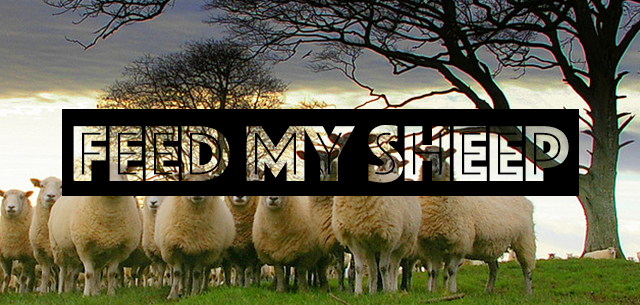
    • How can people learn to shepherd a church flock if they don’t know anything about actual sheep?
    • How can you “fish for men” if you don’t know how to fish?
    • How can you “reap a harvest” if you’ve never planted a crop?

    And let’s state the obvious… I’m not aware of any ministry preparation that places wanna-be pastors on farms or commercial fishing boats or herding sheep.

    Instead, we send wanna-be pastors to the city where ministry preparation looks like any other course of study.

    And we wonder why our churches look like businesses, why church workers are comfortable in offices, why they are white collar workers completely missing the blue collar majority of our population?

    He said to him the third time, “Simon, son of John, do you love Me?” Peter was grieved because He said to him the third time, “Do you love Me?” And he said to Him, “Lord, You know all things; You know that I love You.” Jesus *said to him, “Tend My sheep.

    John 21:17

    But most of us couldn’t pick a sheep out of a line-up.

    Photo credit: Deputation by Peter Eskersley via Flickr (Creative Commons)
  • The Truth About Screens

    group-cover-jan-2015

    I had an article featured as the cover story for Group Magazine’s January/February 2015 edition entitled, The Truth About Screens.

    Little old me. The cover story in the biggest magazine in youth ministry? 

    That’s cool, especially when you consider…

    • I got a C+ in AP English in high school.
    • I got a B in both semesters of college English classes required for my major.
    • When I started this blog I had 1 reader… me.
    • Even now, 10+ years later, a normal day on the blog is 2,000-3,000 readers.

    I’m small time. 

    So, while life really is going 10,000 miles per hour, I do want (and need) to stop for a bit and dwell on this. It is an accomplishment and I’m proud of it.

    And I’m very appreciative to Rick Lawrence and the folks at Group Mag for the opportunity to write anything for them, much less a feature. I’m working hard to get published in a new and bigger venues.

    So it feels good. It shows that the daily grind, in the long run, still works.

    Did you read the article? What did you agree or disagree with? I’m looking to improve my writing, what could I have done better? 

  • Cures for the Common Cold

    Cures for the Common Cold

    We’ve all gotten advice when we’re sick with the common cold. Drink lots of orange juice, cover your head, starve the flu, feed a cold.

    And we’ve all rolled our eyes.

    Which of it is good advice and which is just a placebo?

    That’s why I love these videos. They look at the science behind some of these wives’ tales, some of which are completely backed by the science while others aren’t.

    8 Sick Remedies That Actually Work!

    6 Sick Myths You Thought Were True

  • Welcome to Dystopia

    Welcome to Dystopia

    Welcome to Dystopia

    I made this video because I’m sick of the narrative.

    In the United States, the media portrays that we believe teenagers are incapable. They are a sub-human species guided by whims, under the influence of violent video games, and likely to drop their pants to take a selfie of their genitals at any moment. Teenagers are the butt of the joke. They hate their families. They take advice from rap music. And, more than anything, you can’t trust them.

    That is until a teenager does something extraordinary. Then the media flips. They they are hyper-capable superhumans. They climb Mount Everest. They sail around the world. They raise millions. They launch a political revolution. They win a fistful of gold medals in the Olympics.

    I made this video for two reasons:

    1. Teenagers are fully human. They are not superhuman, they are not sub-human. They are just regular old humans.
    2. The Dystopian Narrative is not new. Parents freak out about social media apps the same way their parents freaked out about cell phones or having a TV in your room or playing video games, the same way their grandparents freaked out about them talking on the telephone or listening to Rock-n-Roll. It’s the same exact narrative with a new object of scorn.

    As a youth worker and as a parent, it saddens me that we live in a society that allows our young to be portrayed this way.

    While I live in Dystopia, as a parent and youth worker, I long for something better and more whole.

    I’m sick of it.

    It’s time to call it out for what it is – A narrative designed to destroy perceptions of our children.

    I’m sick of it.

    It reveals the depravity of ourselves more than the depravity of our young.

  • Everyone Can Learn to Code

    Everyone Can Learn to Code

    “When did you learn to code?”

    I get asked this a lot. It’s not really a “when” question so much as it’s a “why” question.

    I’ve always been good at being able to figure stuff out. A few weeks back we bought curtains that were too long for our windows and I had to lean on skills from my 8th grade home economics class to figure out how to hem them. That’s kind of a normal thing for me. Do a little research, a little trial and error, a little asking for help, and I can figure most things out.

    This has been an attribute that I’ve come to rely on. I can always figure something out. I’ve done it twice in the past 24 hours.

    Why I Learned to Code

    That’s essentially why I learned to code things like websites, work with servers, etc. I learned because I had to figure it out. It didn’t look that hard and the cost of creating a website was more than the little churches I worked for could afford. (They complained about the $7/month we spent on hosting the website!) As I learned more I started to fiddle around with my own stuff, then I did a lot of that when we launched YMX in 2005. And from there it just kind of took off.

    I made things happen for YMX, then people started asking me for help, then I started figuring out that I should charge people for that. And then McLane Creative was born, we sold YMX to Youth Specialties in 2008, I learned more, we built stuff there, and when I left YS in 2011 I had a line of people asking for help.

    To this day I have never hung out the shingle and said I was looking for help on a website.

    And, right, I could easily make a lot more money building WordPress and mobile app properties with McLane Creative than I do with the Cartel if I really wanted to go after it. The only reason I don’t is missional. I wholeheartedly believe in the mission of The Youth Cartel and am dedicating all of my time to it.

    Why You Should Learn to Code

    Code literacy is the new literacy.

    Reason #1: Understanding Your World

    Whether it’s understanding the basics… HTML and CSS… or more advanced languages and syntaxes, so much of how our world operates and will operate going forward is driven by the code with runs the software which runs the devices. (From your cell phone to your fridge to your car to your coffee maker. It’s all

    To understand– even the basis for how a device works and what makes things tick— is to understand the very core of modern life. When you learn the basics of coding you get a behind the scenes look at how everything technological actually works and that opens your mind to both the limitations and possibilities that are out there.

    Reason #2: It’s a DIY Culture

    Allow me to let you in a not-so-secret secret. All coders help other coders, even beginners. Everything I’ve learned about coding or building websites (or businesses or hemming curtains) I learned on the internet. I’ve been to a couple conferences but I’ve never taken a traditional programming course. Everything I know about all of that stuff I’ve learned because I Googled “How do I ______.” And the truth is that some of the most successful programmers/coders out there are doing the exact same thing.

    I’d rather show you where to find the answers to your questions than you to pay me to do it for me. Why? Because in 2 months when you want to do something else, I don’t really want you to hire me again… I’d much rather you send me a link to your site and/or Github and say… “Dude, look what I did!

    Any time I’m approached about a project I first sniff out how much of the work they are willing to take on themselves. If it’s zero, I’m usually going to pass. And the more they are willing to do and learn, the more I get excited. That’s a core tenant of the Open Source community. We are all contributors, we are all bug fixers, we are all coders, we all have ideas, we all try stuff, we all make ourselves experts but helping one another out for the sake of making the community better.

    Reason #3: There’s Unlimited Opportunity for Growth and Income if You’ll Learn to Code

    I’ve already shared that the only thing holding me back from unlimited income in the WordPress world is that I’m dedicated to another mission.

    This makes me think of a guy like Scott Bolinger, who has been a part of the WordPress community here in SoCal for a while, you’d bump into him at meet-ups and WordCamps, who was developing for other people and (I think) doing a bunch of freelance stuff. Then about a year ago he started working hard on this idea of connecting an existing code base for mobile apps to the core code base of WordPress. If he could figure out how to marry the two, people would pay to license that bridge and be able to launch and operate iOS and Android apps using WordPress. (WP currently runs about 20% of all internet sites.)

    In December, he wrote about AppPresser becoming a product that was generating $30,000 a month in sales. I think anyone can look at that product, with limitless potential on reaching 20% of all internet websites, and go… yeah, this could easily be something generating $100,000 in monthly sales very, very soon.

    I’m not saying that you can go from making $0 a month to $100,000 in a year. But I am saying that if you’ll take the time to learn some skills in coding, you can very easily teach yourself skills to do your present job better or easily go from $0 – $1000/month. Quite simply put, there are far more jobs out there for even entry level coders than there are people to do the work.

    How You Can Learn to Code

    I want to point you to three learning opportunities, all are free.

    1. Codeacademy Hour of Code – I love what Codeacademy is doing! Take this entry-level 1-hour course on your phone or desktop… I think this should be compulsory for everyone. So far 24,000,000 have taken a free course on Codeacademy. If you know someone who is between jobs or wants to try something on the side, you can learn more there in a week than elsewhere in a year. (I do lessons when I’m bored!)
    2. Harvard Open Learning Initiative – One of my favorite movie lines ever comes from Good Will Hunting. Will says, “you dropped a hundred and fifty grand on a *%@*% education you coulda got for a dollah fifty in late chahges at the public library. Well, the school Will was referring to now offers some of their classes to anyone willing to take them for absolutely free. How do you like dem apples? 
    3. Stanford on iTunes U – Stanford University, you know, the one right at the heart of the Silicon Valley, also offers online courses absolutely free to anyone willing. They were the very first to do so and I’ve learned a bunch from them about programming, specifically mobile apps. How about a lecture on Programming Methodology? It’s free. Or maybe you need some inspiration? How about a lecture series called Entrepreneurial Thought Leaders featuring guest lectures by some of the world’s premier experts? Free on iTunes if only you’ll press the subscribe button. How to Start a Start-up? You guessed it, free.

    Wrap-Up

    As I’ve said many times in many venues. We don’t have an unemployment problem in this country. We have an unemployable problem. If I knew the right person, right now in the right location, I’d hire them. I have several initiatives that are excellent, that’ll work, I just don’t have the right people and it drives me crazy.

    But I see far too many people having skills that I don’t need and very few with skills I do need. (Or willing to learn)

    Too many people think education is a barrier for them. Too many people think they don’t know the right people. Too many people think that they are too young or too old to be taken seriously. And too many people think that they can’t possibly need to know new skills because they are perfectly content doing what they are doing.

    Those are all barriers between what you are doing today and your potential.

    If someone is willing to learn every day, willing to be ambitious, and willing to ask for help… the American Dream is alive and well.

  • Potential

    Potential

    I saw this tweet this morning.

    I don’t know about you, but it motivates me.

    It’s crazy to think about how important decisions you make as a 17 year high school senior are. And it’s incredible how much positive and negative things said about you can motivate you.

    I’ll never forget my stepmom saying something like, “You aren’t college material. Even if you go away to college, you’ll never graduate. The best you’ll ever do is community college.

    Thanks for the motivation.

    Proved you wrong.

    Next challenge, please.

    Continuous effort – not strength or intelligence – is the key to unlocking our potential.
    ~ Winston Churchhill, overcame professional failure

    I don’t know what the negative voice is in your head. But I do know this: Use it to prove them wrong.

  • The Summer of 95

    The Summer of 95

    Today’s Throwback Thursday is to July 1995, the summer that Kristen and I became a couple. 

    • We were not quite 19 years old when we met, set up on a blind date at the end of our freshmen year at Moody.
    • This photo is in front of the Hesburgh Library at Notre Dame. Football fans know this mural, Word of Life, as Touchdown Jesus. The library and the campus itself were a bit of a refuge my senior year of high school. I lived pretty far from school and I used (cough, trespassed) at the library at least twice a week to study, read books, or just hang out.
    • Kristen came down to visit, spending the fourth of July weekend with my family at our cottage in Southwestern Michigan. Looking back, she was so brave.
    • Speaking of brave… look at that hand on her knee. [shakes head]
    • We took a few of these photos. Kristen’s camera had a timer, we’d set the timer and run to pose. Old school selfies.
    • Not sure about that outfit. Suede shoes and a long-sleeved silk button up shirt. Kristen clearly went with the comfortable route.
    • Also not in this photo? All the metal shavings from my dad’s clutch. I borrowed his truck to drive around but had no experience driving a stick shift. Oops. 
  • Social Media Safety and Security

    Social Media Safety and Security

    Uh oh. Something went wrong with several social media applications late last night.

    Hundreds of millions of people worldwide were unable to use Facebook and Instagram for around an hour today.

    Hackers from online group Lizard Squad have claimed they shut down the two sites at around 6am GMT – but Mark Zuckerberg’s social media empire says it was just a technical fault.

    Both sites, which have a total of 1.5billion users, appeared with error messages in the United States, Europe and Asia for around an hour.

    The social media blackout also affected the dating mobile app Tinder, as well as AOL Instant Messenger and Hipchat.

    Source

    It was amusing to watch as Twitter went into full-on State of the Union mode, the hashtag #FacebookDown adding faux drama and humor to the occasion.


    And while I joked about it there is the potential that this could be more than old man Zuckerberg is letting on.

    https://twitter.com/LizardMafia/status/559963134006292481

    Here’s what I know:

    • Facebook is a giant target with 1.4 billion monthly users. (20% of all humans!!!)
    • They are due to release their quarterly earnings report tomorrow evening.
    • Lots of people share lots of personal information on Facebook.
    • Even more use Facebook to login to a lot more apps.

    Let’s say it really was a technical glitch caused by the rollout of some new features. (Snapchat and Twitter also rolled out new features today, they indeed do have to keep up with the Social Media Jones’s of the world.) That’s perfectly possible and my only real reason to think otherwise is based on their being a publicly traded company, getting hacked would do bad things to their stock right before their earnings report… there’s a lot at stake for them. Enough to lie? Maybe.

    But let’s say Facebook was hacked and while the site was offline hackers ran away with a billion or so people’s personal information. What’s a user to do?

    Just to be safe, I’d recommend these two courses of action:

    1. Change your Facebook and Instagram passwords today. It only takes a few minutes and it never hurts to change things up.
    2. Turn on 2-factor authentication on any and every application you can. If you use Facebook to log into a bunch of things, do yourself the favor and turn this on now.

    If you’d do that you’re good to go either way. 

    Tech Tuesday Questions

    Rachel asks, “Why did you write the post, ‘Why You Should Delete Snapchat?’” 

    As someone who talks to parents and teenagers a lot about social media, I’m actually fairly slow to judge an application. I really dislike black and white answers. I originally wrote the post because at several different speaking engagements parents asked me what I thought about Snapchat. I put them off for several months because I was still analyzing it, so I would say “Keep an eye on my blog. When I know more I’ll write about it.

    So, a few months later, when the guys started suing one another about who came up with the idea and a bunch of their emails ended up in the public record, I was able to dig around some more. Snapchat was the first time I’ve ever told people… just don’t use it. And I’ll reiterate the two main facts of why I don’t recommend people use Snapchat.

    1. They lied to their users from day one about what does and doesn’t disappear. I wrote about it in August 2013 and in May 2014 they reached an agreement with the Federal Trade Commission where they admitted they mislead users.
    2. They are not good digital citizens. You see glimpses of it my original post, how they speak about women, things like that. But bigger than that and far more important. The operators of Snapchat know that a percentage of their application is used in the course of crimes. (Child pornography, prostitution, drug trade, etc.) But, unlike basically every other social media company, Snapchat does not make their data available to law enforcement to help put criminals behind bars. Every investigator or prosecutor in the United States knows this is true. And to me? That they would knowingly hold data that could put people in jail for terrible, terrible crimes… usually against their own target audience of young women… well, that’s reason enough for me to stand by my post and say, “I think every user should delete Snapchat. You might use it for something fun, but people are getting hurt. Bottom line: Your [probably innocent] activity on the app is helping to fund other people getting hurt.

    Julia from California writes, “Which is safer, Facebook or Snapchat?” 

    I wrote back to Julia asking for clarification on what she meant by “safer.” As in “safer doing what?”

    But here’s the answer: Neither are safe.

    When you use any social media application you are taking a risk. It’s in the applications best interest to convince you that your data is safe, that what you think is private will stay private, on and on. But never forget that this is a perception. Ultimately, anything you post online is public. As soon as you hit the “send” button on your phone or computer you have given up control of what happens to that message, picture, or video.

    That message could get intercepted. It is most definitely being monitored by, at least, the country you live in. (But potentially other governments) The person you send the message to could share it with others or use it against you. And the application itself that you are using could get hacked or sold or otherwise compromised.

    I don’t say that to freak anyone out. I say that to remind you, as a user, that the best thing you could ever do before hitting “send” is to make sure that what you are saying is OK to be seen publicly if it ever becomes public. If it isn’t? Don’t send it.


    Tech Tuesday

    Have a tech question for Adam? Each Tuesday I write a tech post. Submit your questions using the form on my site’s right sidebar. It can be about anything tech related, from social media to networking to life at home with wireless devices.

  • The Psychology of Savings

    The Psychology of Savings

    Last night, we watched an excellent documentary on Netflix called Living on One Dollar. It’s the story of two upper middle class college students who are passionate about international development but realize that in order to truly understand their coursework they need to experience the life of those they hope to help. They went on a quest, living in rural Guatemala for a summer on  the equivalent of $1 per day.

    Watching this documentary with my family made me realize three things about a lot of people in my life

    1. Many people I know live far too close to the edge. They are pursuing their calling, lots in full-time ministry, but money is a real problem in their life. (spoken or unspoken) They are one blown engine or medical bill from disaster.
    2. Many people I know are living on less than $1 per day. Actually, they are living on -$20 per day. “The average American household carries a debt of $203,163 for financial baggage such as mortgages, credit card balances and student loan debt.” (source)
    3. Like the Guatemalan families featured in the film, my friends don’t have an income or spending problem, they have a savings problem. “Bankrate.com reported in 2012 that 28 percent of American families have no savings. Another 20 percent don’t have enough saved to cover even three months’ worth of living expenses” (source)

    The Psychology of Savings

    15328480419_86ec9e099d_z

    Life on the edge is dangerous. Sure, you might not fall very often. But life away from the edge is better than life on the edge.

    Balancing on the edge is a weird thing. It’s ultimately about confidence and attention. If you focus too much on keeping your balance and thinking about it… you’ll fall. And if you don’t think you can keep your balance… you’ll fall.

    The same is true with not having a cushion of savings. You teeter on the edge. You try to ignore it but what happens? Eventually, you stumble and things get worse.

    Having money in the bank, something you can fall back on if something goes wrong or something you can depend on when the check engine light comes on… it has a psychological impact on you.

    You are more confident.

    You are free to take some risks.

    • Your boss asks you to do something you think is 100% stupid. And you tell him.
    • You get a flyer for a class to learn something new. And you go for it. 
    • You walk through a neighborhood you want to live in. And you know what it would take to make it happen. 

    See, having some savings is more than merely practical. It’s more than a fallback plan. It’s a psychological advantage.

    Our Story

    2008-2009 dealt us a bummer hand. We had to sell our house in the middle of the worst housing crisis in modern history… and we pretty much got screwed. While we had multiple offers on our house, while we guaranteed the bank we’d pay the difference between what was owed and what the market would offer, the holder of our second mortgage erroneously illegally foreclosed on our house and sold it at auction. (Then sold our “debt” down the line, resulting in years of harassment and collections agencies.)

    In short, our biggest investment went bust. Not only did we lose every penny we invested in the house. We also lost our credit rating.

    Worse still. We lost our confidence. It sucked big time. We went from feeling like we were doing OK to right back to the edge.

    That was 6 years ago. We were far too close to zero with my phone ringing off the hook, creditors chasing us, the letters, the threats, the whole 9 yards. (We were in the right and didn’t owe the banks anything… they stole our house! But when you cross that line the people over there don’t care about right or wrong. They just want the money their computer screen says you owe.)

    I share that to say this: In the last 6 years we’re right back on track. In fact, our savings is stronger than ever. A couple weeks ago we did a review and were shocked to discover that we have nearly 1 years worth of income in long-term savings.

    You want to talk about a psychological advantage? Confidence? We went from having 1/2 months savings to 12 months in 6 years. 

    We looked at those numbers and realized something crazy: We can get way more aggressive. So, starting this month, we’ve adjusted our budget again. I jokingly call these “austerity measures.” But in reality, giving up cable or things like that aren’t that big of a deal.

    Jump Start Your Savings

    Before you eyeroll me I want to share with you the plan we’ve used. It’s not a gimmick or a book or a lecture series or anything like that. It’s drop-dead-simple.

    1. Pay yourself first. We get paid on the 15th and the 30th. The very first thing I do is put a set amount into savings.
    2. Pay your kids second. A few weeks ago I asked my Facebook friends what they were doing to save for their kids college. Almost no one had a plan. When Megan was born we started a 529 plan and put $25 a month in it. We’ve increased it periodically. I treat it like a bill. And while $25 a month might not sound like it’s going to help you get to $100,000 or whatever crazy number people toss around these days, it’s better than doing nothing. The little bit we’ve weaseled away each month since 2002 has resulted in us having about the first year of Megan’s college in that account. (This is about 20% of our college savings plan, I won’t bore you with the rest.)
    3. Pay your bills third. I suck at paying bills. Quite frankly I just forget. That’s why I try to pay all of my bills in the same action.
    4. Go cash only on the rest. More accurately, debit card only. When we buy something, whether it’s groceries or a car, that money comes directly out of our checking account. Don’t have it? Don’t buy it.
    5. All forms of credit suck. Debt is debt. We have a credit card for business travel. I hate it. We’ve been told we need to buy a house. Maybe one day, but I’m in no hurry. After all, last time I bought a house the bank stole all my money. I’ve read and been told that “some debt is good.” This is only said by people trying to sell you debt. Two weeks ago Chase bank reported disappointing 4th quarter 2014 results… they only made $5 billion when Wall Street expected $6 billion. All debt sucks. It’s the enemy. Treat it as such. 
    6. Convince yourself that you are poor. I’m sure there’s another word for this. But we intentionally live below our means so we can be generous and pour money into long-term savings. The typical family in Southern California spends 30%-35% of their income on housing: We spend 18%. Most people have two cars, we will eventually get two cars, but we’ve only had two cars for 10 months of the seventeen years we’ve been married… and that belonged to a missionary couple who let us borrow it.
    7. Reward yourself along the way. We love our vacations, we love our hobbies… in so many ways I feel like we live high on the hog. But all of those things are just rewards. Ultimately, we aren’t as aggressive with our frugality as we possibly could be. And I think we’re able to save for the long-term precisely because of that. We live reasonably and we reward ourselves richly in responsible ways.

    Wrap-Up

    I’m bringing all of this up, not to brag, but to help you see that there’s a direct tie between the pursuit of all that you could achieve, what some people might call “God’s will for your life” and your lack of financial stability.

    • I know too many with big, world changing dreams, who can’t pursue them because of a lack of confidence.
    • I know too many people who think their dreams aren’t worth pursuing because they live too close to the edge.
    • I know too many people who think living on the edge of financial disaster is somehow a burden they are called to bear as Christ-followers.

    You have to address it. And it’s better to address it today than go another $20 in the hole to start tomorrow. 

    Photo credit: Sunset in Rungsted Havn via Olga Capriotta via Flickr (Creative Commons) Her Third Birthday by Travis Swan via Flickr (Creative Commons)