• Why is Snapchat addictive?

    Why is Snapchat addictive?

    Tech Tuesday question from Aaron R. 

    Snapchat. I feel like I am using it too much. I’m not worried about Snapchat not really deleting my pictures. I just feel that I’m using Snapchat to seek something else. I feel bad when I have all these stories and it looks like I am bragging but everybody does it so I think it’s okay. I Snapchat everything and I wish I could stop.

    You’ve made a great observation, Aaron. What you are talking about is important for anyone that uses any app, not just Snapchat.

    Sometimes we all need to take a step back and remind ourselves that we own the phone, the phone does not own us. 

    Why is Snapchat so addictive?

    Long story short, the app is designed to trigger a response in your brain that makes it so that you check the app without even thinking about it. (It’s not just Snapchat, virtually every app does this.)

    Any time you get a new snap or scroll through stories or send a snap, your brain’s reward system is triggered. Getting a message or like or even sending a message feels so good at a sub-conscious that your brain just can’t get enough… kind of like your favorite candy… you don’t know why you ate the whole bag, but you did.

    I first wrote about dopamine and interrupting the loop in 2012 in this post, Notifications are of the Devil, please take a few minutes to read that.

    With something like Snapchat, which often might include flirtatious or even sexual content, it kind of “double triggers” your brain. You have the dopamine effect found in receiving any type of notification PLUS you have the normal hormonal response found in any potential sexual encounter. It doesn’t matter if you’re 13 or 39 or 99… if something sexual might happen, your brain will give it your full attention.

    What can I do to make Snapchat less addictive?

    I’m not a Snapchat user, but I do use other apps that are equally addictive. (Instagram, Facebook, Twitter, YikYak, etc.) Here’s how I take control of my usage… well, at least get better control of my usage:

    • Disable push notificationsHere’s how to do that for Snapchat.
    • Schedule Do Not Disturb to block out hours where you need to concentrate (work, school, sleep) – Here’s how to do that for iPhone and Android.
    • Only use your phone in public spaces of your life – Over the last 20 years of working with individuals and families I’ve learned that most addiction problems occur when internet connected devices are used in private. (Bedrooms, basements, bathrooms, etc.) No one sets out to get addicted to an app, online gambling, porn, etc… but it happens when we use the device in isolation for long periods of time. If you form a habit that you’re not going to use the device in private, you’ll eliminate most internet-related addiction problems.

    Have a tech related question? Drop me a note on my contact form or send in your question via the form on the sidebar of my blog.

  • Grit

    Grit

    Yesterday, Paul caught a trophy fish.

    https://instagram.com/p/3odnLlMjsa/

    OK, so it’s not technically a trophy fish. He won’t win any awards and we didn’t even keep it. It was just a little spotted bay bass.

    But that one fish represents a major accomplishment. It was the first saltwater fish Paul caught completely unassisted from the shore. 

    He’d gone out with me at least 10 times over the past 9 months and never caught a fish. Probably 30 hours of fishing with no success. He’s had a lot of bites, lots of struggle to learn how to cast, and lots of coming up empty.

    Finding Free Play

    We live in a society that bores easily. Video games, the classroom, even our profession… we want nearly instant results. 

    People want to do something for the very first time and see quick success when it just doesn’t work that way. In Outliers, Malcolm Gladwell famously made the argument that it takes 10,000 hours of practice to become the best in a field. Although the precision of that claim has been discredited, the general concept behind it is true: If you want to get good at something you’ll need to practice and learn and find your own way of doing things.

    To get good, at anything, you have to struggle past the mechanical stage of learning where you are thinking about how to do it to get into the muscle memory stage where you can stop thinking about how to do something to the point where you can start to play.

    Success and innovation comes when we get to free play.

    Watch anyone who is excellent at their craft and you’ll see that it often looks like play. Why does it look like play when they are doing something incredibly hard? Because it is play!

    Grit

    Few people get to free play… where a small success like catching a bass or a larger success like innovating software that changes the game while creating a great place to work.

    You see, to get there you have to push past a lot of failure. Not cute failure. Not the failure you can laugh off as a learning experience. Actual failure.

    There’s a characteristic that some people have and other people don’t, which is– in part– why some people succeed where others don’t.

    So what is the difference between people who get to the success of free play and the people who just never quite seem to get there?

    Researchers use one word: Grit.

    Photo credit: Sandpaper by Lukasz Fabis via Flickr (Creative Commons)

  • Called to Plumbing

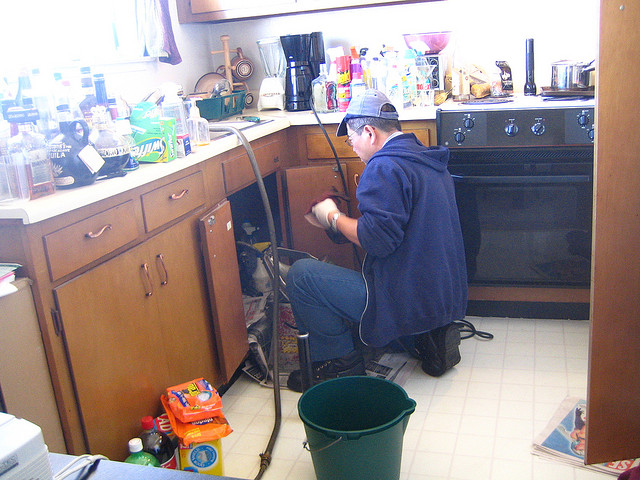
    Called to Plumbing

    Ministry people [usually accidentally] make it seem like theirs is the only vocation with a calling, not so.

    One of the things I love about where we go to church is that it’s full of men and women who might get featured on Mike Rowe’s Dirty Jobs.

    • Builders
    • Military, ex-military
    • Metal shop peeps
    • HVAC experts
    • Dry wallers
    • Plumbers
    • Landscapers
    • Car mechanics
    • People who work on ships and boats
    • On and on…

    These folks get their hands dirty, work alongside ordinary folks, and many of them are absolutely called to ministry right where they are.

    They are doing what God made them to do. Our community needs folks like them, skilled laborers, hard working people with integrity, who serve their clientele with pride.

    I Corinthians 10:31-33 says,

    So, whether you eat or drink, or whatever you do, do all to the glory of God. Give no offense to Jews or to Greeks or to the church of God, just as I try to please everyone in everything I do, not seeking my own advantage, but that of many, that they may be saved.

    Yup, you can sling grease or fix pick-ups or lay tile or roof houses to the glory of God. When you hang out with these folks and ask them about what they do… it’s so much more than a job: It’s a vocational calling!

    It’s kind of a pet peeve of mine when people pick up the idea that if they are serious about ministry they’ll work in a church. (I should say that our church does a pretty good job of avoiding this trap.) It happens accidentally… of course, the preacher doesn’t really believe that his is a vocational calling to ministry and the plumber isn’t a vocational calling to ministry. But when the preacher talks a lot about his own life and not the life of the plumber… the congregation seems to pick up a narrative that the pastor is called to ministry and the plumber is not.

    Yes, working in a church is one way to minister to people… absolutely. But let’s acknowledge that 9 out of 10 people aren’t going to walk into a church in order to connect to Jesus… so instead of hyper-inflating the calling of the role of the pastor, who might have access to 10% of the population, we should instead intentionally hyper-inflate, lift up, equip, and send out the ordinary folks in our congregations doing ordinary (yet, important) jobs in our community who have access to the other 90% of the population day in and day out.

    Photo credit: The Plumber by by Rick via Flickr (Creative Commons)
  • Should churches have open meetings?

    Should churches have open meetings?

    Long-time youth worker Titus Benson has gotten himself entangled in a mess. There were sexual misconduct allegations in the congregation, the church leaders allegedly tried to deal with it privately, and from what I can tell… the more Titus tried to step in and help the more trouble he found himself in.

    This post isn’t about that particular incident. But it is about the larger questions the church is facing.

    Yesterday, Titus wrote a post about how a lack of transparency can often lead to church-based misconduct from going public. He wrote:

    One thing bothers me almost as much as the abuse itself. The whole dramatic undoing of most of these faith leaders I’ve cited could’ve been avoided with greater transparency on the church’s part. Don’t misunderstand me — there would still be criminals and victims and a life of recovery for those who are harmed. But fewer victims would exist and more healing could happen if churches handled things with more Gospel-centered honesty and less deceitful self-protection.

    A Problem of Polity

    In my opinion, the lack of transparency starts with how churches govern themselves.

    Let me unpack that statement a bit… 

    A lot of the larger non-denominational churches have ties to “Baptist-y” backgrounds. That might not be Southern Baptist necessarily. But if you start tracing back the history of where the founders got their education or grew up, you’ll likely see a rather Baptist lineage.

    Now, the traditional Baptist polity (how the church is governed) is “Pastor lead, Congregational rule.” So the pastor operates under the authority of the congregations vote, but on most day-to-day matters the pastor is trusted to lead. There might be a number of committees that provide oversight and recommend direction or budget to specific areas of the ministry, but ultimately the churches members vote to decide at quarterly or annual meetings.

    In healthy contexts this works out pretty well. Congregational rule served “baptist-y” looking churches just fine for generations. This system provides many checks and balances and gets A LOT of people involved in leadership roles. So if so form of misconduct were occurring “the whole church would be in an uproar.

    It’s unhealthy contexts that warranted the form of government so popular today.

    In smaller congregations, especially in rural areas, the pastor wields the ultimate political trump card– If he’s unhappy he can leave.

    If the pastor doesn’t get what he wants he can merely threaten to leave and that’d get him what he wants.

    As a result these unhealthy congregations fostered a lot of wanna-be Napoleon rulers. I remember interviewing at a few of these types of churches… Pastor had his fingers in every decision… everything seemed to be vetted through a filter of “Is this what Pastor would want?” From the songs sung in worship to the color on the walls of the nursery, the operative word for these organizations was “control.” You second guessed Pastor? You got fired. You asked a question in a deacon meeting that seemed inappropriate? Gone.

    Checks and balances are replaced by threats and manipulation.

    Mix in the fact that the Pastor is generally the one slicing and dicing Scripture and this mix of religious leader and political leader– for some congregations– is toxic.

    I believe this is the birth place of some of the problems Titus writes about.

    Why? 

    Because a lot of founders of the church plants that became larger non-denominational churches [which are then idolized and lifted up as examples by today’s church planters] were born from associate staff working in a church job where they had no power, organizationally. [Cough, many of them got fired.]

    They looked at the pastor-lead, congregational rule system as broken and unhealthy. And so they fostered a new polity: Staff lead, elder rule. 

    Basically, how this form of government works is that the pastoral staff (or leadership team) have all of the power for day-to-day activities with general oversight by a ruling elder board. (They are the experts, even if they lack a credential to be an expert.) The congregation has absolutely no effectual power, short of leaving the church or cessation of giving. A lot of these organizations have no voting membership. They don’t vote or approve anything, there aren’t many committees or places where people have a voice, the congregation is often consulted about things… but that’s it.

    The intent is to remove power from the congregation and it does just that.

    In healthy contexts, the staff-lead model works great. Congregants don’t really need power as the self-governing staff serves the church well. When these congregations run into a problem they are quick to seek outside help, they are transparent about what’s going on, etc.

    But in unhealthy contexts, this form of government is really no different than the Pastor-lead model in a small, rural context… the pastor wields unlimited control by controlling who sits on the elder board, who is hired, etc. (I’m using male language here because, let’s face it, most of the players are indeed men.)

    What’s important to point out is that this staff-lead form of government is– without a doubt– viewed as the “only” way to lead a larger church. All other forms of government are devalued (to put it politely) and the mantra among “church growth experts” is that you cannot grow a church unless you are staff-lead. Staff are experts, congregants are sheep, end of story.

    When you cut through the Biblical language applied to these forms of government, really it comes down to this: Who is ultimately in charge of the church? The staff or the congregation?

    Lack of Transparency

    Back to the abuse. Whether it’s sexual misconduct or misappropriating funds or unlawfully firing staff… a lot of problems come out of forms of governance within these organizations which offer no transparency.

    • A staff person is accused of sexual misconduct… what was done about it? In most cases the congregation will never know because it was never informed, the police were not called, there are no written notes/recordings of meetings, etc. Even if you do get information it will not be raw, it’ll be vetted or “cleaned up so you can understand.” As we’ve learned from current scandals the church is much more likely to call a lawyer than they are to inform the congregation.
    • Church funds are misappropriated… what was done about it? When this happens, and it happens more often than anyone would care to admit, how is it handled? If money is stolen is it reported to police? Was anyone held responsible? Did anyone even notice? Similarly— That work that was done on the church… what was the bidding process like? Was it fair? Did we get a good price? Is there a warranty on the work? Did the church get proper inspections and permits? Was the work approved by the correct government agency?
    • A staff person is terminated… was it handled properly? Was there sufficient cause? Was the person properly compensated? Was the person properly classified to begin with? What training was offered? Has the supervisor been re-trained? Is the supervisor an adequate supervisor of staff? Are employees evaluated? What are their goals?

    In a staff-lead congregation you’ll probably never know the answers to any of these types of questions because they are mostly treated as private matters for the staff to deal with.

    But here comes the rebuttal…

    Titus writes, ““It is not advantageous for churches to have conflict in the public eye,” church leaders sometimes argue. We hurt the Kingdom when we argue about church stuff on Facebook, for instance. That’s just not the place for that kind of expression, some insist.” (source)

    That cuts to the heart of the matter, doesn’t it? Protect the good name of the church at all cost… even if that cost is a person’s life or livelihood.

    When something goes wrong, horribly wrong, the congregation might never be properly informed. Instead, the church staff is left to tell a story about what happened without anyone getting access to what actually happened.

    My problem with “staff lead” forms of government is two-fold.

    1. As a congregant it’s like going out to eat, being handed the bill, but you can’t see the details of what’s on the bill. You wouldn’t pick up that tab at Chili’s but you’re giving to the local church is treated like that.
    2. As a staff member, you’re left without due process.

    Embrace Open Meeting Rules

    Here’s the thought that Titus’ post elicited, that lead to this post in the first place:

    What if all 501 3c entities, churches & non-profits alike, had to abide by the same open meeting laws that public entities did?

    Though it’d never pass, I wonder if we changed the laws– Want to keep your tax status? Abide by open meeting laws.

    Don’t want that tax status? Find another business entity for your organization. (Sole prop, LLC, Corporation, etc.)

    See, here’s the kicker that I think 99% of church leaders are in denial of– Your largest donor is likely the government.

    • Why don’t you pay property tax? Because you are seen as benefitting the public. Just like the city doesn’t tax it’s own parks, they don’t tax you. Even though your church uses the same roads and public utilities, etc… the rest of the community pays the bill on that, they are financing your church. 
    • Why don’t you pay the same employment tax other organizations your size do? Because the government subsidizes it by making other business owners pay fractionally more… the rest of the community bears that because you’re seen as good for everyone.

    Whether you admit it or not every church is partially funded by your local, state, and federal government.

    So why not make it so that every one of your meetings as open to the public as theirs are? Why not make your 501 3c records available to FOIA requests? (Just like other publicly funded entities.) Why not post meeting notes?

    You can have closed sessions about personnel or legal matters– just like government entities— but the local church needs greater record keeping and transparency to restore lost trust.

    I will say this until the cows come home… the local church should be the best employer in town, it should be the safest place in town, and it should be the one place where every person, from any walk of life, regardless of personal history… should find life.

    You will not get their hiding behind closed doors. You will get there when you embrace the transparency our untrusting culture demands.

    In a post-Christian world people have to experience good news from you before they will experience the Good News of Jesus in their lives. 

    Photo credit: School Board Meeting is Packed by Light Brigading via Flickr (Creative Commons)
  • Monday Morning Routine

    Monday Morning Routine

    Today is the start of a new week.

    And a new month.

    And for new graduates it’s the dawn of a new journey.

    For many in my world, summer is a time of transition and change.

    For others, today marks the shifting of gears from school mode to summer mode.

    For lots of families it’s the home stretch for school. (2-3 more weeks in the McLane house!)

    Leaders Set the Tone

    One of the many things about leadership I learned from working with Tic Long [back in my YS days] is the importance of Monday morning. Pretty regularly, usually on a Monday, Tic would grab a cup of coffee and work his way around the building to check in with everyone. It was almost never about work. It was almost always conversational.

    Hey big fella, what did you guys do this weekend?

    I’m pretty Type A so I come into every Monday morning like a bull comes into an arena. I’ve got an agenda, stuff to do, a checklist… and Monday morning always feels like a horse race to me. Go. Go. Go.

    Tic interrupted me. He’d pop in and I’d have to stop what I was doing. It bugged me in a way that I looked forward to it over time.

    Was it that Tic didn’t have a list of stuff to get done? (When I first started I was really put off by this, he was bothering me, and I thought he was just wasting time.) Nope. There was a habit and (presumably… intentionality) to walking around and checking in with everyone in the building.

    Yes, Tic is social so it felt natural. But, doing this, it had a net effect that mattered in three specific ways:

    1. You were reminded that you were known, you were more than what you produced.
    2. You were reminded that you were important, what you did at work wasn’t your whole life.
    3. He got to check-in with each person one-on-one.

    The point isn’t to copy what Tic did. What he did worked for him but might not work for you. The point is that if you’re a team leader, you set the tone for your team.

    If you come into Monday morning dragging your butt or feeling grumpy or hiding in your office, scheduling meetings, etc.– expect the same from those you lead.

    Conversely, if you get out and set the tone for your team– expect others to follow.

    Positivity begets positivity.

    Care begets caring.

    Valuing others begets others feeling valued.

    Photo credit: Hot Coffee on a Cold Day by David Joyce via Flickr (Creative Commons)

  • Speak Up

    Speak Up

    A few weeks ago I snuck in a quick midweek kayak fishing session.

    As I was coming in and taking gear off my yak near the Bahia Hotel there was a family setting up a little sailboat. The boat belonged to their teenage daughter, maybe 16-17, she had clearly never sailed before… or if she had, she wasn’t the skipper. Though equally green her dad was totally confident. The mom and the rest of their kids were all there, taking pictures. It was probably a birthday gift. It was probably her birthday.

    They were very excited about this boat.

    I slowly packed up my gear while they spent 10 minutes rigging the lines and all of that. They borrowed my Gerber and I offered them some paracord. While they were excited and the boat was indeed awesome, they clearly weren’t sea-ready. And I hoped they’d realize that and pack up to reboot at home. It was so obvious. They needed a class or at least a friend who could show them what to do.

    It was windy so I joked with them, “Should I call 911 now or wait?” They were unashamed about not knowing what they were doing but totally determined to give it a try. They shrugged it off. What could go wrong?

    I got all of my gear put away and my kayak mounted up on the roof of our van… but something just told me to hang around for a bit. I couldn’t stop them from going but maybe I could help them somehow?

    I sat in the drivers seat of the van, warming up, and they finally got the sail rigged. The daughter sat on the side of the boat, texting and taking selfies.

    And the dad pushed them off the beach… the family cheered, dad hopped over the side onto the boat… then boat swung wildly, the sail went the wrong way– literally into their faces, they nearly capsized, and less than 5 seconds later the sailboat slammed back on shore.

    They failed hard. 

    I laughed hard. 

    Everyone laughed hard.

    It was so obvious. Don’t sail today. 

    I was 100% confident that even if they got out on the water they were going to capsize or hit another boat, etc. These weren’t newbie conditions. It was windy and cold and the tidal current was fierce.

    They weren’t dissuaded. They were going to keep trying. And, frankly, I didn’t want to be the one to shatter their dreams. While they were likely to capsize or cause other boaters to evade their chaotic movements, who am I to tell someone not to do something? And hey, with the Coast Guard nearby as well as fellow boaters chances were pretty good everything would be fine.

    But the bigger and more immediate thing was that their lifejackets were on shore.

    The law requires that each boater have a lifejacket. And frankly, these two were going to end up in the water and they needed to be wearing them.

    So there I was, in my toasty car, enjoying the sideshow of Gilligan and his mates trying to sail… and left with a choice.

    Culture says, “Mind your own business. Leave people alone. There’s no need to say anything to someone you don’t know.

    Culture says, “Just drive away.

    Culture says, “If you say something they’ll probably get pissed.”

    But I know culture lies. 

    Culture costs lives everyday. 

    You aren’t on this planet to be silent.

    You don’t possess knowledge for yourself.

    That feeling, that little twinge that says you ought to do something, it’s not just for you.

    Your silence is kills.

    That voice?

    Listen to it. 

    Act on it. 

    Photo credit: Andrea Bowman via Flickr (Creative Commons)

  • Disrupting Amazon Book Sales

    Disrupting Amazon Book Sales

    Yesterday, I read this article about how Amazon has small publishers like us by the neck:

    Amazon Advantage, which I’ve written about before, is the alpha method of selling our books. It puts us squarely in the limelight so that when someone types in the title, we are the first and most visible seller. Click on the cover image and the book on offer is the one sold by us. But the cost for this clarity and publicity is high, and can be met only by the big publishers, who print thousands of copies of a title and keep the cost-per-copy to less than a pound. But if you are a small press, the sums don’t add up. Linen Press welcomes writers with no track record and writers from minority groups. We read the 20, mostly unsolicited submissions that arrive each week. Having signed up an emergent writer (emergent is a polite way of saying unknown), we usually do a first run of 400 copies, which works out at a basic production price of £3 per copy.

    Then there will be other expenses in the process, such as £200 for a cover image, £200 for artwork, £500 for typesetting and the creation of digital files, £200 for flyers and publicity materials, perhaps 10 copies of the book to enter an award such as the Baileys women’s prize for fiction. The final cost per copy for us is nearer £4. Amazon Advantage takes 55% of the recommended retail price, so on a £7.99 novel, it takes £4.40 and we get £3.60. We have to post books individually, as they are ordered, at £3 postage plus the cost of an envelope. We’re down to a profit of 60p. Out of that comes the author’s royalty of 80p, so we’re in minus figures.

    Source

    While I understand what she’s talking about, we don’t experience quite the same costs that she does… our business model is different… so I see what she is saying but disagree with her conclusion.

    Where she is 100% correct is that there aren’t a lot of options out there for publishers. Every publisher, big and small, are willing to hear new ideas for selling their books outside of Amazon.

    Here was my thought when I read this: Book sales are ripe for disruption.

    • More people are buying more books than ever in the history of the world.
    • The cost of entry into publishing is lower than at any time in history.
    • Digital sales are on the decline.
    • Amazon has billions in marketshare, but they have also have billions in costs/overhead.
    • The cost of entry to starting your own physical or online bookstore is shockingly low.
    • Outside of Amazon, no one is really innovating in this space, everyone seems focused on competing with Amazon instead of delighting book buyers.
    • Publishers (like us) are eager to take on new retailers.
    • While it’s nearly impossible to compete with Amazon on price or speed of shipping, there’s TONS of room for other ways to beat them.
    • Just because big box bookstores failed doesn’t mean that it’s impossible to do well at book retail. There are segments of booksellers doing very, very well.

    Did this peak your interest? Leave me a comment or drop me a note via my contact form. I’d love to hear what you’re thinking. 

  • Eyelashes, Dinner Tables, and Other Stuff that Promotes Long-term Health

    Eyelashes, Dinner Tables, and Other Stuff that Promotes Long-term Health

    Have you ever wondered why we have eyelashes?

    This morning, while making coffee, I poured boiling water into our french press and it splashed a little in an unexpected way. A fraction of a second later my eyelid batted away a drop of boiling water that’d somehow missed my glasses.

    Think about that. When you blink, the duration of that blink is 100 to 400 milliseconds. (.1 to .4 seconds) But, according to researchers at MIT, the human brain can recognize an image in just 13 milliseconds. That means that, instinctively [and without caffeine] my eye saw an incoming droplet within flying at my eye, my brain saw this and processed “BLINK” all within a tenth of a second.

    This happened so fast and was so effective that I didn’t really think about it until AFTER it actually happened.  

    But is that the reason we have eyelashes in the first place? Preventing tiny boiling drops of water from hitting your eye? Partially. It turns out that our eyelashes do that… but it’s among their purposes.

    Through anatomical measurements, we find that 22 species of mammals possess eyelashes of a length one-third the eye width. Wind tunnel experiments confirm that this optimal eyelash length reduces both deposition of airborne particles and evaporation of the tear film by a factor of two. Using scaling theory, we find this optimum arises because of the incoming flow’s interactions with both the eye and eyelashes. Short eyelashes create a stagnation zone above the ocular surface that thickens the boundary layer, causing shear stress to decrease with increasing eyelash length. Long eyelashes channel flow towards the ocular surface, causing shear stress to increase with increasing eyelash length. These competing effects result in a minimum shear stress for intermediate eyelash lengths.

    Source

    Basically, your eyelashes exist to bat away tiny boiling drops of water but also help keep your the air around your eye moving, helping to keep the perfect moisture on all your eyes parts so that it operates optimally. Eyelashes too long? That causes fatigue. Eyelashes too short? You may experience dryness.

    The Dinner Table

    I think I’ve shared before that our family got our first dining room table last year. We transitioned from a family who rarely ate together to a family that regularly ate together around a family table. [Generally, we’d go to the kitchen to retreive food the go back to whatever we were doing. So we were together in the same room, just not paying attention to one another. Now we set the table, food is brought to the table, and we all sit there, eating together until everyone is finished.]

    The dinner table had an instant impact on our family. Our 11 year old, who when we brought the table home said, “That’s the worst idea you’ve ever had!” has been the biggest benefactor. While we all look forward to dinner together, it’s the one guaranteed distraction free time during the day where we’re together, Paul benefits from this the most.

    Since we started eating together I’ve started to recognize the family meal as a keystone behavior to our family’s health… this one thing lead to so many other good things! When we sit down together, good things happened. When we have a string of days it doesn’t happen, things begin to break down and old habits emerge.

    As we started experiencing this simple, yet powerful transformation, I started to notice all sorts of research coming out ascribing family meals other indicators of mental and physical health. (Obesity, depression, drug use, etc.) In short, the dinner table started to feel like a magic bullet when I know it’s not that simple. That’s why I was excited to read this study from Cornell University, which brought balance, understanding, and context to some of the other research emerging:

    The take away message from this study is that youth who engage in more frequent family meals tend to have lower depressive symptoms. While a more basic analysis suggested that family meals have a significant beneficial effect on child mental health, substance use, and delinquency, after accounting for demographic backgrounds and family relationships, these benefits decreased in magnitude, suggesting that they were not due to the family meals per se, but rather reflected the type of people who engage in family meals.

    Source

    In other words, family meals are not a magic bullet. But family meals do reflect a value we, as a family, seek to be.

    Ordinary Things, Extraordinary Impact

    Eyelashes and Dinner Tables. Two things so ordinary that most don’t even pay attention to them until they are gone.

    But without them? The long-term impact is dramatic.

    We live in a society that is infatuated with extremes. Extremes get attention whereas the ordinary is ignored.

    But if you ignore the ordinary? You’re missing your opportunity for long-term health.

    Photo credit: Close Your Eyes by Kristina Alexanderson via Flickr (Creative Commons)
  • Fast and Slow at the Same Time

    Fast and Slow at the Same Time

    May 20th, 2004.

    Eleven years ago. A long time ago and just like yesterday.

    When your kids are born people say, “Blink, and they’ll be grown.” It’s easy to look back and say that. But sometimes each moment, hour, day, week, month grinds on into oblivion.

    Time is a funny thing, kids can’t grow up fast enough and parents just want to hold on.

  • Fishing

    Fishing

    If we’re connected on social media you already know that I’ve got a bit of a fishing thing going on. It’s not quite an obsession, but I’m trying to figure out how to salt water fish.

    • Last year I bought kayaks, equipping them for both recreation and fishing.
    • I’ve acquired all sorts of fishing gear.
    • I’ve spent hours and hours watching “how to” videos on YouTube.
    • I’ve spent hours and hours working on casting techniques and finding spots to find fish.
    • I’ve learned about a wide variety of species found in local waters.
    • I’ve learned way more about the impact of tides and the lunar phase than I ever cared to know.
    • I’ve jumped in on a couple local fishing forum communities.
    • I’ve gone out on open party charter boats, including this week when several of us from church went on a boat to the Coronado Islands in Mexico.
    • I’ve spent hours and hours fishing with varying levels of success.

    Fishing is Hard

    What’s the pay off? To be honest… I haven’t seen it yet. I really want to be near the water. I really need any sort of physical activity. But I also really want to learn how to catch fish!

    When I was a kid I used to fish with a bobber, a couple sinkers, and a minnow at our family cottage. And we caught tons of blue gill, perch, crappy, and the rare small mouth bass. And in my mind that was pretty easy.

    But fishing on the San Diego Bay or Mission Bay just isn’t easy. There’s a learning curve to it… and that learning curve comes with the double-cost of acquiring all the right stuff and putting in all the time practicing.

    Sometimes I don’t even really know why I’m fishing. I definitely enjoy it and I love being outdoors. But there’s something beyond what I can grasp right now going on. (I almost never keep the fish I catch to eat.)

    Pursuit

    Fishing is, to some extent, about catching. Certainly there are people who do it for work where they are fishing to make money, so they have to be experts and haul in fish.

    But fishing is also about pursuit. 

    If you just went to Wal-Mart, bought a basic kit, and slung a line in the water to haul in fish… that wouldn’t really be a pursuit. And I can’t lie to pretend that it’d be all that interesting to me. If it were easy, I’d probably only go out to fish if I wanted to eat fish. It’d be more of a chore (work) than a hobby. (recreation)

    They Thought Jesus was an Idiot

    One day as Jesus was standing by the Lake of Gennesaret, the people were crowding around him and listening to the word of God. He saw at the water’s edge two boats, left there by the fishermen, who were washing their nets. He got into one of the boats, the one belonging to Simon, and asked him to put out a little from shore. Then he sat down and taught the people from the boat.

    When he had finished speaking, he said to Simon, “Put out into deep water, and let down the nets for a catch.”

    Simon answered, “Master, we’ve worked hard all night and haven’t caught anything. But because you say so, I will let down the nets.”

    When they had done so, they caught such a large number of fish that their nets began to break. So they signaled their partners in the other boat to come and help them, and they came and filled both boats so full that they began to sink.

    When Simon Peter saw this, he fell at Jesus’ knees and said, “Go away from me, Lord; I am a sinful man!” For he and all his companions were astonished at the catch of fish they had taken, 10 and so were James and John, the sons of Zebedee, Simon’s partners.

    Then Jesus said to Simon, “Don’t be afraid; from now on you will fish for people.” So they pulled their boats up on shore, left everything and followed him.

    Luke 5:1-11

    Having been on some fishing boats and having NOT caught fish a whole lot, I can’t under-emphasize how crazy this story is. The guys fished out on the water all night, they’d cleaned their boat, the nets were hanging up to dry… and Jesus tells them to push off just a little bit and drop their nets?

    Not even an idiot would do that.

    Only someone completely insane would even ask that.

    But Jesus had something to teach… you might pursue fish for a living.

    But even the fish know to pursue Jesus.

    It’s about pursuit.