• Don’t apologize…

    Don’t apologize….
    • For being 39 and loving to hang with teenagers.
    • For giving a student a hug, it might be the only hug they get all day.
    • For pursing a career in something your parents think is a stepping stone.
    • For giving up another career for something most adults don’t get.
    • For loving a job that your boss might look down on.
    • For being bored during the diving part of a swim meet.
    • For going to a soccer game simply to say hi and show your support for someone who isn’t your kid.
    • For liking how bad a freshmen jazz band sounds.
    • For texting info about tomorrows Bible study during staff meeting.
    • For being more comfortable driving a church van than your minivan.
    • For asking for more budget to cover the rental of sumo costumes
    • Or for losing the receipt for the sumo costumes.
    • For knowing exactly how much cash and time it takes to get 15 pizzas delivered.
    • For knowing that one large pizza feeds about 5 teenagers.
    • For practicing games on the XBox during office hours.
    • For bringing your kids on the camping trip for free.
    • For reusing a killer illustration over and over and over again.
    • For feeling weird when the senior pastor rips off your killer illustration in his sermon.
    • For being there when all hell breaks loose.
    • For being a little thankful that hell has broken loose because you know God will use it.
    • For asking hard questions to discover harder truths.
    • For challenging boys to become men.
    • For challenging moms and dads to let go of their dreams for their kids so their kids can have dreams of their own.
    • For representing Christ in places no one wants him represented.
    • For challenging other leaders to think differently about teenagers.
    • For challenging teenagers to think differently about themselves.
    • For asking students to skip band camp for Bible camp.
    • For keeping the door open when a member of the opposite sex is in your office.
    • For asking the secretary to skip her lunch so you aren’t in the church alone with a student.
    • For trying things that are new.
    • For giving up on things that don’t work.
    • For always believing that people can change.
    • For reaching the wrong kids.
    • For reaching kids like me.

    Never apologize for being a youth worker. We need you too much. 

    You don’t hear it enough. Thanks for serving today’s students. Thanks for investing your life in people the church all-too-often misses. Thanks for reaching kids like me. And thanks for putting up with the stuff you put up with just to keep going.


  • Skin in the Game

    There’s only so far a good heart and good intentions will take you. If you’re going to work towards significant and lasting change in a community you need to have some skin in the game. 

    Ministers are so… transient. We move from ministry to ministry and in many cases we move from community to community. The people in our churches know it and our fellow staff people know it.

    I think this is one of the reasons why associate staff people get fired so easily. Because churches can. Rather than wrestle with the tension of putting up with you, like churches have to do with people who live in the community and voluntarily come to the church, if you are a staff person who is out to change things it’s relatively easy to get you to move away.

    If that church lets you go your house will be on the market in a matter of months. Take that, sucker!

    Skin in the game? Pfft. Not if its tied to your job.

    Of course, it’s not just ministers who infamously don’t have skin in the game. Here are some things that surprise me.

    • School teachers who don’t live in the neighborhood their students come from.
    • Church leaders who don’t live in the neighborhood immediately around their church.
    • Locals who complain about a lack of local businesses yet buy from big box stores or Amazon.
    • Community leaders who say they are all about school yet send their kids to private school or homeschool. (I once knew a principal who homeschooled, er.. what?!?)
    • Police and city employees who don’t live in the city they work in.

    Ultimately, when you don’t have skin in the game what you are doing is either just a job… or you are depending on good intentions and your heart to be right.

    But everyone else, whether they verbalize it or not, knows you’re not fully invested. And it’s a big reason you can get anything lasting done. Until you put your skin in the game you’re just a short-timer.

    Here’s how you get skin in the game:

    • Invest locally. Did you know you can use money from an IRA to invest in a local small business? Yeah, talk to your tax person. If you can’t buy a home where you live, get some skin in the game by investing in a small business you like. Don’t know how to have that conversation? Get to know the owner of your favorite local spot… and ask them. “If I were to want to invest $20,000 in this business, how could you improve it?” It’s that easy.
    • Buy locally. Look, here’s Economics 101. If you don’t spend your money in your neighborhood that money is going somewhere else. Want great places to eat? Eat locally. Want a great grocery store? Shop at the local guy. On and on. Every time you buy something from Amazon or go to a big box store you are sucking money out of the local economy and sending it somewhere else.
    • Live locally. Get over the excuses. (They are just obstacles) Until you live with the community you want to impact you’re just kidding yourself about making a lasting impact. You’re going to care about where you live more than where your work is, bottom line. So if you want some skin in the game your zip code is going to need to match where you want to impact.
    • Educate locally. If I hear one more person talk about loving his neighborhood but sends his kids to a Christian or parochial school, I’ll scream. If you want to make your local schools better the ONLY way you’re going to make lasting changes is if your kids are there. Yup, our kids go to a charter school. But it’s also a charter school that saved a neighborhood school from getting shut down. Almost all of the kids come from within walking distance.
    • Get involved locally. Start attending a board which directly oversees the stuff you care about. Into community gardening? You better be at that planning committee meeting. Care about schools? Get your butt to the school board meetings. Love your neighborhood? Find a local neighborhood board and be a part of it.
    Photo credit: The Carpetbagger by Mirror Image Gallery via Flickr (Creative Commons)
  • GIVEAWAY: The Anxious Christian by Rhett Smith

    What it is…

    It’s a book! Here’s the official description:

    In our journey of faith there are moments that produce a certain amount of anxiety. Often anxiety or worry is seen as an evil or un-Christian feeling to have, but The Anxious Christian conveys the message that anxiety can actually be helpful in our spiritual formation. In fact, God can use anxiety to move people forward in their life of faith.  Anxiety’s gift is that it allows us to face our fears, understand where those fears come from, and then make intentional choices about important issues—such as career, marriage, money, our spiritual lives and much more—rather than getting stuck

    Let’s re-think our shame about anxiety by realizing that anxiety can be a catalyst for growth that moves us closer to who God created us to be.

    Who is Rhett?

    I met Rhett Smith in February 2010 in the Miami Airport. Rhett and I went to Haiti together shortly after the earthquakes in 2010. Rhett has the theology and smile Joel Olsteen only wishes he had. Through the years Rhett has done a lot of youth ministry but is now focusing mostly on his marriage & family therapy practice in Plano, TX.

    He’s a great dude and if you aren’t familiar with his work you should check out his blog and follow him on Twitter.

    In fact, I think Rhett’s work is so important that we’ve asked him to come present a talk at The Summit called, “The Anxiety of Teenagers.” Super excited about that!

    Why I like it…

    1. Christians, especially those in church leadership, are an anxious bunch. There’s not enough stuff out there from a Christian perspective. (That isn’t weird, flowery, or bad advice veiled in Bible verses.)
    2. It’s approachable. This isn’t a text book. It’s written for you and me as a help and source of hope.

    How you can get it…

    BUY IT. Head over to Amazon and pick it up in print or Kindle.

    WIN IT. Leave a comment on this post by midnight PST on 5/15/2012 and you’ll be entered to win a free copy of Rhett’s book.

    WINNER: Schnerples – Send me your address and I’ll get you that book. (Either email to mclanea@gmail.com or use my contact form!)

    Full disclosure: Rhett’s publisher sent me a copy of this book. And if you click either of the Amazon links above and buy his book, I’ll make about 45 cents. But I was not otherwise paid for this post.
  • How to Push Through a Creative Drought

    I don’t know if it’s the workload or the time of year or just fatigue. But I’ve had a hard time being especially creative lately.

    That’s bad news for a person who runs a company called McLane Creative. My projects and my deadlines could care less how I’m feeling or if I’m inspired. There are people depending on my creative, timely solutions and that’s that.

    I have to push through. And I do push through. Getting stuff done is the bottom line.

    How I Push Through Creative Droughts and Get Stuff Done

    1. Rest – It might seem counter-productive when you have a deadline and are staring at a blank canvas or a mounting todo list, but the most obvious cause of a creative drought is a lack of rest and play. So take a nap in the middle of the day. Give yourself two hours to read a book and dose in the park. Take Saturday off. You are not a machine, you cannot produce 24 hours per day, 7 days per week. This isn’t a reality show. Making time to rest is the most productive thing you can do.
    2. Exercise – When I hit a creative wall during my day I take a walk. Pushing my son in the stroller or riding my bike for errands instead of driving or even doing jumping jacks in my office helps. I like to think of ideas as a heavy substance inside my body. When I get the blood pumping fast the ideas are able to get pumped up closer to my heart.
    3. Discipline – Sometimes I’m hitting the creative wall because I’ve procrastinated. But most often it’s because a project I finished in the past comes back for immediate changes and edits. That little bit of chaos throws me off. Instinct lies to me, building a desire to both finish my current project and go back and make some quick changes on the existing work. Being disciplined means pushing through what I’m currently working on and making late-breaking changes work with my schedule.
    4. Momentum – As creative people we know that productivity is the result of keeping the fly wheel going. So when I have something flowing I know I need to keep going, even if that means working until 1 AM. I’ve found that when I am in a drought I can’t build or sustain momentum. So set-up your work time or todo list in a way that builds momentum instead of starting and stopping all day.
    5. Change Mediums – Just about everything project I do will end up in a digital format. But when I’m not feeling it I’m quick to try another medium. I am not a great artist, but I use paper and colored pencils. Sometimes I go take photos of architectural elements for a project or shoot some video just to try to sparks something I wouldn’t have seen if I’d just sat down in front of my computer with Photoshop or Illustrator.
    6. Documentation – When things are really, really bad I spend 20 minutes taking all of my tasks for a project and adding them to a Google Docs spreadsheet. This turns my project into a series of small tasks that I can easily do without needing much creativity.
    7. Suspend reality – I have two offices. One in my home and one in shared, rented space downtown San Diego. (Little Italy) That helps me have fresh space in which to work. But sometimes I need to do even more than that in order to manufacture some creativity. Sometimes I work in a favorite coffee shop, sometimes  I book time to work for a day at a friends office, and sometimes I sneak a half day or whole day onto the end of a work trip just so I can work somewhere else. Suspending reality also means shutting down all of the distractions which pull you away from your creative space. (Shutting down chat software, putting your phone on silent and not returning text messages, logging out of Facebook and Twitter, etc.)
    8. Finish something – Perhaps my biggest droughts come when I have lots and lots of projects going and none of them finishing. I’ve found that finishing a project helps me be more creative on my others. It’s as if I can put that project behind me and that gives me more energy/space to think about the others. So finish something! (Or suspend another project to get it off your shoulders!)
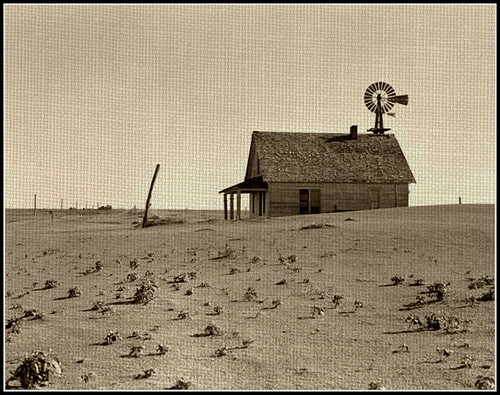
    Photo credit: Dust Bowl 1936 by erjkprunczyk via Flickr (Creative Commons)
  • Celebrating 11 years of parenting

    On Saturday, May 12th 2001 Megan Elisabeth McLane was born.

    Some fun facts:

    • Megan came 2 weeks late. Kristen went into labor the morning after we went out to an Indian buffet with our friends Jason and Bambi. I’ve always claimed I was in labor the next day, too.
    • It’s a girl! From the moment we found out we were pregnant with Megan we knew it was a girl. But we had 3 ultrasounds that all said she was a boy. In video right after she was born you can hear me calling her… Paul. So Megan came home from the hospital in a Notre Dame jersey and spent her first year in a blue and gold nursery surrounded by pictures of Knute Rockne.
    • We missed Anne’s wedding! My cousin Anne married her longtime boyfriend Brad the same day. It was pretty cool to that my extended family was all together when we announced Megan’s birth.
    • Kristen’s parents hauled booty! When Kristen went into labor with Megan her parents had our nephew Jake at the Detroit Zoo. They quickly took him home and boogied to Chicago. Dave & Kathy made it about 2 hours after she was born, right on time.
    • Megan loved Gospel music. I spent the night with Megan in Northwestern’s nursery. We discovered that night that she loved Gospel music and R&B, something we popped into her stereo to calm her down as a baby. That’s also the night she got her nickname, “Sha-me-me.”

    Today we are celebrating Megan. We are also celebrating 11 years of being parents. Paul came 2 years later an Jackson joined the party 10 years later after Megan.  Along the way we’ve learned a thing or two about parenting. I won’t say we are the best parents in the world… but we haven’t left a kid at the mall yet so that’s pretty darn good.

    Some learnings:

    • We are all God’s kids. We’ve never been “rah-rah, we’re big and your small” kinds of parents. Actually, we have tried that and it didn’t work. What works for us is teaching our kids who we are. We are children of God who obey God’s rules.
    • There are no “big deals.” Holy smokes there is a lot of horrible parenting advice out there. The mommy blogger phenomenon is ripe with false expert advice. When Megan was born all the good yuppy mommies quit their jobs and put their babies on very strict schedules. I think we’ve done a good job to avoid the fads, skip the drama, and just relax about parenting.
    • We’ve kept our lives. True, at 35 years old and with 3 young kids, Kristen and I don’t have a huge social schedule. But we’ve always kept our friends and put put the kids second. We’ve never made idols of them and have always agreed that a healthy marriage will lead to healthy kids. (Even if they miss out on some things.)
    • We don’t lie to our kids. Yes, we’ve kept things from them. They don’t need to know everything that’s going on… we don’t overshare. But we never lied to them about little things like Santa or the Tooth Fairy because we want them to know that mom and dad are always honest with them. In the past year or so we’ve also been bringing them in on money discussions. They know how our business works, what our goals are, etc. Even when we bought our van a few weekends ago– Paul knew exactly what our budget was and helped me do the math on figuring out what we would offer for it.
    • We go to church, end of story. Off and on our lives have completely revolved around our church. Right now is probably the least involved we’ve ever been… but we still go to church twice per week! There will come a point when they can chose whether to go or not. But at 11, 8, and 1… they don’t get to chose because we just go.
    • You only live once. While our family keeps things pretty simple we still like to take some risks. We want our kids to know that life isn’t just about living safe. So we build in them a spirit of adventure in how we live and make decisions.
    • We nurture personality, not shape their reality. As a pastor, I was sickened when I met parents who tried to orchestrate their kids lives. They’d come into my office and tell me how their plan was different than what their kid wanted… “Well, that’s not going to work.” I’d always share my philosophy… “I want my kids to grow up to lead happy, healthy, and simple adult lives and work backwards from that.” How can I help them become a happy adult? A healthy adult emotionally, physically, socially, and sexually? How can I help them live a simple life satisfied with God’s will for them?”

    These are the things we’re learning about parenthood. What do you agree with or disagree with? What would you add? 

  • A better place to live

    A few weeks ago I spoke at the BOOST Conference. BOOST is a resource for out-of-school time workers. (After schol programs, assemblies, stuff like that.) In other words, these are people who work with children and teenagers.

    If you think about it, youth ministry people are out-of-school time workers, too. The major difference is that we work for religious organizations which are typically privately funded and folks at BOOST work for publicly funded organizations. But we love the same people, just work on opposites sides of the wall separating church and state.

    The first thing to come up in my presentation was a question about the separation of church and state. I was ready for it. 

    “Separation Schmeparation”

    No. Seriously. 

    Issues of separation of church / state are legitimate. But it often feels like a real, physical wall of separation when in fact it is a cultural barrier based more on fear than anything else.

    We spent 10 minutes listing out some of the fears….

    • There’s fear of litigation if a public entity and private religious group work  together.
    • There’s fear of what the board might say.
    • There’s fear that a parent might get all funky and go to the board or threaten to sue.
    • There’s fear that bringing a religious group on campus or a private group using religious space might lead to cross-pollination, even by inference. Christians worry about “watering things down” and public groups worry about “proselytizing.”

    The list of fears actually never ends.

    When both sides are afraid of one another there are typically at least two factors present.

    1. They don’t know one another.
    2. They don’t have the same language.

    And that’s precisely the case when it comes to youth workers and out-of-school workers. We have common goals, common love for the same students, and here’s the kicker… ARE LITERALLY OFTEN THE SAME PEOPLE! At one point in my seminar we went around the room and introduced ourselves. Nearly half of the people attending my seminar were either part-time church staff or their spouse worked at a church.

    Huh. 

    So what’s the point? 

    At the end of the day we can build relationships on shared goals. Every youth worker and every out-of-school worker wants to help build a better community.

    And that’s a building block towards working together.

    Let’s stop building walls around what we disagree on and instead build bonds on things we can agree on. 

  • What does engaging the neighborhood look like, practically?

    That’s a question I get a lot. And I’ve got a couple friends here in San Diego that know a lot more about that than I do.

    Here’s a little intro they are doing… if you’re interested in figuring out, practically, what it looks like to literally make your life Good News in the Neighborhood, this would be a great place to start.

    Question: If God asked you to radically reorient your life, would you do it?

  • A rant on discipleship

    A few week’s back Joel Mayward asked if I’d participate in his blog series on discipleship. He asked some great questions and really got my mind churning, plus I was in one of those pre-lunch moods. Here’s a taste of what ended up being a holy rant on the topic.

    What is discipleship? 
    I’d like to start off with two push backs on your question itself.

    First off, discipleship is a made up word. Let’s acknowledge that for what it is. Every time I type it in Microsoft Word or on my blog it always pops up as a misspelled word. Because it isn’t a word. More to the point, it’s a made up word because we don’t really even have a word to describe what discipleship is.We are trying to smash the relationship that Jesus had with his disciples into a modern construct of a ministry model. The very problem of a lack of discipleship comes from trying to make it a quantifiable process that is replicable so that we can point to a person as church leadership and say, “This is how I know people are growing in their relationship with Jesus.” It’s a McDonald’s-style phrase that just falls flat in the face of what Jesus and the early church actually did, as documented in the New Testament. So I want to start off by pushing back on the very word, discipleship. Jesus told us to make disciples, (Matthew 28:19) not create a process whereby all people can follow 6 easy steps or run the bases or complete a wheel of discipleship. Those are modern simplifications which have proven to have horrible impact on the life of our churches.

    What is the greatest barrier to this in youth ministry?
    2. As I opened this with, we are living in a day where we’ve tried to create a process called discipleship as a replacement for how Jesus and the early church actually did it. So when we talk about making disciples we think of programs when Jesus never had that in mind. The disciple-making process is a lifestyle, not a program. So a major roadblock we hit as leaders is that our adult volunteers think they’ve been “discipled!” Moreover, we have a culture which is so “easy” focused that very few have the stomach to get involved. Decades of crappy “discipleship models” have created undiscipled, undisciplinable followishers of Jesus.
    And these are just two excerpts! You can read the rest on Joel’s blog.