• Engaging with the Faith-Based Community

    Here’s the Keynote for my Boost Conference presentation later today. You can also download a PDF of this presentation & a PDF of all the raw data from my recent survey, Church Involvement in Public Schools, by clicking the link below. (free)

    [download id=”21″]

    Thanks to all who helped with the research portion of this presentation. I love having fresh insights to share!


  • Youth workers in the news

    Exhibit A

    Tell me this guy has never played chubby bunny or lit a fart at 3 AM with a room full of 7th grade guys… 

    Exhibit B

    This is why youth workers bring their teams to conferences. Because if we just hang out together without people from our church, this happens…

    Exhibit C

    A man does not stay  that calm while tricking another man unless he has played several hundred hours of Honey if you love me won’t you please, please smile at summer camp. 

    OK, so I don’t know if any of those guys were youth workers. But… maybe! 

  • Dear Megachurch: Adam’s list…

    Part 1

    Last week, NorthPoint young adult pastor Sammy Adebiyi wrote an article that was published on ChurchLeaders.com which offended some people. In fairness, he was very gracious as comments flowed in pointing out the many flaws in his post. In radio, I’d call this post “shock jock material.” He called a bunch of people names in the headlines of the post and then quickly backed off when the nasty calls for his head came in. (A legit engagement strategy if you ask me.)

    If his post had merely been confessional about why HE used to make fun of megachurches before he worked at one, I could have read the post, shared a laugh, and moved along. Instead, he used inclusive language… “WE“…  to make it seem like he represented all small church voices.

    Here’s Sammy’s list of reasons for why he used to make fun of megachurches:

    1. We don’t know you
    2. We are sitting on the sidelines
    3. We are jealous
    4. We are hypocrites
    5. We are arrogant

    I completely agree with point #1. It is easy to make fun of people you don’t know. I’ve spent most of my life in smallish churches, places with fewer than 500 people. In my mind, people who worked at monster American churches were unknown to me and unknowable. What I found in getting to know a pile of these folks, including ones who work at Sammy’s church, is that they are essentially the same types of people who work in small churches. They work hard, love their work, love the people in their ministry, have problems, have doubts, etc. But at the end of the day I don’t find many differences between a megachurch middle school pastor and an associate at a small PCUSA church who oversees birth-college ministries. People are people. 

    Maybe I’m just sensitive? But it sure felt like the next 4 points were Sammy exhibiting that he doesn’t really know many people who go to or work at small churches. I read those and thought… “Actually, I don’t know anyone who thinks this way!” In fact, by the time I was done reading his points I actually hurt for the hard-working, God-honoring, Jesus loving brothers and sisters I know who give their lives to their ministries.

    Part 2

    But I’m willing to put that all that aside. I’m not really mad at Sammy for saying what he said. Again, had he written the same thing from his perspective instead of “we” than all would have been easily forgotten.

    The real shame here is that Sammy’s post wasted a perfectly good blog title without having any fun! I mean, there really are good things worth poking fun at, tongue-in-cheek-style.

    So I made a little list, which I’m sure will get me in trouble, but why not?

    So, why do I make fun of people who think their megachurch is the reason a cat meows?

    1. You think 20,000 people is big and makes you a big deal. I mean seriously– 35,000 people go to Qualcomm Stadium on a Saturday to watch no-name San Diego State football. 20,000 is a decent crowd for an NBA game. Compared to the relative population of our country, none of us are that big of a deal.
    2. You think it’s cool to have a lion in your services. No seriously, a church in Texas had a live lion and lamb in a recent sermon series. It’s stuff like this that makes me shake my head. Yeah, you have too many resources for your preaching when you think… “You know what would make that illustration better? Let’s bring a flipping lion right into the building!” Jesus could have done this easily– but he choose to cast out demons and heal people instead. Just sayin’.
    3. You think it’s OK to have a security detail, personal assistants, and “people.” The Washington Post ran a story yesterday joking about Newt Gingrich’s Secret Service detail. The candidates campaign is so derailed that he had to take the train from Washington D.C. to New York for an event yet he still has 4 Secret Service agents watching him 24 hours per day. Jesus didn’t walk around with a group of homies watching his back and running his schedule. In fact, I seem to remember him rebuking a disciple for cutting a dude’s ear off in the Garden. If you need people, my assumption is that you might need to spend more time with your people. But I am probably wrong in that assumption.
    4. You think Jesus’ idea of multiplication was a bigger building or a helicopter to get from one campus to another. I’ve had 4-5 conversations with church staff about the lengths their teaching pastor goes through to speak at multiple campuses on a Sunday morning. I know of 2 churches who employ a helicopter for this purpose. A helicopter. Paul only left Timothy in Ephesus because his chopper was in the shop. (Not naming names intentionally on this one.)
    5. You think you created a big organization. My observation is that most of these big churches don’t really know how they grew from a staff of 5 to 50 to 250 or from 200 people to 15,000 people. It kind of happened gradually and because you knowingly or unknowingly made a whole lot of great decisions. It just cracks me up how fast they think they’ve invented an organizational or reporting structure or decision-making processes. In reality, it’s the same thing that happened to every major denomination and non-profit organization.

    Part 3

    All jokes aside, in a post-modern, post-Christian society– it’s going to take all types of churches to make a significant impact. Sure, we can poke fun at one another and have a good time with that. But in the end, we’re all on the same team. The bottom line is we need more churches and all kinds of them. Big ones, little ones, crazy ones, practical ones, missional one, unintentional ones, house ones, prison ones, neighborhood ones, institutional ones… and a whole bunch of churches who don’t call themselves churches!

  • Is your strategy as big as your vision?

    Our vision is to provide high quality, age-appropriate experiences which invite every student in our community to experience the Good News of Jesus Christ.

    This could be the vision statement of any youth ministry team in the country. Like you, I’ve seen vision statements like this in youth ministry literature, on youth group websites, and even painted on the walls of youth rooms for years.

    The problem is that they have a vision (mandate) to reach 4,000 students in their community but a strategy which scales to reach a lot less. The result of this strategy vs. vision mismatch is frustration-induced angst. No one strategy can reach 4,000 teenagers in a community!

    We all know youth workers who have quit or been fired. And one of the reasons? They failed to focus on something they could actually succeed at. A lack of measurable results makes it easy to quit any job. (Or get fired!)

    You could work 32 hours per day 8 days per week and not make a serious dent in that vision– it’s too big. Simply put, the vision is not right-sized for the strategy. (Most youth ministries employ a single strategy system– a youth group model.)

    Compare that vision to the vision of the local public school system– which likely reaches 90%+ of teenagers in your community. They might have a similarly large vision/mandate. But it takes hundreds of full-time, professionally licensed employees and anywhere from $6000 to $9000 per student to enact a strategy that reaches nearly 90%+ of the students in your community.

    There’s no youth ministry in America that employs enough people to reach 4,000 students built on the youth group model. It simply falls apart at a certain size.

    Youth workers rightly have a burden to help students walk with Jesus and introduce others to Jesus for the first time. But we need to shrink our vision to something we can actually handle strategically instead of aiming at everything and hitting nearly nothing. 

    To get more effective you need to shrink your vision to a realistic size that your strategy can actually accomplish. Then, if you start to nail that, you can expand your vision a little bit bigger. (Better yet, discover new strategies altogether to reach different types of students.)

    Sometimes to grow you’ve got to shrink. 

    Photo credit: Gary Jungling via Flickr (Creative Commons)
  • Rest

    20120420-150623.jpg

    It’s been a busy 2-3 weeks. So I called an audible, checked the family into a local resort, and mandated 2 days of play and rest.

    I’ll be back Monday.

    May peace be with you.

  • The Sacred Act of Pulling Weeds

    If we confess our sins, he is faithful and just and will forgive us our sins and purify us from all unrighteousness.

    1 John 1:9

    Sometimes in the movies the bad guy goes into a church confession booth. He sits down heavily in the chair and the priest says, “Son, how long has it been since your last confession?” A cold, violent voice answers back, “Father, it’s…. it’s been a long time.” And then the bad guy takes a deep breath and slowly confesses his sins– murder, rape, deception, adultery, etc.

    The unspoken narrative is that he’d come a long way from the nervous boy making his first confession as a boy. He hadn’t been to confession enough.

    Confessing Sins is Like Pulling Weeds

    I love my garden. There is something wholesome and beautiful about growing your own food. When you tend a garden your falls into a sacred rhythm. You become more aware of heat and season and wildlife because each plays a role in your garden. Each day you do a little bit of work and every day you enjoy a little bit of harvest.

    Watering, fertilizing, pruning, preparing the soil… And pulling weeds. Every day you have to pulls some weeds.

    If I pull weeds for 5-10 minutes every day I can keep it in control. The weeds aren’t a big deal. They are easy to pull and haven’t done much damage.

    But if I take a few days off from pulling weeds it becomes a bigger deal. Weeds reproduce fast so there are more of them to pull and they are harder to kill because they have taken root in the soil. Not only have they begun leaching nutrients away from my vegetables, but their roots may have begun to intertwine with the roots of my vegetables, which means I’ll do damage to the good roots in the process of pulling the bad roots out.

    If I take a week or two off from pulling weeds I’ll have a major problem. Weeds grow fast and tall and begin to choke out the good stuff. Fixing it becomes a major chore and it’s probably already too late.

    I’ve found this to be exactly like confessing sins  to another believer. When I regularly check in with someone, confessing sins in a sacred life rhythm keeps the sin in check.

    It’s when I fall out of the habit, when I go weeks or months or even years without truly sharing with someone what’s really going on– those little sins take root and mature. They grow big and begin to choke out the good stuff.

    And it’s a lot of work and a lot of pain to get them out of my life. 

    HT to Brian and Kevin and our high school small group. This post came directly from our discussion on 1 John last Wednesday. 

    p.s. Yes, I know I’m blogging about weeds on 4/20. Not that kind of weed, stoner.

    Photo credit: Dreamcatcher-stock via Deviant Art
  • Good News needed!

    20120419-132715.jpg

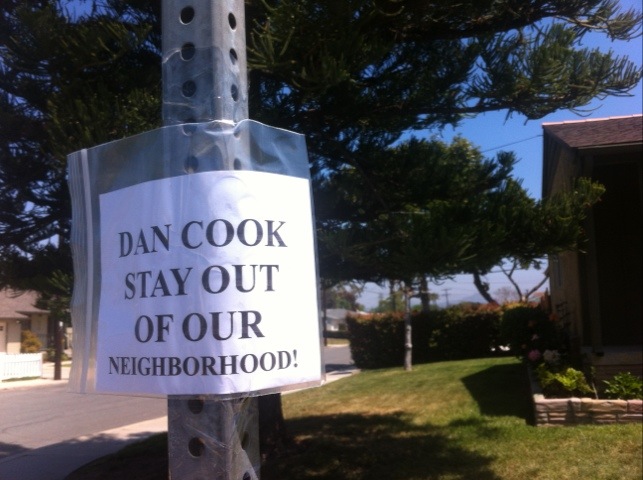
    I don’t know who Dan Cook is, but it looks like he could use a little good news in the neighborhood.

  • The Open Manifesto

    There aren’t many places in the church where all ideas have the same opportunity to be presented. Everything is editorialized, shaped, and packaged. Every idea is filtered through a lens.

    We think something is wrong with that. Deep in our souls we know the solutions to the problems we face today are already out there, waiting to be discovered.

    Open is just that. Open. The Youth Cartel sets the table, plays host, and invites anyone and  everyone who has an idea to the table for a day where we all have equal value for our ideas. Whether you are a big dog with 20,000 people writing down your every word, a college student with some crazy ideas, or somewhere in between, the table is open–we will give you your shot and equal time to share your idea.

    Now that doesn’t mean you will automatically be appreciated or celebrated. It’s an open table and you have the chance to play with the big boys. There will be winners and there will be less-than-winners. Just like everyone has the same shot, everyone undergoes the same scrutiny. The point isn’t that everyone will be equally received, the point is that anyone can have the platform.

    No one gets paid to present at Open. Why? That wouldn’t be fair, would it? Those making presentations submit a proposal and chances are good that if they’ve got something to say that’s on topic, they will get a shot. Their only compensation is the chance to present their ideas, and free entry to the day.

    So what does it cost? We’ve kept it as simple as possible. Tickets start at $25 for the day. If we sell out early then that’s it. But as we get closer to the day, tickets will naturally get a little more expensive.

    True to the premise of Open, we aren’t out to make a lot of money. We are splitting any proceeds for the day equally with a local organizer and a local ministry recipient. We think that’s fair, and we will be 100% open about the money so you know who has made what.

    From top to bottom we want Open to be a different type of event. We set the table, invite all, and provide a day where the best stuff filters to the top. Why? Because we trust you. We are in this together. We care deeply about impacting the Kingdom and we know you do too. And we know that low control, high trust openness is the way to get there.

    Join us.

    Being your ideas, bring your voice, and let’s dream.

    Backstory

    This is the driving document for Open Seattle, a new youth ministry event we just announced today. This is the first of what I hope will become a movement of Open events which gather all over to collaborate, celebrate, and innovate within our beloved tribe of youth ministry. The plan is to do two more as an alpha test, one in the Northeast and one in Western Europe. (Hosting info)

    A fun story about this manifesto is that I wrote it about 6 months ago. I kind of woke up with this from a dream. It was one of those things that dragged me out of bed and I typed it as fast I could. For weeks I had been thinking about Open, I’d had conversations with about a dozen people about it, but I couldn’t put the whole thing into words until that morning. It’s crazy how creativity works. Sometimes you have to dig to find it and other times it attacks you and you just try to keep up.


  • Take the Public School & After School Program Involvement Survey

    Next week, I have the opportunity to speak at the Boost Conference. Boost is the premier conference for out-of-school time professionals and administrators. While not exactly youth ministry like we define it in our tribe, these are adults who are very similar to our tribe. They live, breathe, and love children and teenagers. In some circles they even refer to themselves as youth workers! (Yes, this tribe has TONS of Christians. I can’t wait.)

    Here’s a description of my talk:

    Engaging with the Faith-Based Community

    Current trends in the faith-based subculture have faith-based organizations, including churches, looking for opportunities to serve the needs of the community. in this seminar, we will examine this trend, fill in some gaps of misinformation, address a shared past of difficulties, look at some current examples, and explore ground rules for positive engagement. When it comes to the children of our communities, we have a lot in common, including many shared values. let’s bridge some gaps and create a new story together.

    I need your help

    This seminar will be a lot better if I have some recent data and input from people currently involved vocationally in churches. I can speak to this topic in generalities and can point to data points from other research, but I’d love to have fresh data specifically for this talk.

    I’d love it if 150 – 200 people currently employed by a church / parachurch would share their insights into this important topic.

    Would you please take 15 minutes to complete this survey? 

    Please help me reach my goal by sharing with other staff people you know.

    And yes, I’ll be sure to share what I learn both from this survey and my time at Boost, right here on my blog.

    To take the survey, click here