• GIVEAWAY: Love is an Orientation DVD by Andrew Marin

    What it is…

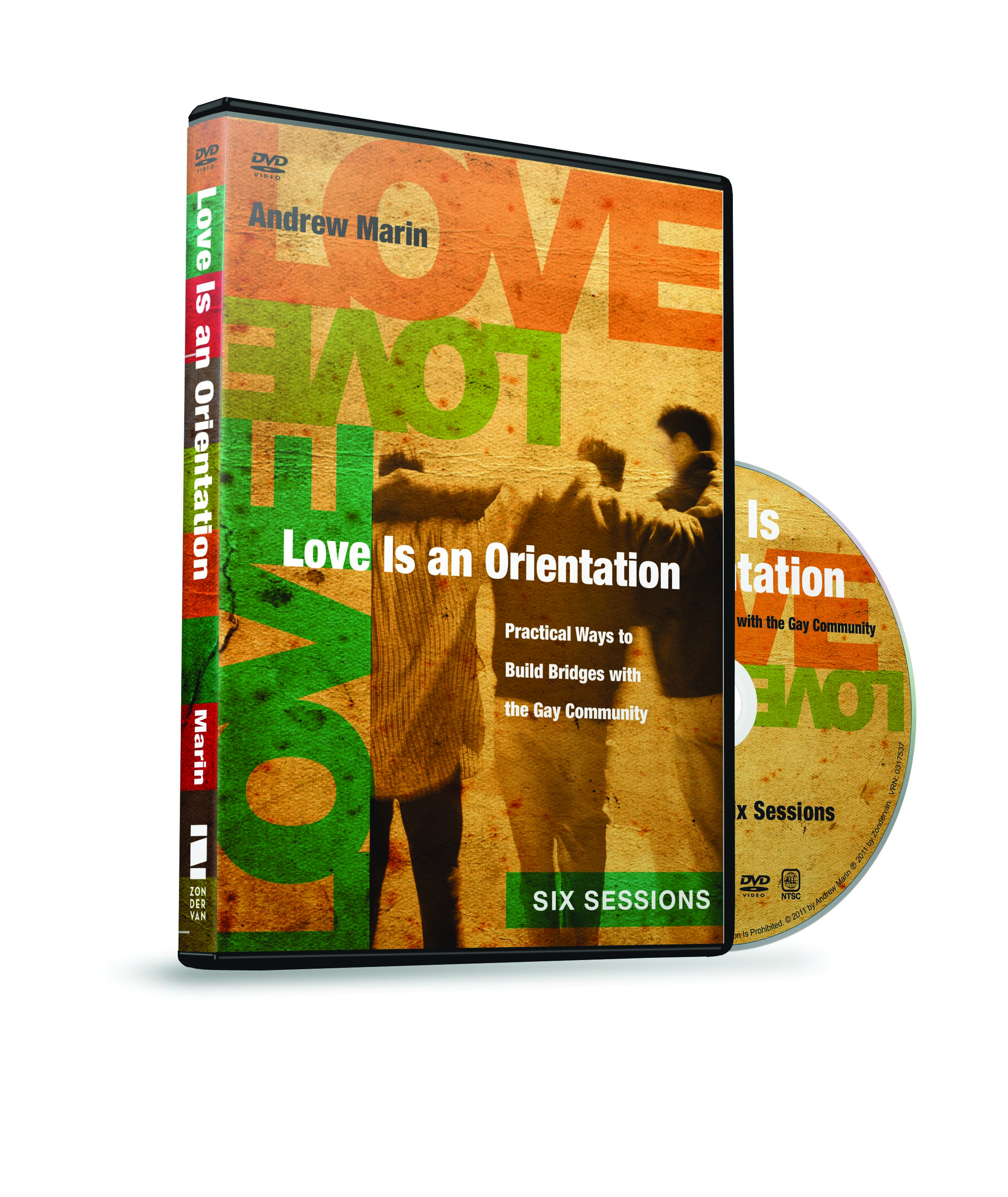
    Love is an Orientation DVD is a video curriculum based on The Marin Foundation’s ground breaking work in the LGBTQ community. The byline is, “Practical ways to build bridges with the Gay Community.” I’ve heard amazing things from adult small groups and church leadership teams who have worked through this content together. Andrew’s ministry and work is truly a revolutionary approach.

    Who is Andrew…

    I first met Andrew in the lead-up to the 2008 National Youth Workers Convention. He was the guy coming in to talk about the hot-button topic and I was the guy trying to build buzz around the convention. During the 3-city tour we became friends and our friendship continues to grow.

    Yup, some people don’t like Andrew. Either they think his approach goes too far or they think it doesn’t go far enough. That’s the tension The Marin Foundation lives in each day. And something in me says that this tension is just about right. (He’s speaking at The Summit on the topic of, Ministry within Theological Tension, see the connection?)

    Why I like it…

    3 reasons I like this.

    1. I’m in it. Ginny Olson and I teamed up on the youth ministry portions and I love how it turned out.
    2. There’s nothing out there as good. Andrew has presented this content to hundreds of churches, to hundreds of thousands of people, and in a bunch of countries. It’s really, really good stuff.
    3. It breaks the ice. I’ve talked to a few leaders who have used it and they love that it gets people talking about ministering in the gay community in a fresh, hopeful, loving way. Like any good teaching it causes great self-reflection and personal change.

    How you can get it…

    BUY IT. The more direct way is to head over to The Marin Foundation website and buy it.

    WIN IT. Leave a comment of any kind to this post and you’ll be entered to win a copy of the DVD and a participants guide. (Comments close at midnight tonight, winner announced tomorrow.)

    WINNER! SarahD92 – You’re the winner! Send me your mailing address and I’ll get it out to you.

  • Beyond Proclaiming Christ

    Where We’ve Been

    In the 1940s Billy Graham became one of Youth for Christ’s first full-time evangelists. In post-World War II America, he took to the airwaves and spoke at rallies around the world. Thousands responded. And, in some ways, modern-day evangelicalism was born.

    Back then the Bible was taught in schools. It was a regular part of the curriculum for high school students to memorize John 3 or Romans 8 as part of their Bible classes. Church attendance was way up, too. Culturally, America was much more Christian than it is today.

    The roots of most of what we call “evangelism” today are tied to this heritage. It’s all built on the premise that most Americans have a working knowledge of the Bible, that they believe in God. and look at the world through a somewhat Christian worldview. I’ve never attended a evangelistic rally, youth event or church service where the Gospel was presented, or anything in between that didn’t have these as working assumptions.

    In proclamation evangelism the role of the speaker is to connect the dots in people’s heads. They’ve heard of God. They know who He is. They have read parts of the Bible. They’ve attended church in the past so are comfortable with the format. The speaker and evangelistic rally really puts it all together and creates an emotional, religious experience, and then calls them home.

    I’m not going to say that the proclamational evangelistic rally doesn’t work anymore. But if you attend one today you’ll see that most of the people who go aren’t regular Joe’s– they are Christians who came to see a Christian band but are willing to hang out to hear the speaker. And for some of those perhaps the proclamational-style is what they need so they respond?

    But take someone completely unchurched? Say, a neighbor whose parents didn’t take them to church and they think Christianity is a crock? Or, like the Average Joe in America believes that if they are a good person they’ll be OK in the end. It’s too weird for them. I know because I’ve done it. A bunch. And I’ve had to go back and apologize one-too-many-times to the point where I’d never invite another friend.

    It’s not that I don’t believe, as an evangelical, that I need to share my faith. It’s that I think that for the people in my life the proclamational gospel message should be replaced with a methodology that reflects today’s culture– one that is three generations removed from the Bible being taught in schools and 50% of Americans attending church each Sunday morning.

    Here’s what I’ve learned

    We live in a post-Christian world. We live in a pluralistic society where Christianity is one of several religions on every block. (Go ahead, walk down your block and ask all of your neighbors what religion they’d ascribe to. I dare you.)

    And every day another person, claiming to be a Christian, is deemed newsworthy because they have defrauded people, or gotten away with child molestation, or supported some right-wing cause in the name of God. For skeptics or self-proclaimed agnostics or leavers or  even members of other faiths… each of these reinforces a stereotype or an idea that Christians are ____.

    They simply don’t know any Christians who are legit, like you.

    The Age of Living the Gospel

    In a post-Christian world you are going to have to live the Gospel before your friends, family, and neighbors to the point where you are asked, “What is it about the way you live that I can have?” Or “I don’t know any other Christians like you. What makes you different than what I see on TV?

    Within pluralism, experience trumps information. Experiencing the Gospel through a neighbor’s goodness, kindness, grace, and love cuts through the stereotypes and defies logic’s last stand. It’s not that information isn’t important. It’s that information isn’t trusted until the source is trust and that trust is validated through experience.

    You see, it’s not that I don’t proclaim Christ. It’s that I let my very life do the talking.

    In the same way, let your light shine before others, that they may see your good deeds and glorify your Father in heaven. ~ Jesus said this in Matthew 5:16

    We now live in a world where the person with the microphone and the big crowd is less trusted than the guy who mows his lawn every Saturday morning. You are legit while the person on the platform is a potential suspect.

    In a post-Christian world, people will hear Good News only after they’ve experienced Good News from you.

    The challenge for you is this: Do you have the guts to live a life that reflects Christ? 

    Like this post? Get new posts automatically by subscribing via RSS or email.

    Photo credits: Billy Graham in the 1940s Youth for Christ Peoria, Jack Ryan mowing lawns by Liam Ryan via Flickr (Creative Commons)
  • Go real fast!

    There’s a lot of talk about “balance” and “boundaries” and all sorts of phrases like that. I’m always interested when I hear this in Christian circles because the men and women of the New Testament were incredibly out of balance and the very reason Christianity spread was because it refused to have boundaries.

    But I digress. Back to the present-day.

    Just an observation. Two kinds of people seem to talk about work-life balance.

    1. People who are already financially successful. There’s something about a person with passive income from their investments and ideas that makes them a bit preachy about work-life balance to people who aren’t quite in their tax bracket.
    2. People who have legit 9-5 jobs. OK, I admit it, I’m jealous of you. I gave up my 9-5 gig in 2002 and small parts of me have regretted it. (Like the parts of me that got the direct deposit and did countdowns until I got 4 weeks vacation instead of 3.) But yeah, if you have a job that you can completely contain into your work day, awesome.

    That leaves a whole lot of schmucks just like me. People on the pathway to achieving some measure of success in the work they are passionate about.

    So here’s what I’m learning when it comes to work-life balance. And here’s the obstacle that I’m learning to overcome.

    The work-life balance people above? They don’t know what they are talking about. 

    When life is going way too fast, when you have too much on your plate, and when your instinct and those work-life voices are screaming in your ear about balance?

    Give them a wink and hit the gas real hard.

    Seriously.

    It’s your instinct to slow down that is killing you. That’s what is keeping it a one-man show or a 10 person shop when it can become a whole lot bigger than you. You’ve got to go a lot faster than what you think you can handle in order to really start to grow.

    To grow you have to get past the current capacity you have and define a whole new capacity.

    And you won’t discover that new capacity for that organization until you go real fast!

    Photo credit: Mario Pleitez via Flickr (Creative Commons)
  • Freebies for registering early – The Summit

    This week we opened registration for The Summit. This is our brand new, TED-like, national youth ministry event. [Here’s the announcement]

    And, as excited as I am about The Summit, this post isn’t really about the event itself so much as it’s about the type of ministry organization we want to be.

    Here is a phrase from the announcement:

    We have lots of freebies to reward you for registering early. Why? Because we think early adopters should get the most rewarded. (Duh!)

    You might not know this but that is an upside down methodology within the marketing world. For instance, I get regular emails from Southwest Airlines offering me great deals from San Diego to the places I visit most often. But why is Southwest offering me those special prices? Because the market isn’t buying them at their regular fare price, so they’ve discounted them to try to entice me to buy low. And it works! I’ve actually booked trips I wouldn’t have booked simply because the flight cost was so low!

    But, for me at least, I would like to think about The Youth Cartel as the type of organization who rewards our most loyal folks with the best possible deal. We’ve done it in some small ways by offering pre-order specials on books and curriculum and gotten a great response.

    For The Summit — we’ve ramped that WAY UP to make it so that the people who register first get the absolutely best deal on price & rewards. Our early bird price is valid all the way through August but if you register in May you’re going to get all sorts of stuff for free that people who register in September won’t get. (Or will have to pay for.)

    • An invite to our private Friday night after party
    • A vote for who gets to speak in the soapbox session
    • Video downloads of every session
    • One registration to a pre-event session
    • Entered in a raffle to win things like… free lodging, car rental, and other fun stuff we’ll dream up.
    • MP3 downloads of every session
    And then, as we get closer to the event these rewards start to go away. So folks who register now get the best possible deal and those who wait get a little less.

    So that’s my theory. What do you think? Is it a crazy theory? Do you think it’s better to go the traditional way and discount stuff when it doesn’t sell?

    And… are you planning to attend The Summit? We’re hearing from youth workers all over who are planning to come, which is rad! Are you registered yet? If not, what are you waiting for?

  • The thread

    “It’s like I’m hanging onto my faith by a thread. I just don’t know what to do anymore.” 

    It’s a powerful image, isn’t it? A hand desperately clinging to a tiny thread connecting him to the Eternal. A weary hand outstretched, tearful eyes, and a gravitational pull towards a threadless life.

    When someone says that to me I wonder if their soul is literally dangling over a faithless abyss separating them from the faithful life they know? Are they really thinking that the afterlife in hell, separated from God, would be better than the hell they are living in the present? Maybe. Sometimes. Yes.

    Most often, pain or frustration brings them to this place. Maybe they suddenly lost a loved one? Or maybe their vocational dreams just evaporated? Or maybe their marriage is over? Or maybe they just can’t stand their church anymore?

    The circumstances, there are always circumstances, are what has pushed them to this place.

    Whatever it is– it brings them to the edge of their faith. A person says that phrase, “I’m hanging on by a thread” as a warning. They are really saying… “I’m thinking of letting go of my faith.

    I know that because I’ve been there. Too many sorrows, too much crap, too much annoyance has pushed me dangling over that abyss more times than I’d care to admit. Hanging there by a thread the most honest thought in my mind is– “I just don’t need this anymore.

    Want to know a secret? 

    In my experience, it takes letting go of that last stupid thread of faith to find faith.

    That’s my sympathetic advice to friends who say that to me. Let go of the thread. To paraphrase Alice in Wonderland, let’s see where this rabbit trail goes.

    It’s positively illogical, isn’t it? Sometimes in order to find faith you need to let go of faith. But that’s exactly how it works.

    When you let go, when you fall down the abyss and land at the bottom. There a new reality emerges for you. Your journey might reveal that the thread you were holding onto wasn’t even faith in God at all. Maybe it was faith in your job? (Or your faith WAS your job) Maybe that thread was tied to an abusive organization or person? Maybe that thread was tied to your family history? Or your child-like dreams? Or you never really asked yourself what your faith was because you just got so busy being a faithful person you never took the time to discover who you actually had faith in?

    And the crazy thing is that in that abyss of letting go– God is still there. He is still faithful. He is still good. He will find you. And you might just find a brand new faith.

    So that’s my advice. Just let go. 

    Discover just how omnipotent, omniscient, and omnipresent God really is. I’m not saying put Him to the test. I’m saying put you to the test. 

    My experience has shown me time and time again: When I let go of the thread of faith I’m holding onto, I discover newfound freedom in faith I never knew existed.

    Photo credit: Stephen Montgomery via Flickr (Creative Commons)

    Like this post? I write 6 posts a week. Subscribe via RSS or email and they’ll be delivered to you daily. Try it, it’s real easy. 

  • GIVEAWAY: Real Conversations by Jonathan McKee

    What it is…

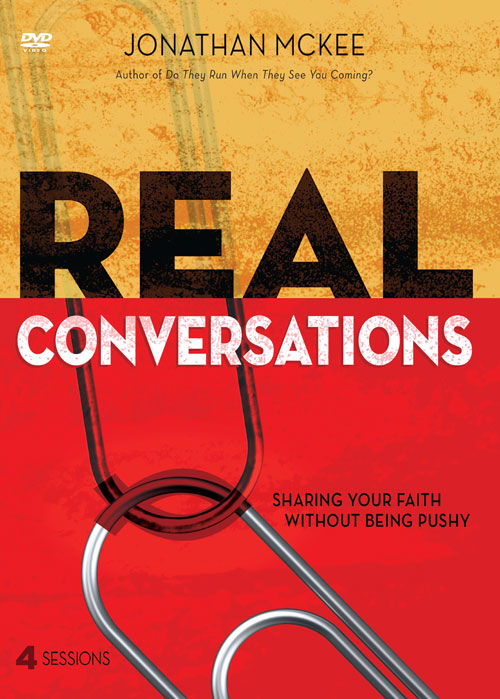
    Jonathan McKee (The Source for Youth Ministry) just released a 4-week video based curriculum that’s all about how to have real conversations about sharing your faith. (Which is cool considering it’s called, Real Conversations.) As a youth leader, this is one of those plug-n-play options that would be cool to have on your bookshelf. Each week there’s a 12-14 minute video and a participants guide to help drive it home. For instance, let’s say most of your team is going to take August off and you’re solo teaching? Bam, press play and let Jonathan do the work. It isn’t quite that simple but the videos and the guides make it pretty simple.

    Who is Jonathan…

    If you know Jonathan and you know me you might not see the connection. He’s more conservative on some things than I am, approaches life a little differently than I do, and he’s from NorCal while I rock the fish tacos down in SoCal. But,while we often have a different approach Jonathan and I have one important thing in common: We long to see the church get better at reaching people right where they are… and we are putting our necks on the line to try to make a dent of a difference. I think that’s one reason we get along so well… we care first about people.

    Another reason, and this shares something I don’t talk about a lot, is that I connect well to people who hustle. Jonathan works hard. Yes, he’s talented. But his stuff does so well not  just because he’s talented, but also because he flat out works harder than a lot of other people in our world. He and I worked on a project earlier this year and he was RELENTLESS! He wanted to not just get it done and on time… he wanted it to be great and put in the work to make it great.

    Why I like it…

    I dig Real Conversations for a number of reasons. I think that there are a lot of youth groups looking for this type of training. It’s consistently choses to stay practical when a lot of similar curriculums get lost in theory and apologetics. I like that its Gospel-oriented without limiting the Gospel to a message. I like that it’s funny, really… I LOL’d a couple times. And I like that it was shot and edited real pretty. (The crew at Zondervan did a real nice job.)

    In the end, I see a lot of similarities between Real Conversations and Good News in the Neighborhood. They are two-sides to the same coin. As I’ve tried to figure out and live into the realities of becoming Good News on my block I’ve had several instances where someone, completely out of the blue, has asked me… “So, I know you believe in Jesus and there’s something about how you’re living that makes me want to know more. What is that Jesus thing all about and how do I get me some of that?

    So you can think of it like this. The Good News curriculum might teach you how to live for Jesus on your block. But Real Conversations will actually help you answer the natural questions that will come up as a result of partnering with Christ to become good news to your neighbors.

    How you can get it…

    Two ways you can get this.

    1. BUY IT. The more direct way is to head over to Jonathan’s website and pick it up. (It’s $10 off, awesome.)
    2. WIN IT. Zondervan was nice enough to send me a copy of the DVD & Participants guide to review. The simple reality is that I watched the DVD and flipped through the book, but I’d rather give it away to someone who might actually teach it than stick it on my bookshelf to collect dust. It’s brand new! So, leave a comment on this post on 5/1/2012. And I’ll pick a random winner to get my copy. To enter… just leave a comment of any kind. I’ll announce the winner on 5/2/2012.

    WINNER: Jeffrey Dyson – send your mailing address to mclanea@gmail.com

    Let’s do this again next week! I’ll be giving away a DVD/participants guide for Love is an Orientation next Tuesday.

  • How to buy a used car for way below Kelly Blue Book price, part 2

    In Part 1 of this series I shared some general used car buying tips that I gleaned from my own experience and reading a few articles on the topic. In this post, I get specific about how I used those general tips to get a great deal on my used minivan.

    Preface: I spent several weeks looking for vehicles on AutoTrader and researching dealers on Yelp. I highly suggest you do the same before attempting to buy a car.

    Goal: To get a high quality minivan from a reputable dealer at a great price.

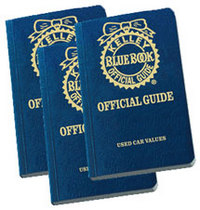
    How we bought a minivan for thousands under Kelly Blue Book

    1. I looked at tons of minivans for several weeks on AutoTrader and in person. If used minivans were porn I would have had a major problem… that’s how many I looked at. I drove around the area so many times I’m willing to bet that at least one dead beat dealer thought I was a private investigator.
    2. I walked off 20-30 lots simply because I didn’t like the salesperson’s attitude. You’d be surprised how many dealers allow their sales staff to be rude, as if you’re going to bully someone into buying something they don’t want?
    3. I took my eight year old with me to buy what I wantedPaul was awesome. He ran recon with me on every car on the lot. For the price of a Coke and some Starbursts he was a valuable asset. Plus, who doesn’t love jumping in and out of vans you’re not going to buy to find what’s wrong with them?
    4. We waited until the end of the month. We dangled that end-of-the-month carrot in front of the sales guys face mercilessly. We weren’t even out on the street on the test drive before I brought it up. As soon as he told me he was short a few sales I dropped the price in my head another $1000.
    5. I did the math while I waited. There’s a lot of standing around when dealing with a dealer. In that time, I looked up the van with all of the exact specs and mileage on the KBB app. Their list price was right at KBB’s price. I knew from my research that I could go at least 20% off of their asking price and they’d still make money. So I put that number in my head. Between Evernote, my iPhone’s calculator, the KBB app, and the AutoTrader app… I had all the information I’d need.
    6. When we got back to the dealership I asked the salesperson to go ask his manager for the absolute lowest offer they’d accept that day. He came back with a number about 10% lower than the sticker price and started to tell me about a few details. Basically, his offer was just enough to get all of their “out the door” fees back to the asking price. He was about $2000 off the price in my head, but I didn’t let him know.
    7. I looked at the CarFax report. I made a mountain out of a couple molehills. But I never responded to his offer directly, just made it clear it wasn’t what I was looking for.
    8. Then I made Mt. Everest out of a speed bump. He said that his dealership required he run a credit check, even though I wasn’t financing through them. (I paid cash) I decided this was going to be a sticking point and used it as a distraction from the numbers game– a way for me to take the power position AND get the sale price I had in my head. The salesperson told me it was a state law that they run a credit check. (It’s not, that’s ludicrous. The form next to the application was a standard disclosure for allowing them to use/sell my credit information to marketing companies.) So I told him that this was going to be a deal breaker, it wasn’t something I was going to do and there was no room for negotiation. He came back with the manager who told me the same thing.
    9. And then I walked away. Literally, Paul and I stood up and thanked them for their time. We shook hands and wished them well. Then we walked out the front door and went to our car. I told Paul that I just caught them in a lie and now I’d use it to get what I wanted… a better price. We sat in the car [I never park in their parking lots, always on the street] and waited a few minutes. Then, the salesperson came out of the building, got in the minivan, and started to drive it from the new car lot to where it was on the used lot.
    10. The buddy move. The salesperson parked the car, locked it up, and started to walk back to the office. I caught him about 50 feet from the van and said, “Hey, what was that all about?” He softened right up, clearly annoyed he’d just lost a sale. “Look, I’m not going to do the credit thing, but that doesn’t mean we can’t do this deal. It’s not a state law but probably a company policy. I know you want to do this deal and I want to see you get paid for it. If you can go print out the policy for me to read and convince your manager to sell me the car at ____, a total out-the-door price, we will have a deal.” He had worked at other dealers, knew it was just a policy, and agreed to make that happen. In other words, he took the bait.
    11. Read the policy. I’m not saying car salesmen aren’t smart, but they clearly aren’t familiar with policy language. When the salesperson showed me the policy in his handbook it said in 3 places that the general manager could authorize them to bypass the credit application for cash sales. So I told the manager, “It’s up to you. If you want to move this car off your inventory and you want to see your guy get a sale today, this is the phone call you’ll need to make. But if you can’t make this happen I’m gone. The exact same van is on lots at ____ and ____. Somebody is going to sell me this van in the next 2 days, I’d like it to be you.” This was all totally true. I was going to walk if I couldn’t get him to budge on this issue. And those other lots really did have the same van. I knew I had them at this point because the salesperson was standing right there. I used the buddy move to put the manager in a position where he had to make the deal happen. If he didn’t make it happen the salesperson had his boss to blame, not me. Cute, eh?
    12. No surprise. Three minutes later he comes back and tells me that I don’t need to do the credit check, but will need to bring in more ID to satisfy a state law that forces them to verify my identity.
    13. Closing time. I looked at the sales guy, “OK, so you told him the price and everything? We’re good now?” He looked at me in terror. They were on the ropes at this point– time for the knockout. “No, I didn’t get a chance to do that yet…” “I told ___ that if we could take care of the credit check thing and you’d do an out-the-door price of ____ we’d have a deal. Will you take that?” [I lowered it another $200, oops. :)] He stuck out his hand and shook on it.
    14. Paperwork, schmaperwork. I spent the next hour doing paperwork with their secretary. Wam, bam, thank you ma’am.
    15. The net result. I got the #2 choice minivan I wanted for my family. The dealer moved a car that’d been on the lot for 3 months. The salesperson got a sale and will get paid Tuesday. My sale price was 22% below Kelly Blue Book for the exact spec/miles. My sale price was 49% lower than the asking price on the same minivan in 2 locations within 2 miles. My eight year old son learned the power of negotiation.
  • How to buy a used car for way below Kelly Blue Book, Part 1

    After a couple months of research we were finally able to purchase a great used minivan while getting a good deal from a reputable dealer.

    General used car buying advice

    Preface — Download the free Kelly Blue Book app for your phone. In order to beat the dealer in real time, you’ll want to have access to the data when you are shopping.

    Goal— This plan is loading you up on leverage so that you can be in the offensive position when it comes down to negotiating price.

    1. Start with a class, not a specific make/model/year. In our case, we were looking for something that seated 7 people that was 3-7 years old. As you get deeper in the process it’ll help to know the basics about your class. Which car is most desirable in that class? Which is least desirable? What are the best features in that class for those years? On and on.
    2. Use AutoTrader.com and Yelp. Once you have #1 figured out, create two searches on AutoTrader and set them up to send you a daily email. Do one search for the cars you are most interested in within 25 miles. Do another search for the entire class within 75-100 miles. This will notify you when something you really like is close, so you can go over and take a look. But it’ll also give you an idea of what cars are going for in your class within your area. (Lots of dealers have several locations and move cars around so their lots look fresh.) Save the ones you like the most. This will make it simple to go back and compare, plus if you use it long enough you’ll see which cars in your class move the fastest and at what price. For Yelp, get to know the dealers reputation in your community before you see their striped tie on the lot… just type in the name of your city and “used car” and you’ll learn all sorts of things about the dealers who look awesome on AutoTrader.
    3. Avoid tent sales, sales events, and anything attached to the name “Giant” or “Super.” If you don’t believe me, leave your checkbook at home and go visit one. It’s every slimy sales guy/tactic at one place trying to out-sell the other slimy guys. From a strategy perspective this is how dealers move inventory quickly at higher-than-normal prices OR ridiculous financing. These events put the seller in the power position and you, the buyer, in the weaker position. Have you ever gotten a good deal at a carnival? I didn’t think so. 
    4. Sunday and after hours are your friend. In our area (San Diego, CA) most of the lots are closed on Sunday. And most lots are closed by 6 PM during the week. If you want to get a closer look at a car you might be interested and want to avoid the people in ties this is the best time to do it. Everything looks nice on AutoTrader. Just do a few recon missions to see who carries what and at what quality. Most smaller lots and a lot of big name dealers buys their cars at auction. Then they spend $1000 on them to spiffy them up at a nice profit. But a few of the name brand dealers keep the best trade-ins and then fill their lots with some auction stuff. Get a close-up look and you’ll spot the winners from losers right away.
    5. Keep the deal simple. You won’t be able to do the math in your head if you start talking about financing, trade-in value, etc. You only want to talk about “out the door” price. (Including all their fees, sales tax, etc.) So take care of your financing ahead of time, sell your car on Craigslist– just do whatever you need to do in order to simplify the deal to an “out the door” price.
    6. Buy at the end of the month. Salesperson paychecks and quotas are measured on the last day of the month. If you are walking onto a car lot knowing you can buy when you find the right car, knowing what you can spend, and are willing to negotiate, and willing to wait another few weeks if you need to– you have about as much leverage as you’re going to get in the last few days of the month.
    7. Don’t go alone. Typically, dealerships assign one salesperson to each buyer on the lot. So having two of you and one of them is a big, tactical advantage. When the salesperson starts showing you cars the second person can open up different doors and see the price or give you a quick opinion. I took my 8 year old son and he was perfect for this job. He and I worked out little looks and gestures for when it was time to move.
    8. Test drives are free. You ultimately won’t know what you like until you get behind the wheel. If a salesperson is douchie about it just walk off the lot. (Most require your drivers license. If they ask to run a credit check in order to test drive, it’s time to bounce.) It’s not like they really think you are going to buy a car without driving it. Test out if you like where the controls are, if things move like they are supposed to, if everything works, etc. Any reputable dealer is also fine with you taking the car to a mechanic to get it looked at. (Usually this is under $50)
    9. Don’t fall in love. If you’ve done your research you’ll know that your #1 – #5 choices are likely available at various lots. Until you sign on the dotted line you need to be prepared to walk away. In fact, walking away is your best leverage point. You have everything the salesperson wants, your money. And only you can decide when the sale makes sense.
    10. Character matters. Be willing to walk off a lot and miss out on your #1 choice if the dealership is shady. Even at the best dealerships, service is going to go down drastically from the moment you buy the car. So if you feel weird about the guy in the tie talking to you– know that he’s the nicest guy at the shop. If you don’t like him you’re really not going to like the service department or anyone else. There are thousands of dealers and millions of used cars available. Just trust me, if you feel weird… walk away.

    In Part 2 of this series I’ll share our actual experience with getting a deal 22% below Kelly Blue Book price and nearly 50% cheaper than similar dealer list price for the exact same used minivan. 

  • Engaging with the Faith-Based Community

    Here’s the Keynote for my Boost Conference presentation later today. You can also download a PDF of this presentation & a PDF of all the raw data from my recent survey, Church Involvement in Public Schools, by clicking the link below. (free)

    [download id=”21″]

    Thanks to all who helped with the research portion of this presentation. I love having fresh insights to share!