Category: Social Action

  • The view from the other side of the fence

    “Give me your tired, your poor,
    Your huddled masses yearning to breathe free,
    The wretched refuse of your teeming shore.
    Send these, the homeless, tempest-tost to me,
    I lift my lamp beside the golden door!”

    The New Colossus

    Seeing these words painted in protest on the newly built, hugely fortified border fence in Playas de Tijuana, was eye opening. What happened to us? How did we get to this place? And where is the America of Ellis Island?

    Here’s what we know. The American society we all enjoy is built on the backs of cheap labor. While we complain about expensive gas we enjoy cheap foods picked by nameless, faceless, undocumented people throughout our country. And that’s just the people who likely went in debt $5,000 to cross our monster border. We so easily forget about the hundreds of thousands of hands that manufacture goods in Tijuana.

    Two weeks ago, I went into Costco and spent $230 on a new flat screen TV. I confess I never thought about the hands who assembled it in TJ or somewhere like it. Their fingerprints were invisible on the box. Their breathe filled space in the box between the styrofoam and the cardboard. But it was their product I purchased. We are enjoying their faceless handiwork.

    I didn’t think that the person who assembled my TV makes less than $60 per week working 60 hours lives just 45 minutes from my home. That person might live in a community like I visited yesterday. It’s a place that doesn’t technically exist though several thousand people live on the flood plain of a river below the plant where toxic waste is routinely dumped. There’s no running water. No toilets. No showers. No electricity. And since they don’t have legal rights to the land the government can decide to move them out whenever they feel like. A team from Centro Romero was there a few years back when bulldozers did just that. They gave families 5 minutes to leave before bulldozing half of the community for a canal project.

    When I bought my TV I didn’t think about the children who will grow up playing in the toxic mess while both parents are off at the assembly plant. I didn’t think about the miles those kids would have to walk to get to school. I didn’t think about the realities of their birth defects caused by heavy metals. I didn’t think about the loan sharks and child traffickers who make their living keeping these young families stuck in these conditions.

    All I know is that I smiled when I bought my $230 TV at Costco that Sunday. It was cheap. I got a good deal. And our TV was broken.

    It’s easy to hear about our nations billion dollar fence and feel good about it. But know that we’ve not stopped the flow of illegal immigration. As one of the signs said, “If you make a 12 foot fence we’ll build a 13 foot ladder.” All our fence has done is made the journey more treacherous. Along one stretch of road we visited a memorial to the 4500 documented deaths of people attempting to cross the border. It’s also gotten more expensive. Until recently, it only cost a few hundred dollars to hire someone to get you across the border. Now the price is around $5,000. How do people making $56 a week afford that? They become indentured servants on American farms. 

    It’s easy to say things like, “I’m all for people immigrating to our country, they just have to do it legally.” Those are easy things to say from this side of the fence. These are easy things to say when you were born here. These are easy things to say when they are nameless and faceless to you. But also think about your $230 TV or your $1.99 fresh strawberries or your $10 t-shirt. It’s easy for you to say those things when you are enjoying the fruits of their oppression.

    My challenge to you is to do what I’ve done. Take the time to learn their stories and walk in their shoes. I’ll take you to these places if you dare.

    And then you’ll ask yourself– which side of the fence are you on? 

     

  • In the Ghetto

    Oh Elvis. How I’m intrigued by your social commentary.

    Wanna talk about ghetto? That suit is ghetto fabulous. Any pimp on El Cajon Boulevard would pay $500 for that. 

  • Support Freely in Hope on Sevenly

    Meeting Nikole Lim and learning about her organization, Freely in Hope, was one of my highlights of 2011.

    We all know that storytelling is a powerful medium for moving people to action. Nikole’s eye for this is exhibited beautifully in her short film, While Women Weep. The film threads together the stories of several African women who became exploited sexually and later enslaved by hopelessness before finding new freedom and hope through Christ.

    As I watched the film I was overcome by three things.

    1. This film is beautiful in every way.
    2. This would be amazing to watch with a small group or with people who are looking for a cause to rally behind.
    3. Nikole needs to tell more stories.

    So please buy her film to support her continued work through Freely in Hope & as an encouragement to this young artist to keep going!

    In related news, Sevenly is featuring Freely in Hope this week with a special t-shirt.

    From now until January 1, your $22 purchase helps to protect women from sexual abuse in Kenya. With your support, Freely in Hope can uplift women out of poverty and decrease the vulnerabilities of sexual abuse. Your support will give protection & education to young women, helping them attain jobs and a better living.

    Go here to buy a t-shirt

    So if you’re looking to end 2011 with a little conspicuous consumption that can make a big difference– here’s my challenge. 

    Go buy the DVD, pick up the t-shirt, and tell your friends that you’re going to host a party to boycott the BCS Championship game farce by hosting a Freely in Hope party at your house.

  • The worldwide leader in…

    I’ve been a college sports fan my whole life. It’s safe to say there has never been a time like this.

    Never. Ever. Ever.

    One by one the most trusted names in college sports are having the skeletons removed from their closet and broadcast on national news.

    • Jim Tressel, the squeaky clean football coach in the sweater vest at Ohio State, was revealed to be the type of guy who rigs kids raffle contest so the best players prep players get free Ohio State gear. [Source]
    • Joe Paterno was absolutely kicked to the curb by Penn State when it was revealed that he knew about allegations of sexual assault in his football building but did nothing about it.
    • It looks like Syracuse’s longtime basketball coach Jim Boeheim is next. Yesterday his assistant Bernie Fine was fired when ESPN revealed tapes of Fine’s wife corroborating an accusers story. Boeheim issued a statement yesterday that he knew nothing of the allegations. All it’ll take is one email or voice mail with him talking about it before last week and he’s out.

    The Witch Hunt is On

    Once the witch hunt begins, in this latest case trying to determine who knew what and when about Bernie Fine’s sexual abuse of ball boys– it’s nearly impossible to know who is the hunter and who is the hunted.

    I’m not saying these guys are innocent. I’m just wondering if there is more to this witch hunt than what is being presented. Maybe the hunter isn’t as innocent as they appear to be?

    ESPN is the Common Denominator

    As I listened to the news about Bernie Fine yesterday I couldn’t help but pick up on this detail… they’ve had this tape since 2003. Eight years! When you are talking about a man who uses his position to molest children eight years is exactly eight years too long to hold a story. Eight years where someone, probably a lot of people, chose to protect Syracuse basketball instead of protecting young boys.

    That’s not acceptable. We simply cannot let them hide behind this little statement of journalistic “integrity:”

    Davis first gave the tape to ESPN in 2003. At the time, ESPN did not report Davis’ accusations, or report the contents of the tape, because no one else would corroborate his story. [source]

    Wait… did you catch that? Someone at ESPN decided not to air the tapes because THEY couldn’t corroborate the story. They aren’t the police… they are a sports news agency!

    A man comes to them with proof that he was molested by a coach at Syracuse University, seeking help since local police wouldn’t do anything about it, and they sat on the story for eight years.

    Eight years.

    What kind of person doesn’t call the police when he knows a child has been molested? Do we really value sports above children in this country?

    So why now? 

    In the three cases I mentioned  above ESPN had knowledge of these stories long before they broke. Lots of people around Penn State knew of a grand jury investigation of Jerry Sandusky. And no one said a thing while they knew Sandusky continued to have access to the football facilities.

    Lots of people knew the Sports Illustrated article was going to expose Jim Tressel’s knowledge of player indiscretions. And they sat on hard evidence about Bernie Fine was molesting boys for eight years.

    So why now? Why is ESPN holding stories and then subsequently releasing them? What makes 2011 special?

    It’s always about the money…

    I’m not presenting a conspiracy theory. I’m just starting to connect the dots. (And asking you, my fair reader, for your input.)

    ESPN does what they do to make money, right? They tell the story that will make them the most money. And they cover the games and leagues that will make them the most money.

    That’s fair. (While not always moral) It’s a free market system and we live in a country with freedom of the press.

    But I wonder if this has anything to do with conference realignment and TV deals? On November 1st USA Today ran a story entitled, “Is ESPN the Force Behind Realignment?” It was almost a rhetorical question. Of course ESPN is the force behind realignment. As the article mentioned, every team or league will ask ESPN if added or removing a member school will increase or decrease their over all television worth. That automatically makes ESPN the linchpin in all of the realignment conversations as leagues will do whatever it takes to get a better TV deal from ESPN.

    And ESPN would love to see teams play in conferences that worked better for their markets and allowed them to make more money. (Even decreasing travel or shipping by 10% would make them millions more!) Why else would the Big East want San Diego State if it weren’t for their location in the 9th largest TV viewing market in the country… and the only major market without a team covered by ESPN?

    Conference realignment has everything to do with making more TV money for member institutions. Pure & simple.

    Don’t even get me started about the college football bowls. Did you know ESPN owns more than half of the bowls? That’s why we can’t have a playoff, duh! It’s about them protecting their assets.

    So here’s what I’m wondering. Could it be that they held and released these stories to devalue Big 10 football (Ohio State & Penn State) and Big East (Syracuse) basketball?

    You could say… “These are ESPN products, why would they devalue them?” And I’d hypothesize… “Because they have a monopoly and if they can devalue the product they can negotiate cheaper deals with member institutions.

    What do you think? Did ESPN have the responsibility to involve law enforcement when the Bernie Fine tapes were given to them in 2003? Do you think ESPN would have any reason to hold this (and other stories like it) until “the right time?

    Or am I just a silly fan who had too much time in the car yesterday to think about all of this?

    Sound off.


  • The high cost of tomatoes

    1. The Unsavory Story Of Industrially-Grown Tomatoes – Clip from Science Friday, August 26th 2011     

    Source: Science Friday – August 26th 2011

    I love tomatoes. They are a seasonal treat I grow in my garden. At the peak of the growing season we were getting 50+ per week from our garden.

    Key word: Seasonal.

    Americans have no concept of seasonal food. We want what we want 12 months per year in complete denial of natural growth cycles. In other words, if you want a tomato on your salad to start your annual New Years diet, you just go to the grocery store and get it.

    Here’s the thing: Tomatoes don’t grow naturally that time of year. There are places in the world where tomatoes grow well during a season. But in the middle of the winter your typical beaf steak tomato doesn’t grow anywhere in North America. At least not naturally.

    So why can I buy them year-round? 

    Supply and demand has a dark side. As the audio from the August 26th version of Science Friday documents, those low taste, high cost winter tomatoes you buy at the supermarket come at a very high cost.

    • About 120 chemicals are needed to make those tomatoes grow in Florida.
    • 8x’s the pesticides are needed for Florida winter tomatoes that aren’t needed for ones grown in California.
    • Many are hand picked and cultivated by modern-day slaves…. in Florida. (More than 1200 cases of such have been documented in recent years.)
    • They are picked when they are completely unripe and bright green. Then they are gased to turn them bright red, even though they aren’t ripe.
    • The reason your store bought tomatoes have no flavor is that they aren’t raised in soil, they are raised in sand. (No natural nutrients, sorry)

    What’s the point?

    If you knew that you were buying something produced by modern-day slavery in your own country, would you still buy it if it were a good deal?

    My advice? Next time you sit down to eat something or make a meal ask yourself… where did this food come from? What were the farmers who produced it paid? And was this food made under conditions that honor God?

    You might not want to know. But the reality is that there is an entire industry out there who doesn’t want you to think about where your food comes from, they just want to get rich off of your ignorance.

  • What is Happening in Alabama?

    This video is shocking. It makes me wonder, “Have the people of Alabama learned anything from the civil rights movement?

    Here’s the full content of the law.

    Listen carefully to the statement. They have taken the Arizona law and added to it more stringent requirements. Essentially, you have to provide a state issued ID proving your immigration status for any and all business transactions in the state of Alabama. Further, they put strict penalties on businesses which sell things to, rent to, or even provide transportation for, people who do not have legal status in the country.

    Let’s get practical. Do you think that the grocery store is going to ID a white woman and her children at the checkout counter? Do you think a landlord is really going to look up the immigration status of a black family? Do you really think that a bus driver will ask for ID from a retired white male? Or the car dealer down the block, will he e-verify the identity of Mr. Johnson whom he has sold cars to in the past?

    The law would also penalize people who knowingly harbor or give transport to illegal immigrants, a provision that many religious officials say would criminalize churches that heed what they believe is the Biblical obligation to feed, clothe and shelter the needy.

    Read the rest here

    Please tell me I’m misunderstanding what this law is about? It seems to me that this is segregation all over again.

    And how is this constitutional? 


  • Ashley Judd – Children are not for sex

    Powerful stuff. I hope change is underway in Georgia.

    GenerateHope is an organization which helps reach out to women who have been sexually trafficked into San Diego County. As Ms. Judd points out, its more common that you’d like to think.

  • Steps of Justice

    If you haven’t yet checked out the Steps of Justice 30-Day Prayer guide you are really missing out.

    What I like about the guide is that it isn’t just something to read and put down. It’s an action guide. It raises your awareness, leads you to prayer, then gets you doing something about it.

    It’s dangerous.

    So that’s my challenge. Do something dangerous by picking up Steps of Justice and giving it a try. Better yet, get 10 of them and use them in your small group. Or buy 100 and get your church involved. Or 1,000 and ask your neighbors to pray. You get the idea.

  • Worth fighting for

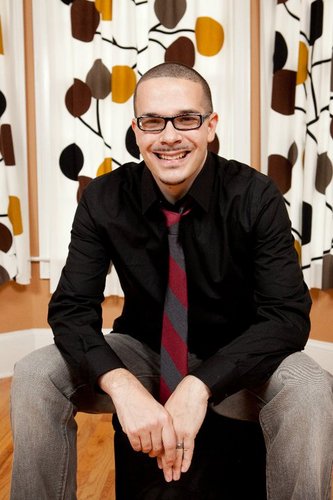
    The last few days I’ve been following the story of Shaun King, an Atlanta church planter and friend of YS, who recently discovered his former boss & pastor has admittedly molested and raped some children.* After doing some further research Shaun learned that other church leaders were aware of the situation but remained silent.

    Not Shaun. He took to Twitter to expose the problem. Here’s how he kicked things off:

    Bishop Johnathan Alvarado of Total Grace Christian Center is a child molester. In the name of Jesus I declare this must end RIGHT NOW. @shaunking – March 13th, 2011

    Here is the crux of his demand:

    I have heard the worst, learned of his admission of guilt, yet he continues to serve and preach. Kids get the raw end of this deal. No more. @shaunking – March 13th, 2011

    And he didn’t back down from there. He has continued to press on. Laying out his case and defending it with more evidence. Even if you don’t like Twitter, please take a few minutes to read through Shaun’s tweets from the past few days.

    You will see righteous anger in action. As he says, “I will STAND FOR KIDS 100 out of 100 times.

    It is the embodiment of Ephesians 5:11-13:

    Have nothing to do with the fruitless deeds of darkness, but rather expose them. It is shameful even to mention what the disobedient do in secret. But everything exposed by the light becomes visible—and everything that is illuminated becomes a light.

    I know many are offended by Shaun, his tactics, and think that he is somehow giving the church a bad name. Are you kidding me? If these allegations are true, (and it seems the pastor admitted to them) young men were raped, families paid off, and the pastor went right on preaching? That’s a disgrace and we need to applaud Shaun for speaking out! To be silent, to deal with that in private, is disturbing. If you’ll protect a rapist… who wouldn’t you protect?

    This morning I’m asking for 3 things:

    1. Pray for Shaun, Rai, and his kids. Pray for the victims and their families. Many in church circles are denouncing Shaun for speaking out. And sadly other people have sent him death threats. Pray that God protects Shaun as he stands in the gap for children in his community. Pray that justice prevails, not in the court of public opinion, but in a court of law.
    2. Reflect on the types of things worth fighting for in your life. What are things that you, as a child of God, would cause you to stand up and fight for, putting your reputation on the line for, even to the point of receiving death threats as you expose light to darkness?
    3. Act, act, act. I believe there are countless stories like this hidden in the confines of the church today. Expose them. Today. There is a devil-inspired lie that “true believers” settle things without the courts involvement. I’ve even heard people say that it’s a sin to sue a church. That is a lie. Examine 1 Corinthians 6:1-11 yourself. Rape is not trivial. Breaking the law is not trivial. Extortion is not trivial. On and on. Examine the context and reason Paul wrote those words. But yet this untruth has lead to countless victims and the continued victimization by people originally called to represent Jesus. Expose them. Do not take refuge in the reality that God will judge them. It is your responsibility as a believer to bring light to dark places. Search your heart, discover what is worth fighting for, and act. Today.

    *I’ll admit in sharing this story that I’m confused on some of the details. I don’t know how a person can rape children and settle that in court without criminal charges against the accused. I firmly believe that a person is innocent until proven guilty. If someone could help me understand Shaun’s statements that the person has admitted guilt and not received a criminal complaint, please enlighten me. Is this a statute of limitations thing?

  • Tunisia, Facebook, Privacy, and Freedom

    Most youth workers have developed a Facebook apologetic. That is to say, they know how to respond and argue for Facebook usage to engage with and interact with their students.

    One component of Facebook, which causes heart palpitations for adults, is that it is a place of dissidence and venting. And the motivating reason that adults see their blood pressure elevated about these activities is that they are either the object of said dissidence/venting or they are asked to clean up the mess created online.

    As a result, some parents and other caring adults use that as a case for Facebook being banned. (Which, as human nature dictates, just means adolescents find another place to carry out dissidence and venting. It is just taken off of the adult radar and disappears into adolescent-world. But you can safely imagine a William Wallace-like response, “You can take our Facebook, but you can never have our phones!“)

    Allow me to introduce to you a story from The Atlantic, which puts this into context:

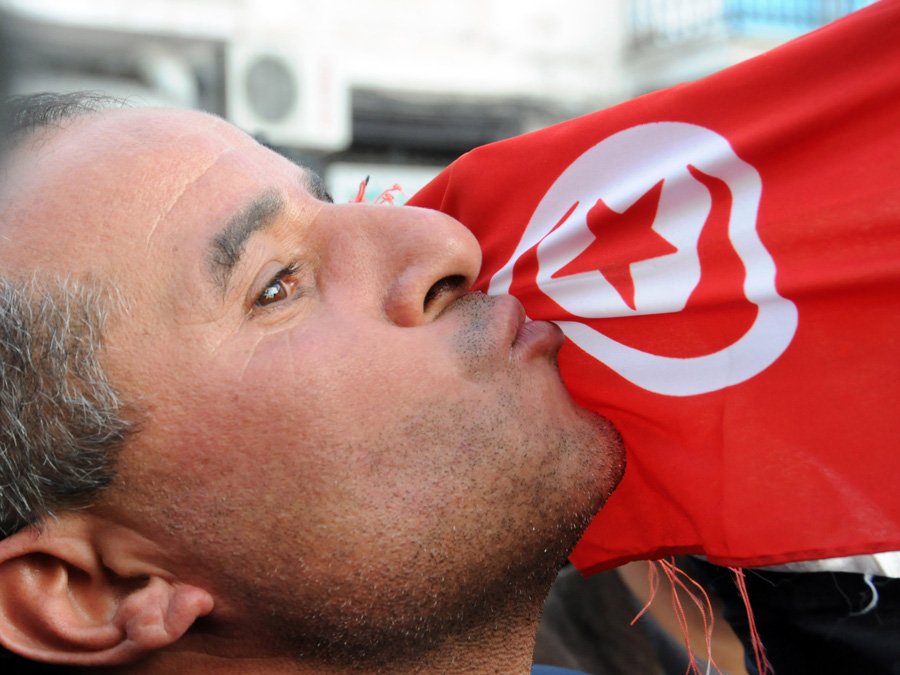
    Expert analysts of the country couldn’t tell if Ben Ali would remain in power for a few more weeks or a decade. It did not feel inevitable that Ben Ali would be deposed. People had protested in the streets before. Revolution had been in the air. It wasn’t clear that this time would be different.

    There has been a lot of debate about whether Twitter helped unleash the massive changes that led Ben Ali to leave office on January 14, but Facebook appears to have played a more important role in spreading dissent.

    Imagine you are Ben Ali. You are the unpopular leader of Tunisia. You are an oppressor of freedoms. And you hear rumors that you may be deposed of your power.

    In youth ministry language– the youth pastor hears that his students are bad mouthing him on Facebook. And they’ve engaged with enough adults in the church that you might get fired.

    So what does Ben Ali do? He had long ago banned YouTube and other video sharing sites… but all of a sudden he discovers that hundreds of thousands of Tunisians are flocking to Facebook, networking, and sharing videos which document the terrors of his rule.

    While clashes with security forces took place in the streets, Rim, who asked we not use her last name, was in her bed in her apartment in Tunis. Like the blogger cliché, Rim sat in her pajamas sharing videos. In her hands, small protests that reached 50 people could suddenly reach another 50, who would share it with another 50. The idea that it might be time for the regime to change spread from city to city faster than street protests and even middle class places got involved.

    “There were rumors that Facebook or electricity was going to be shut down,” Rim IM’d me from Tunis. “Or both.”

    Did you get that? It was either shut down the electricity or shut down Facebook. But Ben Ali’s plan was more devious.

    After more than ten days of intensive investigation and study, Facebook’s security team realized something very, very bad was going on. The country’s Internet service providers were running a malicious piece of code that was recording users’ login information when they went to sites like Facebook.

    By January 5, it was clear that an entire country’s worth of passwords were in the process of being stolen right in the midst of the greatest political upheaval in two decades. Sullivan and his team decided they needed a country-level solution — and fast.

    Instead of just shutting down Facebook, Ben Ali had ordered that the very tool being used to create dissidence be used as a tool of the government to capture personal information.

    Facebook, the company with access to 800 million users personal information, had to make a moral decision. Was it going to get involved in support of a dictators withholding the reigns of power from the people of Tunisia by doing nothing? Or was it going to spur on political revolution by protecting their core values?

    They chose the latter. And, as we know now, their was a change in leadership in Tunisia.

    At Facebook, Sullivan’s team decided to take an apolitical approach to the problem. This was simply a hack that required a technical response. “At its core, from our standpoint, it’s a security issue around passwords and making sure that we protect the integrity of passwords and accounts,” he said. “It was very much a black and white security issue and less of a political issue.”

    The software was basically a country-level keystroke logger, with the passwords presumably being fed from the ISPs to the Ben Ali regime. As a user, you just logged into some part of the cloud, Facebook or your email, say, and it snatched up that information. If you stayed persistently logged in, you were safe. It was those who logged out and came back that were open to the attack.

    Read the rest at The Atlantic

    What does this have to do with youth ministry?

    I don’t know. Nothing and everything at the same time.

    I think a lot of adults feel teenage angst more than teenagers do. Deep down we believe that it is our role to save teenagers from themselves by putting up boundaries and barriers. At the same time we acknowledge that they carry the hope of the world forward in living out the Gospel in ways and to levels that our generation has failed.

    Instead of focusing our attention on somehow asking our students to be saved from the world, perhaps we need to focus on teaching them how to take over the world and lead it in a way which acts on their Jesus-influenced convictions?