Tag: social media

  • Measuring Success in Social Media

    I laugh when I see the term, “social media expert. Let’s be honest. It’s an emerging field and the only thing that makes someone an expert is that they have labeled themselves as such and they read Mashable and Seth Godin.

    With that in mind, I’ll just point out that for the last two years I’ve gotten paid to handle social media. I don’t know if that makes me an expert in the field, but it does mean that I’m employed in the field. (And I read Mashable and Seth Godin just for good measure.)

    So, how do I measure success?

    False positives

    • Size of following. Having 25,000 followers on Twitter or 10,000 fans of your Facebook page doesn’t mean jack.
    • Contest excitement. I love hosting contests as much as the next guy, but hosting a big contest doesn’t mean jack.
    • Being active. Utilizing the tools of social media is important, but just showing up doesn’t mean jack.
    • Atta boys. [Or atta girls] When you first get started everyone in your organization will be excited, but that doesn’t mean jack.
    • Sales or lead generation. This may make the boss happy, but in most cases it doesn’t mean jack.

    True positives

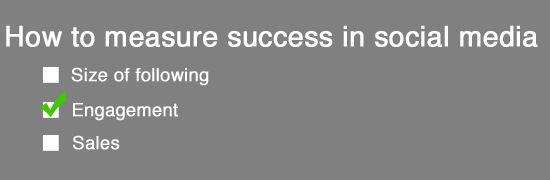
    • Engagement. Are your followers, fans, subscribers listening to the stuff you send out in a measurable way? Do they click on links you recommend? Do they comment on stuff you post? Do they open the emails you send? Having a large following is only as valuable as your ability to engage those people. Otherwise, your just another message they are ignoring. I’d rather have 100 engaged Twitter followers than 25,000 who ignore me. What to measure: comments, likes, open rates, click rates, number of clicks, mentions on fan/followers feeds.
    • Users who contribute. Is your effort a two-way conversation? Traditional marketing is about pushing a message. Social media is about pulling a response. It’s shocking to me how many organizations have large followings but only push. And they wonder why they think their social media efforts are a waste of money? They are! What to measure: Submissions, Facebook messages, Twitter direct messages, unsolicited or solicited ideas.
    • Repeaters. This post is the perfect example. When I press publish on this blog post, my own network will draw a couple hundred visitors. But this post will be read several thousand times in just 7 days. How did that happen? Repeaters. What to measure: Facebook shares, Twitter retweets, add-to-this analytics, trackbacks, blog posts about your content/product/service.

  • A Pastor Who Gets It

    There’s a tiny amount of cynicism when you hang out with church leaders. We have a hard job and it comes out in funny ways.

    That guy just doesn’t get it.

    There are lots of conversations where church leaders don’t get it. Talk to any associate level pastoral staff member, church secretary, maintenance person, van driver, or ministry volunteer and you’ll hear it. “My pastor doesn’t get it.

    And, in all fairness, the job is too big to “get everything.” You simply have to chose what to “get” and what to “punt” on.

    In my world when a pastor doesn’t get it— that usually means that the suck at all things computer related.

    How these people got through seminary I’ll never know! But I’ve met too many pastors who can’t use Microsoft Office or manage their email or find stuff using Google.

    And when it comes to social media– some pastors get it but most don’t. Facebook, Twitter, blogging, live broadcasts online… they glaze over as I talk about these things!

    And yet over and over again, when I meet with pastors, they tell me “I want to get it.

    This is precisely why I contacted Doug and Tony over at JoPa productions and asked them to bring Pastors’ Social Media Bootcamp to San Diego next week.

    Pastors want to get it. Let’s make sure they get the training they need to get it.

  • Fear Makes You Stupid

    Yesterday morning I woke up to the news of a massive earthquake in Chile. The world seemed to hold its breath and wonder how bad the damage would be. “If a 7.0 earthquake killed 200,000+ people and flattened Port-au-Prince, Haiti– what would an earthquake 500 times stronger do?

    Those fears and concerns were legitimate.

    Fortunately, as news reports flooded in, we later learned that while there is widespread damage and hundreds of thousands displaced– Chile was well prepared for such an emergency. In fact, it appears that Chile may be able to handle the relief efforts largely on their own. The New York Times is reporting, “Although the United States had offered aid, Chile’s government had not yet requested assistance. All international relief groups were on standby, and the International Federation of Red Crosses and Red Crescents said the Chilean Red Cross indicated that it did not need external assistance at this point.

    Chile’s disaster was not equal to Haiti’s disaster– and as those fears began to ease and you could see the media looking for a story to scare people.

    Later in the morning, the media attention shifted from the earthquake in Chile to a tsunami the earthquake spawned. This is when the full on fear mongering went nuts.

    • Fact: 750,000 people in greater Port-au-Prince are starving and homeless while billions of dollars of aid sits on tarmacs because NGOs and governments are paralyzed.
    • Fact: The president of Haiti has said it will take 1,000 trucks 1,000 days to clear the rubble from Port-au-Prince. The muscle part of recovery hasn’t even begun.
    • Fact: 46 days after the earthquake in Haiti, starvation and disease are happening just 2 hours south of Miami by plane. Thousands of orphans are undocumented and at risk of being trafficked. Widows and elderly have no protection.
    • Fact: 2 million people in Chile were displaced as their homes were destroyed.

    And twelve hours after the Chile quake all of the news media’s attention shifted from actual news stories to a potential tsunami in Hawaii.

    Fact: Tsunami warnings had gone out for more than 4 hours all over Hawaii. There was no danger to life.

    Fact: A potential tsunami is not equal to an actual tsunami. A potential tsunami was used to cover up the real story in Haiti. (The real story is that the church is meeting people’s needs while the NGOs and governments have meetings at the airport.)

    Fact: The news was reporting on lines at Costco/Wal*Mart/Safeway, showing live video of a camera pointed at a computer screen of a Ustream.tv feed, and anchors desperately trying to convince experts that although scientific instruments were saying the tsunami was only creating a 2-3 foot wave– the wave must really be 30-50 feet.

    Fact: This was worse than Geraldo opening Al Capone’s secret vault.

    And yet every news agency was showing live video from all over the state, showing sunshine and waves, interviewing tourists on vacation– all for a natural disaster that had not even happened yet! One reporter asked a tourist, “What is the situation like up at Diamond Head?” The tourist, confused, looked at the reporter and told the truth. “It’s a party up there.They couldn’t go to commercial fast enough.

    Something is wrong with us. The fear of a natural disaster outweighs an actual natural disaster? The fear of damaged vacation property outweighs the reality of millions of people’s homes in Chile and Haiti? The fear that a tsunami might hit outweighs the reality that a significant disaster has actually happened.

    Fear makes us stupid.

    When will we recognize that fear is our god? When will we stop living in fear? When will we be motivated by compassion that overcomes fear?

  • Social Media Training for Pastors Coming to San Diego

    I bump into church staff all over San Diego County who have the same question, “I hear that social media is a great way to reach people, but I don’t know how to get started, and I don’t have a lot of time to figure it out.

    Youth pastors. Church planters. Senior pastors. They all have the same questions!

    I love the heart behind that question! It shows an earnest desire to try to reach people in their community, but also acknowledges a need for some basic training.

    So when I saw that Doug Pagitt and Tony Jones had put together a one-day training seminar which teaches church staff the basics of blogging, Twitter, Facebook, and live streaming your church service— I knew I wanted to bring them to San Diego.

    I love training church staff over coffee, but the truth was that there are way more pastors who need help on this stuff that time that I have to train them over a cup of coffee. This way is just a lot better and more thorough than I can handle. (Plus, Kristen says I get goofy when I drink too much coffee)

    The first half of the day talks about social media philosophy and the second half is nuts and bolts of getting started. In talking to them about the content, this is entry-level– right where most pastors are. The feedback from participants in other cities has been fantastic.

    I hope to see you (or your boss) there!

    Here are the details:

    Date: March 9th, 2010
    Time: 9:00 AM – 4:00 PM
    Location: Christ Lutheran Church – Pacific Beach
    Registration cost: $95, lunch included
    All the details are right here
    Presenters: Doug Pagitt and Spencer Burke
  • A new kind of missions trip

    I’ve been on a lot of missions trips. But never one that was three dimensional before.

    The three dimensions of the Haiti trip:

    1. Going and experiencing for myself.
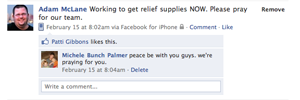
    2. Using Twitter and Facebook to tell stories live, sharing pictures and videos with thousands around the world.
    3. Watching the experience change my friends while they participate in the trip from their living rooms, offices, and cars.

    Here’s how this scenario played out over and over again.

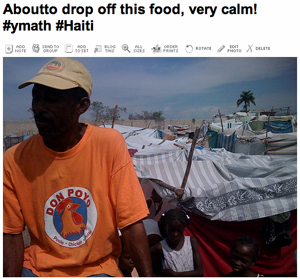
    We would load up the team van and head to a destination. Whether it was a meeting of pastors, a prayer meeting where thousands spontaneously had shown up, or walking around a devastated community and meeting people effected by the earthquake.

    All of a sudden, my iPhone became a powerful ministry tool.

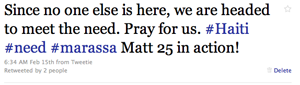
    I would post on Twitter a simple message.

    And instantly, my friends were engaged in what we were doing.

    As free moments were available, often times while walking or driving from one place to another I was able to update my Facebook status or post a tweet so that people could continue to pray for what we were doing… and more importantly join in the story of what God was doing.

    It’s important to note that this wasn’t a distraction from what I was doing on the ground. I was deeply engaged in the moment. But as free we walked from one place to the next or as we drove, I was able to utilize that otherwise down time as ministry time. Doing these things didn’t distract, they amplified what we were doing.

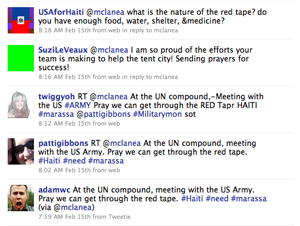
    Thanks to the power of Twitter retweets and hastags, there were now hundreds of people engaged in our ministry, watching every step of our journey. People gave us advice. Sent us links. Added our efforts to databases and websites. Encouraged us. On and on. This was missions far different from what is documented in Acts, when reports from missionaries trickled in from letters!

    As the need for more specific prayer arose, I was able to update these friends… who were now looking for ways to pray for our team.

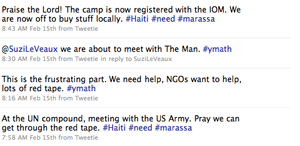
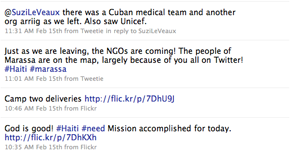
    Read the updates from bottom to top, in sequential order

    At this point in our day, I was in hog heaven. This was the convergence of all of my favorite things. I was engaged in social action as we advocated for people. I was engaged in social media as my cloud community prayed and sought solutions for the problems I was experiencing on the ground. And I was engaged as a pastor as we prayed and worked with people in the camp.

    And social media was also documenting a miracle. (and my getting punk’d by Marko!)

    Little did I know that the three dimensional missions we were doing had taken on legs of its own. My friend Tash was updating her radio audience in Auckland, New Zealand with my Twitter updates so people could pray. Tons of people retweeted and added commentary . Literally, people around the world were following this story and about to see God do something amazing.

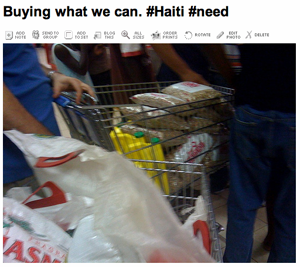
    Using $2000 we had raised on Twitter the night before. We were able to go to the only supermarket in Port-au-Prince and buy nearly all of the rice, beans, and baby food they had. (The money was given one day, utilized the next!)

    While hundreds of people back home participated in our journey, we were able to continue pressing into what God was doing.

    I don’t think this is somehow the beginning of a new age of missions engagement, but I do know that for our team this was a powerful way to tell stories as we went and amplify/report on what God was doing.

    As a fellow youth worker, I know thousands feel compelled to respond to the humanitarian need in Haiti. But the concerns of safety and appropriateness will over-power the prompting of the Holy Spirit to take a team for most. (This is a faith issue, but that’s another blog post.)

    It’s my hope that this new variety of missions will embolden many more to pray for Haiti, give to NGOs doing good work on the ground, and go to Haiti to see for themselves what God is doing.

  • Smart Media

    The most important lesson I’ve ever learned about business and social media was from Duck Tales Scrooge McDuck.

    Work smarter, not harder

    This mention of my work by Derek Johnson of Tatango proves my point.

    I’m not a guru. I don’t have a degree in media design. I have never taken a marketing class. I don’t have an MBA. The truth is that there is nothing special about me— all I do is stuff that is obvious.

    That’s good news for un-experts like you and me. You don’t have to have a bigger budget, you don’t have to have a pedigree, you don’t have to schmooze a newspaper editor, you don’t have to buy Super Bowl ads.

    In today’s world a smart message is all you need. Spend all your energy (cough, and money) investing in working smarter not harder.

  • Social Media and Youth Ministry

    Today I had the chance to talk to youth workers in East County about all sorts of internet and technology stuff. Here are some highlights of that discussion.

    • It’s important to identify WHY you are a part of social media. Youth workers must get past the passive-praxis response of just doing it because it feels like we should and all the cool kids are doing it. Please pause and reflect on the theology behind what you are doing. I’ve got an article in the Winter 2010 issue of The Journal of Student Ministries which talks more about this.
    • Teens are multi-tasking everything. They watch TV while texting and having a friend over– and both are listening to music on their iPods. This results in some funky relationships where people are “together” physically but don’t talk to one another. Though they might text each other about the movie they are watching. If you need to see this phenomenon go do some observation at Target. You will see teen girls shopping together while talking via text to other people. True confession: I’m guilty of this one, big time!
    • Text messaging is king in youth ministry. You text a student, you know you are getting to them. Do more of that! go unlimited, baby! Engage them where they are with how they are willing to engage you.
    • Don’t forget to go to stuff like games. Technology makes some things easier, but you physically showing up in their life is still a big deal.
    • The new report from the Kaiser Family Foundation on media consumption by teens is mandatory reading for youth workers everywhere. Here’s the link. Don’t come to conclusions, read articles, or do anything else about the topic until you digest this new study.
    • Parent issues with technology are a big deal in some circles. But it seems like there is less of a battle with Facebook compared to Myspace.
    • Fewer ministry dollars and time are being spent on building a web presence as we all just cave in and do stuff on Facebook. I think this is a good thing.
    • Tools like Hootsuite and CoTweet are perfect for busy youth workers. Sit down once a week and schedule Facebook profile messages and tweets.
    • Presence is becoming a major issue. Kids don’t even know how to just sit and have a conversation anymore. Of course, this starts with adults. I’d suggest everyone reads Flickering Pixels by Shane Hipps. I love how he approaches the topic.
    • IRL is back. All of this technology is leaving kids hungry for real life experiences. Events, retreats, concerts… experience are all hot this year. It might not be in traditional ways, but real life stuff is becoming cool again.

    One trend that I meant to talk about but ran out of time with is this: I’m seeing fewer and fewer teens reach out to become content creators. It’s not just that I am around shy kids, it really is that there are fewer teens out there who are contributing substantive thoughts/comments. Attention spans are about that of a flea right now. Which is why sites like Fail Blog, FML, and TFLN are so popular among teens. (Those links are not safe for work) Look at the comment sections of these sites. Nothing of substance whatsoever. There must be $1 billion in text messages sent in 2010 containing either “lol” or “k.”

  • Can Yelp Save the Mom and Pop Shop?

    I love mom and pop shops. I can’t quite put my finger for when this affinity began, but I prefer an owner operated business over a chain any day of the week.

    We all know that corporate America has slowly destroyed these small businesses.
    One by one, we preferred Home Depot over our local Ace Hardware to the point that franchisees had to give in. The same goes for restaurants, music stores, grocery stores… the list goes on and on.

    The paradox is that the more prevalent big box shops get the more a certain portion of the population longs for the uniqueness and quirkiness of the little guy.

    This is where Yelp is saving the day. Yelp is people powered reviews of local businesses. Users rate all kinds of services within a community– they cut past the marketing and give you the straight skinny. I’ve used Yelp to chose places to eat, doctors, furniture stores, hotels, and even parks!

    Here’s the fun part. I’ve learned that when you give a fair and honest review of a place you often get an incredible response from the owner. The shareholders of Home Depot never wrote me to thank me for spending money there. Nor have I ever received a follow-up note from Chili’s.

    Here’s one I got from the place we bought our bed:

    Thank you so much for your outstanding review!! My wife and I are responsible for many lives who depend on the success of our business and the only way to make it these days is by providing proper service. I want you to know that your review means a great deal to all of us.
    So once again, from me, my wife and the whole crew, we thank you for your business and great review. It was a pleasure doing business with you and we look forward to serving you again in the near future. See you soon.

    It’s good to know that when I spent my money at that place, they not only noticed, but appreciated the connection between my choosing their establishment and their paying their staff. Again, not something you see at a corporate joint.

    Of course, Yelp has an iPhone app. Kristen and I have literally been exploring a city, standing in front of a place reading reviews, and deciding whether or not to eat at a place based on reviews posted that day.

    Here’s my request. If you value small businesses. If you love all things unique and quirky where you live. Please use Yelp. Joining the site is free. And posting reviews and ratings can take just a couple of minutes but help others out a ton. Even if you don’t travel much, just rating the places you like will help your favorite places find more customers. Be kind to the places you like and brutally honest to the places you don’t like.

    This one small act can make a huge difference for some small businesses. Just one additional customer per day is a big deal.

    Of course, feel free to add me as a friend on Yelp so you won’t Yelp alone.

  • Do Ministry Leaders Need a Social Media Presence?

    Photo by Flickr user hoyasmeg (creative commons)
    Photo by Flickr user hoyasmeg (creative commons)

    Seth Godin answers his own question:

    What is the reason social media is so difficult for most organizations? It’s a process and not an event. Events are easier to manage, pay for and get excited about. Processes build results for the long haul. link

    Why do pastors and other church leaders need a social media presence?

    • The world is full of fakes. Because of the public sin of so many who lead large ministries, there is a general suspicion of all people in church leadership.
    • The people in your congregation want to know if you are a fake. They show up, so on some level they believe in you. They are watching your life to validate what you say.
    • The people in your community already think you are a fake. You need to prove them wrong.

    If you need a biblical justification for investing your time and energy in social media, look no further than the incarnation of Jesus. John 1:14 says, “He came and dwelt among the people.” The way church is run today… pastors do not dwell among the people. They dwell among their flock and their offices. (2-3% of the population of your community is hardly “the people.”) Look at the example of all of the Apostles in the New Testament. They all dwelt among the people. Most of them worked vocationally in the cities they ministered in.

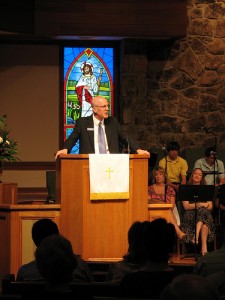
    A public presence, 1 hour per week, preaching in front of an audience, is simply not enough of a presence to know if you are fake or not. The fact is, if that’s all people see of you than they know you must be fake.

  • Life Schmooshing

    life-convergence

    How do I keep my private life private with social media?

    When I pull away all the onion layers for people learning about social media, this is their core fear. They wrestle with two primary realities.

    1. Why would anyone care about what I am doing?
    2. How do I control the message?

    I’m not saying that every person who uses social media has something to hide. But I am saying that nearly every adult is increasingly aware that their use of the internet can be a both an asset and a liability– often times at the same time.

    I call it “life schooshing.” When I want to come across as intelligent, I use the phrase “life convergence.

    Rather than fight it I suggest you learn to embrace and manage it.

    In the past, we could have a public persona and a private persona. And because theose spheres of influence rarely collided it wasn’t a big deal if those lifestyles didn’t line up with one another. A pastor could be a complete Republican hero on Sunday morning, while privately supporting the most liberal Democrats with his money. No one would ever know or ever care to know!

    The internet has changed all of that.

    Now? You’d be an idiot to try to keep all of these spheres apart. Your high school friends on Facebook will call you out. Your family will call you out. Your church will call you out. Your co-workers will call you out. Worse case scenario, your sins will call you out.

    Two realistic choices for dealing with life schmooshing.

    1. Go Amish. Unplug from social media. Don’t have a Google account. Stop using Facebook. Don’t comment on people’s blogs. Pretend Twitter doesn’t exist.
    2. Embrace incarnational living. It’s not a bad thing to have all of your life converge together. Trust me. It’s more blessing than curse. If you truly want to be a person of integrity in all areas of your life… social convergence is a great thing!

    What are some ways social media is helping your spheres converge in healthy ways? What are some fears you have? What about concerns of privacy?