I know people in youth ministry from the “biggest and best churches” in America. And I know people in youth ministry in the tiniest churches in America.
And both people have the same complaints and struggles– ministry life sucks for family life.
My response to that?
So what? Cope and deal. Do the best you can.
Ministry people aren’t alone in struggling to put family first. Any and every profession has the same struggle. Our desire to make full-time ministry this heroic effort and sacrifice to our family is humiliating to the people who make the same sacrifices to finance our vision. Not to mention– nearly half the people we are trying to reach are single parents who have to put work first in order to just keep their family afloat.
The reality is that “family first” is a marketing line that has been repeated to the point where we think it is some sort of biblical by-law. It’s hardly a biblical mandate. I seem to remember Jesus’ call to his disciples being to leave family and put him first. Offering yourself as a living sacrifice (Romans 12:1) doesn’t have an out clause for parents of young children. On and on… there simply aren’t calls to a a life in ministry, biblically, that are “family first.”
It is something we believe to be true which just isn’t in the Bible.
Sorry.
Even in an agrarian society, which you hear family-first people constantly refer to, it’s not like dad has a stay-at-home job. Have you ever visited a farm? Family-friendly workplace is not a description I’d use to describe a dairy farm. Or a family growing corn. Or even our local organic farm that supplies our CSA.
Family-first people also reference pre-Industrial Colonial times as this idealistic time of parenting where mom and dad patiently did homework or taught a skill to their sons and daughters. What history books are these people smoking? I could point to any biography of an early American success story and their life was hardly “family-friendly.” It’s funny how revisionism is a two-way street, isn’t it?
The Secret Ingredient of Success
Success, by any definition, has not changed in its core ingredient, since the stone ages.
You’ve got to want it.
Or you’ve got to steal it.
Let’s assume that you the type of person who prefers the former over the latter.
You’ve got to want it more than the person next to you.
You’ve got to outwork, out-hustle, out-whatever everyone you know.
You’ve got to wake up wanting it.
You’ve got to lay your head down in knowledge that you didn’t want it enough.
You’ve got to throw balance out the window.
You’ve got to Cats in the Cradle it.
The bottom line is that if you are driven by some ideal of success, however you define it… it’ll own you more than you own it.
And the reality is that once most people figure out that the dreams they had as children involved all of that– they redefine happiness around a new kind of success.
That’s why “family first” is a different mantra of success.
That’s why successful people get on Oprah or Barbara Walters and tell the camera that they chased success and they lost their family and now they have regrets. But they aren’t giving success back. They aren’t returning the awards or the money. They are spending their time on easy street trying to make up for lost time.
Can I be in full-time ministry and put my family first?
Call me a heretic. But I don’t think that’s what Jesus called me to. I think in the New Testament example Jesus called us to put family second.
Fortunately for me, I’m married to a woman radical and crazy like me. Together, we get it.
Let’s face it, success is about being opportunistic.
Here’s my simple outlook on opportunities. I’m thankful that I’ve made more right steps than wrong ones so far. But having the right outlook on the various ideas I’m presented with makes a huge difference.
Pause to ask questions, hard ones. If you don’t ask how something will help you no one else will.
Think about how you want to tie it in. You know what they say… if you don’t have a defined target you’ll miss it every time.
Be audaciously bold. Wimps need not be opportunist. Go after things, with gusto!
Go. Sitting on the sidelines will never get you anywhere. Nor will being shy or nervous about failure. Jump first, ask for forgiveness later.
I’ve written a series of articles for Immerse Journal describing a digital ministry philosophy for youth workers. The first article, called “Be Consistent” brought a lot of questions because I spent all 800 words talking about “why” to be consistent and it left many struggling readers with a burning question, “How can I be more consistent in this area?”
Here’s my process for daily blogging
I’ve made it a daily habit. To put it in Christian terms I’ve added it to my daily devotions. I consider writing a major discipline of my spiritual life. It’s a daily exercise for my brain. I belive it’s one of the ways the Gospel works its way both into my life and into the lives of the people around me. Since its part of my daily routine I don’t find the time to blog. The time to blog has found me.
I constantly capture ideas for blog posts. I have two distinctly different methods for doing that. Everywhere I go I have a journal and my iPhone. If something comes to mind, a sentence or thought or paragraph, I capture it. (If you spend time with me you may have seen me do it, though you may have thought I was just checking my email.) Sometimes its a visual sketch that I draw out or write out. But typically, its any idea that pops into my head or flows from a conversation and I capture it. (I use Evernote for that. Synchs from my phone to the cloud to my laptop.)
I have a list of blog posts for future writing. Periods of inspiration come and go. So I maintain a list on Evernote called “blog posts” — Just a raw list of things I want to blog about at some point. Right now, that list has 11 posts titles/concepts. Sometimes it has as many as 30 and sometimes it has as few as 5. Each morning, as I sit down to write, I open up Evernote and decide if I want to write about one of the things on my list or something else that just came to mind. (It’s about 50/50)
I write on a timer. Since I ride public transportation to work I have a firm departure time from my house. If you could see the time stamp of most of my blog entries you’d see it is right around 8:00 am Pacific. DING! That’s when I have to leave for work. So my blog post has to be done even if it’s not perfect. I start at around 7:00 am and I have to press “publish” by 8:00 am. That means I have to write, edit, do artwork, publish, and push the links out to Facebook & Twitter in that hour.
I process concepts in outline form.That may sound weird but it is how my brain is trained to work. If you were to look the concepts I capture on Evernote you’d see a formula: Concept; list of supporting items. That’s why so many posts are often lists or bullet points. I’m starting with that and wrapping an intro and a conclusion. If I have more time each supporting item may be a paragraph. But typically, like this post, those supporting items are bullet points or numbered points.
I allow myself to slip in other posts. Each day I have my “main blog post.” This is the one I get up and write in the morning. But if something pops up and I want to post it later in the day, I do it. Typically, that drop-in post takes me a few minutes instead of an hour. It’s a thought or image or video or life nugget or reaction to something I read. But I’ve found allowing that to flow allows me to have still have that consistency of one thing I’m writing each day.
I don’t punish myself for days off. I don’t have a scheduled day off from the blog. But sometimes, typically a weekend, I just don’t post and I don’t worry about it or force myself to write two on one day to catch up. Or sometimes I’ll skip the morning ritual to take the dog for a walk and in the process of walking him I will generate 3 new ideas. It’s also typical on weekends that I don’t have a “main post” but I’ll just push out two drop-in posts of quick thoughts, videos, family updates, etc.
Blogging isn’t really always on my mind. I’m not sitting there, having coffee with a friend, and thinking… I’m so blogging this. This process actually allows me to NOT do that. It frees my writers mind to be fully present in my daily life. That’s hard to explain– but I think I’m just wired to write and writing in the morning kind of gets it out of my system so I can be productive in my day without thinking about things to write.
So, that’s how I do it right now.
My process is one-part analytical, one part self-discipline, and a pinch of artistic desire. You could even call it a little bit manic.
And if I’m really honest with myself. Part of the reason this process works for me is that it brings order, control, and discipline to my scattered mind– writing a blog is more for my benefit than yours.
My little football heart got broken last night. First, San Diego State gave up a touchdown with 50 seconds left to giveaway a victory to #25 Missouri. That would have been their best start in 30+ years. Then, a few hours later, Notre Dame gave up a silly trick play for a touchdown to lose to Michigan State.
In both cases, it was about finishing the game. Both teams were sloppy. In one game, a lack of tackling discipline cost them the game. In the other, being over-aggressive cost them an embarrassing lose and landed them on Sportscenter for all the wrong reasons.
For those of us who lead, both games were a powerful reminder for finishing.
In life, just like in football, your last play leaves a lasting memory. No one cares how well SDSU or Notre Dame played on Saturday. We’ll only remember the embarrassing finish.
Do you have a strategy for finishing a project well?
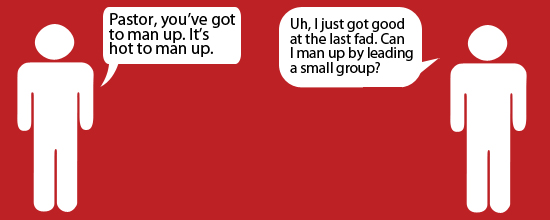
The last few years has seen the popularization of something I refer to as the Pastor Man Up Movement. (PMUP)
You hear things said, like “Pastor, if anyone is going to lead your church, it has to be you.” Or, “No one else in the church is called to lead more than you.” Or, “It’s time the pastors of the church took control from the committees.” It’s an interesting phenomenon. And it’s promoting a lot of abuse of power. Pastors read a blog or hear a PMUP message and run to the next meeting all full of testosterone instead of grace.
It’s dangerous to take the power that a pastor is given and then encourage that person to exert his will on a congregation.
It’s like storing a keg of black powder in a cigar bar. Eventually there will be an explosion.
In a healthy context there’s nothing wrong with this movement. It’s good for pastors and church staff to be leaders and to be reminded of their calling. That’s why we pay them. (Let’s not lose site of that fact. I know many people have been abused by the church, but there really are healthy churches out there.) When we hire pastors at our churches we should empower them to lead. I currently attend a church where the church staff are good leaders. They seek wise counsel, they are temperate, they consider the needs of the whole congregation in making decisions, they work hard to battle “what people want” vs “what the Bible is asking us to do.” I’ve never sensed that they are afraid to lead.
The problem is that it’s also become popular to hire staff members with little or no formal training. It’s not unusual for me to hear of people joining a church staff with not only no formal training at the undergraduate/graduate level– they’ve not even been an intern or been taught how to lead a church in an informal setting. They have zero training to enter the ministry. Literally, one week they are selling cars (or whatever) and the next week they have the title of pastor. Few other professions do this the way churches do. You wouldn’t hire a teacher to be a lawyer. Nor would you hire a vet to be a physician or a CPA to be a plumber. But in the church? It’s become en vogue to hire non-professionals.
[My suspicion is that those people who leave a profession to enter the ministry probably weren’t that good at their profession in the first place. But it’s quite an ego boost to go from being a CPA to an executive pastor! It’s not like a mediocre CPA was going to make partner.]
PMUP + Untrained staff = Explosion waiting to happen
A couple of thoughts about this combination:
When a senior pastor surrounds himself with untrained associates this should tell you something about the leader of the senior.
There’s nothing wrong with being a strong leader. But if no one is following you of their own free will… you aren’t leading. You are a dictator. (Remember how things end for most dictators)
When a church calls an untrained person to be their pastor, this should tell you something about the congregation.
It makes me giggle when a bunch of dudes decide that they need to man-up. I grew up thinking that a real man took care of the people around him, not used his weight to get his way.
Where in the Bible were deacons/overseers/elders told they should man up?
When did the will of a congregation/voting become a bad thing?
Sometimes it seems as though people are selling themselves and their vision instead of God’s vision. As a churchgoer, all I know if I’m stuck with the bill.
If someone has to throw around their weight to make things happen, does that make them a leader worth following?
The unspoken message every person knows in a church is that if the pastor can’t exert his will, the congregation runs the risk of the person quitting. (This isn’t “manning up.” It’s “taking my ball and going home.”)
When did formal eduction/training as an entry point to ministry become a bad thing? And if churches are going to hire untrained staff, why don’t they budget for properly training them?
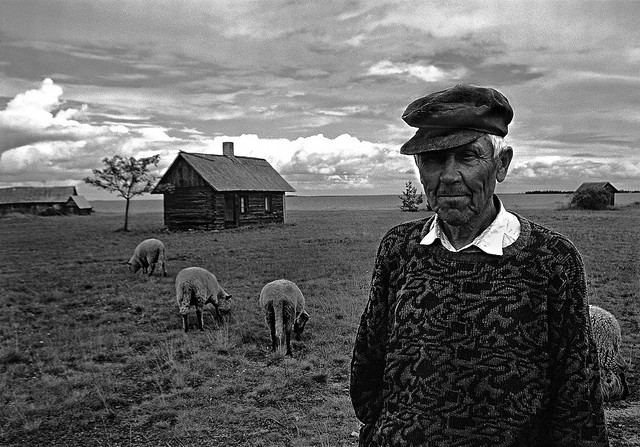
Photo by Kris Haamer via Flickr (Creative Commons)
The third time he said to him, “Simon son of John, do you love me?”
Peter was hurt because Jesus asked him the third time, “Do you love me?” He said, “Lord, you know all things; you know that I love you.”
Jesus said, “Feed my sheep. I tell you the truth, when you were younger you dressed yourself and went where you wanted; but when you are old you will stretch out your hands, and someone else will dress you and lead you where you do not want to go.” Jesus said this to indicate the kind of death by which Peter would glorify God. Then he said to him, “Follow me!”John 21:17-19
The path to success in life, ministry, relationships, career, and darn near everything else is paved with service. (Gasp, probably pain and suffering, too!)
I’m sorry it has to be that way. It’s not my fault that this is true. Blame the other Adam.
To Adam he said, “Because you listened to your wife and ate from the tree about which I commanded you, ‘You must not eat of it,’ “Cursed is the ground because of you;
through painful toil you will eat of it
all the days of your life.
It will produce thorns and thistles for you,
and you will eat the plants of the field.
By the sweat of your brow
you will eat your food
until you return to the ground,
since from it you were taken;
for dust you are
and to dust you will return.”Genesis 3:17-19
Back to the John passage. Did you notice what Jesus said Peter had to do to show that he loved Jesus? Feed my sheep. That’s grunt work. That’s work without honor. That’s work that isn’t sexy. That’s not the cover of a magazine or leads to a book deal or getting invited to speak at a conference.
Feeding sheep means arguing with stubborn animals all day. Feeding sheep means you get bit. Feeding sheep means that you step in doo-doo. Feeding sheep means you occasionally have to scare off a predator.
And yet…
On Peter, the one Jesus told to grunt it out by feeding sheep, Jesus also said “And I tell you that you are Peter,and on this rock I will build my church, and the gates of Hadeswill not overcome it.” (Matthew 16:18)
If you are into church history you know Peter was a key leader in the early church. While he wasn’t perfect he indeed fed Jesus’ lamb from that moment until the moment he was nailed to a Roman cross himself. He served his way to the top of church leadership.
Note: My list of verses above is just the beginning. There are lots. And there are many good books which can give an exhaustive word study. But the point is clear, Jesus flipped the script on how to be a leader.
Universal path to success in any organization
Photo by Christian Paul via Flickr (Creative Commons)
Do you want to know how you lead people and change any organization?
People ask me all the time: What’s the secret?
You serve. You grunt it out. You get bit. You are faithful to the task you’ve been given. You master that task. You own that task. You serve that task. Just like a shepherd you keep your head up on the task in any circumstance. Just like a shepherd you always keep an eye on where you are leading the next day. You take responsibility. You take the compliments and the criticisms to heart.
Ultimately, you meet the needs of the sheep. You serve the owner. You put the rights of the owner above the rights of yourself. You keep the abuse in mind but you don’t let that own you. In doing that you win hearts and earn influence from the top to the bottom.
It’s not magic. It’s not a secret. It’s taught in the Bible!
Photo by Vearl Brown via Flickr (Creative Commons)
It’s not going to be popular to mention this, but it is worth mentioning. There is another path to success. One that is faster in accession. And one that is definitely easier. But it’s not as the servant-leader.
It’s as the lion.
In truth, many of the most successful “leaders” in the world are not servant-leaders. (The Christian world is, sadly, filled with lions.)
They didn’t get to their position in life by serving their way to the top.
They got there by brute force.
And they keep it when they kill, destroy, and intimidate day-to-day.
They travel in packs which devour prey.
We kind of turn our noses up at this style of leadership. But it is entirely functional. What’s more interesting is that plenty of people are drawn to this style of leadership. It’s quite popular in the Evangelical world!
(There’s a third animal-styled leader. That’s the hyena. He mocks and steals his way to the top. But that’s for another day)
The heart makes the difference
What’s different between servant leadership and lion leadership?
The weakness of lion leadership: The pride knows no loyalty. You only have power so long as you can keep it. One day, another member of the pride will take leadership from you.
The strength of servant leadership: Loyalty runs thick and deep. When you have served your way to the top, people will be loyal to you, even to a fault.
Choose to serve
Let’s be obvious. Each day, those of us in leadership, must make a rational choice. Do we want to serve or do we want to use our muscle to create a pride?
My advice, while it might not be the fastest way to get things done, ultimately Jesus asks us to choose to serve.
Sometimes a court case becomes a news item simply because of the parties involved. Such is the case of Bimbo USA filing an injunction against its own employee who wanted to leave his job as head muffin man to go work for rival Hostess. (Makers of Twinkees and Ho Hos)
A news item involving Bimbo and Ho Hos wouldn’t be complete if they weren’t really fighting over muffins, would it? It’s a innuendo parade! Getting past the plastic wrapper, we’re all a little disappointed when we discover the plantiffs name is Chris Botticella and not something more snickerworthy.
The heart of the case is a real Twinkie. It turns out Botticella is one of only seven Bimbo employees who knows the secret recipe to making Thomas English Muffins. And those delicious morsels are a $500 million per year business which would be a cream filling to Hostess’ already lucrative business.
Yes, Mr. Botticella is the $500 million muffin man and Bimbo is afraid that he was buttered up to move Drury Lane from Southern California to Pennslyvania.
After Bimbo bought Thomas’ in January 2009, Mr. Botticella became responsible for an English muffin factory in Placentia, Calif. That March, apparently as a condition for entering the ranks of the nook and cranny cognoscenti, the company had him sign a confidentiality agreement. It barred him from revealing company secrets, but did not prohibit him from going to work for a competitor.
At about the same time, according to papers filed by Mr. Botticella’s lawyers, the company embarked on a broad cost-cutting drive. It involved plant closings and layoffs, and the papers say he found the process painful and became unhappy in his job.
Last October, he accepted a job offer from Hostess to run its Eastern operations. The salary was $200,000 a year, $50,000 less than he was paid at Bimbo.
Some serious questions this case brings up
All jokes and Ding Dongs aside, and you are encouraged to add your own Sno Balls in the comments, this particular case of an employer suing an employee who wants to quit to work for a rival brings up some interesting questions.
If an employee under an NDA leaves a job to work for a rival, how do you know you can trust the employee under the NDA?
If an employee leaves to work for a competitor, do the employees at the old company automatically assume that the old employee will share everything?
Have we past the point where a publicly traded company can keep trade secrets? Certainly, if Hostess really wanted a recipe for English Muffins they have the resources to find out what is in it. Of course, it seems like if they copied the recipe they’d be breaking patent laws which makes this whole thing complete nonsense.
If they wanted to know how to make English muffins, couldn’t they just ask a baker from England?
Would it seem reasonable to assume that Mr. Botticella could demand Bimbo’s $250,000 annual salary for life since his employer won’t allow him to work for another baker? (40 years in the industry, no one could expect him to go elsewhere)
Am I the only one disturbed that an employer could file an injunction (and win in two states!) preventing an employee for quitting?
Starting a new organization is an entirely different task than innovating to change an existing organization.
Both are hard. But changing and existing organization is way harder.
For most of my career I’ve been in turnaround roles. Kristen and I have a little joke… My entire adult work life has seemed like one roller coaster ride after another.
Click, click, click, click… up we climb.
Click, click, click, click. My heart races.
Wait for it. Wait for it… Wheeeeeeeeeeeeeeeee!
Arms up. Screaming bloody murder. Thinking of the Tom Petty song, Free Falling.
Down the big hill we go.
Over and over again I’m left to help try to innovate our way out of the mess.
And, so far, I’ve been pretty successful at it by most people’s judgement.
How does one innovate within an existing ecosystem?
Become Switzerland. There are political factions within any organization. If you want to get stuff done you need to be neither and empathetic both sides at the same time.
Spike the football. When you do something that everyone is happy with its OK to just look into the camera and say, “Thank you very much. Woohoo! Hi mom!” I’ve seen a lot of people fail in an organization because they were afraid to take the credit for their own ideas doing well. Don’t be an idiot. It’s OK to be the guy to do good stuff. Spike the football.
Own the data. Existing organizations are horrible at owning their data. I like to look at the results of a long-standing program that has had no results and say, “30 years of VBS and not a single new family? Why didn’t we just light that $300,000 on fire? At least we would have had a good BBQ.” When people are tied to tradition or the way they’ve always done things, sometimes you need to be the person with the frying pan who hits them in the head. Helping people in leadership own the data is the catalyst to getting stuff done in an existing organization.
Be creative. Face it. A fist full of money and a fat belly has never created a single good idea. Have you seen Bing? No budget, no time, no research, shot in the dark… that’s when good stuff happens. That’s when the best ideas pop into your head. Creativity and innovation come out of suffering and frustration. These are your friends and allies, not your enemies.
Opportunistic eyes. I keep a list of ideas I’ve got on ice. Then, when I’m in a meeting and everyone is scratching their heads looking for something new, bam… I’m pull out my concept. If I ran around screaming about every idea I had all the time I’d look like a mad scientist.
What are some ways you’ve learned to innovate within an existing ecosystem?
Clay High School, 1992 | Welcome to the wayback machine
When someone pitches an idea my mind is running through a matrix of questions.Is this really a good idea? Is the idea even possible? Is this the right person to turn this idea into a reality? Will enough people buy into the idea that it’ll take off? Is this the right time for this idea?
But the overarching question on my mind is simply, “Has this idea possessed this person to the point that they won’t rest– they will just be driven by this idea for as long as it takes?”
90% of the time the answer to that question is no.
“I can teach anyone enough about music to sing in the choir.”
This was the philosophy of my high school choir teacher. The woman was possessed. I’m living proof of this truism. I have no musical ability or talent at all and I was taught enough to perform at hundreds of shows, concerts, and competitions during high school.
This woman was possessed in her belief that anyone could sing and sing well. She convinced more than 50 students per year to take a choir class at 6:30 AM. On top of that she convinced about 25 of us to take an additional music class in the afternoon. Get this, for three of my four years of high school I had two music classes every day. And after school in the Spring almost all of us were also part of a musical.
It wasn’t unusual for me to leave for school before 6:00 AM and not return home from school until after 9:00 PM.
How did she do it? She was possessed by her idea. “I can teach anyone to sing.”
She had that one magical ingredient that most purveyors of ideas don’t have.