• The sweet cry of lament

    I’ve heard there was a secret chord
    That David played, and it pleased the Lord
    But you don’t really care for music, do you?
    It goes like this
    The fourth, the fifth
    The minor fall, the major lift
    The baffled king composing Hallelujah

    Your faith was strong but you needed proof
    You saw her bathing on the roof
    Her beauty in the moonlight overthrew you
    She tied you to a kitchen chair
    She broke your throne, and she cut your hair
    And from your lips she drew the Hallelujah

    Baby I have been here before
    I know this room, I’ve walked this floor
    I used to live alone before I knew you.
    I’ve seen your flag on the marble arch
    Love is not a victory march
    It’s a cold and it’s a broken Hallelujah

    —-

    Maybe there’s a God above
    But all I’ve ever learned from love
    Was how to shoot at someone who outdrew you
    It’s not a cry you can hear at night
    It’s not somebody who has seen the light
    It’s a cold and it’s a broken Hallelujah

    You say I took the name in vain
    I don’t even know the name
    But if I did, well really, what’s it to you?
    There’s a blaze of light in every word
    It doesn’t matter which you heard
    The holy or the broken Hallelujah

    I did my best, it wasn’t much
    I couldn’t feel, so I tried to touch
    I’ve told the truth, I didn’t come to fool you
    And even though it all went wrong
    I’ll stand before the Lord of Song
    With nothing on my tongue but Hallelujah

    Source, history of this song

    There’s a depth of honesty in this lament which is alluring. It’s a depth that we are uncomfortable with– almost repulsed by– but drawn to because of its connection to our story.

    The human experience unites us together. In our best and weakest moments we are all left to sing Hallelujah to something.

    We lament. We mourn. We feel the pains of loss. In doing so we don’t fail to acknowledge God. Instead, we acknowledge our humanity and need for a great big God who heals lament that shreds body from soul from spirit.

    My eyes fail from weeping, 
       I am in torment within; 
    my heart is poured out on the ground 
       because my people are destroyed, 
    because children and infants faint 
       in the streets of the city.

      They say to their mothers, 
       “Where is bread and wine?” 
    as they faint like the wounded 
       in the streets of the city, 
    as their lives ebb away 
       in their mothers’ arms.

     What can I say for you? 
       With what can I compare you, 
       Daughter Jerusalem? 
    To what can I liken you, 
       that I may comfort you, 
       Virgin Daughter Zion? 
    Your wound is as deep as the sea. 
       Who can heal you?

    Lamentations 2:11-13

  • In the Ghetto

    Oh Elvis. How I’m intrigued by your social commentary.

    Wanna talk about ghetto? That suit is ghetto fabulous. Any pimp on El Cajon Boulevard would pay $500 for that. 

  • An Ode to the Unqualified

    Here’s to you,

    The unqualified.

    The untrained.

    The unordained

    The unordainable.

    The seminary reject.

    The mom with no time for seminary.

    The dude with a job.

    The family in the pew.

    The widow in the nursery.

    The seasoned rookie.

    The mint veteran.

    The faithful.

    What you do goes unrecognized. There’s no sign in the church parking lot with your name on it but there should be. There’s no recognition from the platform because the people on the platform don’t know what you do. There’s no accolades or raises or sabbaticals or training conferences. There’s no books or magazines or hashtags describing your task.

    You just do it. You represent Christ every day in the small things. You come into contact with the people the pastors only read about. You take the words of Jesus seriously and love your neighbors as yourself. You pick up their mail. You check on them. You listen with the ears of Christ. You pay attention to the nuances in their voice. And you take action when the Spirit leads.

    There will be no pension checks for you. There will be no housing allowance. There will be no leased car. You will pay your own cell phone bill. You will mow your own grass.

    You are the unqualified. You are the heros of the faith. You are the workers reaping the harvest. You are the ones from whom Good News flows. 

    Want to support this blog? The easiest way to do that is to subscribe via RSS or sign-up to get my daily email updates

  • Speaking & Writing update

    Forgive the pause in my normal posts to share some life updates.

    Speaking & Training

    My 2012 speaking/training schedule is now has it’s own page. As far as I know, everything listed there is available for you to register to attend. There are two primary things which seem to be taking off for me in this area.

    1. A Parents Guide to Social Media – This seminar teaches social media principles, goes over relevant laws, and tries to replace fear with fact, principle, and strategy.
    2. Growing Your Business with MailChimp – This is a 2-hour class, more like an interactive training session on all that MailChimp can do for you. (I also do a ministry version, much the same content just geared for ministry communications.)

    Obviously, I do a lot more than just these two things. But that’s what is bringing the most interest right now. I’d love to come and speak for you. Just send me an email and we can talk about it. Being a small business owner/entrepreneur– I’m pretty creative when it comes to the payment side of things so darn near anyone can afford me.

    Writing

    Short-form writing has really become my specialty. (500-2000 words) Over the past several years I’ve written lots of blog posts, guest posts, and magazine articles. But I’ve stayed away from books because the idea of 40,000 – 60,000 words scared the crap out of me.

    That said, I have two book projects underway in the >15,000 words category.

    1. I’m co-authoring a small book for parents with Marko on social media. (Hence, the seminar above.)
    2. I’m revisiting some of my favorite, most shared blog content and “digitally remastering” it into a beautiful little book on how you and I can become Good News in our neighborhoods.
    I’ll let you know when those have official titles, release dates, etc.

    Curriculum

    I’ve got 2 very creative, very fun, 6-week curriculums in development for high school and college students. (They’d work for middle school too, probably) I’ve got a bit of a manifesto on curriculum and why I’m doing it a certain way, but that’s for another post!

    Both of those are coming out this Spring.

    I’m hunting for collaborators

    There’s no other way to say it. If you have ideas and you want to work with me on something, let’s chat. If you’ve got a great idea for a mobile app, event, book, curriculum, or something else and think working together might be awesome, drop me a line.

  • The Fulcrum is Jesus

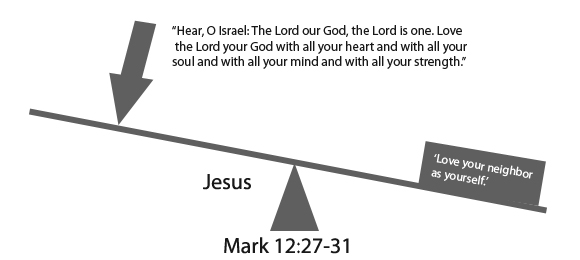
    Sometimes I sit in church with the realization that for a lot of folks they think this is the center point of their walk with Jesus. As if, somehow, the fulcrum of the Christian life is attending a worship service?

    We’ve been raised (Christian language: Discipled) to make church that “can’t miss” thing of the Christian walk. In evangelicalism, the practical disciplines of the spiritual life are:

    • Go to church
    • Regular Bible reading
    • Daily prayer

    If you want bonus points:

    • Join a small group
    • Serve in a ministry of the church

    Don’t get me wrong. I do most of those things on a regular basis. And these are very good expressions of the Christian life.

    But these are the peripherals of the Christian life, not the fulcrum.

    The church is not the centerpiece of your walk with Jesus. That’s idolatry.

    You can’t sit in church and say… “YES! This is it.” Attending church (passive action) isn’t it anymore than watching football on TV is the same as playing in the game. (active participation) Jesus didn’t come so you could go to church. He didn’t tear the veil between Levites and the people so you could watch church. That’s a foundational misunderstanding in the person and action of Christ.

    Your load... is to love the Lord your God with all your heart, soul, and mind. That’s so much more than church involvement, reading your Bible, praying, being in a small group, and serving in the church. There’s nothing wrong with those things, but they are too cheap and easy to be “it.

    What Jesus describes is all encompassing. Like two lovers in the first 90 days of their relationship! 

    Your output… is to love your neighbor as yourself. The output of your walk with Jesus can’t just be church involvement. It’s can’t be about you and your learning. It can’t be about serving at the church. That’s not what Jesus said was the output.

    According to Mark 12, the output of loving God with everything is loving your neighbors. (You know, the people next door.)

    One of the teachers of the law came and heard them debating. Noticing that Jesus had given them a good answer, he asked him, “Of all the commandments, which is the most important?”

    “The most important one,” answered Jesus, “is this: ‘Hear, O Israel: The Lord our God, the Lord is one. Love the Lord your God with all your heart and with all your soul and with all your mind and with all your strength.’ The second is this: ‘Love your neighbor as yourself.’ There is no commandment greater than these.”

    Mark 12:27-31

  • Transportation matters

    Since moving to San Diego in 2008 I’ve taken a lot of public transportation. In fact, part of choosing where we live was proximity to public transportation.

    I can catch the bus about a quarter mile from our house and the trolley is about 1.2 miles away. With a bike that means I’m 5 to 15 minutes away from one of those options all the time. Speaking of my bike– I tend to ride my bike anywhere I can within about 3 miles.

    Here’s what I know

    I interact with people I would never, ever encounter if I drove my car everywhere. Normal folks like me headed to/from work. Tourists perpetually lost. Homeless folks. Mentally unstable folks. Rich folks, poor folks, cops, drug dealers, addicts. And every other combination of people you can imagine.

    My interactions aren’t always conversations. Sometimes it’s small talk and often times it’s just observing.

    When speed and convenience become the objectives of getting where I need to go I miss out on the richness of these interactions.

    No, the trolley isn’t the fastest way for me to get to work. No, riding my bike after dark on a busy street isn’t the safest option. And yes, I recognize that I’m fortunate to live in a place where these are options.

    But here’s the thing: Most don’t. In fact, given the choice almost every person I know would rather get in their car and zip to their place of work than wait on a bus or ding-ding on the trolley.

    Each day as I’m walking somewhere or riding my bike or sitting on the trolley zillions of cars go by. Most have a single person in them. Most of those people are doing something else. (Listening to the radio, talking on their phone, etc.)

    And those of us in the slow lane are the ones smiling.

    So what’s the point?

    You can make the choice to slow down. Walk places when you can. Leave the car in the driveway. Make time to take time.

    We all know life isn’t about getting to our destination. So why not embrace the journey in your daily life? 

  • The Unemployable Problem

    Big news out of Washington D.C. recently. The unemployment rate fell to its lowest mark since February 2009, 8.5%. That’s good news if your a president in an election year.

    But others would be quick to point out that 8.5% unemployment is still too high. Yet, I have to wonder. What percentage of Americans are unemployed because they are unemployable?

    The other day, I took our kids to the local park for a picnic and to soak in some free vitamin D from the flaming ball which hangs in the January San Diego sky. It was a sunny, breezeless, quiet day at the park. With most kids back at school and parents back to work the park was fairly empty of the dozens of screaming toddlers on the slides and mom’s chatting on the sidelines experienced during the week before.

    It was our family and a pile of random stragglers each there for their own reasons.

    One man and his friend watched a little boy as they smoked weed and talked about how weed hasn’t hurt them a bit. In the same conversation they talked about their inability to find a job but apparently lacked the cognitive ability to recognize that smoking weed at a public park at 1 o’clock in the afternoon while a toddler plays under your care is as good a reason to not hire a person for a job as any other.

    A young woman sat on a bench near me and talked on the phone while her daughter tumbled up and down the ladder of the slide alone. She cried, literally, to a friend about how her mom wouldn’t give her $100 to pay her cable bill. In the same conversation she lamented to her friend about not being able to find a job anywhere.

    Moments later a nanny arrived with 3 toddlers. In San Diego it’s fairly normal to see a middle-aged Hispanic woman caring for 3 little white kids. I could be wrong in making that assumption, because they could have been her children I suppose, but they looked to be children she watched. She oversaw an orderly march to and from the park, the distribution of snacks and jackets, and she maintained order as they played in the sand and later helped them take turns on the swings.

    So there I sat, basking in the sunlight of this irony. 4 adults at the park with very different American experiences. 3 unemployed and relatively unemployable young adults wasting every legal opportunity they have for the advancement of their life. And 1 employed, legally unemployable middle-aged woman, exhibiting professionalism and investing in the advancement of her life.

    Mike Rowe is right, you know?

    We have an educational system that has created a massive hole in the job market. It’s not just in my industry that there is a gap in qualified people. It’s in the trades, as well. (Read more: College isn’t for everyone)

  • High-trust, low-control

    A movement cannot grow in a low-trust, high-control environment. 

    But a dictatorship can. (Cuba)

    A corporation can. (McDonald’s)

    A gang can. (Al Capone)

    In a low-trust, high-control environment leadership is supreme. Decisions flow from top to bottom. A high value is placed on replication and copying and perfecting. Efficiency is more important than individualism. And the everyday worker has virtually no voice. In fact, the less voice the worker has the better.

    China

    You want to see what church growth looks like? Remove the money. Learn about the Boxer Revolution and how that changed the church in China. All the western missionaries and their hierarchical structures went away. (Or were killed) And the church went underground.

    Thus, a low-control and high-trust structure was forced to emerge. When the church went from an Augustinian mindset with paid staff and buildings and budgets and fake-butts-in-seats to an underground movement of unpaid pastors on the run, meeting in house churches, and people risking their life to be a part of it… the church became a movement again. The Gospel spread neighbor to neighbor because it is Good News. People risked their lives to be called a Christian.

    And it became an unstoppable force. (I’ve heard estimates in the hundreds of millions of converts during the 20th century in China.)

    Jesus designed the church as an insurgency. Looking at church history, the times when the church has been most effective have been in a high-trust, low-control environment. The Roman Empire conquered every people group in its path but was conquered from the inside-out by an insurgency of the heart.

    A core problem in America is the rapid embrace of a low-trust, high-control leadership structure. “Church growth experts” (and their books and conferences) encourage church leaders to remove the voice of the people and go to staff-lead models. To generalize, the staff become the local experts on everything from discipleship to sex and the people become relatively voiceless, idea-less, worker bees in support of the vision of the leadership. These high-control, low-trust leaders proudly say things like, “This is the type of church we are. If you don’t like it, you can leave. There are plenty of churches out there.

    I’ve heard leaders say that at leadership events. And people in leadership write that down. And underline it. As if asking people to leave who disagree with you is a sign of a powerful leader. (Hint: Surrounding yourself with people who agree with you makes you a wimp of a leader.)

    So many people have left the church. Sure, there are examples of big churches you can look to and hope for growth in that model. But I can schedule a tour of a 25,000 square foot church for sale 500 yards from my house that says there is no hope in that model.

    You can’t create an insurgency of the heart with a low-trust, high-control model. People will die for Jesus but they won’t die for you. 

    La Raza

    The church will grow when we give power back to the people. Not just the power to serve leaders vision, but real— actual power over their day-to-day church life. We give lip service to the Priesthood of all Believers but we don’t live it out. In 1520, Martin Luther wrote On the Babylonian Captivity of the Church:

    How then if they are forced to admit that we are all equally priests, as many of us as are baptized, and by this way we truly are; while to them is committed only the Ministry (ministerium Predigtamt) and consented to by us (nostro consensu)? If they recognize this they would know that they have no right to exercise power over us (ius imperii, in what has not been committed to them) except insofar as we may have granted it to them, for thus it says in 1 Peter 2, “You are a chosen race, a royal priesthood, a priestly kingdom.” In this way we are all priests, as many of us as are Christians. There are indeed priests whom we call ministers. They are chosen from among us, and who do everything in our name. That is a priesthood which is nothing else than the Ministry. Thus 1 Corinthians 4:1: “No one should regard us as anything else than ministers of Christ and dispensers of the mysteries of God.” Source

    Friends, our lips say we believe in the Protestant doctrine of the Priesthood of all Believers but we fund a priesthood among us.

    Are you saying we have to fire people?

    Listen. I’m not saying that we need to eliminate church staff. I’m saying that if we want to see the church grow again, in a post-Christian America, we need leaders to lead towards decentralization of power. We need paid staff to see their job as expert equippers and not expert speakers. We need to measure leaders on their ability to replicate Jesus and not themselves. We need leaders to unleash an insurgency and not continue an occupation.

    So indeed, we probably need to fire some people who won’t embrace the present reality we live in. But new leaders will emerge. The Holy Spirit has always provided. Indeed, there are leaders in your pews today who could do this if only you allowed it.

    And which people should we pay? Probably the ones who don’t want to be paid. 

  • Start-up Mode, What We’re Learning

    “So, how is the start-up stuff going?”

    It’s a fair and caring question. I get it all the time.

    Several months ago Kristen and I felt God pulling for a big change. Long before we even knew exactly how it would play out… we knew it was time to go for it. You know, a double dip recession and the worst economy in a generation is the perfect time to launch a start-up, right?

    Actually, it is.

    If you have a good business idea there is no such thing as a bad economy. If you want to think about economics, tomorrows biggest business winners are being determined today because the people who profit while everyone else is floundering will pay bigger dividends than those who either lose ground our don’t do anything now.

    “It’s crazy.”

    That’s my response when people ask that question because it’s the truth.

    It’s crazy fun. It’s crazy the things I’m working on. And it’s crazy to think about all the conversations I’ve had as I’ve considered various opportunities over the past months.

    It’s crazy to have to do things like month-to-month forecasts. And it’s crazy to have to rent an office for myself when I’ve had an office of my own provided by an employer since I was about 19 years old.

    What I’m Learning

    1. I wish we had done this earlier. It’s not that I regret a moment of my time at YS, but as we ramp things up that I could have done this sooner and we’d be further along in our development.
    2. It’s not scary. Right now, there are millions of people doing jobs they hate because they are too afraid to make a change. I’m more afraid of doing a job that I don’t want to do than I’m afraid of starting my own business.
    3. Mission drives focus. I’ve been asked to consider projects that just weren’t right for what I’m trying to do. And a few times, in my insecurity, I’ve said yes to things that were more a distraction to my mission than they were profitable for our business.
    4. You have to stand up for yourself. In the past I’ve either just dealt with difficulties or had someone to help me with things I couldn’t correct. But now? I’ve got to have difficult conversations with people. I’ve got to be clear about what I am and am not going to do. If I won’t stand up for myself, I’ll get stepped on.
    5. Disappointment is part of the deal. I can’t tell you how many times I’ve gotten amped for a big thing that hasn’t happened. It just goes with the territory. It’s not that I don’t allow myself to be disappointed anymore. But I have learned to deal with it quickly and move on.
    6. Dreamers get paid. Some of the most fun projects I’m working on happened because of saying, “Hey, wouldn’t that be cool if…?” Or it’s cousin, “How can we work together on that?
    7. Helping people is best. I LOVE helping people do stuff they thought wasn’t possible. There’s nothing quite like doing some training and seeing people go, “Oh, I could do ___ with that. Wow!” Believe it or not… that’s not that common. Traditional business wisdom would teach the opposite.
    8. It’s all about value. I have a philosophy that I want to deliver ridiculous value to the people I work with. Why? Delivering value builds loyalty.
    9. Admit when you suck. Just like I’ve had to learn to stand up for myself I’ve had to learn to go over and above when I’ve stunk. It happens. It will happen. Just admit it, pony up, and resolve to do better.
    10. Take advantage of the flexibility. The biggest mistake I’ve made in the past six months is not taking time off. I’ve gotten good about scheduling stuff. But vacation time? I didn’t do it. In 2012, I’ve got 4 weeks of downtime already booked.