• High-trust, low-control

    A movement cannot grow in a low-trust, high-control environment. 

    But a dictatorship can. (Cuba)

    A corporation can. (McDonald’s)

    A gang can. (Al Capone)

    In a low-trust, high-control environment leadership is supreme. Decisions flow from top to bottom. A high value is placed on replication and copying and perfecting. Efficiency is more important than individualism. And the everyday worker has virtually no voice. In fact, the less voice the worker has the better.

    China

    You want to see what church growth looks like? Remove the money. Learn about the Boxer Revolution and how that changed the church in China. All the western missionaries and their hierarchical structures went away. (Or were killed) And the church went underground.

    Thus, a low-control and high-trust structure was forced to emerge. When the church went from an Augustinian mindset with paid staff and buildings and budgets and fake-butts-in-seats to an underground movement of unpaid pastors on the run, meeting in house churches, and people risking their life to be a part of it… the church became a movement again. The Gospel spread neighbor to neighbor because it is Good News. People risked their lives to be called a Christian.

    And it became an unstoppable force. (I’ve heard estimates in the hundreds of millions of converts during the 20th century in China.)

    Jesus designed the church as an insurgency. Looking at church history, the times when the church has been most effective have been in a high-trust, low-control environment. The Roman Empire conquered every people group in its path but was conquered from the inside-out by an insurgency of the heart.

    A core problem in America is the rapid embrace of a low-trust, high-control leadership structure. “Church growth experts” (and their books and conferences) encourage church leaders to remove the voice of the people and go to staff-lead models. To generalize, the staff become the local experts on everything from discipleship to sex and the people become relatively voiceless, idea-less, worker bees in support of the vision of the leadership. These high-control, low-trust leaders proudly say things like, “This is the type of church we are. If you don’t like it, you can leave. There are plenty of churches out there.”

    I’ve heard leaders say that at leadership events. And people in leadership write that down. And underline it. As if asking people to leave who disagree with you is a sign of a powerful leader. (Hint: Surrounding yourself with people who agree with you makes you a wimp of a leader.)

    So many people have left the church. Sure, there are examples of big churches you can look to and hope for growth in that model. But I can schedule a tour of a 25,000 square foot church for sale 500 yards from my house that says there is no hope in that model.

    You can’t create an insurgency of the heart with a low-trust, high-control model. People will die for Jesus but they won’t die for you. 

    La Raza

    The church will grow when we give power back to the people. Not just the power to serve leaders vision, but real— actual power over their day-to-day church life. We give lip service to the Priesthood of all Believers but we don’t live it out. In 1520, Martin Luther wrote On the Babylonian Captivity of the Church:

    How then if they are forced to admit that we are all equally priests, as many of us as are baptized, and by this way we truly are; while to them is committed only the Ministry (ministerium Predigtamt) and consented to by us (nostro consensu)? If they recognize this they would know that they have no right to exercise power over us (ius imperii, in what has not been committed to them) except insofar as we may have granted it to them, for thus it says in 1 Peter 2, “You are a chosen race, a royal priesthood, a priestly kingdom.” In this way we are all priests, as many of us as are Christians. There are indeed priests whom we call ministers. They are chosen from among us, and who do everything in our name. That is a priesthood which is nothing else than the Ministry. Thus 1 Corinthians 4:1: “No one should regard us as anything else than ministers of Christ and dispensers of the mysteries of God.” Source

    Friends, our lips say we believe in the Protestant doctrine of the Priesthood of all Believers but we fund a priesthood among us.

    Are you saying we have to fire people?

    Listen. I’m not saying that we need to eliminate church staff. I’m saying that if we want to see the church grow again, in a post-Christian America, we need leaders to lead towards decentralization of power. We need paid staff to see their job as expert equippers and not expert speakers. We need to measure leaders on their ability to replicate Jesus and not themselves. We need leaders to unleash an insurgency and not continue an occupation.

    So indeed, we probably need to fire some people who won’t embrace the present reality we live in. But new leaders will emerge. The Holy Spirit has always provided. Indeed, there are leaders in your pews today who could do this if only you allowed it.

    And which people should we pay? Probably the ones who don’t want to be paid. 

  • Start-up Mode, What We’re Learning

    “So, how is the start-up stuff going?”

    It’s a fair and caring question. I get it all the time.

    Several months ago Kristen and I felt God pulling for a big change. Long before we even knew exactly how it would play out… we knew it was time to go for it. You know, a double dip recession and the worst economy in a generation is the perfect time to launch a start-up, right?

    Actually, it is.

    If you have a good business idea there is no such thing as a bad economy. If you want to think about economics, tomorrows biggest business winners are being determined today because the people who profit while everyone else is floundering will pay bigger dividends than those who either lose ground our don’t do anything now.

    “It’s crazy.”

    That’s my response when people ask that question because it’s the truth.

    It’s crazy fun. It’s crazy the things I’m working on. And it’s crazy to think about all the conversations I’ve had as I’ve considered various opportunities over the past months.

    It’s crazy to have to do things like month-to-month forecasts. And it’s crazy to have to rent an office for myself when I’ve had an office of my own provided by an employer since I was about 19 years old.

    What I’m Learning

    1. I wish we had done this earlier. It’s not that I regret a moment of my time at YS, but as we ramp things up that I could have done this sooner and we’d be further along in our development.
    2. It’s not scary. Right now, there are millions of people doing jobs they hate because they are too afraid to make a change. I’m more afraid of doing a job that I don’t want to do than I’m afraid of starting my own business.
    3. Mission drives focus. I’ve been asked to consider projects that just weren’t right for what I’m trying to do. And a few times, in my insecurity, I’ve said yes to things that were more a distraction to my mission than they were profitable for our business.
    4. You have to stand up for yourself. In the past I’ve either just dealt with difficulties or had someone to help me with things I couldn’t correct. But now? I’ve got to have difficult conversations with people. I’ve got to be clear about what I am and am not going to do. If I won’t stand up for myself, I’ll get stepped on.
    5. Disappointment is part of the deal. I can’t tell you how many times I’ve gotten amped for a big thing that hasn’t happened. It just goes with the territory. It’s not that I don’t allow myself to be disappointed anymore. But I have learned to deal with it quickly and move on.
    6. Dreamers get paid. Some of the most fun projects I’m working on happened because of saying, “Hey, wouldn’t that be cool if…?” Or it’s cousin, “How can we work together on that?“
    7. Helping people is best. I LOVE helping people do stuff they thought wasn’t possible. There’s nothing quite like doing some training and seeing people go, “Oh, I could do ___ with that. Wow!” Believe it or not… that’s not that common. Traditional business wisdom would teach the opposite.
    8. It’s all about value. I have a philosophy that I want to deliver ridiculous value to the people I work with. Why? Delivering value builds loyalty.
    9. Admit when you suck. Just like I’ve had to learn to stand up for myself I’ve had to learn to go over and above when I’ve stunk. It happens. It will happen. Just admit it, pony up, and resolve to do better.
    10. Take advantage of the flexibility. The biggest mistake I’ve made in the past six months is not taking time off. I’ve gotten good about scheduling stuff. But vacation time? I didn’t do it. In 2012, I’ve got 4 weeks of downtime already booked.
  • #MSMC12

    I’m really excited to be a part of this years Middle School Ministry Campference.

    What the heck is a campference? It’s a little word we made up at The Youth Cartel to describe a gathering of like-minded people at a camp. In this case, it’s unique because it’s specifically designed for adults who minister to middle school students. Half camp, half conference. I know… it’s tricky.

    We moved this bad boy south. Last year, I was pretty new to The Youth Cartel when the first one happened. In fact, I didn’t even go. But I was in charge of following-up with people who had told us earlier in the year they were interested. Over and over again I heard from people who wanted to come but our location was just too dang far from where they live. Fortunately, we were able to move a couple hundred miles south. That gets us within a 6 hour drive of places like Nashville, St. Louis, Cleveland, Chicago… and really close to cities like Indianapolis, Cincinnati, and Louisville. In short, that will mean it is a lot easier for a lot more people to come.

    Why should you think about going? Um, I’m going to be there. Enough said.

  • The Economics of Preaching

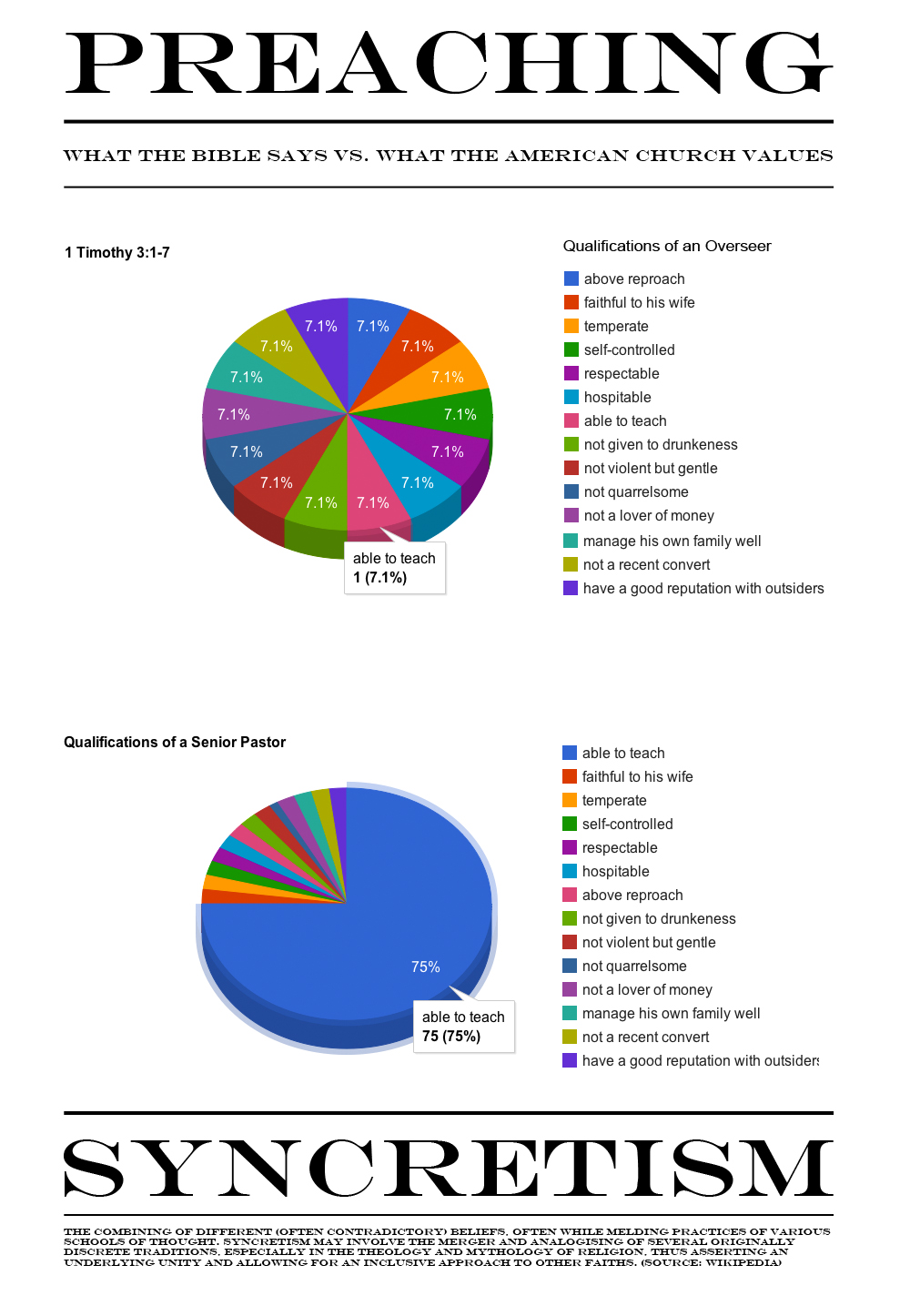
    click image to see full size

    Have you ever thought about the economics of preaching?

    Probably not. 

    If you were to take a moment to think about the value we ascribe to the action of preaching in the American church, you may start to wonder if we’ve overvalued it.

    Think about it from an organizational economics perspective.

    • The Sunday morning sermon is seen as the single most important activity in the action of the American Protestant week.
    • Take away the sermon and you wouldn’t call it a worship service.
    • If you don’t have anyone to preach you may think about canceling church. You couldn’t say that about any other element of the standard worship service. (Music, public reading of the Bible, receiving offerings, testimonials, etc.)
    • Ask anyone in the pews what the most important qualification for a senior leader is? Preaching.
    • In many contexts the title “preacher” is a suitable substitute for the more proper title of pastor, elder, or overseer. But the connotation is clear, the main value in the senior leader is his/her ability to preach. I’ve never heard a pastor’s title swapped out to “host” or “Mr. Gentle.”
    • If a person isn’t a good preacher, even if they are good at a lot of other things, they don’t have a reasonably good chance of a career as a senior leader.
    • When a church grows, most often it’s because people say the church has a great preacher.
    • When a church dies most people blame the preaching.
    • People will put up with a lot from a pastor if that same person delivers good sermons.
    • Organizationally, you could argue that the Sunday morning message is the fulcrum for the whole organization.
    • Want to launch a new initiative? You better preach about it.
    • Want to address an issue in the congregation? You guessed it, the sermon is the best way.

    Think about it from a monetary economics perspective.

    • The senior pastor makes the most money in most churches.
    • The one activity the senior pastor works the most consistently on? Preaching.
    • The highest employed staff person’s most important task, the one task costing the most amount of money per hour to the church? Preaching.
    • 30 minutes of speaking costs the church at about 25% of their highest paid employees time.
    • You’ll pay the drummer $75. But the pastor? We don’t disclose that. 

    A hermeneutics problem.

    You cannot argue, hermeneutically, that the New Testament values preaching to the level the American church places on it. When Paul gave Timothy qualifications for overseers he didn’t give special attention to preaching. “Able to teach” is one of 14 the qualifications listed. Preaching, specifically, is not mentioned. (Able to teach could mean a lot of things.)

    If anything is emphasized by Paul it is matters of personal character. You cannot argue by Paul’s emphasis or in his order that we should value an overseer purely by his/her ability to preach. “Able to teach” is buried in the middle. If it were first on the list you could say Paul was emphasizing it. If it were mentioned twice, likewise. But stuck in the middle of a phrase like that? It’s just one of the regular qualifications.

    Yet, in America we value preaching above all else. Think about it from an governance perspective. Your church could have 6 elders and 1 of them is the senior pastor. The primary difference in that person’s organizational responsibilities compared to the rest? Preaching. In most cases, the other 5 elders wouldn’t even consider payment for their service. But the preaching elder? You have to pay that person.

    Here’s what we know. (We could each point to specific examples) If a person is a good preacher we will choose to overlook obvious character flaws. Even flaws that clearly disqualify a person from the role of overseer. 

    The over-valuation of preaching in the American Protestant church is a classic example of syncretism.

    And this one syncretism is a primary feeder for our denial of the priesthood of all believers. When you over-value preaching… you’ve created a new priesthood.

    Question 1: What does it reveal about our view of God to over-emphasize the role of preaching in the local church?

    Question 2: If we didn’t have regular weekly preaching what would our gatherings look like? 

    Do you like this post? Do me a favor and subscribe to my blog via RSS or sign-up to get my daily email update. 

  • Merely Obedient

    Today we pause to remember the life and legacy of Dr. Martin Luther King, Jr.

    Dr. King’s life is one we can point to and agree, “Yes, in his lifetime his work moved nations.” One man brought voice to millions and inspiration to billions.

    Many people will reflect on Dr. King’s work and build a wall around his legacy, affirming his works and bravery while simultaneously distancing themselves by labeling him as uniquely gifted by God. As if to say, “I could never be like Dr. King. He was special, gifted, talented, extraordinary– I am ordinary.”

    My challenge to you would be to examine Dr. King’s work closely for yourself. Read his sermons, watch speeches given at rallies, and wander through the nearly 1 million items in his online archives.

    Then ask yourself this question: Was Dr. King gifted or merely obedient? 

    As I’ve examined Dr. King’s life, his works, his writings, and his early ministry I’ve discovered a man wholly ordinary but extraordinarily obedient to the calling God placed on his life.

    Remember Moses? A man with a speech impediment who murdered a guy in his early adult life? When God called him he was overcome by his ordinary-ness. He complained back to God, “Pardon your servant, Lord. I have never been eloquent, neither in the past nor since you have spoken to your servant. I am slow of speech and tongue.” (Exodus 4:10) and “Pardon your servant, Lord. Please send someone else.” (Exodus 4:13)

    Imagine the lunacy of Moses trying to educate God on his personal history and faults? Moses gave God a few good reasons why he was too ordinary to lead a million people out of slavery and God replied back over and over again… I’m not asking you to be extraordinary, just merely obedient.

    Ultimately, Moses is recorded as a hero to the Jewish people, not for his bravery in standing up to Pharaoh, but for his obedience to God. He didn’t lead a million people out of slavery. But he did show up and was obedient.

    Don’t make the mistake today of honoring Dr. King’s life work without asking yourself, “Am I being obedient to the calling God has laid on my life?”

    For we are God’s handiwork, created in Christ Jesus to do good works, which God prepared in advance for us to do.

    Ephesians 2:10

  • Huge Win for San Diego State!

    This is our families first year as season ticket holders for men’s basketball. Yesterday was, by far, the highlight of that experience so far.

    We made it to Viejas about 12:05 PM for a 1:00 PM tipoff. And there were already lines to get in, the student section was 90% full, and about 50% of the stands were full 45 minutes before the game. Where else does that happen? 

    The student section "The Show" unveils their new massive banner

    There were 6,000 plus people booing UNLV during a pre-game shoot around. That’s when you know it’s going to be a wild game.

    The game lived up to the hype. 

    Megan and I have our game face on to face the UNLV Runnin' Rebels

    It was loud and crazy from 45 minutes before the game until the last second when Jamaal Franklin’s lay-up sent the stadium into a frenzy. The stadium roared for about 90 seconds after the game winner. Deservedly so. It was so loud that you couldn’t hear that the announcer was trying to tell the fans that the game wasn’t actually over.

    What I loved about this win is that it was a team effort. Leading scorer Chase Tapley struggled to get open and never really got to go off like he normally does. But the added attention on Chase gave James Rahon and Jamaal Franklin opportunities to make significant buckets, which they did with more than 20 points each.

    A lot has been said about this being a rebuilding year for SDSU. They lost Billy White, D.J. Gay, Kawhi Leonard, and Malcom Thomas after last years epic season. (2 of them to the NBA) And, truth be told, they don’t have the standout talent they had last season. But they are consistently outplaying and out coaching their opponents. That’s the power of great coaching and recruiting. (Next  year’s team, based on recruits and transfers, will be one for the ages.)

    The Aztecs beat the #12 team in the country because they had a better strategy than UNLV, were slightly more disciplined, and had a huge home court advantage.

    I’m loving bringing my kids to these games. The Show continues to live up to the hype. Yesterday, they unveiled a massive “The Show” logo right before tip-off that covered nearly the entire student section. Teams are completely intimidated to come into Viejas and our players are completely empowered.

    With our throats and hands tired from screaming and clapping, Megan invented the High 1. It'll take over the nation. Notice the grumpy (silent) UNLV fans behind us. They all look like that, like they were just released from a cheap casino holding cell for the game.

    If you’re ever in town when there’s an SDSU game . Let me know, I’ll score you a ticket to The Show. 

  • The F Word, Part 3

    Editorial note: This is part 3 (part 1, part 2) of a guest post series. I don’t normally do guest posts, but this friend had insight that needed to be shared. Today we’re wrapping it up by responding to some comments and answering questions asked. I have a feeling we will revisit this some day. While the point of this series wasn’t to promote something, if you’re looking for a resource on this topic, please visit The Marin Foundation.


    First off, the outpouring of grace has been pretty overwhelming. It’s very strange I have to admit, to know there are beacons of hope, these mercy-givers out there. A thousand thank yous.

    If you are wondering, how to find people like me in your sphere of influence, here’s how.

    First, be very open that you wouldn’t care if a person was gay, you’d love them. And love them because God loves them, not because they are gay, or think they are gay, or this or that. When we love for a reason that is not because God loves them, we tend to have these variations of acceptance and then it just gets complicated.

    Second, challenge the negative gay bashing talk. “Hey, that’s not cool. People I love are gay.” When people challenge me on this, I say, “OK, next time you pray, use the word you just used in talking to God.” That clears up the situation real quick.

    Third, if someone tells you that they are gay. You let them talk it out. And when they are done, look them in the eye and say, “I’m not going anywhere. I’m not telling anyone. I’m your friend and I love you.” It’s what I hope to hear when I tell someone.

    Fourth, you’ll have a million questions. Maybe ask two. And when you get together, don’t make every time some kind of Oprah Q and A. We will tell you as it comes up.

    Five, just love us. Invite us over. In a marriage-based church culture, where couples get together, single people are left kind of on the margin. We like restaurants and movies; we like your kids. We will help with dishes. We go home to an empty apartment; we like the warmth of your place.

    Hug us often and don’t interrupt it as anything other than a hug. Celibacy is a hard road for the sake of the cross.  Human contact is a rare treat.

    Now, to respond to some comments.

    Some of you have called me courageous, but that’s because I have outstanding friendships in my life.

    Some of you have said you’ve cried and I say thank you. I cry too.

    HisOwn: Your story saddens me, makes me stumble like the earth is giving way. You have to tell someone. Tell your best friend. I pray you find some solace, my friend. And I pray that with clench fists, eyes shut, gathering all my will for that prayer.

    Jeffery Dick asked why I don’t join a church would be fine with me being openly gay. You see, I can’t come out publicly because my parents would lose it. Trust me. My dad majored in beating up gay men in the military. It was his thing. So I can’t really come out. I also have a job where it would create complications.

    The second reason is I need to be in a place where I can do the hard work of changing the minds of those around me. If we all ditch the churches who don’t really care for us, then the gulf between us becomes wider. I’m not called to comfort. Good question. Gold star.

    Because you have to understand, I can manage the same-sex attraction part. I’m older now, a bit older.  It’s easier.

    However, you can’t manage the isolation, the fear and dread of someone finding out and losing that relationship. You see, we, the Strugglers, the Forever Singles don’t get a family. The hardest part is not being someone’s first. You married people out there, your spouse picked you. You are their first priority.

    We Strugglers don’t have that luxury. We are an afterthought, the Eternal Third Wheel.  Our loneliness is our miry pit.

    I’m a member of a church that has a denominational leader who is actively offensive in this area. You’ve heard of this person.

    I have friends in the church who know, all the pastors, and they are fine with it. They have no problem me being a leader or preaching.

    I’m pretty good at preaching. I once scored a 9.2 when they held up the cards at the end. The Russian judge gave me a 7.6. (I figured we need a bit of levity.)

    Know this: Christ loves us. You. Me. And I long for the day when I look back at this life in His Kingdom and laugh a bit; I’ll laugh at the foolishness of it all and that it won’t be like that anymore. And all of us, we’ll gather for awhile. I’ll shake your hand. I’ll give you a hug. We will know each other deeply.

    And one day we get this white stone with a new name on it. A new name. A name only God knows. (Rev 2:17) And all the other names, even the one on my driver’s license melts away.

    So if anything, this thorn I have makes me a better friend, more loyal. And it makes me long for Jesus and for home.

    So share my story if you’d like. Not for my sake (I was nearly outed about 3 times in the past 12 hours due this series. No fault of anyone, just Facebook can be a bit tricky at times. Twitter too, that rascal.) People need to know that we are out there. We serve communion, and we pass the offering plate. We play on your basketball league (We crush you. Be aware of that.) We are your friends, or at least we want to be.

    And if you get the chance, meet Adam McLane face to face. The guy has this sporty exterior, but he exudes grace. He exudes grace like he just ate garlic fries. It comes out of his pores. He listens so well and he has given me a platform that has shaped me in ways I’m just starting to grasp.  I owe him a debt, a great debt.

    And to those of you who know my name, thanks for being my friend.

    “You are the light of the world. A city set on a hill cannot be hidden. Nor do people light a lamp and put it under a basket, but on a stand, and it gives light to all in the house. In the same way, let your light shine before others, so tha they may see your good works and give glory to your Father who is in heaven.”

    Go be a light my good friends. Love those around you. Bring your light into our darkness.

    And if you ever see a man wearing a sharp patchwork driving cap, who is very handsome and built, standing next to Adam McLane, give him a fist bump. Ask him his favorite comic book hero, buy him a beer and he will tell you a tale.

    Adam: OK, that last bit made me literally laugh out loud. Thanks for the kind words. I’m glad you aren’t anonymous in my life. I need more friends like you. Because left alone I’m a moron. 

  • The F Word, Part 2

    The F Word, Part 2

    Editorial note: This is part 2 of a guest post from a local San Diego friend. (Part 1) I don’t normally offer guest posts, but this point-of-view is important. Church and youth leaders need to hear from men in their congregations like him. While this post is anonymous, I invite you to dialog with him through me.


    I grew up reading comic books; it was an escape from the horrible living environment I was stuck in. I had a brother, 9 years older than me, who made me his punching bag; an ex-alcoholic father who switched his addiction to rage, and my mom who had to take a lot of abuse from my dad.

    I was attracted to comic books because it clearly spelled out who was good and evil; the good guys won most of the time and what I liked at the end of the day was that they could conceal their identity. Superman became Clark Kent. Batman deftly changed into the billionaire, Bruce Wayne. Green Lantern willed himself back to being Hal Jordan. And poor Spiderman usually stumbled back into his apartment, collapsing onto the bed as Peter Parker.

    Their secret identity brought them peace; they protected their loved ones by having it. They managed two distinct and separate lives. It’s something that sounded so great.

    But when you have a secret identity, it is more painful than a bruise on your chest or cigarette burn on your arm.

    When I was about 14 I realized something; I was attracted to the guys in my high school, not the girls. The realization is a lot to take in, especially around the time that AIDS had surfaced; people were scared; protests were hitting the streets. The words “faggot” and “homo” were en vogue.

    I knew I was in trouble.

    I managed to keep in secret until about 18 when I told my high school counselor. He sympathized and explain that there were other people out there like me. Once I got to college, my life would change.

    It did. My first week at college I became a Christian.

    And I was still gay.

    In the college Christian group I was a part of, there were great people, but a large majority of them used the words homo, queer, and faggot. I was in some deep trouble.

    I had to hide the fact that I was gay. I mean, who could I tell? And the pressure to date was nearly insurmountable.

    I managed coming out to some friends, but the loneliness, the isolation was great. No one got it.

    That was about 20 years ago.

    Since then I’ve tried counseling for 7 years; it was helpful to unpack a lot of the abuse I took, but I still wasn’t attracted to women.

    I had a girlfriend in seminary for a year and a half. I thought I could change and make it work.

    I didn’t. I broke her heart.

    I have mastered the ability to blend in with straight people; they rarely suspect I’m gay. In the Christian world, being gay is right up there with child molester.

    You have to understand; I have had friends I’ve never been able to tell. They make the occasional gay joke or if they see two men who are clearly together, they have some kind of snide remark. And I’m sitting across from them.

    Now, just so we’re clear: I’m celibate. I’m not planning on having a relationship. You might be thinking, “Oh, good. You’re one of us.” Afraid not. And so we don’t get into a political quagmire that this blog isn’t designed to function for, I won’t get into the reasons why.

    The purpose of me spilling this story, the most painful one I have, is to say this.

    We sit amongst you.

    We are people struggling with being gay, afraid of what their closest family and friends would say. We laugh at your homo jokes and then we go in the bathroom and look in the mirror and hate what we see. We take a deep breath and we go back inside.

    We tolerate churches designed around married couples, married conferences, and marriage sermons.

    Most of use can’t come out. We risk losing the friendships we have so we’d rather dine on surface relationships, instead of having none.

    We long for someone to understand, to get it. And one reason I don’t play the lottery (besides Dave Ramsey’s advice) is that I’ve already won it. I have friends that I’d take a bullet for, who know my true story and love me. It’s not that they don’t love me regardless because I’m not doing anything. I’m not at gay bars or trolling the internet looking for someone. I’m not sinning in my sexual behavior.

    I came out to a friend of mine and he looked down at the table, sullen and said, “Everything must be really difficult for you.” We sat there in silence for awhile and I thought, he gets it.

    The church will hug the man that just cheated his wife for a year and shun the struggling gay guy who hasn’t had sex in 10 years. Guaranteed. Easy money.

    And I’d burn every earthly possession I have, empty my bank accounts, quit my job, and terminate every relationship I have for a pill to change over—in a heartbeat—I’d walk away from that pyre buck-naked, unemployed, broke, but straight.

    But unlike my heroes of my youth, my secret identity clings to me and I am forced to hide from what is called to be most loving, compassionate place on the planet—the church.

    So here’s what I ask: be kind to us. We are looking for friends that listen and have compassion on us. We are not looking for you to understand us completely, we just want to go through our day not feeling like monsters. We run the risk of losing the people we value by coming out, but we must weigh that against being fake and pretending we are straight.

    I also ask that we cut out the gay-bashing talk; I get that it’s funny with your friends and it cuts to the quick, but I guarantee you’ve said it in front of us and we twist inside and mourn inside.

    Be kind to us; we are broken and we need no more reminders.

    Want more posts like this? Become a daily subscriber! It’s free and easy. Click here to get a daily email with the latest blog posts. Click here to subscribe via RSS.

  • The F Word, Part 1

    Editorial note: I don’t normally do guest posts. But in this case I am making an exception. The following post is from a friend of mine, a local San Diegan with an advanced ministry degree from a well-known conservative university, whose perspective on life I’ve learned lots from in during our new found friendship.


    Adam has been blogging a lot about fear lately—how fear robs us of the best God has for us, how God does not intend for his faithful to walk in fear afraid. God is our Father; He is our protector and provider; He is present; He is here. Be not afraid.

    So what are Christian men afraid of?

    I’ve watched men especially be afraid of one thing—being friends with other men. Now, don’t get me wrong. I’ve seen guys go watch sports or hunt together; they bump fists at church (and then put their arm around their wives) and then, juuuuust to push the envelope, a good ol’ men’s breakfast.

    But authentic friendship? Real brotherhood? Well, the days of Promise Keepers are over. You can bag on that movement all you want but it at least it challenged the traditional status quo in our churches on men’s friendship: Keep it simple and shallow and no one gets hurt.

    What are men really afraid of?

    What’s at the core of this socially awkward mix? I mean, women do friendship well. They talk and share and get together. And don’t get me wrong, I understand that men usually bond over activities, but it just seems like men now are going through the motions of friendship but the bonding isn’t happening.

    Christian men are afraid of being perceived as gay or remotely gay or a tad gay or even a little glitter pixel of gay. I can’t tell you how many men I’ve seen hug and another man nearby says, “That was so gay.”

    I’ve heard men share about what is really going on in their lives and right before we get to the root of the issue they pull back and say, “Wow, I’m sounding like a big faggot right now.”

    Ah, because gay men are continually wrestling with the emotional needs of a pregnant wife. It’s an epidemic.

    Christian men hide behind the façade of not wanting to be thought of as gay as an excuse of not wanting to be perceived as weak or vulnerable. But in doing so, caving into this Christian manly homophobia. Consequently men come across as insensitive jerks by missusing the word gay.

    My Two-Year Rule

    I have this “two-year” rule.

    Here’s the rule. Usually men tell me they have no real friends around them and that they are fine with just the family. Sure, they justify, they have some long distance friends. But they get along just fine.

    When I hear them say, “I have no friends” I start a mental countdown of 730 days. At the end of those two years, something will be ruined because of their lack of friendship with other men: A marriage, finances, a father-child relationship, a career, or something else.

    Why men need friends

    God designed men to have community for the simple fact, left alone, we are morons. And when we hide behind a big pink triangle of an excuse for not having intimate male friends, afraid of the slighted perceived notion of being gay, we are destroying what our soul  needs—Someone to tell us blunt truth about our lives, to walk with us, to challenge how we are treating our wives, our children and our career.

    We need friends who know us deeply and intimately. (Wait, did you say intimately? Yes, yes I did. Are you uncomfortable with that? Intimacy.)

    And it puzzles me that two men, especially if they are married and have children, are so paranoid about being perceived as gay? What are you worried about to begin with? I don’t get it.

    And yes, I get it. Being perceived as gay may cause some damage there—some very real damage.

    The Flipside of Your Labels

    You need to know the cost of misusing those words, “faggot” and “gay” to describe your fear of friendship with other men, is just an an excuse for what you really need. It is destroying the potential authentic relationship that could very well save the other relationships around you.

    And it will also cost you the friendships of those who struggle with being gay. Like me.

    But that’s for another post.

    Want to support this blog? It’s super easy. Just subscribe to daily updates via RSS or email. 

  • Teenagers are Desperate for Good News

    One reason youth ministry is flatlining is crappy theology.

    Kara Powell, executive director of the Fuller Youth Institute, was recently interviewed by Relevant Magazine about the present reality that youth ministry presents a faith students easily walk away from in college. She was asked, “Do you think there are any misunderstandings or misconceptions that contribute to young adults leaving the church?”

    Her response:

    The students involved in our research definitely tended to view the Gospel as a list of dos and do-nots, a list of behaviors. We asked our students when they were college juniors, “How would you define what it really means to be a Christian?” and one out of three—and these were all youth group students—didn’t mention Jesus Christ in their answer; they mentioned behaviors.

    Source

    Allow me to translate that. Students are learning really crappy theology from their culture, their parents, and their churches.

    Is your Gospel even Good News?

    Here’s what I encounter when I talk to students in our ministry and even random students I talk to out on the street. They are desperate for Good News. They are looking for Good News. In their honest moments they are desperately searching for Good News. (From Jesus, Buddha, or Katy Perry)

    Their lives need Good News. Somewhere. Somehow. In some fashion… they are hard-wired for and looking for Good News. Why? Because their lives are surrounded by bad news. They need a Jesus who is real, who can help them, or their life isn’t going to get any better.

    If God doesn’t show up they are in trouble.

    And what do they get at a church? Not much. A 30 minute pep talk, some laughs, and some songs. Or, at best– a Christian version of Dr. Phil with an invitation to talk to someone after church.

    But a God who meets them where they are at? Or people who are willing to intervene? Nope. And forget about delivering anything that is actual Good News in their lives.

    I meet students who are struggling with stuff like this:

    • Have hurts I can’t talk to my mom about.
    • Hurts caused by a mom and dad who love themselves more than they love me.
    • Does anyone love me? Am I even worth loving?
    • Why isn’t my dad around?
    • Who the heck am I? What am I going to do with my life?
    • Sex is like a big rock rolling me over. I am so confused and hurt about sex.
    • I’m stuck in the same problems my parents are, can I break the cycle?
    • My family is late on the rent again. We can’t pay our bills and I feel like a big burdon on my parents.
    • I have big dreams but no one can help me get there.
    • I’m stuck in drug and alcohol abuse and I can’t talk  to an adult about it.
    • I’ve been molested by someone in my family and I can’t talk to anyone about it.

    These aren’t rarities. These are just below the surface for a majority of students I interact with. And the churches answer? Come to church. Listen to a message. Attend a Bible study.

    Is there any doubt why 95% of teenagers opt-out of that? They are saying, “I need Good News. I need Jesus to be real because I have no other options.” And the churches solution for everything is prayer, Bible study, and attending worship services?

    Really?

    That’s not Good News. That’s Good Behavior. 

    It’s inadequate. It’s a failure. And it’s certainly not the Jesus they encounter when they read the Bible. You know–  the Jesus who was so desperate to help them that He gave His life for them. They want that Jesus and when He doesn’t show up at their church…

    They are leaving and I can’t blame them. 

    Teenagers desperately need a roaring lion Jesus who will come into their lives, protect them, and help them figure stuff out. They will give anything to a God big enough to do that. Instead they are presented with a smiling, carefree, half-empty suburban-friendly Jesus like substance which cares more about their surfacey behavior than the condition of their heart.

    It’s crappy theology. No pastor would admit to teaching it. But that’s what students are learning.

    And we arrogantly say we don’t need radical change? Hmph.

    Flatliners logic.

    Students are trying everything they can to find Good News! They need Jesus to help them with their real, physical problems. 

    Will your ministry be the one who steps up, gets messy, and points them to the messy, grimmy, grace-covered Good News of Jesus Christ that touches not just their soul but the sole of their feet?

    You want to flip the world upside down? Become Good News to a teenager.

    I spit this game 7 days per week. The easiest way you can support my blog is to subscribe via RSS or sign up for my email updates. It’s real easy. Thanks for your support.