And the moral of the story is….
ht to Ed Noble

All of the chaos happens when I leave town.
On Monday afternoon Kristen dropped me off at the San Diego airport. All was calm and under control in the McLane clan. Leaving Kristen for 5 days with Megan, (10) Paul, (7) and Jackson (4 months) was hard. I really didn’t want to leave them. We all wished I didn’t have to do this trip. Not because I was dreading going on the trip or being in Minnesota but simply because it’s been so long since I’ve been away. And I’ve really loved being home more.
At the same time we were prepared for daddy to be gone for a few days and for Kristen to manage the kids, and the house, and her job, and the kids school. (They go year-round, getting out July 15th) The older two are growing very independent… helpful even. In many ways, when I’m gone is like an exam. Can they handle more responsibility? Let’s hope so because they need to!
I checked in with Kristen Monday night when I landed in Minneapolis. All was calm and everyone was tucked in and sleeping away.
My Tuesday was rushed in visiting with all of my fellow co-workers at YouthWorks, meetings, the normal. Then I got a call from a weird 619 number. I let it go to voice mail but quickly checked it. It said, “Mr. McLane, this is the nurse at Darnall Elementary School. We have Paul here in the office and he’s been injured on the playground. We’ll need you to come get him as soon as possible. Please call us right away.”
My heart leapt and sank at the same time. My instinct told me to grab my keys and go get him. But my reality was that I’m a 4 day drive away. I quickly connected with Kristen, who was dashing to get him.
He had broken his arm in an accident on the playground. Our first ER trip as parents and I missed it.
Kristen and I exchanged a hundred text messages while they were at the ER. Paul and Amy, dear friends, came to the rescue and took Megan and Jackson for the afternoon. While Paul waited nearly 3 hours to get an x-ray and a cast… I wasn’t there.
It seems like this always happens. Important things happen when daddy is out-of-town. Last year, Kristen was rear-ended while I was on a trip to Washington state. I’ve missed kids losing teeth. Or winning an award at school. Or epic small group nights with major breakthroughs. Doctors appointments when Kristen was pregnant. Bed times, quiet times, crazy times, thrills, spills, shrills, and the immediate stills of realizing it’d all be OK.
When daddy is away stuff happens. Life doesn’t stop at home. It’s inevitable. And it kills me. And while I know Kristen is a trooper/super power mom/amazingly strong woman who can handle it all I want to be there, with her, when these things happen. I want to be there.
Our Heavenly Father is the same way. While He never leaves us sometimes we go far from Him. And life moves on. Stuff happens, chaos reigns, victories occur, and sometimes bones break. For every bed time, quiet time, crazy time, thrills, spills, shrills, and the immediate stills of realizing it’ll all be OK– Our Heavenly Father wants the intimacy of sharing those moments with us.
His heart breaks for His children when they are away from Him. He wants to be there.
Maybe it’s time for you to come home?
So he got up and went to his father. But while he was still a long way off, his father saw him and was filled with compassion for him; he ran to his son, threw his arms around him and kissed him. Luke 15:20
I’m going home tomorrow to Kristen and the kids. But maybe today you need to go home and be with your Father?
The news: Today is the last day to register for NYWC San Diego for Super Early Bird prices.
Bacon and flutophones? The brainstorm session for this video was a blast. Ian, Tic, and I kicked around a thousand ideas around the concept of “What would be MORE AWESOME?”
The shoot: This video was shot all around our office in El Cajon. Literally all around. As Ian set-up and moved lights all around the office to get lighting set, Tic got more and more creative. I stepped out for a phone call with Mark Matlock, came back, and Tic was riding my bike around the office. Hilarious.
But wait… there’s more. (Videos that is. Coming in a few weeks.)
I couldn’t be more of a nobody. When I showed up as a 17 year old kid on the campus of Moody Bible Institute I couldn’t have been more aware that I’d stepped into a world I knew nothing about, knew not a soul, and had no claim to anything.
As I met people, they referenced relationships to people I’d never heard of. Famous pastors. Famous parents. Famous books. Famous and important allegiances that would take them far in life.
Years later I learned that some of my early ministry job references were telling people that my biggest obstacle to a ministry career was that I didn’t come from a ministry family. “He’s a nice guy, but didn’t grow up in a ministry setting, so he can’t possibly ever be that effective.”
Huh…. Really?
17 years later I can look up many of those people on Facebook and quickly learn that knowing all the right people and kissing all of the right rings hasn’t gotten them very far in life.
Why is that? Because it doesn’t really matter who you know. That’s just a lie told by people in power to make you think you’re a nothing.
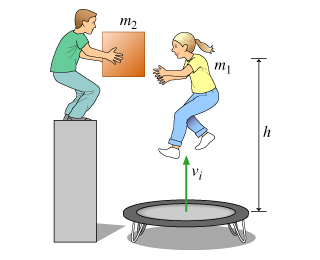
The Trampoline Effect: Who you don’t know isn’t nearly as important as what you do with who you do know.
Give me a handful of friends who want to help one another and we’ll do 10000% more in a month than a pile of well-connected, entitlement fat, whiners who think the world owes them their next paycheck.
It’s simple physics.
If you’re a nobody like me. If you’re like me and your family lineage looks more like a bush than a tree. If your track record includes some famous failures. If you have dreams bigger than your budget or zip code. If you woke up this morning and realized that you have no more tricks in your bag.
Than the Trampoline Effect is good news to you. Having the right friends is nice. But it isn’t the difference between success and failure! I’m living proof.
Get together with a couple friends and show the world what you can do.

Today I published the YS list of top 20 bloggers in youth ministry. It’s the second year for publishing it (third year I’ve done it) and I’m really pleased with how it turned out.
I thought it’d be cool to pass along some notes from the process:

Our culture loves despair. We ignore the facts and choose lamentation.
Listen to an hour of the news and you’ll hear how dangerous our country is. (Crime is down significantly over the past 30 years) You’ll hear how horrible the economy is. (The image above shows the NASDAQ Index the past two years.) Public school stink. (In fact, most major metropolitan school systems have seen test scores steadily increase over the past decade.)
Find a slow news and the media just goes back to the wheel of despair news stories that you love. Teen pregnancy, homelessness, violence in schools, date rape, sexting… you know the list. They go back to that wheel of despair because YOU LOVE THAT NEWS! Our culture is sick, twisted, and upside down.
We love to point to examples of bad news and apply them to our entire culture. Gang violence up 2% in Chicago? People in Arizona will go buy a handgun, just in case it spreads. A school in the district is struggling? Pull financial support, start a private school, all the kids with means will go there.
We’re all going to hell in a handbasket and there’s nothing you can do about it. Armageddon is on the horizon, cope and deal baby!
That’s our culture of despair.
I refuse to be defined, to think of myself, or to allow myself to be manipulated by an evil system which loves despair. Jesus did not die so I could live a life of despair. He subjected himself, even to death, so that I could live life to full. (John 10:10)
I choose to fear God alone and allow Him to have dominion over what He’s asked me to do. He’s not surprised by my circumstance. He’s never let me down. And He takes great pleasure when I put my faith and trust in Him despite the odds.
The only story Americans like more than despair? A comeback. Your comeback can begin right here and right now. But you have to put on hope. You have to wear it like a jacket. You have to allow hope to define you.
Hope goes beyond and attitude and a forced smile.
It is a posture I choose to carry in all areas.
If you don’t like hope. You won’t like me.
Join me. Reject despair.
Assume a posture of hope.
A few highlights and posts from around McLaneland.
Learn more about our garden at OurGreenFarm.com
Check out pictures and stuff at JacksonMcLane.com
Here’s a few posts you might find interesting
Connect with my techie, nerd stuff over at McLane Creative
Check out my Flickr page for more random stuff
That’s it! Random news from McLaneland.
I’ve got a redesign for the blog coming in a couple weeks. You won’t want to miss that.
One of my many roles at Youth Specialties is to oversee the YS job bank. While it isn’t the fanciest job hunting service in the world countless people have found their ministry jobs through the site.
The hiring process, for many churches, reveals the pendulum problem. They aren’t looking for the best candidate for their church. They are looking for someone who isn’t like the last person.
I’ve read thousands of descriptions over the years. And I can quickly translate a position description into a description of their previous youth pastor. Churches use a code language that they think is clever but is easily translated.
A fictional example of a position description:
First Presbyterian Church – Youth Director
FPC is a family-friendly congregation serious about the raising the next generation of believers in Anywhere, US. We are seeking an individual to oversee and direct our thriving youth ministry program of 7-12 grade students. Duties will include teaching Sunday school, overseeing midweek Bible studies, planning regular activities with the emphasis on developing the ministries effectiveness. Qualified candidates will possess at least 5 years experience in working on a multiple staff team in a youth ministry role, a Masters degree from a denominationally approved college or university, and a desire to seek ordination within the Fictional Presbyterian Church.
What we know about the previous youth director from this position description:
First Presbyterian Church – former youth director, Cindy Johnson
Cindy was single. (e.g. Not family-friendly) As a former YoungLife staff person she was passionate about students… just not the ones whose parents give a lot of money to the church. (e.g. Serious about raising the next generation at FPC’s kids) She probably did a good job teaching Sunday school, (e.g. The new person can still do that) wasn’t that involved in midweek teaching, (e.g. overseeing is code for “will be there and run it”) and Cindy’s cardinal sin was that she planned activities that were fun and easy to run… but weren’t tied together so that parents could tell what she was trying to do. (e.g. emphasis on developing the ministries effectiveness.) Cindy was focused on youth ministry and never really had her heart in staff meetings for things that weren’t about her job. And the pastor’s wife was highly offended that Cindy RSVP’d “No” to her Christmas Tea, choosing to fly home to spend the holidays with her family instead. (e.g. at least 5 years experience on a multi-staff team.) Cindy got the job right after graduating from her undergrad and left to pursue an MDiv at a non-denominational seminary. (e.g. People were always suspicious of her Baptist roots, anyway. They knew she wasn’t really Presbyterian all along because she didn’t like the bag pipes.)
That’s how the pendulum swings. And it carries right into the interview process with candidates walking away scratching their heads. “Why did they ask me so many questions about my personal finances?” Um, because the last person sucked with money. “Why did they ask me questions about my musical preferences?” Um, because they want to know if you’ll help lead the worship team. “Why did they ask me about my philosophy of parent ministry?” Um, because the parents hated the previous person and got them fired.
They aren’t interviewing you, per se. They are interviewing to make sure you aren’t anything like the previous person.
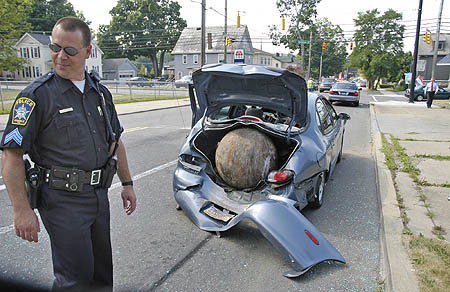 For untrained people often left to do the hiring… it’s human nature. Want something different? Bam. We’ll give you different. We had Cindy, now we have Tom and Janet and their six kids. Tom’s been a youth pastor for 15-years at various churches, is ordained in the denomination, and has an MDiv from the Presbyterian seminary as well as a Masters in Non-Profit Business Administration.
I give Tom 2 years until that pendulum turns into a wrecking ball.
Simple. Hire where you want to see growth. The leader a ministry hires should reflect and be prepared to take you where you can’t, don’t know how, or won’t go without them.

Now about your love for one another we do not need to write to you, for you yourselves have been taught by God to love each other. And in fact, you do love all of God’s family throughout Macedonia. Yet we urge you, brothers and sisters, to do so more and more, and to make it your ambition to lead a quiet life: You should mind your own business and work with your hands, just as we told you.
We live in a dog pile society. Everyone has an opinion on everything. Their own opinion is superior to everyone else’s. And nothing gets us talking faster than repeating or adding to someone else’s opinion.
It’s the dog pile effect. It takes a mountain, makes a molehill, then it makes Mt. Everest. All in the name of “just talking.”
As if the collateral damage was worth it?
The annoying thing about the whole dog pile method is that, at the end of the day, it’s typically over things we don’t actually care about or effect us.
And while we all join in, and get injured by, the dog pile– we do it to other people! (It’s true that hurt people, hurt people.)
National politics? Office politics? Denominational politics? Church politics? Sure, I’m up on the news but I don’t really care enough to say… hurt a friends feelings by saying his opinion is stupid.
Broken bones. Broken dreams. Broken lives.
It doesn’t matter if you’re a big, fancy nationally known person or the guy handing out flyers at the grocery store. When criticism mounts, when accusations fly, when things get repeated to the point that it’s assumed to be true even before you take a serious second to think… all of that adds weight to the dog pile.
O, that we would be different! That we would seek to understand before volleying an opinion. That we would differ in opinions in a way that honored, loved even, others.
There are things in this world that are worth destroying. But one another is not one of them.