Tag: Church

  • An idea for your church

    church-baby

    Looking for something new, fresh, and hot? How about doing something practical, instead? How about changing lives forever?

    This is worth looking into:

    METRO ATLANTA, Ga. — Last weekend an Atlanta pastor made a promise that stunned his congregation and most of the people who heard it.

    In a speech that discussed abortion, the President, and the sanctity of life, the most provocative statement from Pastor Vic Pentz of Peachtree Presbyterian Church came towards sermon’s end:

    “I make a promise to you now and I don’t want you to keep this a secret,” the pastor pronounced, “the Peachtree Presbyterian Church will care for any newborn baby you bring to this church.

    “We will be the family to find a home for that child, and there’s no limit on this. You can tell your friends, you can tell your family, you can tell the whole world …”

    Reflected Pentz a week later, “I seem to have touched a nerve by saying that to the congregation.”

    Honestly, this is what the church has always done. This is what the church in many parts of the world does today. Wouldn’t it be amazing if your church issued the same challenge?

    HT to Church Marketing Sucks

  • The Dark Side of Attractional Ministry

    dark-side-attractional-ministry

    The dark side of attractional ministry is that it’s a short term strategy.

    True confession–

    I was a perveyor of an attractional ministry model. It never permeated any youth group that I’ve been a part of, but the structure of our last ministry was– at it’s very core– an attractional model within our two biggest demographics. (Children and adults 40+) Time and time again here on the blog I’ve made generalizations about attractional ministry, not just as an outside observer, but as someone who has participated and performed within the model. I critique because I know!

    Three quick reasons attractional ministry doesn’t work:

    1. A life with Christ isn’t entertaining. At the end of the day, a day-to-day walk with Jesus isn’t filled with flash pots, set design, video screens, and compelling skits, and crafted messages for the heart. So the premise itself presents a well-intentioned lie about Jesus.

    2. When the lights go out, people feel empty. Whether its an amazing kids program or a great event for adults. The reality is that people leave feeling empty and longing for more. Just like 2 hours of television doesn’t fill the soul quite like an intense conversation with a good friend, an amazing night of Jesus-y entertainment just leaves you tired and empty. The attractional model had the same effect as a visit to a casino. A huge build up and a huge let-down. (With free drinks along the way.)

    3. It’s unsustainable. This goes in a few directions. It isn’t sustainable in that a single church cannot entertain all the demographics/age groups you will attract. Also, it isn’t sustainable among volunteer and paid staff. (People don’t volunteer to entertain, they volunteer to minister) Lastly, it isn’t sustainable as it doesn’t prepare people to leave your church and fulfill the Great Commision.

    You can’t sustain it as a church

    When we first began our attractional ministry to children it seemed so innocent. The idea was if we could make the kids program awesome, kids wouldn’t want to miss church. We’d target kids knowing that parents would follow and support something that was great for their kids. It wasn’t about attracting money, it was about attracting families. Our hearts were in the right place as less than 5% of our communities families were part of a church. It wasn’t a false Gospel, it wasn’t evil or about self, it was just a short-term strategy that worked very well at first.

    The dark side of that is that entertaining people is an ever-hungrier dragon. Our initial efforts were simple and fun. But expectations quickly swelled. It didn’t take long for us to rethink our plan… we needed bigger casts, more production money, more planning, and if we just upped our game a little bit we could attract more people. When we got to the next level, people were excited and wanted more. Within a very short time people were expecting an experience we couldn’t create. They’d watch television or go on vacation and their expectations increased as they wanted those experiences with a Jesus-twist. More money, more people, more production… this is not a model for sustainability. I don’t care if your congregation is 200 or 20,000. You simply cannot compete in a sustainable fashion with the entertainment industry.

    Your leadership can’t sustain it

    The same truism played out among the leadership. The folly of turning one area of the church into mini-Disney quickly caused unintended consequences. Within a few months I went from ministering to the hearts of people to the host of a three ring circus. I had a hard time getting into spiritual conversations. It always came around to “I loved what you guys did, what’s happening next?” It was such a time-sucker that in all reality… I was the host of a three ring circus who did the bare minimum relationally to be called a minister. The community recognition was useful, the day-to-day reality wasn’t useful.

    Among the leaders, people turned on one another when one attractional ministry got more attention or funding than another. Remember that dragon? He always needs to be fed and as he grows he gets hungrier and more demanding. And a church only has so much talent that is functional for entertainment. As expectations for better entertainment attracted new and more people– competition for resources began. Feelings were hurt. Rank pulled. Volunteers stolen. Guilt laid. Moral shrank. Frustration set in. We all wondered in our silence, “How can we spend the same amount of time and money and get a bigger and better product?” We had fed a dragon that now spit fire.

    That’s right… the church staff began thinking of worship services, kids ministries, and adult outreach as product to be perfected and sold to an audience. Before we could figure out what was happening, it all turned into one tragic game a bigger or better. The problem this model was created to solve really just made the original problem ten times worse.

    The whole time I knew we couldn’t sustain it forever. There wasn’t more money. There weren’t more people. The questions went from “what are we looking to do in the next 3-5 years?” To “what are we trying to do this year?” To “what are we doing this quarter?” To “what are we doing this month?” To “what are we doing this week?” In desperation you just get into a survival mode of… how can we get through this week? No one entered into this foreseeing this problem. But that’s how dragons go, I guess.

    Ever increasing expectations + lack of resources + staff frustrations = burnout. I wasn’t alone in feeling burnt out. All of our staff and volunteers felt it. But none of us would admit to it because we were all too busy feeding the dragon. He wanted more.

    You can’t sustain it as a model for walking with Jesus

    The model itself sounds so Christ-like when you start. We justified, “Hey, this is exactly what Jesus did. He drew a crowd, then invited them in to a relationship.” But our theology was short sighted. We forgot John 6, didn’t we? When Jesus confronts those following him with the reality that following him was going to mean they’d have to carry His burden and that in order to follow Him lont-term they’d have to eat his flesh and drink his blood… John writes... “From this time many disciples turned back and no longer followed him.

    Within a year, the most dedicated volunteers were still following us but the majority had pulled a John 6:66 and gone home. Who could blame them? The leaders were defeated, but still had people coming– expecting to be entertained. Pride set in as we doubled down to say, our plan MUST WORK! We couldn’t admit our mistake or tell those people that ultimately our vision failed. We knew a walk with Jesus wassn’t about fun skits, silly songs, games, and great music. Ultimately, our attractional-style of ministry worked in one way and had devastating effects in another. All the staff hated what we had created. All of the staff lied to themselves that it was worth it. All of the staff openly questioned themselves, “Is this what ministry is all about?

    A life with Jesus isn’t about making it from one event to the next. It isn’t about getting inspired by an event. Teaching people that by depending on entertainment to draw people is ultimately not the Gospel. It looks like Jesus. It smells like Jesus. But its just a shadow of the real thing. Luke documented this phenomenon in Acts 8.

    Now for some time a man named Simon had practiced sorcery in the city and amazed all the people of Samaria. He boasted that he was someone great, and all the people, both high and low, gave him their attention and exclaimed, “This man is the divine power known as the Great Power.” They followed him because he had amazed them for a long time with his magic. But when they believed Philip as he preached the good news of the kingdom of God and the name of Jesus Christ, they were baptized, both men and women. Simon himself believed and was baptized. And he followed Philip everywhere, astonished by the great signs and miracles he saw.

    I share this story as a warning to my friends in ministry— tough times make us all look for easy solutions. It’s Fall. A lot of churches are in the same position we were in when we started our attractional ministry. They have vision, they have unreached people, but right now money is tight and you think… “If we could only attract 20 more families, we’d be OK. We wouldn’t have to lay off staff.” That’s right where we were when we brought the dragon into our church.

    That dragon may be cute and cudely today– but trust me, it will breathe fire soon enough. He will eat you up, spit you out, and leave you quoting Ecclesiastes.


  • Why I Stand Up to Bullies

    bullies-r-bad

    What if you found out that the principal had denied access to the gay/straight alliance because of some technicality… a rule the Christian club broke all the time? Would you take a stand for the gay/straight alliance? They have the right to meet at the school under the same rules that give the Christian group rights to meet. I asked this question to a senior pastor friend of mine over a cup of coffee. The conversation got to this point when he asked me why I was always standing up for the little guy. I told him that our role as Christian leaders was to help others seek justice to which he replied, “Well, some things deserve justice and equality while others don’t.

    And Christians wonder why some people hate them?

    Let me share a few reasons why I think more Christian leaders don’t stand up to bullies:

    1. They are wimps. Somewhere in all of our education we are taught to never fight the system, just to submit to the ruling authority, and smile at old ladies on Sunday mornings. I’ve met far too many church leaders whose only leadership skill is diplomacy. Diplomacy is great. But the desire to negotiate is worthless if no one takes you seriously. Just because you are a church leader doesn’t mean you have to be a pansy.

    2. They have horrible theology. In the above discussion you see it played out. That church leader was only interested in standing up for the Christian group. No one else in the community matters to him because they don’t directly benefit him. (Directly, meaning he doesn’t see the connection between justice and church growth!) You know, Jesus and his disciples only ever stood up for the religious folks, right? Just ask the woman at the well and that woman about to be stoned when caught having sex.

    3. They are afraid of their churches. Good Lord, imagine what would happen if the senior pastor actually stood up against injustice in his community! I mean, what would the board say? I mean… if I don’t do what they say I could lose my job! (See #1 & #2)

    4. Their worldview is jacked up. I could ask the pastor above if he was an absolutist or a graded-absolutist and he’d swear oaths to Josh McDowell that he was walking the absolutist straight and narrow. But based on how he answered the question above you’d see that he’s really a relativist. (gasp) He’d stand up for the Christian groups right to meet at a local high school because he agrees with them. But because he doesn’t agree with gay/straight alliance, he wouldn’t. Relativism in action. So what’s good for one group isn’t good for another, right pastor?

    5. Their priorities are out-of-order. The last cop-out I hear all the time is, “I’m so busy running the church.” Too many who work in churches are so worried about running the programs of the church that they forget their place in society. Think about it… most pastors make horrible neighbors. They are too busy to be a part of the community, they use their house as a meeting location, and they are preaching all the time that you should love your neighbor despite the fact that they don’t know their own neighbors names or love them one bit. It shocks me that the way evangelical churches operate that they are so out-of-balance with the community’s need.

    I know these are generalizations. And I know that people think that if they can dismiss one single point with a specific example they can dismiss all that I’m saying. Please don’t lose the point of the post by disagreeing with a single generalization. The point is that if you want to be a Christian leader in your community, you don’t need the title of pastor. What you need to do is look deeply at what’s going on, expose injustices, speak out for the weak and poor among you, and stand up to bullies. Whether that’s a school board, a government official, a nasty neighbor, a gang, the big donor at church pulling the strings, or even some bullies picking on kids as they walk to school.

    Jesus is a big fan of justice, are you?

  • Football, Church, and polls

    bowdenAugust 1st arrives and I find myself drawn to coverage of football. I’m not really into baseball. With 164 regular season games I struggle to care between April and September. The NBA playoffs last almost as long as the regular season so that has never interested me. March Madness is fantastic, but it only lasts a month. And I can’t get into watching hockey on TV so that is out. College football is, by far, my favorite sport to get into.
    The Pre-Season polls are starting to come out. This is the one thing that truly irks me about college football. So much is determined about the outcome of the football season before the ball is kicked off in September. It simply makes no sense to me that you pre-rank teams before they’ve played a game knowing that the polls will eventually determine who gets ot play in the national championship game. The same 25 teams are in the top 25 each fall. It’s as though the script for college football has already been written. Tim Tebow, back for his senior season, will play either Texas or Oklahoma for a national championship… depending on who wins the conference championship game. A playoff is the only thing that will fix this. And even that will be effected by pre-season polls.

    church-rankingsA few years back I was hanging out with some friends and we were discussing setting up a fantasy church league. You know, put out church rankings based on attendence, power of sermon, quality of worship service. Add to the mix some Church Center replays and postgame talk… we could probably get enough interest to put out weekly rankings. “Late in the sermon it looked like Craig Groeschell was losing his audience. Heads dipped and the internet interaction started to slow. But then he threw in an unexpected hail mary altar call and brought it down! What a pro finish!” or “John Piper’s delivery was flawless on Sunday. His precision in slicing and dicing that passage, tying in the joy application, that was a thing of beauty. Church Center play of the week nominee, for sure.” But then we thought it’d make the whole thing just weird if it blew up and pastors started spiking Bibles and dudes started getting endorsement deals. Can you imagine a postgame interview from Perry Noble? “First off, I need to give all the glory to Jesus Christ. Second of all, I couldn’t have done it without my Pepsi Worship Team and the Tommy Nelson Gospel Choir. Without them, we wouldn’t have won today.

    Thankfully, we came to our senses on that one. The last thing anyone wants is for megachurches to start lobbying supporters for all-star votes!

    Football wouldn’t be the same without rankings. Church wouldn’t either.

  • Going lean and mean

    lean-and-mean

    Yesterday’s church service was a celebration of what God is doing in our community. For those who don’t know, I attend a church plant called Harbor Mid-City. It’s an effort to do the impossible task of bridging cultures in one of San Diego’s most diverse communities. Mid-city is home to roughly 60 language groups and it’s socio-economic demographic stretches nearly as wide. In short, it is a place which embraces the awkwardness that these people don’t normally come together for the sake of living out the Gospel message of justice and equality while being surrounded by injustice and inequality.

    No church has ever challenged my way of thinking more. In theory, I love everything Harbor is about. But in practice, I’m a wuss and have to actively fight my tendency to make church about my kind of people worshipping in my kind of way. I thank God for His challenging our to invest there for now.

    For the last few weeks the church– and a hodgepodge of other ministries in the neighborhood– have run what they call The Urban Project. Essentially, this is a justice in action project. I don’t know all of the details of everything that was done but I do know that for these few weeks the whole church put forth an effort to do really cool stuff. They fixed stuff that was broken. They pointed out to local government injustices in our working class poor neighborhood. They employed high school students and taught them leadership skills. They ran a free day camp for the children of the community. I’m sure they did a lot more, too. But that’s the stuff I know of.

    Here’s the point of this post: The church couldn’t do this if they didn’t operate lean and mean. Here are three ways they operate lean and mean that are worth thinking about:

    1. No property. I think a lot of churches would be wise to sell their property. They have no idea what a distraction an office is for the staff nor how much time/effort/money is wasted simply by maintaing a building. It’s a gross inefficiency that most ministries don’t truly need. By not having property to hang at, maintain, or pay for… the church is able to focus much more attention on their actual ministry.

    2. Low-tech service. If you are used to high production church you’ll be shocked to see how simple the services are at Harbor. Seriously, shortly after arriving at Harbor a couple of staff asked me to get involved helping them catch-up. My counter-point to them is that a pretty, produced service has little net gain for the amount of time invested in making it great. I’d rather them stay focused on what makes the church great than get distracted in trying to get pretty. It’s 90 minutes of people’s lives each week… to people in the pews it’s not nearly as significant as people in church leadership think it is. I’m glad to see that Harbor continues to keep the worship service in perspective and keeps it simple. (Yet powerful in its simplicity!) Moreover, I think a lot of churches think their worship service change lives and over do it. If there is one area of regret from my time in church ministry its that we wasted so much time producing a worship service. I kick myself for that all the time.

    3. Preaching rotation. This is something I greatly appreciate about Harbor. You see, the lead pastor is very gifted. I’d put him on par with most of the people we bring in at YS events. And yet Stephen’s main ministry is not preaching. It’s leading the church and ministering to the people. If Stephen concentrated on preparing 50 sermons a year the churches overall ministry would suffer. A major reason we’re seeing so much success is that when he shares the pulpit with other qualified people he essentially has created an additional part-time position at the church! I wish more preaching pastors gave up the pulpit at least once per month for the sake of the church ministry. At the end of the day, life-on-life ministry has  long-term impact while up-front preaching ministry tends to have short-term impact.

    What are ways that you could re-evaluate your ministry to get lean and mean in the ministry season to come?

  • Multi-Generational Communication

    multi-generationWhen I was in New Jersey, I had an intriguing conversation about communicating to multiple generations during the Sunday morning sermon. Kristen’s uncle, Fred Provencher, is a senior leader and one smart cookie. I loved this conversation on a lot of fronts. Fred is a great communicator, he is a great pastor, and yet he is doing bucketloads of research to try to figure out… “How do I become a better communicator and pass on some best practices to others?” How many senior leaders are really wrestling with this? I think most feel that their messages aren’t that effective, but very few will actually take the time to learn why and how to fix it.

    The task is nearly impossible!

    When I was on staff at a church we always had this feeling that Sunday was-a-coming. Like clockwork. It was always in front of you like a ticking time bomb. The local preacher has to prepare 50 messages a year, keep the attention of loads of different communication preferences, evaluate the effectiveness of last weeks message, prepare this weeks message, begin planning for stuff 6 weeks out so the worship team is can prepare, on and on. On top of all of that the preacher must try to factor in a way to communicate to builders, boomers, and all the rest of the generations… all of whom have strong preferences for how the sermon should be delivered. You can see why some teaching pastors just give up and do what their talents and preferences dictate. Which is why I’m so excited for Fred’s research.

    The task is wholly necessary!

    For 2000 years the Sunday morning sermon has been the primary communication tool of the church to the church body. Going forward I think it’d be hard to argue that the sermon will be less important in the future. The real question is, will it be as effective in leading the church going forward as it has been to date? Or will it fade into a tradition we do but see little fruit from?

    It’s about technology!

    The sermon is not about video, audio, big screens, dramas, special music, or even a talented speaker. But it is about finding the right technology for each audience. A communication style is a technology. Adapting to your context is a technology. The words you use to convey biblical truth are technology. The Bible is the content and the technology is how the communicator delivers that content.

    Context, context, context

    As I think about this I think about it as 3 contexts.

    Context of where you are: If your church is in suburbia and your audience is hooked on Facebook, YouTube, and are business people I’d think that you’d want to communicate differently than the church I go to which is mostly working class poor. I’m always shocked to see people emulating the communication styles and technologies of churches that just don’t fit the local context in which the church operates. That’s why Erwin McManus’s stuff is so powerful in his context but falls flat in other places. In the context and shadow of Hollywood, storytelling and visual arts are powerful technologies. I don’t think that would fly in rural Kansas.

    Context of the passage: I’ve been shocked to see misuse of technology in relation to the passage of Scripture the preacher is teaching. How can you teach the beatitudes… blessed are the poor, blessed are the meak… while using a $100,000 A/V system and by hiring professional actors to do a skit? Sometimes we get so worried about being hip and relevant that we actually offend the context of what we’re trying to teach. Imagine you are a working-class poor person attending a service that is supposedly teaching me that its OK to be poor. How can I undertand that message in a $20 million building from a pastor who makes $100,000 more than me! Sometimes we forget to look at the context of the passage through the lens of the the technology we use to deliver it.

    Context of who you are: Another shocker is seeing a communicator try to go outside of themselves. I’ve seen communicators put on a public persona or try to communicate in a fashion that just isn’t them. We visited a church in which a very type A, direct and to the point preacher tried to close his message with an artsy prayer experience. He fumbled through the instructions. He felt awkward telling people to get up. And he never stopped talking while people were supposed to be praying. The biggest thing a preacher should do is to be who they are. If you are hip, be hip. If you are a nerd, be a nerd. If you are artsy, show us. But if you can’t send an email don’t try to tell us you found this video on YouTube. When you do things that are out of context for you, it doesn’t matter if it was done to appease a generational expectation.. it just makes you look stupid.

    It matters who you are the other 6 days.

    The Sunday morning sermon is important. But it is validated by who you are when you aren’t preaching. Otherwise, they are just words. We live in a high expectation, low trust world. The true measure of your Sunday morning words must be lived out through your actions. That communicates to every generation that your message is worth listening to.

  • Free vs. Paid Content in the Church

    free

    Whether you are aware of it or not, there is a raging battle going on about the concept of free vs. paid content on the internet. Big names in media like Rupert Murdoch have drawn the line in the sand– they are going to make people pay for news content. Others have embraced the Google model of an advertising-based system of free content. Last week Seth Godin took the debate to a new level. He is firmly in the free camp while Malcolm is in the the paid camp. Of course, most of Seth’s income comes from consulting, speaking, and book proceeds– so Seth may be in the free camp for some things, but his paycheck comes from paid content too.

    Inside the church the same debate has just begun. And all of these questions lead back to the same two central questions that newspapers are wrestling with, “Since creating content isn’t free, who is going to pay?” “In a world of free content, where is the ethical line?

    Two Sides to the Content Coin

    1. Gospel-oriented content should be freely available. As someone who has successfully started an internet business in the last five years I know the power of free. Ask Tim Schmoyer. Ask Ryan Nielsen. Nothing draws traffic to a youth ministry website quite like free. In the youth ministry world there is an expectation of free content. There is a righteous indignation when you question the ethics of free, too. No one cares that it costs me thousands of dollars to create, host, and market “free” content. There is a general consensus that stuff about youth ministry should be free and you shouldn’t expect anything in return for free lessons, videos, music, etc. “Don’t ask me to click on an ad. Don’t ask me to sign up for a newsletter. I need something free because I don’t have budget to buy stuff.” I’ve gotten nasty emails from folks who insist that all content about ministry should be free. These same people often are in paid ministry. So they want to get paid for using someone’s free content. Talk about wanting your cake and eating it too! Sheesh.

    2. Gospel-oriented content should cost something. Of course, the ironic thing about the free thing is that the people who think ministry content should be free want to get paid by their churches, ministries, or non-profits. If I told you that you shouldn’t get paid for being a youth pastor you’d get angry with me! There is a certain immaturity to the free thing. At the end of the day there is no such thing as free content on the internet. Someone sits down to write something, they save it as a PDF, they post it on a website, and they offer it for free to anyone who wants to download it. It seems free when it isn’t. That computer cost you something. The education that powered your thoughts cost you something. The time you spent creating it… was it for work you were being paid for at the church? If so, does that content even belong to you? If it was your free time, isn’t that time worth something? If you don’t think your time is worth something why should I use your stuff? When you posted it somewhere on the web, who paid for that server space? If it’s on a well-known site, who is paying for the building of that site/brand? Who is paying for maintaining it? If you added graphics to the content, who paid for that? If you had someone proofread it, who paid for that persons work? That doesn’t seem free to me.

    There is no such thing as “free” content, even Gospel-oriented content, so people should expect to pay something for the works they use. The real question is, “Who should pay?” In the old media world the user was expected to pay for the content. You subscribed to a newspaper to get the content and the profit in the model came from advertising. You wanted a book so you went to a bookstore and bought it. In the 1980s and 1990s most of us in ministry would have thought it immoral to copy books and give them to friends, copy cassette tapes and give them to students, etc. But now there is an expectation that advertising will somehow pay for all the content I want/need. That’s the new media age. Free to me, let advertisers foot the bill. Wouldn’t it be funny to see a pastors salary supported by advertising? He’d preach in an outfit that resembled a Nascar driver’s suit! It’s always funny to think about real world applications of stuff we do on the internet everyday, isn’t it?

    Digital media has created an ethics dilemna for people in ministry, hasn’t it? There seems to be a feeling that the parable of the talents can’t possibly relate to actual money. People who advocate for free content will concede… “It’s OK to break even, just don’t get rich!” So if content cost me $500 to produce a lesson… why is it wrong to want to return $1000? (Like the parable) Don’t you remember the parable… Jesus called the man who just broke even a wicked and lazy servant. What then would Jesus say to people who intend to invest $500 in content and give it away? Super wicked and super lazy?

    We would never walk up to an auto mechanic and expect him to change our oil for free simply because we are in ministry. We would never go to the dentist and insist that he give us free dental. We would never go to the grocery store and expect the grocer to pay for the pastors food. And yet we have no problem with this when it comes to Gospel-oriented content. Something is out of whack, isn’t it?

    As with all things that seem to leave us in a quandry– I am wondering if there is a 3rd way. Is there a way that is both ethically satisfying and free? Is there a way that is both affordable for ministry folks and pays for itself?

    Chime in. I don’t pretend to have all the answers. If you’re in the paid camp– speak up! If you think everything should be free, give me a counter-punch.

  • Does the church love my child?

    This video is from the blog of Andrew Marin. If you haven’t read his book, Love is an Orientation… shame on you!

  • Two views of the local church

    church-views

    There are two sides to every coin, aren’t there? I’ve had this post stuck in my head for several weeks– and I think the illustration says it all.

    Church leaders: Complacency sneaks in. We surround ourselves with people who go to church. We spend a lot of our time at the church. Our perspective becomes that the community revolves around activities at the church. Pretty soon we become ambivelent about the neighborhood we live in. Our schedule is defined on what’s convenient to those who come to church. Our agenda becomes to serve them.

    We perceive our ministry as a “city on a hill” when in fact the people living in our neighborhood are completely unaware of our existence. Before we know it, we are so comfortable with our programs, budgets, staff, and people who come to church we forget reality.

    The reality is that in most communities about 5% of the population attends a church. And yet we are comforable with that. Go ahead do the math yourself. Spend 30 minutes calling every church in your community and get actual attendence numbers. Next, simply divide that number by the population of your community. In most places that number is 5% or less of people who attend church on any given weekend. And we all know that just because someone attends church on Sunday doesn’t mean they are Christians, right?

    Why not take some time to get to know how 95% of the population views your church? Think of it like this. Count the next 20 cars that drive past your house. Only the 20th car will attend a church this weekend. In the illustration above there are 18 houses in view of that church. And none of them will attend that church this weekend. If your theology is like mine, you recognize that Jesus died for all 20 of the people in those cars and all 18 of the people who live in those houses. But who is our ministry serving? The 5% who show up. Most of our money and time is spent serving Jesus from the perspective of the 5% and not the 95%.

    That perspective should change things. 1 in 20 people will attend church this weekend. Any church. Even that church that is so bad you won’t even meet with the pastor to pray.

    I’m speaking to you out of deep gratitude for all that God has given me, and especially as I have responsibilities in relation to you. Living then, as every one of you does, in pure grace, it’s important that you not misinterpret yourselves as people who are bringing this goodness to God. No, God brings it all to you. The only accurate way to understand ourselves is by what God is and by what he does for us, not by what we are and what we do for him. Romans 12:3, The Message

    And yet church leaders reassure themselves that numbers don’t matter! This is the state of the church and people say we don’t need to fundamentally change how we do ministry. We worry about offending the 5%. We worry about changing too much too fast while our sworn enemy puts up victory statues all over. We follow leaders who look at this reality, shrug their shoulders, and move on with their lives. We go to denominiational meetings which agree to spend more money on organizations which are smaller every year. In short, we invest all of our time and energy in a broken model.

    And then when someone really breaks through. And that community reaches 6% of the population so we flock to hear how they did it? Got a book? Teach a seminar? Our perspective is jacked up, isn’t it?

    New leaders are needed. I dream of church leaders coming to the forefront who are drastically interested in the 95%. I long to surround myself with leaders who keep the 5% in perspective. We celebrate those lives changed! But I want to be with men and women who think differently. Where are the leaders who look at those 5% as just the beginning? Where are the people who recognize that a model cannot be built around an individuals talents? Where are the leaders who know they need to start a swarming movement?

    Point me to those people. I am tired of those who are satisfied with the failure of 5%.

  • What to Say When the Youth Pastor Leaves

    the-truth

    It’s June. Professional youth ministries most dangerous month. I’ve served in three churches and all the hiring, firing, quitting, and retiring with the youth ministry seems to happen in June. It’s a wicked combination of the end of the school year and for a lot of churches, the end of the budget year. I could offer some theories as to why so many churches hire and fire in June… but that’s not the point of this post.

    “What do we say when the youth pastor leaves?”

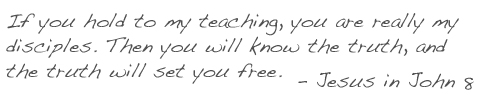
    Church leaders: Tell the truth. If the person quit, just say they quit. You don’t have to spin it. Just tell it like it is.

    But if you are firing them, I can’t tell you how many people I have talked to who were fired and then asked to enter into an agreement (never in writing) that for a sum of money they will say that they have decided to quit. Hundreds. If you are man or woman enough to fire a person than be man or woman enough to tell the congregation. You don’t pay severence to someone you are firing to cover up the fact that you are firing them. You pay them severance because they are self-employed and ineligible to claim unemployment benefits. It only makes matters worse when you fire a person and then put on a charade that you are sad to see them go. You throw a party, you say all sorts of glowing things in public when you know full well that you sat in a board room and decided this person needed to be fired. If you lie, your lie will be found out. Your sin will be exposed and the embarrassment you were trying to avoid will come back to haunt you for years. If you made a brave decision as the leadership of the church then it is a sign of your strength as leaders. When you try to wuss out, it shows what kind of leaders you are.

    The truth always wins.

    Church staff: Tell the truth. If the leaders of your church dismissed a person don’t ever lie about it. It’s perfectly acceptable to say, “The leaders decided to go another direction.” You don’t have to go into the specifics of why the person was fired. But don’t participate in the leaders lie if they are trying to spin the truth. That makes you party to the lie! Your corroborating the leaders story and remember, the truth will come out eventually. And remember, this is exactly how you will be treated if they let you go later.

    The truth always wins.

    Youth Pastor: Tell the truth. I have been in your shoes. I know what it’s like to have that meeting where the leaders tell you that you aren’t the person they want pastoring their kids anymore. I have felt my world crash around me in that moment. I’ve looked across that table when they told me what to say. They are going to wave a big check in front of your eyes and you are going to think, “How else can I feed my family? How will I pay my rent? How will I have enough money to get the heck out of here?Just don’t get bought by Satan. Think about it… would Jesus ask you to lie in His name? Not telling the truth is telling a lie! Church leaders who ask you to lie for a little bit of money are doing the work of your sworn enemy. Walk out of that meeting with integrity. Do not cave to their pressure and promise of financial security to further their lie. They will end up offering you the same severance check anyway… because it is the right thing to do and the congregation will demand it. Moreover, your telling a lie to the congregation will only make matters worse. They are trying to get you to take the fall because they know you are leaving the church.

    Candidates for youth ministry positions: Find the truth. Your well-being and the well-being of your family and future ministry depend on you discovering the truth! If you are interviewing at a church you need to talk to the former youth worker. During the interview process ask the search committee about the previous person. Then ask for their email address or phone number so you may contact them. This is 2009, you can find them in 10 minutes on the internet. Be a detective and get to the truth as to why that person left. If there is a lie… don’t take the job. This is precisely how you will be treated. If the previous youth worker was fired and the pastor and the elders participated in that lie, confront them! No matter how good they make that job sound, that entire relationship will be based on lies unless they come clean. Confront their sin and then don’t take the job. Show them what a leader looks like.

    Some may read this and think, “Boy, Adam McLane has a chip on his shoulder about this. You would be correct. I am sick of seeing my friends in ministry asked to lie for a few thousand bucks. I am sick of churches hiding the fact that have fired a person. I am tired of the Bride of Christ doing things that are worse– even illegal— than what happens in the business world. I know that a healthy ministry can only be built on the truth. And it is time to speak up and get some truth out there.