This is the story of Corporal Sidney Manning of Butler County, Alabama
July 28th, 1918 – Near Breuvannes, France
When his platoon commander and platoon sergeant had both become casualties soon after the beginning of an assault on strongly fortified heights overlooking the Ourcq River, Cpl. Manning took command of his platoon, which was near the center of the attacking line. Though himself severely wounded he led forward the 35 men remaining in the platoon and finally succeeded in gaining a foothold on the enemy’s position, during which time he had received more wounds and all but 7 of his men had fallen. Directing the consolidation of the position, he held off a large body of the enemy only 50 yards away by fire from his automatic rifle. He declined to take cover until his line had been entirely consolidated with the line of the platoon on the front when he dragged himself to shelter, suffering from 9 wounds in all parts of the body.
You aren’t a leader because of your rank, Corporal Manning had none.
You aren’t a leader because you went to school, he only went to basic training. You aren’t a leader because you write a book on leadership. Or because an organization calls you its leader. Or because your daddy was a leader. Or because you aspire to be a leader.
You are a leader when you take people where they would otherwise not go alone.
When the plan falls apart. When the bad news comes. When fear takes hold. When the enemy is advancing. When there is no where to go but the scary, dangerous place. When what needs to get done is dangerous.
Only then will you find out who the leader is. He or she looks you in the eye and says, “I will take you where we need to go.”
Winning had bought Tressel respect in the state of Ohio. First at Youngstown State and then on the national stage at Ohio State.
As the success increased so did Tresell’s insulation from everyday scrutiny. In the eyes of fans and the administration he could do no wrong. Certainly there were warning signs everywhere. Most notably was Maurice Clarett. As a freshmen, Clarett help the Buckeyes win the 2002 National Championship. But was soon overcome by scandal, eventually being dismissed from the university. There would be others. But none were as vocal or with the national voice that Clarett garnered.
All the while Tressel’s name stayed out of the spotlight. Clarett was a bad kid from the wrong part of town while Tressel was the misunderstood golden child. This would be the response to every allegation to come. Tressel was unaware of the problem and offenders were dishonest, bad kids.
Off and on Ohio State players were punished for infractions of NCAA rules. But Columbus is a one-horse town and no journalist dared to take on what everyone was seeing– lots and lots of NCAA infractions. With all of the success in the football program there was lots and lots of money flowing. No one inside of Columbus was going to blow the whistle and risk their livelihood. Everyone claimed Tressel knew nothing.
The wheels began to fall off nationally during the 2010 season as allegations surfaced that some players had sold or traded some memorabilia in exchange for tattoos. Suddenly, the spotlight was on the program to discover what was really going on. 5 players were suspended for 5 games in the 2011 season by Tressel. This was quickly followed up by a self-imposed 5 game suspension that Tressel took. The spin was that he chose to do it this way so that the players would see that he was the kind of leader who took it on the chin when he got in trouble.
Fans of Ohio State bought it. (And even revered him more for his valiant leadership.) But the national media and non-OSU fans smelled the rotting corpse of a cover-up in the trunk of Tressel’s trophy room.
Even in his resignation Tressel maintain his arrogant posture. He pretended to fall on his sword and say his resignation was not an admission of guilt but to protect the reputation of the university he loved.
It won’t work. While Ohio State fans are living in denial. The NCAA will act and the punishments will be severe. There’s a good chance that the NCAA may actually shut the program down for 1-2 years as a result of the systemic problems. In all likelihood, since he’ll have to serve suspensions earned while at OSU at any future NCAA job, Tressel is out of college football for life.
It is a sad ending to anyone’s career. But was also entirely of his own doing.
Preventing Tresselgate as a Church Leader
We live in a time where church leaders are put on pedestals similar to that of Jim Tressel. (At least in Evangelical circles) People identify with their pastor so strongly that it’s not uncommon to associate the name of the church with the name of the pastor. People go to Rick Warren’s church, Bill Hybel’s church, Andy Stanley’s church, Rob Bell’s church, Joel Osteen’s church, Mark Driscoll’s church, John Piper’s church, etc. It’s completely ridiculous that we do that, but we do.
A dangerous double-edged sword. On the one hand the church benefits from the notoriety of their pastor. On the other the notoriety of the pastor is the largest threat the organization faces to its present reality and future success of large organizations. The net result is that the pastor lives in a protected bubble. That doesn’t mean he can do no wrong. It just means that if he does wrong everyone in his life is going to do whatever they can to keep that from the public since his failure impacts their financial security.
Practically speaking, how do we prevent Tresselgate?
Leadership Transparency- I’m all about elder rule in a church. And I’m all about staff teams largely governing their day-to-day operations. But elder meetings should not meet behind closed doors with no ability for anyone in the church to intimately know what’s going on, ask questions when appropriate, and foster a sense of transparency. Likewise, the elders should be congregationally selected and scrutinized as overseers of the congregation and the staff. (The staff can’t pick elders– That’s illogical for their role as overseers.) And their meetings should be open to the general public. Just like municipal boards they should have open and closed sessions. But reserve closed sessions exclusively for personnel and legal matters.
Whistle blowers protected- In most secular work environments there is some level of protection for staff who blow the whistle on inappropriate behavior. The #1 reason this got so big at Ohio State was that no one in the athletic department blew the whistle on Tressel’s years of stuff going on. (The SI article documents this well.) There is no protection for church staff. If little things get dealt with without fear of reprisal they don’t escalate to big things later. A little bit of money miss-spent, a little bit of power abused… that’s just life and can be dealt with. But not dealing with it creates a snowball effect that will one day destroy the entire mission.
Time off from the platform- Early in my leadership development a mentor taught me that leadership prowess wasn’t determined by what happened when I was there. She measured my performance as a leader by what happened with my team when I wasn’t there. We need to create that environment in the church today. It’s great to have figurehead leaders who are amazing communicators. But if those people are truly leaders of a movement of God, they will be measured by their ability to put others in their place. Andy Stanley had a nice-sounding sermon a few years ago built on the premise, “What do you do when you are the most powerful person in the room?” The answer to that question is to be like Jesus and disperse the power to your disciples… and then step away. The power of Jesus’ church isn’t central leadership. It’s that it’s empowered every person to be a priest with direct access to the Father! We need to affirm the priesthood of all believers and get our leaders off the platform.
Don’t believe the hype about yourself- I don’t believe any church leader wants to be on a pedestal. Any “powerful” church leader I’ve ever met is wholly uncomfortable with the reverence they receive. It seems to me that gross failures happen when the person starts to believe the hype about themselves. Fundamental to the problem is that many of these people are the most successful people they know. God blessed them and it just happened. If you find yourself on a pedestal do whatever it takes to find some friends where you are an absolute nobody. It’ll do your soul good.
Cheaters never prosper- Eventually, whatever it is that you are hiding will be public. Plausible deniability never works for long. The best thing you can do is to operate a clean program… even if that means you win less.
What are other ways you think church leaders can prevent Tresselgate from destroying their ministry?
Right before I went into full-time youth ministry one of my mentors shared this truth with me over coffee.
Sometimes people are going to come to you and complain about the stupidest stuff you can imagine. Understand that when that happens, it isn’t you, it’s them. They likely have an area of their life that is completely out of control. And because they have no control over such an important area of their life they are going to try to take complete control of something they think they can control. It’s classic transference. Stop and pray with them. If they stomp off, pray for them.
That advice helped me a ton. (And for you, maybe the light just went off!)
In truth, a life of a leader also often spins out of control. Agendas are in play way above their understanding. Parent demands don’t make any sense. The level of leadership they need in their church is often outside of their experience level.
They are just grasping for anything they CAN control in a life of ministry full of things they can’t control.
As I interact with people sometimes their anger level reveals a great amount of hurt. The more they hurt they more angry they become with me about nothing. Seriously, I’ve had people yell at me because they can’t figure out how to reset a password. Or because their credit card was declined. (Because they put in the wrong address.)
All that to say– a life in ministry is full of things you can’t control.
But here are 5 things you CAN control.
Attitude – You might not be able to chose the agenda, but you can always chose your attitude.
Behavior – Ever heard that actions speak louder than words? It’s true.
Tone – Not just what you say, how you say it.
Mind – What you put into your mind to learn, and what you allow to dwell in your mind, that’s up to you.
Schedule – How you structure your day and how you manage your time, that’s largely up to you.
Photo by Mikel Manitius via Flickr (Creative Commons)
When chaos arrives on the scene panic changes everything.
Every person has a freak out mode. Rumors spin out of control. People are jumping ship. Like Jonah, there’s a moment when the sailors cast lots to figure out who angered God. Fingers are pointed. Cuss words are muttered under their breathe. Biting words aren’t far behind. Everyone is doing whatever they can to fix the situation. Yet at the same time, in the back of their minds, they don’t know if they are making things better or making things worse.
Photo by Ira Machefsky via Flickr (Creative Commons)
Some situations turn the best of us into hyenas with a bad case of fleas.
It’s one thing to steer a ship on open seas on a calm day. That’s easy and anyone can do that. But it takes a captain to calmy guide the ship into harbor on a windy day with high waves. When the crew freaks out the captain takes over.
“You are crazy enough to think you can change the world.”
This was the negative criticism of my ministry nearly 10 years ago by an elder. I took it as a compliment.
When I read Revelation 2-3 I see that Jesus will not judge individual churches or communities of faith. That’s not what John saw. (Revelation 1:19) Instead,
I see Jesus judging entire towns based on both what they’ve done and where their hearts are collectively.
As we look forward to that future judgment, we as church leaders in each community cannot be satisfied with reaching 5%-10% of the population. A logical conclusion would be that how we are doing things will only result in reaching 5%-10% of the population going forward. Simply put, f we want to reach exponentially more we, collectively, must change.
Most people realize that. But they don’t actually know how to make change happen.
Here are 5 ways I make change happen:
Present the facts, repeat them often, write them on the walls. Do your homework, get behind the evidence.
Persistence. Be a bulldog. Don’t let the issue die. No isn’t an answer, it’s an opportunity to try a different approach.
Stop the presses. If something is really important you need to stop everything else, at all cost. We can’t go on like this.
Tell a great story. Remember, a well-told story is your most powerful weapon.
Outwork everyone else. Know why everyone says hard work pays off? Because it does. You can’t ignore hard work.
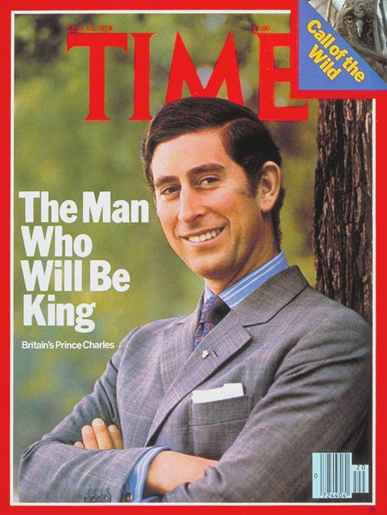
Prince Charles is a man in waiting. He’s been waiting to be king his whole life.
It’s a depressing lot in life, isn’t it? Your entire existence is wrapped up in a moment that may never happen… and will only happen when your mom dies.
Lame.
In so many ways Charles has proven he isn’t worthy to be king. He didn’t stand up to his family to marry the woman he loved. Instead, he married Diana, and their life turned into a tabloid embarrassment. And while many think he has an amazing book on organic gardening no one takes him seriously as a statesman and would-be king. He’s perpetually this dude politely waiting.
One way I know he isn’t fit to be king is that he has waited all of these years. History is full of stories where the prince got the queen or king out of the way so he could assume the role he was born to have. Not to be morbid or trite… but couldn’t he have talked his mom into some sort of deal by now? Certainly, she could have retired her role and allowed her son, as the crown prince, to govern?
Maybe she has just waited this whole time for him to grab the crown instead of pretending to be Hugh Hefner all of these years? Queen Elizabeth has proven herself to be more a man than her son, that’s for sure.
At some point in his life Charles must have woken up to the reality that there was no coronation ceremony coming.
Here’s the reality check: There’s no coronation ceremony coming for you, either.
I used to have this fantasy that I’d be doing my thing and one day someone would walk up to me and say, “Adam, you’re Sunday school lesson today was incredible. Here’s a publishing contract. Why don’t you come and join our team?” Or… “Thanks for coming to our meeting today, why don’t you come back and chair this committee next time?”
That’s not the way the world works. Instead, when given the opportunity to lead you have to go for it and nail it. When an opportunity presents itself you make the most of it.
Far more people snatch, grab, and maneuver their way to king than will ever assume the role by death or attrition.
The myth of the open door
In Christian circles there’s a lot of talk of open doors. There’s a whole pile of people sitting around and waiting for open doors. But here’s the thing about waiting for open doors… I’ve found that most open doors lead to really crappy opportunities! (A church job I can “just have” is not worth having. Or a standing offer to join an organization is probably an organization I don’t want to be a part of.)
The best opportunities for you might just be doors you have to put a little shoulder in. Or wedge your Nike’s in when the door is cracked open to ask, “Who is there?”
And the very best opportunities in my life have come when I went to my garage and got my Sawzall to make my own door.
Call me crazy, but I’d rather be the maniac with the Sawzall cutting down doors of opportunity than playing Prince Charles the Polite with my arms crossed on the cover of Time Magazine.
Why?
Because at the end of the day I know which person I want to follow.
That sums up my relational strategy with friends, co-workers, and family.
I keeps it real.
There’s a tendency among ministry folks to put a happy face on everything. Or worse yet to try to put a leadership face on everything. While I appreciate the desire to try to put on a tough exterior the fakeness they exude often makes the insecurity and deep hurt bubble to the surface even more.
In order to keep it real you don’t have to wear your heart on your sleeve. Don’t misread that. But somewhere you need to take off that tough exterior to reveal the scared, goofy kid you are.
Let’s face it– No one in leadership deserves to be there. None of us is more qualified than anyone else. God often puts us in situations where we are in way, often WAY over our heads. While we shouldn’t try to lead from a position of fear… we can’t hide behind our defense mechanisms all the time. Instead, we need to lead from a place of security in who we are and who God wants us to be.
Keeping it real isn’t a sign of weakness, it’s shows you understand you are in the shadow of the Great leader.
Longevity tip: Find a group of friends who you can keeps it real with.
Taking it a step further: I’d love to see a movement of young leaders who commit to one another, “I keeps it real.”
In a world full of fakes the people are dying for Christian leaders who keep it real.
In every community around the United States only about 5-10% of people attend a church on any given weekend. (Easter & Christmas, let’s bump that to 15%.) If you believe that Jesus intended His church as the primary instrument of the Gospel spreading and prevailing in a community… this is a problem we need to deal with.
First, some people question my math. My encouragement, do the math for yourself. In the next hour call every church in your zip code and ask them for last Sunday’s actual attendance. Then divide that by the number the census bureau says lives in that zip code. You’ll see I’m being very generous by saying 5-10%. It is likely 4% or less. Even less when you consider that each church you called probably rounded their numbers up and there are a good number of people who are actually actively involved in 2 or more churches.
We don’t have anything to be proud about
I cringe when I see church leaders bash one another. Gluttony, arrogance, and pride are the sins of pop culture Christianity today. Everyone has something smart to say. Everyone thinks their theology or practice or church or worship is somehow morally superior to everyone else’s. When people comment on blogs they say, “I agree with you ___, but I disagree with you ____.” David summed it up well, “In their own eyes they flatter themselves too much to detect or hate their sin.” (Psalm 36:2)
None of us have it 100% right. All of us are equal in our failure to reach more of our community. Save your swagger for going out dancing with your “smoking hot wife” on Friday night. Name the biggest church in the country and then do the math. You’re rocking 25,000 in a metro area of 2 million? (1.25%) You have nothing over a church of 250 in a town of 14,000. (1.78%)
We are all just doing the best we can to figure out how to reach our communities. We should encourage one another– instead of wasting our time lining up to bash people.
Your theology isn’t any better or more perfect than the church across the street. (Within the confines of orthodoxy, of course.) And no one is impressed with your ability to make yourself look intellectually superior. If those theological legs aren’t walking next door to love your neighbors… well, perhaps you’ve made Jesus your hobby and not your Lord?
It takes all kinds of churches
It’s easy to look at the style of church you like and say, “The world needs more of that.” But the reality is that each community needs all kinds of new churches. We should celebrate rich diversity in the body of Christ as opposed to espousing that one way is ideal and the rest are second best.
We need big megachurch-copying-rip-off-artist churches. We need Jim-and-Tammy-Faye-money-grabbing churches. We need earthy organic churches. We need old-skool-indie-fundy churches. We need go-to-church-to-watch-a-dude-on-TV churches. We need stiff-necked-hymn-loving-Presby churches. We need clothing-sharing-community-development-loving-missional churches. We need almost-disneyland-just-built-a-slide churches. We need honky-tonk-country-music-loving churches. We need hip-hop-driven-urban-family churches. We need big-hat-potluck-loving churches. We need all kinds of churches to reach all kinds of people with the love of Christ.
There’s no room to say what kind of church is right and what kind of church is wrong when you are only reaching 5-10% of the population. We just need churches and we just need to reach people!
What’s worthy of celebration?
Churches working together. Churches loving one another. Church leaders choosing to unite. Churches choosing to reconcile age-old problems. Churches sharing resources. Churches sharing staff. Churches coming together for the greater good of the community. Churches flinging the doors open to newfound ethnicities in their community. Churches feeding the poor and caring for widows, orphans, and otherwise needy people. Churches tearing down the walls of their fifedoms for the sake of the spread of God’s Kingdom on earth.
Let’s celebrate and talk about that. Tearing one another apart? I’ve got no time for such worries.
A comment. A ungaurded remark by the wrong person. A glance or a stare that you can’t get an explanation for. All of those are things that can set me off inexplicably.
Normally, I’m pretty happy-go-lucky. Why do those tiny things trigger the my mind so wildly? I wonder those things as I lay in bed with my mind literally swirling in the darkness.
At times when darkness creeps in I’m left asking myself questions like this:
Are these people playing me?
Am I just being set up to be the fall guy?
How do I get out of the way of this situation I’m imagining?
Am I prepared to go another direction, right now?
What would happen if….
If what? That’s when I snap out of my anxiety-filled, irrational Risk game and wake up to reality. No one is out to get me.
Disappointed with myself, I am left self-reflecting: How did I get to that place… AGAIN?!?
Snakes in a church?
You see, like a lot of people who are involved in Christian leadership, I’ve been bitten by a snake before. And once you’ve been bitten you don’t ever want it to happen again. As a result, people who work in churches tend to have a healthy fear of snakes.
In 2002, Kristen and I left an over-resourced church we loved to accept a call to full-time ministry. It was the culmination of years of hard work, prayerful steps of obedience & preparation, and a lot of sound advice. We left Chicago and headed west for an under-resourced church in an area which described itself as the armpit of California. A huge unchurched population. Rampant adolescent problems. And no viable, functional Christian ministry to those kids.
Our hearts were way ahead of our skill level. The church wasn’t nearly as willing to reach “the wrong kids” as they originally said. The meth epidemic was exploding all around them and they didn’t know how to respond. So instead of reaching out the leaders decided to close the shutters and try to ride out the storm.
Within a few months every friend and mentor I’d ever had was telling me the same thing: Bad fit, get out.
So we did. I began a quiet process of finding another place to do ministry while at the same time respecting my obligation to the church I was serving at, holding out some hope that things might turn around as I was looking and we’d be able to stay.
A few months later, Kristen and I found a much better fit, well-suited for my skill level, and closer to our family. We accept that churches call, signed a contract, and were eager to close things up at one church to move on to another, better fit. We had kept everything on the up-and-up. I’d asked the advice of people far more seasoned than I and followed their advice closely.
All that was left was to tell the elders.
The meeting didn’t go well. They turned on me. These men slobbered angry tears at me about how they wished I was going to be the son they wished their sons had been to them. And they told me I was a horrible husband to Kristen. And a horrible father to my daughter. And that I was unfit for any kind of ministry. And that the devil must have confused me into thinking I was called to ministry when I was clearly not.
I took it all in. I apologized for disappointing them. If the room full of men turned into bitter boys, I’d be the one in the room to stand up and take it like a man.
Then they explained to me that they couldn’t allow me to quit because that would be an embarrassment to them. I couldn’t quit because they were firing me! Later, they produced a letter and “a review” of my performance based purely on things they had heard, filled with quotes from my volunteers, things they later told me they never said, and the viscous letter even went so far to say that Kristen was an unfit mother.
And I was told to read a different letter to the church the next Sunday. (I read parts of it, ad libbing the rest. Oops.) And they were to pay me off to get me out of their sight. Then, when that was all over- phone calls came because they said things about me in private to other people. Letters arrived at our house. People drove by our house slowly to stare. My neighbors wouldn’t talk to me.
The next 30 days before our moving van left were the worst 30 days of my life. It made no sense whatsoever. I hadn’t done anything wrong. All I had done was quit one job to take a job that better suited me. But, the men I had trusted suddenly turned into snakes, biting me repeatedly.
I’ll never forget my last conversation with one of the elders. The one whom I’d been closest too. As he walked me to our car on the last Sunday, he handed me an envelope full of money and pretended to say nice things. He tried to apologize for how the elders had acted, but since he was also delivering their hush money, it was all kind of a lie and he knew it. He said, “You know, I’ve wanted to know this whole time something, maybe you can help me? From the first day you’ve loved kids here that none of us would love. You’ve reached out to people we don’t want to even look at but probably should. What book did you read that taught you how to love those kids?” I looked at Kristen. Her jaw dropped. She shook her head. One statement summed up the entire disconnect that haunted the last year of our lives. I help back a smile. I said, “Mark, I learned those things from the life of Jesus. That’s the entire point of the New Testament. The Gospel isn’t just for people born into the church, it’s for everyone.”
Snakes. I never felt so sick to my stomach in all of my life. As Indiana Jones so famously said, “Why did it have to be snakes?”
Darkness creeps in
The last 24 hours, memories of the snakes have crept back in. I wish I could explain it. I guess old fears lurk just under the surface. But these fears paralyze me. I wish it weren’t true. But it is. It’s a weakness I wish I could grow out of but I fear it’s become part of my DNA.
It’s not a fear like the fear of the boogie man. Instead, it’s a fear of knowing that one day in the future you might have to face that same situation… and how will you respond differently?
“Am I more prepared today to deal with that situation? Am I more mature? Am I more self-confident?”
Questions that wake you from a deep sleep. Or prevent you from sleeping to begin with.
Fear is irrational. It comes from an emotional place. When darkness like that swarms in I’ve learned to rebuke it. That sort of fear isn’t from God.
That’s where truth always wins.
The Groom would never treat His Bride that way. Though Jesus had the power, he chose to win our hearts instead of capturing our hearts. He’s doesn’t demand our trust, He asks us to freely give it to him.
Whom do I trust?
If I learned anything from being bit by a snake it’s that I need to be secure in whom I put my trust.
Let love and faithfulness never leave you; bind them around your neck, write them on the tablet of your heart. Then you will win favor and a good name in the sight of God and man.
Trust in the LORD with all your heart and lean not on your own understanding; in all your ways submit to him, and he will make your paths straight.
Do not be wise in your own eyes; fear the LORD and shun evil. This will bring health to your body and nourishment to your bones.
Want to avoid confusion with your team?Communicate. Communicate. Communicate.
I define a leader as someone who takes people somewhere they would otherwise not go on their own.
All-too-often, as I look back on my life in leadership, my tendency is always to get a mile ahead of my team because I have under-communicated the basics with them.
Why are we doing this? What’s our intent? What do we want to get out of this experience? Who are we targeting with our ministry? Why are you serving? How can we accomplish our goals? When is the best time to do this? On and on.
Every once in a while I’d get this feedback:“I know you have a reason for everything we do, and you’ve given us all the information about what we are doing, but I am not understanding why/how this is going to happen.” When I was young in leadership I somehow too this as a compliment. But now I see it for what it is… a weakness I need to address.
When my team lacks focus and drive to execute the vision– That’s my fault not theirs. I tend to communicate the vision too little and the share details too much. In the moment, the logistical details seem more important than the over-arching vision. But in the end, you need both.
You will have leaders who are OK knowing stuff as they go. But to really take a ministry somewhere you need to execute along the way to accomplish the vision.
3 Ways I combat my tendency to under-communicate
Give people the big picture often. Before each ministry cycles starts, (school year, calendar year, however your church does it) schedule a meeting with key leaders to go over the plan. When I do this I present a white paper for the year as well as the teaching calendar, event calendar, and a description of a discipled person. In other words, I start with the end in mind and show my team how we’re going to get there together. In youth ministry, at about the same time, I host a parents meeting and go over the same information… plus some other stuff like cost of events, permission slips, etc.
Put your pedagogical statement out there. It feels cheesy to think about, and I totally stole it from Doug Field’s youth ministry classic, “Purpose-driven Youth Ministry,” but I think it’s useful to put the purpose for a ministry, in writing, on everything you do. Even better, when I am teaching a lesson and there is a handout for leaders, I also like to give them a quick sentence about what we are teaching. “The main idea of tonight’s lesson is that students will learn ______.” This puts your leaders on the inside, thinking of your teaching strategy right alongside of you, and values their intelligence/abilities.
Get stuff to people early. This is the one I wrestle with the most because you’ll always have some people who feel like they need every detail when you can only provide the big picture. Such as, I have volunteers who want small group questions 1-2 weeks in advance so they can think about it in advance. The problem is that I can’t give that because I rarely actually work on the talk until 24-48 hours before I teach it. But I can tell them the passage and the main idea of the lesson. And usually, that’s enough. The same is true for events and trips. I need to give them the information early enough where they can rearrange their schedule and jump on board to help. If I forget, or am lacking, in that then I should expect them to bail on me.

 This is the story of Corporal Sidney Manning of Butler County, Alabama