Tag: seth godin

  • The Risk of Tribes

    The Risk of Tribes

    “An individual artist needs only a thousand true fans in her tribe. It’s enough.”

    Seth Godin, Tribes: Why We Need You to Lead Us

    Church leader-types read that and universally underlined it. They thought “Seth Godin said it, I believe it, that’s absolutely true. I need that in my life.

    They did the math in their heads. “If a thousand people like me and donate to my thing or buy my stuff… that’s all I really need to make it.

    (more…)

  • The Man Who Punk’d the World


    It’s becoming increasingly clear that this family punk’d the world.
    In fact, it looks as if the man who scripted the whole incident, less the involvement of the child, sold his story to Gawker.

    What isn’t clear is why they tried to play it this way. OK, so you pulled a fast one with the world’s media? Awesome! Why not use the spotlight to look into the camera and say to Wolf Blitzer, “You just got punked!

    Sure, he’d be opening himself up to a big bill from the agencies who wasted taxpayer money playing pawn-like roles in his publicity stunt.
    But, if he got the last laugh on CNN and then told Wolf that he had a place where people could chip-in to cover his impending legal problems– all of this would have been funny, he would have collected a million dollars, and the Heene family would have pulled something off which would have made Ashton Kutcher blush.

    In that moment Richard Heene’s held choice in his hands which would change his family forever. Would he tell the truth and become a legendary prankster? Or would he lie and become a legendary mook?

    Richard Heene chose to try to keep the hoax a secret. Even after 6 year old Falcon Heene spilled the beans on live TV. And now the family looks horrible. And now the parents may get arrested. And now the fame they so eagerly wanted will be replaced by visits by the Child Protective Services.

    The hoax had the potential to live out an example of Seth Godin’s blog post from the same day. Instead, we’re stuck with this sad story of 3 little kids who may now see their family encounter hard times.

    I just wish Richard Heene had chosen the other option.
    Now that would have been captivating television. “Wolf, the truth is that you… and the whole world… just got punked!

  • Always and Never

    As a 20 year old I sat next to Kristen in pre-marital counseling wide-eyed. The pastor knew we were crazy for one another and he said, “Make sure that you limit the times you say “always” and “never.” 

    That’s why I chuckled when I read Seth Godin this morning.

    “I’ll never buy from you again.”
    “I’ll never vote for that candidate if my candidate loses.”
    “I’ll never invest in that stock.”

    Never seems like a really long time, doesn’t it? Practically forever.

    Here’s the thing. People who say ‘never’ actually mean, “until my situation or the story changes materially.” Making bad decisions in the now to honor absolute statements in the past isn’t particularly sustainable. Consumers, short-sighted as they are sometimes, are able to realize this pretty quickly.

    In fact, the only thing shorter than ‘never’ is ‘always.’

    How true is that in your church? In your youth group? 

    Leaders lead people where they “never” wanted to go or “always” avoided. It’s not a popularity contest. Follow God above all else.

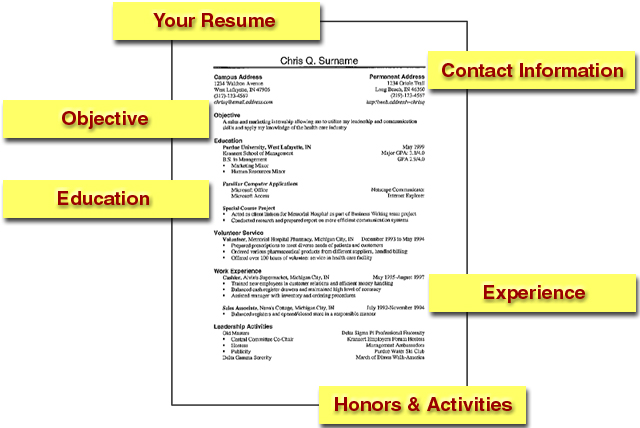
  • Do you need a resume? It depends.

    resumeRecently, Seth Godin made this statement on his blog.

    I think if you’re remarkable, amazing or just plain spectacular, you probably shouldn’t have a resume at all.

    The reason is simple. If you are really, really good at what you do [remarkable] the resume is just a formality. I’ve been on plenty of job hunts both from both perspectives and I know this to be true. When I’ve been looking for a job I have always translated “We have your resume and we’ll be reviewing it soon.” to mean “You aren’t our top choice, we’ll call you when the #1 person isn’t coming.” And when I’ve been looking to fill a position I have already talked to the best candidates before I start collecting resumes. Or worse, when I’ve started looking for resumes it means that I don’t know what I’m looking for exactly.

    What is a resume, anyway? It’s a self-marketing tool. That’s all it is. You are casting a light on yourself to highlight what you are good at and hide what you aren’t good at.

    Confession time. In both my ministry and my health insurance career I have been “lucky enough” to land on head hunters phone lists. What that means is that I have occasionally gotten calls from people whose job is to talk happy employees (me) out of their jobs to try a new business or ministry. [Trust me, I’m not going anywhere! 28 years left on the mortgage.] My response has always been the same two fold answer.

    1. “Why would I leave a place I’m happy with for a place that had to hire a head hunter to get someone?”
    2. “Why should I send you a resume when you’re calling me tells me “they” want me because you’re calling me out of the blue to try to talk me into leaving this job?”

    In that instance, my resume isn’t important. When a headhunter calls you, you are already in the drivers seat for that job. That’s a scary place to be but it is the truth of the situation.
    When is your resume important?

    1. When you are looking for an entry to mid-level job.
    2. When you are trying to get a first job in a new location or field.
    3. When you aren’t sure exactly what you want.
    4. When you are forced by circumstances to cast a wide net. (laid off, fired, or living in Michigan)

    When is your resume unimportant?

    1. When you’re not looking but get a call asking for it.
    2. When you’re a “known” entity in a job field or location.
    3. When the aggressor in the job search is the employer.

    If all three of those are true, you might as well send them a napkin with your phone number as you’re skipping the pre-screening phase and going right to the big interview.

    What do you think? What are your job searching tips?

  • Test Your Awareness

    I saw this on Seth’s blog, it is quite interesting.

    Seth relates it to advertising. The video relates it to driving. What are some things you’d relate it to?

  • Who vs. How Many

    That’s the question Seth Godin wants to know.

    helpAre your efforts at work, school, or church aimed at reaching the most people or at reaching specific individuals, audiences, or people groups?

    Some places require an egalitarian approach. (such as a public school) But in the church world there are two specific and important audiences… the lost need to be reached and the found need to be taught.

    What about in the business world? Are you more interested in keeping customers or reaching new customers?

  • Guest Dip Story: Tim Schmoyer

    dip_tim_schmoyerWhile in seminary in 2003 I served at a church plant outside Dallas, Texas that I thought was going to be the perfect church for me. It was new, full of young people, had a pretty outgoing pastor who held a Doctorate of Ministry in church leadership, and everyone had a burden for lost souls in the community. I went in to the position thinking, “Wow, this is the kind of church I could stay at forever, where all my ministry dreams can be fulfilled.” Everything started well. Kids were engaged, parents were welcoming, and unsaved students were giving their lives to Christ. How exciting!

    But within a couple months that excitement turned into resentment as many in the congregation, myself included, desperately wanted to leave the church. Many unhealthy things were taking place, but for me it was mainly three issues:

    1. Outreach is great, but not when it turns into a spiritual recruitment method for increasing church attendance.
    2. I can’t stand being the person adults come to for counseling because no one trusts the pastor.
    3. Being an employee does not make me a pawn to fill in all the cracks that volunteers in other parts of the church are leaving open.

    These issues and more began to build and build. Criticism began to build from the pastor that I was spending too much time teaching and not enough time reaching, especially as people started leaving the church. The more people left, the more I was expected to “recruit” and replace them with fresh blood. Furthermore, I was expected to fill in the ministry holes others were leaving behind just because I was paid staff and the pastor told me to do it as my boss. I soon dreaded Sunday mornings. I had to get there very early every morning and stay late to cover new responsibilities that had nothing to do with youth ministry or things I was slightly passionate about. It got worse as church members started sharing things with me followed by, “Oh, and please don’t tell any of this to Pastor.” I told them I couldn’t do that, but the people continued to put me in an awkward position between them and the pastor, which made our pastor envious and ruined our relationship even further.

    I often vented about the situation to one of my seminary professors that I met with every week. He advised me early to leave the church, something he usually advises against, but I loved the kids there so much that I couldn’t bring myself to leave them. Plus, I knew that if I left it would be a long time until another youth pastor would come for them. So I hung on despite my prof’s wisdom.

    Finally, one Sunday morning was the straw the broke the camel’s back. The pastor said something to me that made me so angry I almost went straight home to write my resignation letter, but because of the kids, I stayed through the service and wrote it later that afternoon. Unfortunately, three months later in 2004 the church closed their doors anyway and completely dissipated.

    The ministry dip was huge for me at this church. I started out on top of the world, sunk to having the weight of the church on my shoulders and then abandoned it altogether. I didn’t even start looking for a new ministry position until about a year later. But through the dip I learned a couple very valuable lessons that have significantly impacted my ministry involvement since then.

    1. Students ultimately belong to God. He will take care of them with or without me.
    2. Youth workers are not little helpers to fill holes in my ministry. I need to use them to serve where their God-given passion lies, even if I have to create new areas of ministry for it to happen. (More on that regarding this experience here)
    3. When interviewing for a new youth ministry position, I make SURE my values are aligned with both the church’s written and unwritten values.

    Tim Schmoyer is the blogger behind Life in Student Ministry, husband to Dana, and a youth pastor in Alexandria, Minnesota.

    Dip Series Headquarters

    Sponsored by: Raising Lazarus: A Fund for Hurting Youth Workers.

    Subscribe in a reader

    Subscribe to adammclane.com by Email

  • The Ministry Dip: Guest Blogger Series

    dip_hqHave you ever wondered why people quit ministry? Have you ever wondered why you haven’t quit yet? Have you ever been in the middle of a very important ministry project, one that you felt would make you or break you, and it broke you?

    If you have felt this way, than this series is for you.

    It doesn’t matter if you’re a youth ministry volunteer, a nursery worker, a church staff member, or even the Senior Pastor, we all experience the same struggle and ask ourselves the same question: Is this worth it?

    The Dip Principle: Recently I read Seth Godin’s book, “The Dip: A Little Book That Teaches You When to Quit,” and I was totally energized. Here’s a quick summary.

    When you start something new you are full of energy and ideas and the people around you are cheering you on… so a new task seems easy and is full of rewards. Then you hit The Dip.

    (more…)