
Category: youth ministry

  • Join us for Open Seattle

    I’m getting really pumped for Open Seattle next week. If you live in the Pacific Northwest we’d love to have you. Yesterday, we extended the regular registration deadline until next Monday– so you can still get in for $25!

    What’s Open Seattle?

    Open is an experiment. It’s asking the the youth ministry world the question… “What would happen if we completely flipped the script on a youth ministry training event?

    • What if a national organization gave leadership to local organizers?
    • What if front-line youth workers were favored in speaker selection over those on the speaking circuit?
    • What if we took chances instead of playing it safe on the stuff we present?
    • What if The Youth Cartel didn’t have to fly its name out front, but instead lifted up the names of its partners?
    • What if none of the speakers got paid? What if I didn’t have to get paid to help organize it… I just did it for a fair share?
    • Speaking of money, what if a local YM charity was benefited financially?
    • Heck, what if we just posted the full event budget online for anyone to see?
    • Why not record everything and then share all the sessions with the community on a central website… so no matter where you live you can have access to training resources and the freshest ideas out there on the ground?
    • What if we perfected the thing and just kind of open-sourced THE WHOLE THING so we can help people who have been to one organize one themselves?
    My hope for the answer to all of those questions is… I think that the best ideas will be given a voice. My hope is that when front-line youth workers get an opportunity to share what they know and even their big, crazy ideas with a group of people just like them… that it’ll spur on more ideas and spark new innovations with the net result that we’ll reach more teenagers with the Good News.

    So yes, it’s an experimental thing. Originally there was a lot of risk. It was really hard to explain the overall concept to the first few partners– Jeff at SPU, Brian Aaby at YouthMark, Mark Moder at Youth Dynamics. But as we kept talking about it this idea really took off. They made the idea even better.

    At this point in preparation– I’m not feeling this is as big a risk anymore. Actually, when I look at the people who are presenting and the folks who are coming I don’t see a lot of risk. Now I just see an awesome, affordable, innovative event. 

    We’ve got two tracks of learning. One is training, it’s full of great stuff as a refresher for the paid person and covering a lot of bases for your volunteers. The second track is all about ideas. It’s got some stuff in there that’ll cause you to scratch your head or write stuff down or just plain want to wrestle the speaker at the after party.

    For $25 You Get

    1. 16 sessions
    2. A free t-shirt
    3. The ability to say you were at the very first one of these. (We’ve got two more planned for this school year, one in Boston and one in Paris.)

    In 2013-2014 we hope to add 6 more of these as we beta test the concept… 4 more in the United States, 1 more in Europe, and 1 Lord willing, in Canada.

    I hope to see you next weekend on the campus of Seattle Pacific University. And if you can’t make it there, I hope to see you at an Open event soon.
  • Lead by Enabling

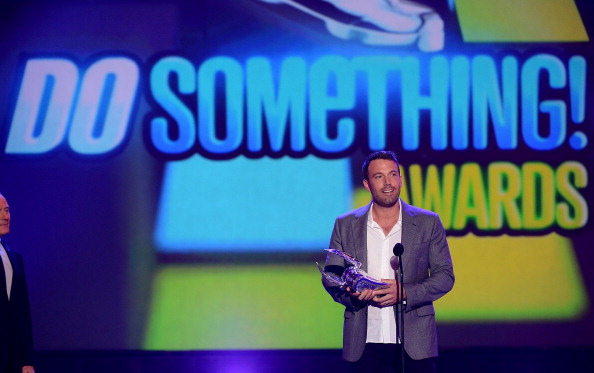
    Did you catch the Do Something Awards on VH1 last night? Wow. Wow! WOWowow! It was an explosion of fun, music, and celebration of teenagers who… are doing stuff in their communities.

    I’m relatively new to discovering DoSomething.org but the idea behind their organization is pretty simple. They help teenagers do stuff in their community. Here’s how they describe their mission:

    We love teens. They are creative, active, wired…and frustrated that our world is so messed up. DoSomething.org harnesses that awesome energy and unleashes it on causes teens care about. Almost every week, we launch a new national campaign. The call to action is always something that has a real impact and doesn’t require money, an adult, or a car. With a goal of 5 million active members by 2015, DoSomething.org is one of the largest organizations in the US for teens and social change.

    As a youth worker and person who thinks about new ways of ministering to youth all the time, I deeply resonate with that.

    They have made their job relatively simple. They encourage teenagers to do stuff without defining what “stuff” should be very much. This empowers their creativity and supports their capabilities. And they get out of the way. Then, for those who need a little more help, they set up national campaigns.

    What’s the role of adults? They tee things up and get out of the way!

    It’s power is clear. While not a religious organization or “youth ministry” in just a few short years, with a relatively small budget, they have activated millions of teenagers around the country… and their award show is broadcast nationally on VH1 packed full of celebrities celebrating the difference these teens are making. There’s power in their enabling methodology! 

    I’m really intriged by this model. Which is part of the reason Marko & I invited Naomi Hirabayashi to come and speak at The Summit. We have a lot to learn about not only massive impact, but also a model of leadership that gets out of the way. It’s so foreign to youth ministry and yet all Gospel-y and youth ministry-y at the same time. It reminds me so much of Jesus sending out his disciples into the villages. (Luke 10)

    As I watched their award show last night I loved that none of their “old people” appeared on stage. Their award show wasn’t a showcase of them, it was a showcase of their model of enabling and getting out of the way. They didn’t try to MC it, they didn’t accept any accolades. They just worked to put it on and got out of the way.

    Questions: What would your ministry look like if your primary job was to tee things up and get out of the way? Could you lead a microphone-less/platform-less ministry? 

    photo credit: Mark Davis/WireImage

  • When press releases attack

    funny-ad-vs-content

    (see the full-size version of this image)

    In my morning stroll of Google News about teenagers I picked up on this story. On Google News it was just plain text. But when I clicked the link to bookmark it… well, you can imagine my surprise! Clearly, it was a press release sent around in hopes that it’d get published in newspapers or other online sources. Um, I’m thinking they didn’t intend for their keywords to be paired with these ads.

    Talk about unintended consequences. Oops.

    Here’s a safer link to the same press release.

  • OpenYM.org – When my dream starts to become our dream

    It’s hard to put a finger on when Open started to become a dream. I can remember having conversations with Kristen in 2006 about the glass ceiling within the youth ministry world. The majority of the speaking/writing/training opportunities went to a relatively small group of people.

    Sadly, even though I’ve since joined the ranks as “one of those people” there still isn’t a true, mechanical and democratic, way for folks on the front lines of youth ministry to get their ideas heard. There is lots of desire within the youth ministry world to hear from new voices. And there is lots of desire from folks doing ministry on the local level to share their ideas. But the path to connect those two groups has been fuzzy, at best.

    That’s really the genesis behind Open. How do we connect those two groups in a way that helps the whole community?

    That’s really been a dream of mine. When I talked about it I got a lot of nodding of the head and people would say, “Yeah, that’s really interesting.”

    It was my dream. And it wasn’t catching.

    Then last Fall something awesome happened. I started to talk to people about it who did more than nod their head. They’d stop me and go, “Hey, just a second. Let’s add ___ into this. This is exactly what we’re looking for.

    I put together a little white paper and started to shop it around to people who loved that conversation. And it spread.

    That idea has started to go from an idea that Adam had to an idea that many people in our tribe have.

    So here’s how it’s rolling out…

    Alpha test – Proof of concept

    In this phase, I’m very involved. It’s my baby and I’m helping at every step of the way to make sure that the first 3 Open events are what I’ve been dreaming about.

    Those first 3 locations are:

    I hope to see you at one of those 3 first ones. Of course, everything will be recorded and shared with the YM community on openym.org for those who can’t quite make it to an Alpha test city. (for free!) But it’s awesome to see people coming from all over to check it out, too!

    Beta test – Refine the concept

    With the 3 Alpha cities rolling… Later this fall I’ll start to get serious about the next 6 cities. My hope is to add 4 new cities in the United States, one Canadian city, and an additional non-North American city.

    I’m talking to folks in about 10 U.S. cities for what those 4 additional cities might be. Of course, I’m “open” to consider a bunch more. So if you’re in a metro area and are interested… let me know.

    The goal for the Beta phase is really to work out the bugs and start to get things into a plan that anyone can follow. My hope is that of those first 9 cities that most of them will keep rolling and birthing new Open’s all over.

    For instance, let’s say that some people from Portland come to Open Seattle and really dig it. So they come back with an eye on… “How do we do this in Portland to benefit our area?

    That’s the my dream becomes your dream moment, right? And that’s why we’re doing the next phase.

    Production – Out in the wild

    After the alpha and beta test phases are done in 2013, early 2014. My plan is to document all the how-to stuff and release Open to the youth ministry world as a free, open-source regional training event.

    So, just to be clear, if you’re interested in hosting Open _____ (your city) than you’d need to come to a couple of the Alpha/Beta test cities. Maybe come to one as an attendee or speaker, then come back to one as someone who wants to be a host… because if I know that I’ll make sure you see how the whole thing works! Then, as long as you’ve seen it and get the vibe of it, you can get approved to host one yourself and I’ll work with you to develop the partnerships, find the location, and help you promote it.

    This is fun

    I’m an idea guy. And I’m having fun watching as Open takes on a life of its own. It’s morphing, improving, and getting more awesome as it goes from a “me dream” to a “we dream.”

    What is it going to take to convert your dream to our dream? 

    photo credit: dreaming of cotton candy skies by K Nicoll via Flickr (Creative Commons)
  • What’s measurable in youth ministry?

    • Church attendance. (duh)
    • Program attendance. (double duh)
    • Baptism.
    • Renewal/reaffirmation of baptism vows.
    • Attend confirmation.
    • Complete confirmation.
    • Small group participation.
    • Program participation.
    • Content retention.
    • Content progression.
    • Content application.
    • Becoming a volunteer.
    • Attending volunteer training.
    • Volunteer hours.
    • Bringing friends.
    • Bringing a Bible.
    • Bringing friends with a Bible.
    • Going on a mission trip.
    • Going on a service trip.
    • Creating a service opportunity.
    • Completing a service opportunity.
    • Recruiting friends for a service opportunity.
    • Fundraising for a service opportunity.
    • Joining a student leadership team.
    • Leading a student leadership team.
    • Youth ministry board participation.
    • Church board participation.
    • Finding a mentor.
    • Being a mentor.
    • Volunteering outside of the youth ministry.

    There are a lot of things in youth ministry which aren’t measurable. Standing alone,  these quantifiable things might not mean a lot because students can easily fake them or do them with no heart or impact on their relationship with Jesus.

    But that doesn’t mean you don’t measure stuff. You mix this quantifiable stuff with qualitative stuff to help you determine an individuals growth as well as the health of your entire group.

    For example, at my last ministry one of my assumptions was that a student would make the leap into adult involvement in our church if they had a place they called their own in the congregation. As a result, something I measured and moved our students towards was transitioning from high school ministry involvement to being part of an adult team. (Leading kids ministry stuff, helping on our main service team, participating in one of our mercy ministries, etc.) It was measurable and attainable and made a big difference.

  • How do you measure teenage maturity?

    News on teenagers consistently conflicts.

    • We are ecstatic about teenage Olympians. No one puts a teenage qualifier on their accomplishments, an Olympic medal is an Olympic medal, it doesn’t count for half a medal because someone is under 18.
    • Our laws define someone as an adult the moment they hit 18 while providing a completely different legal statute for people under 18. Yet neurologists and developmental/behavioral psychologists are proving that every adolescent matures are a different pace depending on a wide variety of variables. (Some inborn, some learned, some internal)

    The Love/Hate Relationship with our Nations Teenagers

    We have a love/hate relationship with teenagers. We love their accomplishments, we are disgusted when they fail. We are simultaneously infatuated and disgusted by teenage sexuality. Gasp, Justin Bieber has a girlfriend! OMG, I can’t believe she might be pregnant. Oh, I’m going to watch 2 hours of TV talking about it and tweet/Facebook about how disgusted I am… gimme, gimme, gimme more news on teenage sexuality! I’m not exaggerating all that much, am I?

    A 16 year old wins a gold medal and she’s on The Today Show. That girl is so mature for her age! (Succeeding at sports makes you mature) Her girlfriend, in the same school and grade gets pregnant? Oh, becoming a mother isn’t an accomplishment… that’s a statistic! She is SO STUPID! We might even make her go to a different school. 

    We (rightfully) decide things have to change when a teenager attempts suicide. But funding the school counselor or making sure her parents insurance covered her treatment before it was a suicide attempt? Well, common logic states, that’s really a parental issue.

    This continues on after 18, of course. Those who go to college– well, we give them a pass on being adults because they are students. And students can’t be expected to act like adults because they are students. So we allow college students a pass on being mature. In fact, walk around a college campus and you’ll see that “what’s cool” is to act like a 13 year old, fully fulfilled! (Think about it… a “cool college guy” is loud, obnoxious, gets drunk, sleeps around, avoids responsibility, and doesn’t take school all that seriously. There’s nothing mature about that– but college culture celebrates this as a fully embraces college lifestyle.) But someone doesn’t go to college? Well, they better get a job and fend for themselves. They are an adult now…

    So how do we measure maturity?

    The point of this post is to point out that our society gives many mixed messages about adolescent maturity. Science and common sense says that maturity isn’t an arbitrary age. It depends on a wide variety of factors. One person becomes and adult at 16 while another might not become an adult until 25.

    But we have an arbitrary line. Legally, and to a lesser extent culturally, a person is an adult at age 18.

    The Supreme Court has now affirmed that not all teenage criminals are the same, some can get life sentences for their crimes while others can’t, the courts are now allowed to look at other factors besides physical age to judge their ability to understand their crimes. This is a big step. 

    I suppose I’m wondering when we, those who work with students in schools, churches, and our neighborhoods, will begin to do the same?

  • Teenagers are incapable… until they aren’t

    Gabrielle Douglas is 16 years old. This week she won 2 gold medals at the London Olympic games. She will be a junior in high school this year.

    Missy Franklin is 17 years old. She also won 2 gold medals in London and owns 2 world records. She’s entering her senior year in high school.

    If you want to see a few more stories about teenagers in the Olympics, The New York Times has a page dedicated to the endeavor.

    The Capability vs. Expectations Gap

    As a lover of teenagers universal and an often observer of their amazing capabilities— I enjoy the irony that America will celebrate Gabby and Missy’s victories as if they were their own daughters…

    • We acknowledge their physical prowess.
    • We acknowledge their dedication.
    • We admire the grace at which they handle their athletic events and the pressure of the world stage.
    • We admire the maturity in their handling sudden fame.

    We each easily attribute downright adult descriptions on teenage Olympiads. 

    This is ironic because from a societal perspective we don’t expect teenagers to be capable of such adult-like qualities. I mean… they can’t possibly be adults at 15-16-17, can they?

    3 examples of this irony…

    Raise expectations, friends. Most teenagers can do just about everything you can do… maybe better than you can. Let’s not just celebrate teenagers who hoist gold medals, let’s celebrate the capabilities of the teenagers in our lives.

    And let’s kill agism, OK? Let’s judge people by what they can do instead.

    Discover what their coaches know: When you expect someone’s very best, you’ll get it. When you expect nothing, you’ll get it.  

  • The 48 Hour Self-Retreat – How to plan your Fall 2012 Ministry Strategy

    It’s August 1st. 

    For most youth ministries things really kick off in 30 days. That means in the next 30 days you need a publishable Fall calendar, you need to check in with all of your volunteers to make sure they are coming back, and you need to host a volunteer training meeting as well as schedule a parents meeting.

    Plus, you have all your normal day-to-day work. And you still have summer ministry stuff going.

    The Vortex of Doom

    Remember that feeling you had in May? The one that looked at what you were doing through a critical, tired eye? The one that said… “Gosh, this was pretty good but we can do a lot better.” The one that resolved to make 2012-2013 better?

    Remember how you were relieved to have made it through your annual review unscathed? You left that meeting with a sinking feeling that you probably bought another year before people start demanding “results.”

    And now you’re here. You have taken the time to evaluate the past year. You’ve taken a little time away from normality to get some perspective.

    And now there is a lot of temptation in your busyness to just do what you did last year with a few minor revisions and hope for different results.

    I call that the Vortex of Doom. The Vortex of Doom is that rushed feeling you feel right now, anxiety whispering in your ear… “You won’t be ready in time!” The Vortex has gravitational pull to “just get stuff done” and results in you not doing your very best.

    The Promise

    If you give into the Vortex of Doom every August and plan to do what you did last year, just a little bit different and just a little bit better, than don’t be surprised when you get to May 2013 and you:

    a. Feel worse than you did in May 2012…

    b. Get fired because you delivered the same results yet again…

    I promise you this. If you take 48 hours and re-evaluate your 2012-2013 plan right now… you’ll be thankful all year.

    If you do last years strategy with only minor changes you will not see a different result. Why? Because a bad strategy, wonderfully executed and fully funded, is still a bad strategy. Doing it again this year, with gusto, won’t change things. Investing in your past will never lead to your future.

    You work with teenagers… change has to be in your DNA to survive.

    The 48 Hour Self-Retreat

    Here’s one of my little secrets. While it’s really hard to get my team away for a planning retreat, it’s actually pretty simple to identify 2 full days of planning for myself. Then I can schedule some meetings with key leaders as part of my retreat, say have coffee or have them over for dinner, and they are participating in the planning retreat without even leaving home. (Or knowing they are on your retreat. BAM!)

    Tasks for the 48 Hour Self-Retreat

    1. Prayer. Spend an hour or so each day in silent prayer. I’ve found it useful to spend the first 30 minutes just listening and slowing down. Next, I like to spend the first day praying for all of my leaders and students. The second day is spent asking God for wisdom.
    2. Celebrate the victories. I’ve found it really useful to spend an hour or two celebrating what God has done in the previous year. What were wins? Who were the people impacted?
    3. Make some resolutions. What big things need to change? Maybe it’s your target demographic. Maybe it’s what students learn? I can’t answer that for you.
    4. Two-fold research. First, spend 2 hours doing a basic ethnography at 2 different places. Do observation, take notes, etc. (Here’s a link to how to do that.)
    5. Meet with 2-3 key volunteers to ideate. I like to get this to a point of asking, “What if” and “Wouldn’t it be cool if…” statements.
    6. Meet with 2-3 key student leaders to ideate. Same as above. Depending on your set-up you might even do t his with those adult leaders. A dinner is a good way to accomplish that.
    7. Meet with 2-3 “fringe students” to listen, dream, ideate. I actually like to meet with a couple groups of them. Those in the church who should be involved somehow but aren’t. And those truly on the fringe, maybe have visited a couple of times and you see at school, but aren’t engaged at all. Take them out for a coke or go to Dairy Queen… something simple like that works wonders.
    8. Spend a couple hours compiling all of this data, identifying the top 5 learnings. Do this before lunch on the second day.
    9. Have a “So now what” session. Go into a room with a big white board, chalk board, or butcher block paper and just start brainstorming ideas. Look at your data and your learnings and start saying… “So now what?” If you can gather your team for this, awesome. But seriously… this is one of the most critical parts of the process, otherwise you just learned a bunch of stuff but haven’t done anything with it.
    10. Identify 1 measurable difference for the coming school year. It’s not that you are only doing one new thing… it’s that you want to everyone to be able to clearly identify what that 1 thing is and recognize it when they see it. For example, last school year the ministry I volunteer with wanted to dramatically increase the “I know you” factor. So we changed a whole bunch of things so that the group interacted more, hung out more, and got to know one another. At the end of the school year we could all point to that and say.. “Yep, that’s way better.”

    So, how did it go? I’d love to hear how your 48-hour retreat went!  

  • Too old for games

    In act one of last week’s This American Life entitled, Amusement Parks, Ira Glass [America’s best preacher] spends time with Cole Lindbergh. Cole is the manager of the games department for an amusement park called Worlds of Fun in the Kansas City area.

    Cole is an amusement park management geek. His life revolves, wholly and completely, around the 30+ teenagers he manages all summer. His job is to supervise them as well as make sure that they bring in as much revenue for the games as humanly, legally possible.

    He does this by creating a culture of fun and competition. He only hires extroverts that thrive behind that annoying amusement park microphone. Then he pits them all against each other to motivate them, make it fun, and drive up sales. His teenage employees go all out to make as much money as possible, often working 12-13 hours per day. One employee interviewed was so into the competition that she forgot to take a break… for 13 hours. (Um, child labor laws anyone?)

    But near the end of the piece Cole got reflective. He’s 25 years old. He quit his last year of college for an opportunity for this job. His girlfriend says that the job is stressing their relationship to the point where she’s said that if he doesn’t finish school their relationship can’t move forward.

    But, internally, Cole faces a bigger problem. As a 25 year old supervisor he knows his days are numbered. He’s reached the pinnacle for being cool to teenagers. They do everything he says and love working for him, but he can feel it starting to slip away.

    The Creepy Divide

    Cole knows he is about to cross an age barrier from cool, 20-someething guy who loves to hang with high school students to… late 20-something guy who loves to hang with high school students. And he knows that’s creepy. 

    25 year olds should want to have 25 year old friends. And jobs that aren’t making music videos with teenagers. And his girlfriend wants to get married and have kids… and he knows that means giving up this silly job.

    Cole knows he’s too old for games. But he loves it and is afraid to give it up. He is afraid of what’s on the other side of the creepy divide.

    Crossing the Creepy Divide in Youth Ministry

    25 seems to be that age in youth ministry, too. Many readers of this blog are in their early 20’s, just getting started. They have no idea that pretty soon… inviting 6 girls over to make cookies for a bake sale is about to get creepy. Or having 6 guys meet you at a coffee shop for a bible study. Yeah, that’s creepy too. And playing dodgeball with 12 year olds? Creepy for a grown adult. (Until you hit about 50. Then it becomes bean grandpa in the face… which is always cool.) Have a small group over to play video games until 2 AM… that’s all creepy all the time when you are 32.

    Then again, maybe I’m alone in that? Maybe I feel creepy when I shouldn’t at all? Maybe I just suck as a youth worker and I need to get over feeling creepy, go buy something from [insert cool store name] and try to fit in?

    The Good News of Aging in Youth Ministry

    It’s not that you need to get out of youth ministry when you hit your mid-20s and beyond. It’s that the hang out factor needs to adapt. In fact, as you get a bit older in this thing you want to hang less and invest more. You have family and jobs and other responsibilities.

    It’s not that its bad or wrong to hang out with 16 year olds endlessly, for no real purpose. It’s that you aren’t cool anymore. It’s not cool for a 13 year old to chill at the youth pastors house, with his kids, for no reason for hours and hours. Just like it’d be creepy if your teenage daughter hung out with her softball coach, at his house, it’s creepy and looks weird just to hang.

    Instead… as you get older in this you feel less like you need to be friends with students. And you can focus on what’s really important.

    Is there hope for Cole?

    Maybe. He won’t like it. But if he wants to continue his career as the games manager at the amusement park, he’ll need to adapt his game.

    And if you’re in youth ministry and you are crossing that creepy divide. Adapt your game and stick it out another decade. It’s totally doable.

  • Kidnapping students and other dumb things NEVER to do in youth ministry

    Playing around in a church van is nearly as stupid as kidnapping studentsKidnapping Students? Really?

    Raise your right hand and repeat after me:

    I, [state your name], do solemnly swear, to never go to jail because of my role in youth ministry. So help me God. 

    Nothing in youth ministry is worth dying for. And nothing is worth going to jail for.

    Here is an easy-to-use list of things NEVER to do in youth ministry.

    1. Let’s start our list with the mock kidnapping students.

    A church and its youth pastor are now charged with false imprisonment and simple assault.

    They say they were trying to show an example of religious persecution, but the Dauphin County DA’s Office says what they did was a crime.

    The Dauphin County District Attorney’s Office said after a grand jury investigation, the Glad Tidings Assembly of God and its youth pastor, Andrew Jordan, both broke the law. source

    Don’t ever do that. Yes, I know people have been kidnapping students for years. But we also used to have youth ministry games called, “Guess her weight.” Just don’t do it.

    2. However tempting don’t ever screw around when transporting students.

    Don’t race, steal vehicles for fun, pretend to leave people at rest stops, swerve lanes, refuse to stop so people can pee, etc.

    Transporting students is one of those things we do in youth ministry so often that it’s easy to let your guard down and get silly. But it’s also one of the more dangerous things we do. It’s better to be boring than end up in a ditch.

    3. Flirting, teasing, seducing, pinching, grabbing, slapping… or any unnecessarily physical contact.

    Why does this even need to be said? Oh, I know why! Because any Google News search of “youth pastor arrested” yields case after case of a youth pastor sexually assaulting students in their care.

    Male or female, no one is exempt. We all have to be extra careful.

    I get it… youth ministry can be a sexually charged space. That’s why it is so important to screen volunteers, repeatedly train everyone who is in leadership, and to be vigilant in maintaining a safe place for teenagers to explore, create, and build a relationship with Jesus. It never starts with a 30 year old married man and a 16 year old student saying… “Hey, wanna have sex?” But it often starts with innocent, out-of-bounds contact that goes unchecked.

    4. Leading games & experiences you aren’t trained to do.

    Yeah, we didn’t think through that very well.” Well duh. That’s easy to say when you’re in the emergency room talking to a parent or a police officer. But you should really think about that before you play red rover with high school guys or try to lead students in a low ropes course when you don’t know what you’re doing. Broken arms, shoulders, and faces happen because you fail to mitigate the risk. That’s not taking the fun out of youth ministry, but it is taking the lawyers and insurance companies out of your planning meetings.

    Play smart.

    5. Teaching the Bible beyond your understanding or just flat out making stuff up.

    Oh, sweet Jesus! I can’t believe some of the crap that I’ve heard come out of people’s mouths. I can’t think of a nicer way to say it. If you have more title than theological training you better make up for it in study before you teach/preach/write curriculum. Why do you do commentary work? Why do you read what others are teaching on this topic? Because if you’re the only one seeing a passage of Scripture that way it’s probably because you’re wrong. Sometimes teachers get more excited about being creative than they do about being correct. Or they are so full of woo that they could convince a kitten they are a lion. Don’t teach heresy creatively or with gusto. Got it?

    There’s no shame in using a curriculum.

    6. Playing the anti-parent card.

    Adolescence is a time when its natural for students to separate from their parents. You’ll often hear, “I hate my mom/dad/grandma.” 

    Oh, what temptation. You know that you can use your influence and that adolescent angst to get a lot done.

    Don’t use that to your advantage. At the end of the day, your ministry is an extension to parents. Even if those parents aren’t following Jesus… the ten commandments don’t have an out-clause. The Bible doesn’t say, “Honor your youth pastor.” It says, “Honor your father and mother.” Don’t baptize students without parents permission. Don’t even allow them to come to youth group if you know the parent is against it.

    What am I missing? What would you add to this list of “Don’t ever do” advice? 

    Oh, let us add  “Kidnapping students” is dumb 5 more times to this list.