Category: youth ministry

  • Clips, the newest app for youth ministry

    One direction I think youth ministry resources need to go is mobile

    In the latest edition of Immerse Journal I have an article called “Technology Swiss Army Knives” that’s all about apps that help you spend less time in your office and more time with students. I’d actually like to see apps for youth ministry get to the point where we could ditch our offices altogether. It’s not like any of us went into youth ministry hoping to maintain office hours. More on this concept later…

    Clips is one of those apps that is a great resource for on-the-go youth workers, small group leaders… even parents.

    About the creator – RJ Grunewald

    It was created by one of my long-time youth ministry network guys from Detroit, RJ Grunewald. He’s a middle school pastor who fell in love with the iPhone and started dreaming about how to use his phone for ministry. Back in 2008, fiddling around after church, he created an app that farts. (Perfect for middle schoolers!) He submitted it to the iTunes store as the WhoopieCushion app and it blew up. (Get it, blew up?) I actually heard about it because RJ called me for some advice about starting a business. It was perfect timing because YS was just starting to think about apps for ministry, too. Long story short, RJ built the MyGuitar app and Tough Topics. (Both successful, but now retired.)

    What is Clips all about?

    It’s really simple. You’ll be mad you didn’t think of it. If you have a set of Videos that Teach in your office– this is an updated and mobile evolution of that. (I’ve bought at least five sets of Videos that Teach over the years, it’s my most stolen resource.)

    The app has a library of popular movies with amazing and powerful clips. The app suggests a clip and provides Bible-based discussion questions and some suggested Bible verses. You can search by movie name or topic. You can save things as favorites so you can come back to it, stuff like that. In a future version he’s opening it up to the community a bit more by allowing users to suggest clips to include in the app. But there’s enough there to last you quite a while.

    It’s a great idea. And for any youth worker who is an app junkie, it’s a must-have. It’s available now in the app store for $2.99.

    It’s a resource you’ll want to make sure is in the hands of your small group leaders and parents, too. Help them turn movie time into worthwhile discussion. Tip: Use the iTunes “gift this” button and you can send it to the youth workers in your ministry. If you need a raise… gift it to your senior pastor.

    Last thing, I love the fact that RJ owns Clips. So literally, buying this app is supporting RJ and encouraging him to not only make this app better, but to make more apps like it.

    Question 1: What’s your favorite movie for teaching students?

    Question 2: If you have the app, what do you think?

    Full-disclosure — RJ is a client of The Youth Cartel. 

  • Which Sasha is the new High School Pastor?

    My friend and co-worker, Sasha Morgan, is joining the student ministries team at Irving Bible Church in Dallas. (Hooray for a conservative church hiring a female high school pastor!)

    David Grant [her boss and an amazing dude I’ve grown to know, love, and respect greatly] asked Sasha to shoot a quick video introducing herself so he could show it on Sunday night. So Sasha borrowed my phone and shot her segment and emailed him. All from my phone and email address.

    And I smelled a prank coming.

    So I shot the video you see above and sent it to him as a joke. He thought it was funny. Then he showed it to his students on Sunday night. And then it was posted it on the churches blog. And then it went out in the churches email newsletter.

    Fantastical.

    And now you know that I have the worst Russian accent in the world, which progressively got more French towards the end.

  • Behind the Veil of Calling

    Illustration by Frits Ahlefeldt-Laurvig, HikingArtist.com – via Flickr (Creative Commons)

    I’m not a psychologist. Nor am I a sociologist. But I know my profession pretty well. And I know a ton of people in my profession.

    Why do we do what we do?

    It’s an important question. In many ways it is the only question that our students want to know the answer to.

    My intuition tells me that most of us have been trained that the right answer is, “I’m called to this. I couldn’t do anything else because it is who I am more than what I do.

    But behind that veil of the right answer– we find deeper, less correct, more driving motivations.

    • We want to see teenagers involved in the church.
    • We want them to steer clear of sex and drugs.
    • We want to help parents navigate the stormy waters of early & middle adolescence.
    • We want students to avoid the mess we got in; we want students to be the shining example we were in high school
    • We want to work at a church and this was the open door.
    • We want to be important in the lives of teenagers, we want to make a difference.
    • On and on…

    Not all motivations are equal in nobility. While most motivations seem pure not all are with merit. And some might actually be contributing to a new problem more than solving the problem youth ministry was created to solve.

    What are some examples of pure motivations which lead to ignoble motivations? If you work in a church or parachurch doing youth ministry– What are your points of contention with donors/supports/parrishners motivated to support your ministry with motivations that could be less than helpful?

  • The Big Picture of Parenting

    Original Cartoon published in Wall Street Journal (July 2008)

    Thinking about this– I know I have two huge handicaps.

    1. I didn’t grow up under “ideal circumstances” but I still turned out just fine.
    2. My own kids are only ten, almost eight, and five months.

    I’m not a parenting expert by any means. In fact, because I didn’t grow up with a strong relationship with my own dad (or any male whom I’d label a role model) I’m still learning how to dad.

    While I might not be there yet as a parent, and while I might not have the best native skills as a dad, I still have the power of observation.

    Here’s what I know from doing youth ministry and ministering to adolescents and their parents for my entire adult life: Parents who focus on the Big Picture have a higher success rate than parents who get lost in the daily battles.

    They win the battle but lose the war.

    What do I mean?

    Parents who are highly controlling, who don’t let their adolescent children experiment and find themselves in middle and high school, tend to see their children go wild in their 20s. The mistake seems to be that they focused on managing behaviors instead of trying to parent a teenager trying to figure out who they are. (The primary task of adolescent development.)

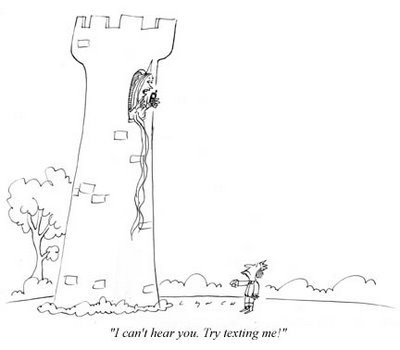
    So they freak when their 14 year old makes out with a girl at a dance. Or put them on lockdown when they try alcohol at a party at 12. Or force them to attend a church camp when they are 15 “to fix that nasty attitude.As if Repunzel-ing them were going to work.

    Sidenote: Isn’t the plot of every Disney movie a struggle to find ones self against the wishes of controlling parents? Ever wondered why those stories connect so strongly with adolescents? It’s powerful to them because it’s their life! 

    What’s the Big Picture?

    I like to look at my children with a long lens. What are the types of things I’d like them to be as adults? And then I work backwards.

    • I want them to be strong, independent thinkers. Not yes men. –> Arguing about things will be normal. Questions like “Why?”, my authority, and fairness are annoying, but fostering that.
    • I want them to enjoy simplicity. Reject the desire of plenty for the joys of saying no. –> While we live a pretty simple life, we allow them to experience luxuries. They want things, earn them, get them. In order to reject that stuff they’ll need to discover for themselves that there is no happiness in things.
    • I want them to have happy, healthy, and simple adult relationships. –> That means I can’t freak out about everything. They are going to like who they want to like. And they may make some mistakes along the way. But I don’t want them carrying around a daddy-phobia when they think about a partner. Is dad going to approve of this person? I want them to be happy. To have a healthy marriage. And to have simple adult relationships.
    • I want them to find pleasure in what they do. –> That means we want our kids to pursue their dreams for them, not ours. Not surprisingly, my kids are into nerdy things. (I mean, I’m kind of a nerd, right?) We’ve been open to letting the kids explore what they’re into. We exposed them to soccer early, I loved soccer growing up. But they hated it. So we didn’t force them to love it for us. Well beyond childhood we want to rally behind what they want to do vocationally. Sure, I have dreams for them. But their dreams for themselves are so much cooler than my dreams for them.
    What’s the Big Picture for Your Kids? Can you articulate it? And do you allow your Big Picture to overrule your cultural desires to over-parent?
  • Viva la Cartel!

    After three amazing years of working at Youth Specialties, it’s with a crazy concoction of sadness and excitement, that I’m sharing today that I’m leaving Youth Specialties to start a new venture. It’s impossible to put into words the emotions I felt just now as I wrote, then again as I rewrote, and over the past weeks as I’ve meditated on having to write those words. Truly, few jobs could have shaped, challenged, encouraged, and forced me to grow more than these past three years at YS.

    My hope is that I’ve received the gift which my time at YS was and it’ll act as a springboard for my next season in life.

    At the same time, from a different place of emotion, I am bouncing up and down with excitement for the opportunity I have to partner with my friend Marko (Mark Oestreicher) in launching The Youth Cartel.

    I told you it was a crazy concoction of emotions!

    My last day as an official YS staff person will be August 31st and I’ll start my new role with The Youth Cartel on September 1st. I’m still coming to both NYWC in San Diego & Atlanta as a seminar speaker, fish bowl moderator, and presenter in the multimedia area. So I hope to see you at convention! Likewise, with my new role, I’ll have more free time at convention to chat with fellow attendees instead of racing from thing to thing.

    First — A Look Inside My Head

    The last several months have been incredible. The Spirit has been at work in our house, shaking things up and reassuring us at the same time. He has used many people to speak bold unmistakeable truth to us. We’ve had deep, long conversations with trusted friends, and even remarks from others such as, “Maybe your just doing what you’re doing to learn?” Or “I feel like God wants you to dream bigger.” Or even, “We’re wondering just how serious you are about San Diego. Do you want to be here for a long time?

    Into those messages have come some close friends, acting as a discernment group, helping Kristen and I weave together what we needed to do vs. what our heart might have been telling us. In the last several weeks, as we really dug into this thing, that group of men helped me (specifically) see past my own expectations and limitations and get a plain view of what God was calling me to do. (I’ll have to write about the wisdom of plurality in decisions another day.)

    More important than even those outside voices has been the voice of Kristen. At every turn she’s been bold in telling me the truth. And when I said, “What do you think about this thing with Marko? A start-up is crazy.” She just looked at me and said, “It sounds crazy enough to be a lot of fun.” Yesterday I wrote a post about being bold and courageous. She lives that out better than anyone I know.

    Housekeeping, literally house-keeping. Unlike a lot of ministry moves this life-change means we are staying put in San Diego and have no intention of moving any time soon. I’ve re-upped my San Diego State football tickets and added men’s basketball, as well. I mean… what’s not to love about San Diego?

    Second — A Look Ahead

    Stoked isn’t quite the right word for what I feel about The Youth Cartel. Marko and I have continued to grow closer as friends over the past three years. Originally, I thought maybe God was asking me to start my own youth ministry organization. But as Marko and I shared our hopes and dreams for youth ministry it became abundantly clear we needed to work together. Our byline is “Instigating a Youth Ministry Revolution.” If you’ve ever been with me for more than 20 minutes you know that’s what I’m all about. This venture is all about finding and elevating new ideas, new voices, and a new era of youth ministry. It’s that “sharedness” that drew Marko and I together to do this. As I shared in the video, we have some cool stuff in the works. And I can’t wait to give my full attention to this in September.

    A fun sidenote: This is my second youth ministry start-up. My first, Youth Ministry Exchange, Marko led the way in buying from me in 2008.

    Third — A Look at the Big Picture

    What’s crazier than one start-up? Simultaneously running two start-ups. I’ll be sharing my time between The Youth Cartel and McLane Creative. To some degree, both organizations operate in very similar ways so it’s a natural compliment. I’ll continue growing McLane Creative with innovative design, marketing services, and coaching with my non-church clients. And all of my church/youth ministry related stuff will be part of The Youth Cartel. My hope, long-term, is that I can stay involved with both as they grow, with eventually handing over the day-to-day operations of the design firm to a protege`. (Or even one of my kids!)

    That’s my news. If you have questions, leave me a comment (public) or even use my contact page. (private)

  • 4 Ways We Hold High School Students Back

    Photo by Megan Ann via Flickr (Creative Commons)

    In reading Robert Epstein’s book, Teen 2.0, the one thing that fundamentally shifted my thinking is that adults lament about childish behavior while simultaneously funding and celebrating it.

    Politely, Epstein says we have infantalized our youth. Maybe we need to take it a step further? We treat our young like pets.

    4 Quick Examples to Illustrate that Point

    1. We spend bagillions of dollars on the Rule of Law and Regulation of Teenagers: In the last 40 years we have created an immense amount of laws aimed at regulating behavior of those under 18. We force them to go to school. We regulate where they can go when school is out. We regulate when they can be out. We tell them what they can wear. Who they can be with. What they can ingest or not ingest. Epstein did a study comparing inmates to high school students and found that men in prison have more freedoms. But magically, despite 18 years old not being a significant number in physical or emotional development, we have decided that those over 18 can do whatever they want.
    2. We Celebrate Low Expectations: We have removed adult expectations from high school students. They can’t be bothered to even get out of bed in the summer, right? Forget the fact that physically high school students are near the pinnacle of their strength and can outwork their parents. Forget the fact that the adolescent brain is mostly ready to tackle adulthood, ever seen what happens when a teenage son asks his mom to help him with his physics homework? And forget the fact that teenagers can do amazing things. (Like say, discover a cancer treatment for a high school science fair) Instead of ramping up expectations for them, in our wealth, we remove expectations of productivity. We even limit the ability to have expectations of our high school students. Instead, we slyly whine about our teenage children at home and what they won’t do. Or a post-college student who has moved home but can’t find the right job.
    3. We have an unlimited spending appetite for teenage sexuality: Think of how many billions of dollars are spent annually preventing teen pregnancy? BILLIONS! But not nearly as many billions as are spent celebrating adolescent sex in advertising, television, movies, etc. Our culture has an obsession with adolescent sexuality. It’s taboo. And that taboo drives our spending on both prevention and celebration. Since we’ve labeled high school students as children, this forces a label that their sexual activities as irresponsible. Meanwhile everything in pop culture celebrates adolescent virility and fertility. (Television, music, news media, movies, etc.) Physically, the average 16 year old is completely ready for sex. But if that 16 year old wants to have a serious, long-term relationship? Oh heck no! We need to prevent it. We argue that they aren’t emotionally ready for a sexual relationship. (Hypocritically, we were but deny that even happened. And our great-grandparents married at 16 and had our grandparents at 19. Today’s teen pregnancy tragedy was yesterday’s normal sexual expectation.) Meanwhile, our Christian constructions argue for waiting until marriage… something which we’ve delayed almost 10 years on average in just 100 years! The average first marriage for a woman in the U.S. is now 26.5 years old.
    4. We Spend a Lot Keeping Teenagers Out of the Workplace: Up until the Great Depression most adolescents didn’t finish high school and entered the trades, farming, or a factory to work full-time. For the most part that is now illegal. We’ve regulated the types of and length of employment adolescents can participate in. We’ve created a false expectation that every student should go to college. (A notion our economy cannot support.) But we’ve created a multi-trillion dollar industry called compulsory high school we can’t bear to let go of or adjust in all of its disfunction. Instead, we now expect that students won’t go to work, earn money for their families, or otherwise contribute because they will perpetually get education for things they don’t want to study. We expect them to consume. And we’ve created industries around entertaining them so they have something to do while not working or not learning. (Sports, video games, summer school, camps, etc.)

    Is it no wonder why this period of adolescence has extended from 4-5 years in the 1940s to 13-14 years today? 

    Maybe it is time we reverse this trend? Maybe we need to start by getting out of the way and allowing adolescents to become adults?

  • Swinging at the right guy

    Photo by Steve Hopkins via Flickr (Creative Commons)

    In 7th grade I ended up in the principle’s office because I got into a fight. Technically, I was trying to break it up and got punched. But, apparently to a 7th grade science teacher, getting punched meant I was in a fight and deserved to be suspended.

    Within 5 minutes the three of us were sitting in front of the assistant princple awaiting our judgement. Another 5 minutes and I’d be in class again. The student who started the fight just told it like it was, “I was meaning to hit Jeff but I hit Adam on accident, I hit the wrong guy. Sorry.

    Case dismissed. Hasta luego.

    A lot of people swing at the wrong guy

    • Failing in a class directs a student’s anger at the teacher instead of at his study habits.
    • An honest evaluation of your work makes you angry at the system judging you instead of your lack of results.
    • A spouse takes out the stress of their job on their loved one since they can’t stand up to their boss at work.
    • Your doctor tells you that you’re obese and need to change some habits, and you never go to that doctor again.

    This same principle carries into the youth ministry

    I can’t tell you how many times I’ve listened to a church staff member lament for 30 minutes or an hour about how much their boss or their board or their executive pastor doesn’t “get them” and that if they would just see it from their perspective they’d see that you really are doing the right things. Or that the church is measuring the wrong things.

    My response? You’re swinging at the wrong guy.
    • Maybe you’re measuring greatness with a different ruler than they are?
    • Maybe they get you better than you get yourself and see you underperforming?
    • Maybe your pastor isn’t your enemy, he’s your greatest ally?
    Never shy away from an honest evaluation. I’d rather get an honest evaluation of my work than someone blowing smoke any day. You can always do better. And there will always be someone out there better than you to learn from.
    Never believe you aren’t in a fight. We all struggle against something. It’s part of what makes us human. It keeps us motivated and moving forward and innovative. There’s nothing wrong with being in the fight of your life.

    Just make sure you pick a fight with the right enemy.

    You’ll get a lot further, faster than punching the wrong enemy.

    • Failing at school? Fight your study habits.
    • Failing at work? Fight your work habits.
    • Having a conflict with your boss? Stand up for yourself.
    • Need to lose 20-30-100 pounds? Get mad at the donuts, not your doctor.
  • Behind the Scenes on this Year’s Top 20 List

    Today I published the YS list of top 20 bloggers in youth ministry. It’s the second year for publishing it (third year I’ve done it) and I’m really pleased with how it turned out.

    I thought it’d be cool to pass along some notes from the process:

    • Overall, there was exceptional growth this year. In 2010, the YS Blog was the clear #1. Statistically, it was well ahead of the pack. This year that same blog came in at #5. What happened is that the YS Blog was largely flat in growth, lost its lead, then got passed by 4 blogs to drop it to #5.
    • There were a few new entries to the top 20. Kenda Creasy Dean, Greg Stier, Terrace Crawford, Rethinking Youth Ministry, and Doug Fields are all new to the list in 2011.
    • At quick glance, you’ll notice few women, which continues to baffle me. With what I index, there is a ratio of 5 men for every female youth ministry blogger. What’s weird about that is that the field is typically evenly split with 50% men and 50% women. For now, Kenda Creasy Dean and Kara Powell (Fuller Youth Institute) are our female bloggers. (Kara does about half the blogging for FYI, Brad Griffin does the other half.)
    • Looking at the rankings with a 3 year lens, I’m actually pleased with how the formula works. It’s 66% publicly available stats and 33% an influence ranking. (Who knows where that other 1% goes!) If you’ll look year over year over year, it’s cool that there aren’t wild fluctuations.
    • This list is pretty democratic. I’ll index anyone whose blog is on youth ministry, is active, (posted in the last 60 days) and has some statistical value. (Like… more that 25 readers per day top get into the top 100.)
    • Unlike last year, where we saw a HUGE drop off between #5 and #6, there is no dropoff in the composite ranking. There’s no drop off in the index and that carries all the way to #50.
    • Speaking of the composite ranking. Josh Griffin barely held off Mark Oestreicher for #1 this year. I wasn’t sure who’d be #1 until I added the very last numbers.
    • 2012 is “game on.” I think anyone currently in the top 10 could make a run at the top spot next year. There’s even a couple between 11-20 who could make a run at it.
    • On a personal note, it’s really cool to see my blog creep up from #5 to #4. I’m no Tim Schmoyer. But I’m getting there!
    • Last thing, this is a labor of love. I love doing it. And I have seen how these rankings have been used in the past 2 years, so I know that while everyone feels a bit weird about ranking bloggers… it’s ultimately good for the genre of youth ministry blogs AND it’s good for the visibility of the field of youth ministry.
    Got questions? Leave me a comment.
  • The Sky is (not) Falling!

    I don’t know about you. But I’ve just about had it with people telling me that youth ministry is over.

    It’s not over.

    But it is changing.

    A brief look back at the history of youth ministry

    Examining youth ministry with a historical lens will allow you to see more clearly where we are and where things seem to be headed. For those who didn’t read Marko’s Youth Ministry 3.0, this is covered there pretty well.

    Era 0: Early ministries (1870s – 1940s) Before we really had adolescence we had ministries working with children and young adults. They have a legitimate claim to saying they started youth ministry. But their practices were dramatically different than we commonly see today. Some of these organizations still exist today… Christian Endeavor, Boy Scouts, Boys Brigade, YMCA, to name a few.

    Era 1: Parachurch dominance (1940s – 1960s) Younglife, Youth for Christ, and a few other ministries essentially invented the youth ministry practices we use today. The 3-fold youth group night of worship, games, and teaching came out of this. It’s important to point out that the catalyst for these ministries was first that adolescence as we know it today was born. And second that the church was horrible at responding to the needs of this emerging subculture.

    Era 2: Church dominance (1960s-2000s) The success of the parachurches eventually trickled into the church. In the mid-to-late 1960s churches began to hire Younglife/YFC staff to serve at the church and basically copycat what they were doing for the church without actually integrating with the church in a wholesale way. But as time has gone on youth ministry has trickled into the adult church. (Casual worship music, teaching styles, skits, media use… these are all inventions of church-based youth ministry that graduated into “big church.”) In fact, it’s the “big church” vs. youth group mentality that created the tension we are in now. Some places describe church-based youth group as an organizational island while others coined the phrase, the One-Eared Mickey Mouse. Either way… that tone and some recent research has lead to a lot of church-based youth workers in vocational trouble.

    Era 3: Missional dominance (2000s – ???) As I wrote about in January 2011, we are continuing to see a trend that big churches are getting bigger, little churches are getting missional, and medium-sized churches are feeling the pinch in the middle. But if you think about it all three are just getting missional and being more true to who they are. As churches (and parachurches) realize that the One-Eared Mickey Mouse isn’t helping young adults make the transition from adolescent faith to adult faith they are wrestling to discover how to best minister to the adolescents in their communities. This is leading to big churches getting better at what they do and growing numerically. Smaller ministries have realized that they can’t copy the methods of the big churches and have started to adapt adolescent faith development and evangelism into new ministries which meet the needs of the communities students.

    The sky isn’t falling on youth ministry

    I don’t want to minimize what many people are going through. It certainly feels like their sky is falling. One result of this transition is that a huge amount of long-term professional youth ministry staff people are losing their jobs.

    As the church dominance era is coming to an end there are lots and lots of people who vocationally left in the cold. So the sky feels like it is falling on them as churches (and parachurches) wrestle through the reality that they might need to do youth ministry differently. Unfortunately, when many church boards look at their one-eared Mickey Mouse, they see old Pastor Adam and his youth ministry department and decide that in order to shake things up… they are going to need new leadership.

    But you need to know that there is no less interest in youth ministry. In fact– there is much, much more church-wide.

    The exciting flip side of all of the tension/drama/pain is that we are in an incredible period of innovation, invention, soul-searching, research, and discovery in youth ministry as we all try to figure out, “What’s next?

  • The Parent Gap

    As a kid, my parents weren’t that involved in church. There was a time when half of my family had some friends in church and did some stuff around the church. But by and large I was the church-e-est of the bunch from about 5th grade until now.

    I think my reality as a high school student has peppered my entire career in youth ministry.

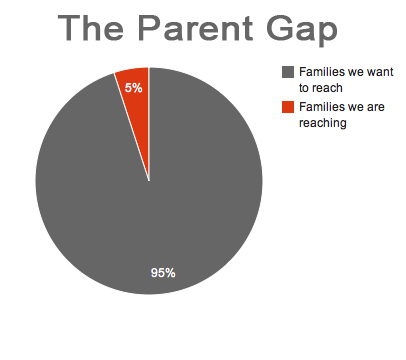
    • We are paid by, and charged to serve, the needs of 5% of the population who pay our salary.
    • We are called by, and charged by Jesus, to reach the 95% of the populations with our very lives. (Romans 12:1)

    It’s not truly an either or situation. It isn’t that you need to make a choice to only serve Christian families or only serve non-Christian families.

    Yet it is that you need to bear in mind that your youth ministry can’t assume that every family is like your “best” Christian families. My parents were actually very supportive of my church-life. They drove me to stuff. They paid for stuff. And even though they were only passively interested in the Christian life for themselves, they were highly appreciative that men and women were investing in my faith development.

    Ultimately, Christian families aren’t your primary target audience. God is holding them responsible for their faith development of their children. Research shows that the biggest influence on the faith development of a child growing up in a Christian home is the parent… not the church. (No matter how cool the youth pastor is.)

    How can we expect students who aren’t from Christian homes to bridge that gap and be a part of a ministry with constant parental involvement demands? That’s just not realistic.

    To reach more people we don’t need a new program. We need a new strategy.

    Questions:

    1. Am I just off my rocker here?
    2. What are some ways you’ve had success engaging the general parent population in your community?
    3. Do you see Christian parents in your ministry as those you serve or those you empower to reach their peers with the Gospel?
    4. How do you, as a youth pastor or youth ministry volunteer, hold Christian parents of teenagers accountable to their responsibilities in the home?