Category: youth ministry

  • Understanding & Reaching Wireless Students

    Whether you are a high school teacher, a high school pastor, or the parent of a high schooler we all have the same problem. How do we understand and reach the teenagers in front of us with messages that matter? 

    I’ve found that this lead in question is often the problem.

    1. We are a generation of adults who likes to talk and pretend to be experts on things we don’t understand, we over-assume.
    2. What matters to you isn’t necessarily something that matters to the students in your life.

    That said, there is plenty of research available which will help you better understand what’s important and how to reach those in high school right now. Why is there so much research done on this age group? Because bagillions of dollars in spending are influenced by them! (What? You thought researchers just liked them? Maybe so?)

    Here’s what’s on the menu for understanding those who just graduated high school:

    • Soup of the day – The Beloit Mindset List for the Class of 2015. We start things off by recognizing the world they have grown up with. They’ve never had a home phone, they’ve never dialed up the internet, they’ve never known a world without terrorist plots or going to the gate to pick up a friend at the airport. This list provides context.
    • Chef’s salad – The cost of college is on the forefront of their minds. Most high school students live with the adult assumption that they need to attend college. They are marketing savvy enough to ponder, “Do I need to go to college or do adults depend on me going to college?” They are asking good questions to count the cost like, “Is college right for me? Why do I want to go to college and spend all of that money if I don’t know what I want to do? Am I going to make enough money in the long run to afford the debt it will take to graduate?” This is why the gap year is so intriguing to them. (This is a massive opportunity for entrepreneurs)
    • Featured entree`5 Ways to Friend the Class of 2015. Research start-up Mr. Youth has published a powerful marketing whitepaper which dove deep into the forces that move them. The five ingredients of this dish include: Help them express their personal brand, Integrate organically into their world, Get in good with their friends, Become an on-demand brand, Get to know them before assuming what they want.
    • DessertMillennial Donors 2011 Executive Summary. Today’s students are motivated to change things. According to the second year study called Millennial Donors, 93% of those surveyed gave money to charity. 79% actively volunteered their time. But 90% of those surveyed said they would stop donating (time & money) if they didn’t trust the leadership.

    What does this have to do with my role in students lives? 

    • To reach students we have to understand what makes them tick instead of trying to get them to understand our point-of-view.
    • The world they have grown up in is vastly different from the one you grew up in. They already have a million adults in their lives that lecture to them, your best opportunity for reaching them is through listening.
    • Instead of asking students to get on your team you’ll need to help them see how your team and their team can collaborate. The concept of personal brand isn’t narcissism, it’s an opportunity.
    • Understand that a recommendation is their most powerful motivator. They simply won’t go somewhere or do something that’s not recommended to them.
    • They are hard-wired to give back, volunteer, and contribute their fair share. But the key component is trust. If you aren’t transparent and honest they will just move on.
    Do you work with high school students? Do you agree or disagree with what I’ve pointed out? What are areas you’d like to explore more? How could this research impact your day-to-day interactions with high schoolers? 
  • Desert Man Trip

    I’ve been around a few types of “manly men” in my lifetime.

    1. Dude’s who hang out at country clubs, play sophisticated sports, and have sophisticated tastes.
    2. Dude’s who smoke big cigars, enjoy fine beverages, and gamble big bucks. (Either gambling or on business deals)
    3. Dude’s who shot guns, kill things, and could live for months self-sustained from things in their garage.
    Not a good place to sit

    I wouldn’t consider myself firmly in any of those camps. And I’d hardly consider myself a manly man. I’m more of a floater man who likes all of those things but never enough to go all in.

    This past weekend I spent 3 days with group #3 while serving at the Encounter mens retreat. All told there were 57 young and fully grown men in the desert for 3 days of playing hard, eating good, and playing with fire. (Bonfires, flame-throwers, explosions, shooting range, paintball, and more explosions.)

    As we were packing up I told Brian… “This is clearly the most red neck thing I’ve ever done.” I’m a city slicker whose idea of country boy is a bike rack on his car. I’m not really a big fan of guns– much less teaching young men how to shoot them. There was lots of irony in that I spent the last three years in an urban high school ministry trying to show young men that loving Jesus meant putting guns down (gangs) and now we were going to do just the opposite.

    I had convinced myself to come into the weekend with an open mind. I have huge respect for Brian- a top 5 nominee for the brightest youth ministry veteran I’ve ever rubbed shoulders with. On top of that Encounter is a ministry to high school students in East County of San Diego. (For those not familiar with San Diego, anything east of La Mesa is referred to as “East County.” East County San Diego bears more reflection on ranching than it does big city. If we go 10 miles from our house you quickly get into horse, cactus, and big pick-up truck people.)

    This kind of trip made me nervous from a city slicker perspective but was completely culturally relevant to the young men Encounter ministers to.

    To the desert

    Getting stuck on the way in

    We drove out to Ocotillo and quickly got off paved roads and into the back country. (Map) Just getting back to the canyon was an adventure. We got there about 30 minutes before it got dark and quickly established camp. You can’t even call this area a campsite as it was completely undeveloped. (No electricity, no cell services, no water, no toilets… just a cool canyon in the desert.)

    It’s all about the content

    In reality, while this trip is über manly man it really is a youth group retreat about calling these young men to follow Christ. Our culture does it’s best to emasculate young men and treat them like boys. This was a wake up call for them that becoming a man is up to them. We are ready to look at them as men… maybe the first time they were told that?

    The content for the weekend was wrapped up around this central thought: You are dangerous and you can use that danger for good or evil. Topically, we reenforced that with lessons (and sweet object lessons!) about danger, their mouth, sexual purity, their choices, and perspective. It was a great chance for them to wrestle with the reality of their personal decisions.

    It’s all about being hands on

    Where is Starbucks?
    Where is Starbucks?

    We live in a world where we are in community only when we choose to be in community. Moreover, we can walk away from anything that makes us uncomfortable. While that is safe and lawsuit conscious it is leading to the neurosis of a generation.

    God never intended us to be lone wolves, the enemy did. (Look at Genesis 3, it’s always been a divide and conquer strategy) Satan builds strongholds as we delve further and further into isolation. We don’t think our actions have consequences. We want to talk about blowing things up but not the people who are harmed. We want to say nasty things to other people through a video game. We want to look at pornography and pretend that doesn’t hurt anyone. We want to focus on our friends and not our community. On and on, culture pushes us into being alone while God calls us to something more complete.

    Isolation is the enemy of communion. Jesus’ call for communion was never a call for individuals to come to Jesus as individuals on their own terms. That’s a perversion of our individualistic culture. Faith that lasts is almost never “just Jesus and me.” Our culture lies about that, our church culture lies about that, and youth ministry (too often) preaches that.

    Sharing communion in community under the hoppa

    So 57 men of all ages went to the desert for an encounter with Jesus. To be communal, to live in commune, and to commune with their Creator.

    My prayer is that as we shot, burned, and blew things up that those were symbols of the battle against the enemy. Three days per year of communion is not enough. I hope that for some of those young men they walk in communion with one another, in rejection of individualism, for the rest of their lives.

  • Inside out youth ministry

    A couple Sunday’s ago our senior pastor, Ed Noble, was talking about the inside out revolution underway at Journey. He gave an example about an area of the property where the church used to meet weekly for a big, family dinner. Now that space is used to run a food pantry for families in our community.

    It’s not that the big family dinner thing was bad. Quite the opposite. For where the church was at it was just what was needed. A lot of good was done in that room over those meals. The fact that the room is now used for a food pantry is not a more noble use of the space– it’s just a strategy that reflects both the needs of the community and the heart of the congregation and where we are at today.

    When Ed gave that example it got me thinking about youth ministry. Because, to oversimplify and generalize, youth ministry is typically a “come and get” kind of thing. (Like the family dinners) Volunteers come to serve students who show up. And the church puts on the program because they feel like it’s ultimately good for the church. It’s good, it’s noble, it serves a purpose.

    But what would it look like if we turned our ministries inside out? 

    What would it look like if youth ministry in the local church weren’t seen through the lens of “what’s good for the church” and was built around “what’s good for students needs in this community?

    That’s no indictment on how we do ministry or even challenging the assumptions upon which our profession is built.

    That’s turning the coin over and asking, “How could this same space, same staff, same budget serve 95% of the population of students in this community alongside of the 5% who currently are engaged?

    If we believe the Gospel of Jesus Christ is for all students– what should that change what we do?

    The church is a hospital for sinners, not a museum for saints.” We all nod our heads in agreement. But what would it look like for youth ministry to truly embrace that?

  • Free their minds…

    Free their minds… and their hearts will follow. (Sorry En Vogure, I changed it.)

    Is the primary task of my ministry to cram as much of what I know into their heads or is it to teach them how to think? Rhetorical, right?

    Wrong. My actions say the former while my brain says the latter.

    Think about the typical day of your students as it relates to adults.

    • Early morning: An adult tells them to get out of bed and get ready for school. (Either by word or edict)
    • Morning: A parent tells them to get in the car, get out of the car, to have a good day, etc. If they ride the bus they might make a couple words of small talk.
    • School: Adults are largely in charge of the classroom and do most of the talking.
    • Between class time: Students cram a few minutes of conversation with friends as they dash from place to place. (Adults dictate the parameters of this.)
    • After school: Coaches instruct, students listen and obey.
    • Home:Have you done you homework? Your chores? How was your day? Tell me about….

    To overgeneralize, most interaction students have with adults is either structured or adults talk at students. They are almost always put in a position of learner or otherwise lack power.

    We would all say that they have power to own their faith. But are our interactions with our students validating that or putting them in a powerless position?

    It’s relatively rare that a student would have a conversation with an adult.

    It’s even more rare that a student would have a conversation with an adult where the adult does the majority of the listening and the student does most of the talking. (The adult in the lesser role while the student is in the power role.)

    Shaddup Already!

    As this Fall has ramped up and I’m starting to get to know my small group of guys my inner dialogue is, “You don’t need to talk at, just listen. Listen. LISTEN.

    The best thing I can pass along isn’t what I know. It’s how I think. I don’t care that the guys in my small group know what I know or have answers for everything we’re talking about. But I desperately want them to know how to find stuff out for themselves, to compare and contrast what people are saying, to not just grab wisdom for the sake of acquiring knowledge but actually discovering the source of wisdom.

    Sure, I want them to know what God’s Word says about this and that. But I really want them to know how to wrestle with things in a way that moves/changes them.

    Curate vs. Dictate

    I can’t do that if I do all the talking. I’m not helping them learn how to think critically if I tell them what I know. They will only grasp hold of their faith, truly own it, if they can articulate it for themselves. That means I am not in their lives to tell them the answers. I am there to teach them how to find the answers themselves. 

    My theory is that I need to talk less and less for them to think more and more. That means my job is less to provide answer and more to create questions. Which is good. Because I have lots of questions. And I’m really good at creating doubt.

  • California Dreaming

    The American dream was affirmed yesterday– at least for some California residents. For tens of thousands of children, brought here illegally as children by their parents, Jerry Brown’s signing of  the California Dream Act, was a symbol of hope that their state cares about them.

    Qualifying students, regardless of their immigration status, can now apply for state financial aid. This was part B of a two-part law, part A passed earlier this year which allowed students to apply for private loans & financial aid regardless of status.

    This is great, but it isn’t enough

    While I’m thrilled with this new state law it isn’t the Dream Act we need at the federal level.

    • Qualifying students still cannot apply for federal financial aid because they lack legal immigration status.
    • Republicans continue to block measures which would provide a pathway to citizenship or even permanent resident status for children brought here by their parents.
    • Since the majority of financial aid for college comes from the federal level, this is more support but not a level playing field.

    Why this matters to youth workers and the church

    • It’s a matter of justice: It’s an injustice that a person raised in this country, who goes to school right next to your children, does not have the same opportunities to succeed that your child does. For many of these students, they had no say in whether or not their parents brought them here. But they have gone through our educational system, learned the language, competed with native-speaking peers, and this is their country in every way… except the one that truly matters, full legal status/rights.
    • It’s a matter of fairness: You want to pay $.99 for a pound of tomatoes or $1.29 for ground beef? Do you really think that $7 t-shirt you are making for your retreat was made by workers making minimum wage? Of course not. We both know it. Your standard of living is subsidized off of the back’s of cheap labor. To block those workers children access to post-secondary education & a pathway to legal status is embracing a system of oppression.
    • It’s a matter of numbers: Whether your church recognizes it or not we are still a melting pot country. The Latino population (whom the Dream Act primarily benefits) is exploding! Some predictions show that nearly 30% of the US population will be of Latino origon by  2050. On top of that, the census bureau is predicting a massive shift towards youth in the coming years. Currently, there are 59 children per 100 people in the US. By 2025 this will be 72. So our country is getting younger and more Latino… quickly.
    • It’s a matter of strategy: Let’s talk turkey. Let’s say you could care less about the first 3 things I listed. (Justice, fairness, and numbers) Let’s say you’re so hung up on the fact that their parents brought these children here illegally that you don’t want to give them anything like legal status, equal protection under our laws, or equal access to the same education your children have. (e.g. Arizona & Alabama lawmakers) With the population quickly shifting to give numerical power to legal people of Latino origin… do you really want to have your church as one of the agencies who held them back? Do you think that’s a good long term strategy for your church?

    For my youth worker friends: Let’s be reminded that our role in our community isn’t just to work at our churches. We are in our communities to advocate for all teenagers in Jesus’ name. God isn’t interested in the immigration status of students in your ministry. He’s interested in their status with Himself.

    The King will reply, ‘Truly I tell you, whatever you did for one of the least of these brothers and sisters of mine, you did for me.’
    Matthew 25:40

  • What the &%#$? When did cussing become OK at youth group?

    Andrew Dice Clay
    Meet your new youth pastor, Andrew Dice Clay.

    Observation is one of my core skills in life. I notice things. Subtle and not-so-subtle shifts catch my attention. Then when I see them in several contexts over a period of time my brain starts to categorize them as emerging trends.

    So here is an emerging trend I’m seeing: It’s now OK to use the occasional cuss word in youth group. I’ve been called edgy or over-the-line my whole career for using terms like “crap” or “sucks” or “pissed off” in my lessons. But in the last 3-4 years? I’m starting to feel conservative in this department.

    I don’t mean the slip of a word when your shoe flies off and mashes some unsuspecting freshman in the face. I mean– it’s now seen as acceptable to drop a little salt & pepper in your talk to spice things up.

    Time out! Before you follow a link to my church website and label myself and Brian Berry as some sort of foul mouthed sailors– read the first paragraph carefully. This isn’t just happening in my youth group. It’s happening in lots of contexts over a long period of time. In other words– I’m seeing it everywhere I visit. (And if you know me personally you know I’m not opposed to the occasional naughty word.) So I’m not throwing my ministry under the bus here– we’re not doing anything I’m not observing all over.

    I did a retreat a few years back when a youth pastor, unabashedly, told a group of students to “shut the f&%$ up” when they were talking during the Bible study. I remember leading a mission trip in 2003 and camping near another youth group whom had brought a worship leader & speaker down with them. The worship leader mixed in Green Day songs into his set and didn’t edit the words. And the youth speaker used so many cuss words he got a letter from Eminem asking him to clean it up. OK, that’s an exaggeration. But you know what I mean. 

    Two sides of the coin

    1. That’s everything wrong about youth ministry today!  We fail to be different. We fail to create a safe place. On and on.
    2. That’s everything right about youth ministry today! We are using the vernacular of the day! We are majoring in the majors and letting the little stuff go.

    What do you think? Have you seen this trend? Is it something you are worried about? Or am I just being an old fuddy duddy? 

  • The Solid Rock, The Sinking Sand

    What do I see happening in youth ministry? I think this song sums up the conversations I’ve had with youth workers of the last 2-3 years.

    On Christ the Solid Rock, I Stand
    All other ground is sinking sand
    All other ground is sinking sand

     Things that have always worked, successes that we could always predict, and stability we could always enjoy are all gone. Kaput. Poof. Vanished.

    And so I meet wonderful, wounded, hopeful people and all they can say is, “I’m holding on to Christ, my Rock. But I’m standing in sinking sand. What is going on?

    Conversely— redemptively and mercifully— I run into ministries/individuals/organizations figuring it out and moving forward.

    Here’s four common threads I see gaining traction, whether articulated or unarticulated amongst these organizations finding success today.

    From transactional relationships to transformative community

    I don’t know how else to say it. But I think full-time, paid youth workers are at a disadvantage to their volunteering peers in many ways. Students are sophisticated, savvy, and motive-sensitive. It used to be that being a paid church staff member created instant trust. Now, for a multitude of reasons, being a pastor can be (though not always) a block for students. This was revealed to me in a conversation I had with a recent grad. She said, “There comes a point when you realize that outside of your parents every adult who ‘cares’ about me is paid to care about me.”

    People today are looking for long-term, transformative community. In a world where everything changes all the time we instinctively desire stability that is found in long-term community.

    From competitive to collaborative

    Individuals, organizations, and local ministries who are gaining traction are rejecting the competitive/high-power business-driven models and seeking collaborative relationships. This means anything from churches combining forces to create a community-wide youth ministry to youth ministry organizations putting aside their long-term differences for the sake of working together.

    There simply no place (or resources) for a competitive spirit when we are reaching so few people.

    From experts to innovators

    I don’t foresee us going back to a time when 1000s of people drooled over every word from an expert, writing notes furiously, and trying to wholesale implement their teachings.

    It seems almost silly to mention that this is the way it used to be. But this used to be the way it was! 

    Instead, I see people/organizations/ministries seeking inspiration from experts and contextualizing their learnings to innovate local solutions. Just like the Real Food Movement has people looking from national to local sources of food, youth workers are looking less at national experts and more towards local innovators.

    From sound bytes to application

    Isn’t it interesting that we have access to every bit of information we could ever want and yet we are reaching fewer people than ever in youth ministry?

    I’m not alone in this observation. People who are figuring it out and finding success are walking away from teaching styles which delivered “aha moments” and are focusing their attention on application. That’s not devaluing teaching the Bible. In fact, it’s refusing to just glance over the Bible without holding their ministries accountable for applying what God is teaching them.

    It’s no longer about pushing out the Gospel to whomever will listen. It’s about pulling people into the storyline of what God is doing and inviting them to accept their role.

    These are ways I’m seeing people find bedrock. What are ways you are seeing this? 

  • 3 Books Youth Workers Need to Buy this Fall

    Of all the books that are new this fall, here are three that I’m recommending you buy:

    Parents

    Sticky FiathSticky Faith: Everyday ideas to build lasting faith in your kids – Put together a 6-week parents discussion group with the parents in your youth group and work your way through Sticky Faith together. You don’t want to see students leave the church; parents don’t want to see that either. Kara Powell & Chap Clark put together an amazing study of 500 students and their transition from high school faith to college faith.  Sticky Faith shares their learnings plus robust ideas for helping reverse the trends their research revealed. Check out this article about Sticky Faith in yesterday’s Washington Post.

    Small Groups

    The Jesus Creed for StudentsThe Jesus Creed for Students – I loved Scot McKnight’s best seller The Jesus Creed. This is an excellent adaptation of that work for middle/high school small groups. Chris Folmsbee and Syler Thomas, two youth workers with years of experience, help students grasp what it means to love the Lord with everything and love their neighbors as themselves.

    Youth ministry strategy

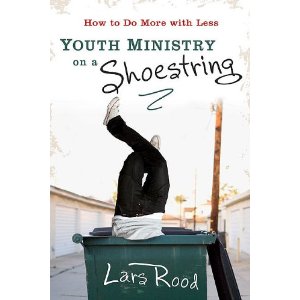
    Youth Ministry on a ShoestringYouth Ministry on a Shoestring – Let’s quickly have the chuckle. Yes– it’s a bit funny that the Lars Rood works at one of the most resourced churches in the world in one of the wealthiest communities in the world. What the title doesn’t convey is a fantastically freeing strategy: How to do amazing things for no, or almost no cost. Lars’ ministry strength is creating unforgettable experiences and moments in the lives of his students and he will share with you how to do that, generally at zero cost to your youth ministry budget. The back section of the book is full of real-life examples from youth workers around the country applying the strategy.

    Question: What’s your favorite new youth ministry resource?

  • 5 Minute Strategy Session: Define Your Ministry Goal

    Discussion questions:

    • Do you agree with the assumption that ministry programs have relational capacities?
    • Do you agree with the assumption that you need to grow or risk losing your job?
    • What are other strategies you could employ in the next 30 days which would impact adolescents in other spheres?

    Here’s the link to download my slides:  [download id=”19″]