Category: youth ministry

  • You need to get out more

    “Leaders are learners.”

    We’ve all heard this. And most people I know in youth ministry are very well read. They read a lot of books and attend a lot of training stuff.

    But I also think one reason people can’t think outside of the box to solve problems is that their context is so tiny. They only really know how to “do youth ministry” one way. Sometimes I’ll sit down at a conference or spend an hour on the phone with a friend and we’ll agree… their current strategy isn’t working. But they’d rather get fired than change.

    Why is that? 

    • Is it that they are stubborn? (No)
    • Is it that they are uneducated? (No)
    • Is it that they are dispassionate? (No)
    • Is it that they lack creativity? (No)
    • Is it that they lack the power to change things in their ministry? (No)

    It’s usually because they’ve only ever seen youth ministry done the way they do it. They grew up exposed to a style. They went to college or seminary and were fostered in that methodology. Then they got hired by churches who want them to run a program that same way. And they hang out with people who do ministry like them. And when they go to conferences, they go to conferences who do ministry just like them.

    You know the mantras— We do Sunday school and small groups. Or we do a midweek program. Or something like that.

    These are all viable methods. But there are TONS of other methods available in youth ministry. Chances are good that you never even took the time before you started the job to figure out, “Does the method I know even work in this context?” Oh no, we usually come at it the other way. “This method worked for me in another context, it’ll work here.

    It’s not a lack of learning holding them back. It’s the lack of contextualization, study, observation, and experimentation that’s killing you.

    You need to get out more

    If you want to consider this a profession, you need to expose yourself to a wide variety of methods. It’s like going to a doctor who only wants to cut people open. He might know there are other types of surgery out there, and he might have heard about some pills that you can take, but he’s really into cutting people open because that’s what he knows how to treat your problem.

    You wouldn’t go to that guy would you? He’s a 1-trick pony.

    But that’s how we roll in youth ministry. We have tribes of people who are 1-trick ponies. It’s not that they don’t know there are other methods out there. They just do what they do. We hide behind terminology like “primary giftedness” and other ways of self-convincing ourselves that we can only do ministry the way we grew up doing it.

    Learning that isn’t diverse in its approach isn’t really learning, it’s reinforcing what you already know.

    You need to get out more.

    If learning is a value and all you’re doing is reading books or going to conferences reinforcing what you already know, you’re not a learner. Spend some time observing other methods. Go visit other churches who aren’t like yours. Go see youth ministry in another culture. Make the time to do so. Set up some experiments. Create some brand new theories and test them out.

    Whatever you do. Don’t keep working on something you’ve proven doesn’t work in your context.

    That’s not professionalism, that’s insanity. 
  • Teenagers are Desperate for Good News

    One reason youth ministry is flatlining is crappy theology.

    Kara Powell, executive director of the Fuller Youth Institute, was recently interviewed by Relevant Magazine about the present reality that youth ministry presents a faith students easily walk away from in college. She was asked, “Do you think there are any misunderstandings or misconceptions that contribute to young adults leaving the church?”

    Her response:

    The students involved in our research definitely tended to view the Gospel as a list of dos and do-nots, a list of behaviors. We asked our students when they were college juniors, “How would you define what it really means to be a Christian?” and one out of three—and these were all youth group students—didn’t mention Jesus Christ in their answer; they mentioned behaviors.

    Source

    Allow me to translate that. Students are learning really crappy theology from their culture, their parents, and their churches.

    Is your Gospel even Good News?

    Here’s what I encounter when I talk to students in our ministry and even random students I talk to out on the street. They are desperate for Good News. They are looking for Good News. In their honest moments they are desperately searching for Good News. (From Jesus, Buddha, or Katy Perry)

    Their lives need Good News. Somewhere. Somehow. In some fashion… they are hard-wired for and looking for Good News. Why? Because their lives are surrounded by bad news. They need a Jesus who is real, who can help them, or their life isn’t going to get any better.

    If God doesn’t show up they are in trouble.

    And what do they get at a church? Not much. A 30 minute pep talk, some laughs, and some songs. Or, at best– a Christian version of Dr. Phil with an invitation to talk to someone after church.

    But a God who meets them where they are at? Or people who are willing to intervene? Nope. And forget about delivering anything that is actual Good News in their lives.

    I meet students who are struggling with stuff like this:

    • Have hurts I can’t talk to my mom about.
    • Hurts caused by a mom and dad who love themselves more than they love me.
    • Does anyone love me? Am I even worth loving?
    • Why isn’t my dad around?
    • Who the heck am I? What am I going to do with my life?
    • Sex is like a big rock rolling me over. I am so confused and hurt about sex.
    • I’m stuck in the same problems my parents are, can I break the cycle?
    • My family is late on the rent again. We can’t pay our bills and I feel like a big burdon on my parents.
    • I have big dreams but no one can help me get there.
    • I’m stuck in drug and alcohol abuse and I can’t talk  to an adult about it.
    • I’ve been molested by someone in my family and I can’t talk to anyone about it.

    These aren’t rarities. These are just below the surface for a majority of students I interact with. And the churches answer? Come to church. Listen to a message. Attend a Bible study.

    Is there any doubt why 95% of teenagers opt-out of that? They are saying, “I need Good News. I need Jesus to be real because I have no other options.” And the churches solution for everything is prayer, Bible study, and attending worship services?

    Really?

    That’s not Good News. That’s Good Behavior. 

    It’s inadequate. It’s a failure. And it’s certainly not the Jesus they encounter when they read the Bible. You know–  the Jesus who was so desperate to help them that He gave His life for them. They want that Jesus and when He doesn’t show up at their church…

    They are leaving and I can’t blame them. 

    Teenagers desperately need a roaring lion Jesus who will come into their lives, protect them, and help them figure stuff out. They will give anything to a God big enough to do that. Instead they are presented with a smiling, carefree, half-empty suburban-friendly Jesus like substance which cares more about their surfacey behavior than the condition of their heart.

    It’s crappy theology. No pastor would admit to teaching it. But that’s what students are learning.

    And we arrogantly say we don’t need radical change? Hmph.

    Flatliners logic.

    Students are trying everything they can to find Good News! They need Jesus to help them with their real, physical problems. 

    Will your ministry be the one who steps up, gets messy, and points them to the messy, grimmy, grace-covered Good News of Jesus Christ that touches not just their soul but the sole of their feet?

    You want to flip the world upside down? Become Good News to a teenager.

    I spit this game 7 days per week. The easiest way you can support my blog is to subscribe via RSS or sign up for my email updatesIt’s real easy. Thanks for your support. 


  • Stay Crazy

    I can’t tell you how many times I’ve watched this video over the years. Maybe hundreds. It inspires me every time. 

    In youth ministry, Mike Yaconelli is our Steve Jobs.

    As I wrote earlier this week, we live at a time when youth ministry has flat-lined. The way we do youth ministry has failed to increase it’s impact either in the church or in our society. And that flat-lining has created a crossroads.

    • Why do I do what I do? 
    • Why do I invest so much time into these students? 
    • Am I investing in students the right way?
    • Am I making an impact at all? 

    These are the questions we ask ourselves at the crossroads. It’s natural. It’s good. You’re aren’t wrong for thinking these thoughts.

    My hope is that when we get to these crossroads we don’t double down on strategies we know don’t work. My hope is that we don’t quit and suddenly feel called to church planting or selling life insurance. My hope is that we don’t give up on the church for she is the bride of Christ.

    Instead, my hope is that we look at the reality we are in, look both ways at the crossroads… and say “Woohoo! Let’s figure out how some new ways to keep loving on God’s kids!

    Stay crazy, my friends. 

    Let’s be blog friends. Subscribing via RSS or getting my daily email updates.

  • Youth Ministry is Flatlining

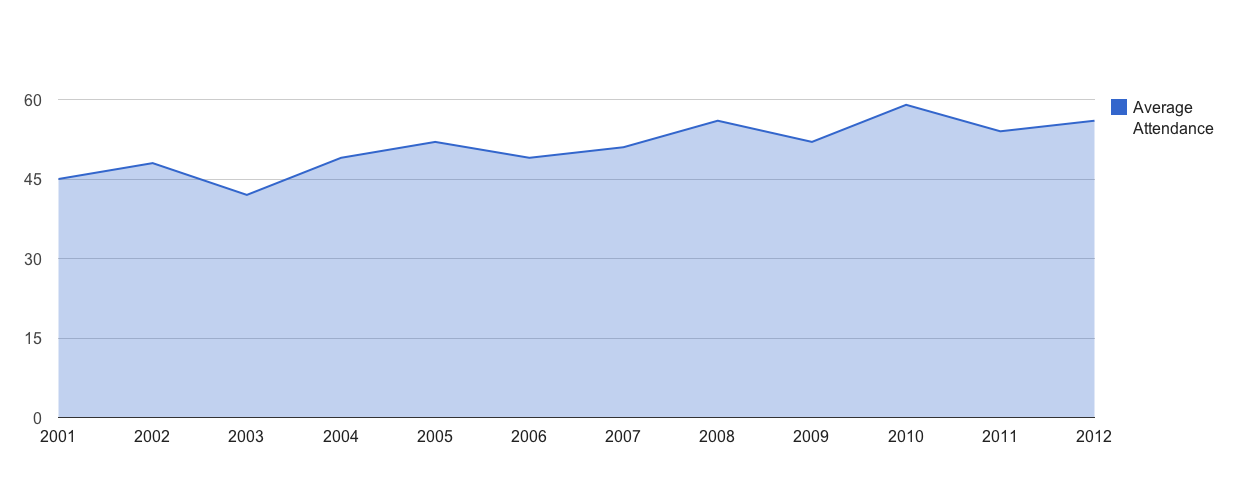
    If I were to plot out the average youth ministry attendance in a local church this is probably what it would look like.

    So when I say, “The way you are doing ministry is failing to reach students. It’s not you, it’s your strategy.” Youth workers look at me and say, “No, that’s not true. We are actually reaching more students than we were 10 years ago with less budget.

    And from their vantage point, looking at that one view of the population of adolescents in their community, they could be right. They are reaching 10-15% more students than they were 10 years ago.

    Flatlined growth

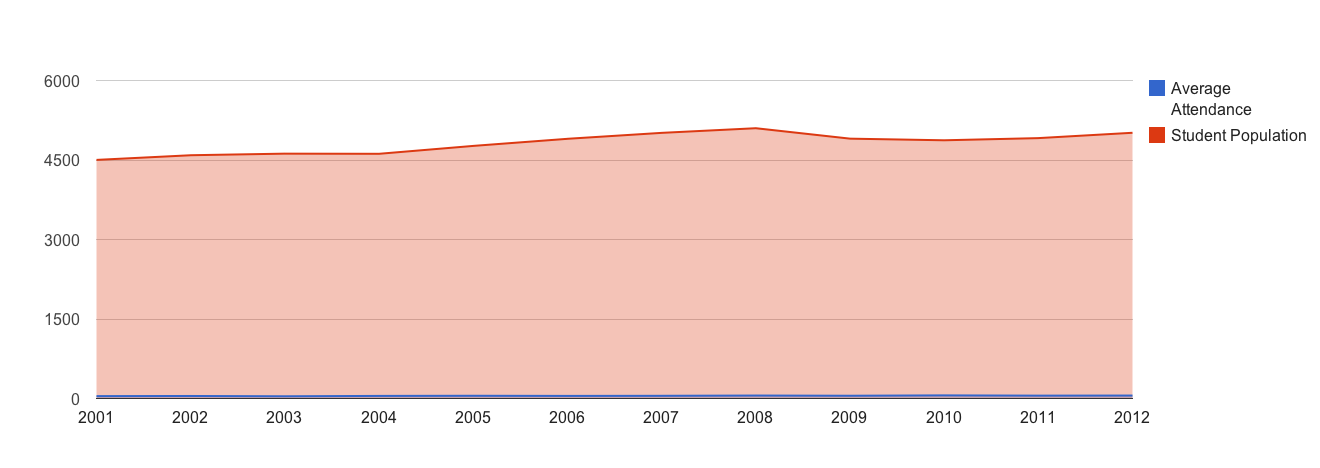
    However, when you compare students engaged in youth ministry to the overall student population in your school district it looks a lot like this.

    This is what I mean by “you are failing to reach students with the programs you currently offer.

    Statistically speaking you are flatlined. (As in– no heart beat!) You’re reaching just about the same percentage of people you’ve always reached. That may be OK from a church politics situation but I’m not sure I’m OK with that from a theological position.

    And I’m positive that this flatlining has lead to the following problems in youth ministry over the last decade:

    • A general cynicism about youth ministry internally and externally.
    • A decrease in youth ministry staff and general budget funding.
    • An increase in expectations that new youth ministry staff grow the program immediately.
    • Lots of great youth workers moving on to other ministries or careers.
    • The rise of family ministry models designed to circle the wagons. (Historically, youth ministry existed for evangelism. Popular models today are primarily interested in keeping church families engaged.)

    Students are involved… just not in youth ministry

    According to this 1995 study, 79.9% of all high school students were involved in an after school activity. I know that this study is 17 years old– but we would all agree that that percentage likely hasn’t changed much in 20 years, correct? (Maybe +/- 10%)

    Every youth ministry strategy I know of is trying to wedge their way into this pie graph. They are looking for students, ultimately, to forego involvement in one of the programs at the school and invest in their program.

    After nearly 40 years of youth ministry we know that this isn’t going to happen. Even the best youth ministry program model might only wedge their way in there by 2-3% of total student involvement.

    A theologically appropriate number of students are not going to stop involvement in other things to get “fully engaged” in a local youth ministry program. And even if they did this it wouldn’t be a good strategy for continued growth, would it?

    It’s 2012. You have flatlined for the past decade. Are you ready to try a new strategy?

    This is why it is said: “Wake up, sleeper, rise from the dead, and Christ will shine on you.”

    Ephesians 5:14

    Stay tuned, subscribe via RSS or get my daily email. This year we are going to look at new youth ministry strategies that are breaking this model and reshaping the way students engage with Jesus. 

  • High schoolers passing in the night

    I volunteer with the high school ministry at my church. Each Wednesday night I help to lead a small group of high school guys. And each Sunday morning I am one of the adults trying to engage our students in some sort of meaningful conversation.

    Journey is of the size where you can successfully go for ages without ever actually talking to someone. And the high school group is much the same. I’d estimate weekly attendance to our weekend experience like this:

    • 50% regulars (They come on Sunday and Wednesday nearly every week)
    • 25% irregulars (They come on Sunday 1-3 times per month)
    • 25% who the heck are you? (They come every 6 weeks or are a one-time visitor)

    Journey is also the kind of place where you can grow as much or as little as you’d like as a leader. So we have students in many different areas of responsibility in the church. These are amazing young men and women who will make you turn your head 25 degrees to the right and say, “High schoolers can do that?

    Sunday morning is a expression of two students passing in the night.

    • Students for whom Christ is at the center, He is changing them and they are growing fast.
    • Students whom are checking out of their relationship with Jesus. As soon as their parents allow them, they’ll not come back.

    It’s this sad-hopeful spot in which I sit each Sunday. Both students are on a journey– hopefully towards Christ. One is taking the more direct, obvious and measurable path, while the other is from Missouri, the Show Me State. They may re-engage later in life. But until they have the opportunity to check some things out they aren’t ready to give their lives to this thing.

    I can see the unexpressed frustration on both ends of the spectrum. Those who are growing are looking at their peers and thinking, “When are you going to wake up?” And those who are looking to check out are thinking, “Why don’t you just shut up so I can get out of here?” It sometimes gets expressed through passive-aggression but it is most-often unspoken.

    But it’s that tension, two students passing in opposite directions, which you can feel in our high school ministry.

    Earlier in my ministry career I freaked out about this. I might have thought it was something we could correct. And I certainly would have thought it was something we needed to directly address. But as I’ve gotten a bit older (maybe wiser) I’ve learned that both types of students are on the same spiritual journey. Little I say and do can effect either of the groups. In the end, being loving and supportive and listening and respectful of their story is going to make way more impact.

    Question: Do you see this same phenomenon in your ministry? Are you actively addressing it or passively observing it?

  • Kick off the new year with CBEmini

    I’m kind of tired of hearing how biblically illiterate teenagers are today. 

    Ultimately, as spiritual leaders and parents dedicated to investing in those students, biblical illiteracy is on us. Our students don’t know the Bible because we’ve failed to teach them. (Guilty as charged) Worse yet, if students don’t have a love for God’s Word that’s reflecting on our own lack of love for the Bible.

    I’m happy to be a part of something that is changing that and helping people have a brand new relationship with the Bible.

    Marko and I worked with the folks at Biblica (International Bible Society) to create CBEmini.

    What is CBEmini? It’s a 9 day trip through Luke-Acts using The Books of the Bible. Basically, The Books of the Bible is the New Testament laid out like a chapter book. All the words are the same but the format is a lot more simple. No columns, no footnotes, no verse numbers… just the story of Jesus and the early church as Theophilus may have read in in the first century.

    CBEmini is a bit-sized version of the 8 week Community Bible Experience. Our hope is that if your students try the 9 day experience that they will want to continue. So far, in our beta testing, that’s exactly what has happened… people are continuing on because 9 days wasn’t enough. (You read that right– students want to read MORE of the Bible.)

    The format is simple. You get a PDF of Luke-Acts to print and students read it. You get together as a group a few times to talk about what you’re reading in more of a book club format than a typically Bible study. (You get a leaders guide, too.) And watch what happens as student read the Bible, really, for the first time. It’s really cool. 

    Over and over again we’ve heard students say… “It’s almost like I’m reading a story and not the Bible.” Or “I love reading this in the same way I read a good book… I just read until I get tired and put it down, then come back later.” Or “I never knew how good the Bible was at telling stories. Things fit together in ways I never saw before.

    I’m excited about this project because I can only imagine the movement that would be created if thousands of students fell in love with God’s story in the same way the connect to Harry Potter or Twilight. It’s not that students don’t like to read. They do! This tool just helps them read the Bible in a format that they can connect to.

    The best part? It’s totally free. How cool is that? 

    Here’s the punchline: Go sign-up now.

  • Sometimes You Have to Cheat the Church to do Ministry

    Let’s start with this reality. If you think ministering to teenagers is easy, simple, turnkey, low commitment, or something you can package into a program you are sunk. 

    That’s why I’d rather teach youth workers transferable principles than give them prescriptive solutions to the things that I talk about.

    Question: Adam, I just read your Immerse Journal article about re-embracing the priesthood of all believers and I don’t know where to start. Can you give me five action steps?

    Adam: No. Because if I give you what those 5 things are for your ministry that’s all you’ll hear and you will ignore what the article was challenging you to do… reject the preisthood of the staff and embrace the high trust, low control environment the New Testament teaches.

    I’m OK with ideas. And I’m OK with exploring case study. But giving you 3 quick things to try to get your students excited about their relationship with Jesus? It’s just not that easy.

    Entertainment vs. Transformational Ministry

    At this year’s National Youth Workers Convention I made an intentional, strategic decision about my time. As I hung out with my fellow youth workers between my seminars, at meet-ups, and so on I knew I wanted to get past the “nice to meet you and connect a face to a name” spot and talk about this concept of looking for philosophical, missiological solutions to the problems our ministry is facing. Maybe you don’t need a new small group curriculum? Maybe you don’t need a new worship display device or a new way to design t-shirts? I tried to guide these conversations to one of philosophy of ministry– maybe what you need isn’t a round of encouragement but and encouragement to stop working so hard on a strategy that makes you tired?

    At the same time I’m always careful to point this out. We know it’s not the church that is the problem. We know it’s not that the program is bad.

    It just isn’t enough. Jesus didn’t give his life so we could create religious organizations and programs to serve people interested in attending an institutionalized church and it’s programs.

    Jesus died for something so much bigger and better, didn’t he?

    Sometimes You Have to Cheat the Church to do Ministry

    A few years ago Andy Stanley shared a message at the Willow Creek Leadership Summit with the main point being about family. He said, “Sometimes you need to cheat the church for your family.

    Agreed. We all need to embrace the reality that our job is just a job and it can’t take over our life.

    Yet, as I meet more and more frustrated youth workers stuck in the reality that their employment is tied to running a program only 2%-5% of the general population is interested in, my encouragement becomes… “Maybe you need to cheat the church to do ministry?

    In other words: Maybe the solution to your frustration with your role running the program is to give it less of your time so you can redirect your time to reaching the lost in a missiologically appropriate way for your context?

  • Social media interaction with minors – Where do you draw the line?

    I have a column this week on Slant 33 about this very topic. Here’s some sound bytes.

    Youth ministry is dangerous. It will bring you into temptation. It’ll bring you face to face with your deepest fears and greatest annoyances. It’ll cause you to create policies and break them at the same time. Chances are, as you engage with students online, you’ll see all of that and a whole lot more. 

    Invitation is the dividing line in my eyes. I think that, as we engage with our students through social media, it has to be about permission. I know many of them say things in Facebook messages or chat that aren’t honoring to God. I know many of them have secret Tumblr accounts and private circles on Twitter and/or Google Plus. But I don’t want to force myself there without permission. I don’t think my role as a youth worker should come with expectations that I’m an FBI agent, cracking into their private spaces to discover what they really think. 

    First, I think your church leadership should wrestle through this question together. I know it sounds lame to think about drafting a policy, but there are both philosophy of ministry and legitimate liability concerns to think through. Most school districts do not allow teachers to socialize with students on Facebook. There is good logic there that is worth wrestling through as a staff. Whatever the policy is, it’ll take the staff team policing one another to enforce it. 

    Second, I think that when you do engage your students, you should do it through a ministry account and not your personal account. For instance, it’d be a good idea to create a Facebook page for your ministry or church and then interact with your students by using Facebook as a page. It’s a nuanced difference but an important one. It puts you in a position where you are obviously an agent of the ministry instead of the individual person. Because, at the end of the day, that is your role. Just like you attend a Friday night football game as a representative from the high school ministry, you engage with students online as a representative of a ministry.

    Read the rest (And Tash & Scott’s take on the same question!)

    What say you? 

  • Love is an Orientation DVD

    I’m proud to be a part of the youth ministry session of this project with Ginny Olson. Together we talk about ministering to LGBT students in your youth group, creating a safe environment, and bullying.

    You can pre-order the DVD curriculum from Amazon here.

  • POLL: Do you have to be paid to be considered a youth worker?

    Context: My last paycheck from a church as a full-time youth pastor came in May 2008. Since that time I’ve worked full-time at a youth ministry organization and volunteered through a local church youth ministry. (Technically, two organizations and two churches.)

    Every so often I hear from a youth worker, usually at a church, who says something like, “As a person who used to be a youth worker…” or “You’re a youth ministry influencer and not a youth worker anymore.

    That’s the context of this poll. It’s not just about me, though. Think about all of the people you know who used to be on staff at a ministry and are now in a different role. Are those people youth workers in your eyes? I’m trying to understand if you consider a youth worker to only be a paid person from a church/youth ministry organization… or do you define it wider than that?

    Be honest. The poll is anonymous.