• Thank You, Steve Jobs

    Here’s to the crazy ones.

    The ones who are crazy enough to think that they can change the world are the ones who do.

    More than just a technology or computer company. Steve Jobs taught a generation that by thinking differently, amazing things can happen.

    Whose got next?

  • What the &%#$? When did cussing become OK at youth group?

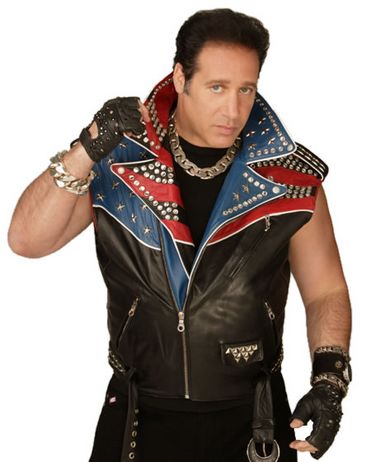
    Andrew Dice Clay
    Meet your new youth pastor, Andrew Dice Clay.

    Observation is one of my core skills in life. I notice things. Subtle and not-so-subtle shifts catch my attention. Then when I see them in several contexts over a period of time my brain starts to categorize them as emerging trends.

    So here is an emerging trend I’m seeing: It’s now OK to use the occasional cuss word in youth group. I’ve been called edgy or over-the-line my whole career for using terms like “crap” or “sucks” or “pissed off” in my lessons. But in the last 3-4 years? I’m starting to feel conservative in this department.

    I don’t mean the slip of a word when your shoe flies off and mashes some unsuspecting freshman in the face. I mean– it’s now seen as acceptable to drop a little salt & pepper in your talk to spice things up.

    Time out! Before you follow a link to my church website and label myself and Brian Berry as some sort of foul mouthed sailors– read the first paragraph carefully. This isn’t just happening in my youth group. It’s happening in lots of contexts over a long period of time. In other words– I’m seeing it everywhere I visit. (And if you know me personally you know I’m not opposed to the occasional naughty word.) So I’m not throwing my ministry under the bus here– we’re not doing anything I’m not observing all over.

    I did a retreat a few years back when a youth pastor, unabashedly, told a group of students to “shut the f&%$ up” when they were talking during the Bible study. I remember leading a mission trip in 2003 and camping near another youth group whom had brought a worship leader & speaker down with them. The worship leader mixed in Green Day songs into his set and didn’t edit the words. And the youth speaker used so many cuss words he got a letter from Eminem asking him to clean it up. OK, that’s an exaggeration. But you know what I mean. 

    Two sides of the coin

    1. That’s everything wrong about youth ministry today!  We fail to be different. We fail to create a safe place. On and on.
    2. That’s everything right about youth ministry today! We are using the vernacular of the day! We are majoring in the majors and letting the little stuff go.

    What do you think? Have you seen this trend? Is it something you are worried about? Or am I just being an old fuddy duddy? 

  • Consider it Joy!

    King James Knew Trials
    Oh wait, not this James. The other one knew a thing or two about turning daily trials into joy. This one was kind of the opposite.

    Consider it pure joy, my brothers and sisters, whenever you face trials of many kinds, because you know that the testing of your faith produces perseverance.

    James 1:2-3

    Twisted Life

    James knew what was up. 

    He knew that if you’d take walking with Jesus seriously, truly lead people, got past the fluff, and entered into the Christian life, trials would come. A life with Jesus isn’t the absence of trials.

    Instead, James says to look at the trials in your life with a twisted little smile. We know how this ends, right? We know that while minute-by-minute life might stink we can look at our tough times from a Kingdom timeline and know we’ll be OK.

    James doesn’t tell you to avoid trials. He says to put them in perspective because a trial is nothing but a workout for your perseverance muscle.

    I Choose Joy

    I’m not trial-less. Like James predicted trials indeed come my way. People who don’t really know me line up to ask, “Are you OK?” And secretly I think they want to see me squirm. They want to know that my faith is wavering because it might somehow give them permission to continue in their wobbly-kneed journey to the throne.

    But I choose to take James’ advice. I choose joy. Even when it’s not rational I choose joy. Odds stacked against me? Things aren’t going to go my way? Joy is a choice and not a foregone conclusion.

    It comes from inside of me. Joy flies in the face of despair, slaps it, and then gives despair a hug.

    I choose joy because Joy chose me. 

    Sticks-n-Stones Can Kiss My Butt

    I spent a lot of Monday licking my wounds from unkind things said to me over the weekend.

    Maybe I deserved it? Maybe I’ve offended some people? I can’t know why people make the choice to say something rude/sarcastic/passive-aggressive– then smile and walk away.

    I think to myself, “It was good seeing you, too. Thanks for being the mouthpiece of Satan.”

    You see, James helps me know that discouragement isn’t from the Lord. (Even if it comes from a fellow believer.) He says that things like this are going to come your way… but you need to choose joy through them because if you pass the test your faith will grow.

    When people say nasty things to me (or about me, which is somehow supposed to be better) I am reminded of Genesis 50:20. Joseph said to his wolf-like brothers, “You intended to harm me, but God intended it for good to accomplish what is now being done, the saving of many lives.”

    I’m no Hebrew scholar but I’m pretty sure Jospeh was saying… “You sold me as a slave and told dad I was killed. I should have you killed or just let you starve! I know everything you’ve said about me… kiss my butt. I’m going to bless you despite what you deserve.

    A faith-filled life isn’t the absence of trials. A faith-filled life comes when you are able to choose joy when trials come your way.

    For more joy, BRING IT ON!

    Here’s the truly twisted thing about this passage from James. Walking with Jesus isn’t about avoiding trials. It isn’t about operating your life in such a way that people don’t have nasty things to say about you or don’t want to take you out.

    As I read the Gospels and pastoral epistles I see Jesus imploring us to live a life of boldness. Paul says in Ephesians 5 to be light in dark places. We can’t be that until we pick up our lamp and go into the dark, scary places and change things!

    And changing things… walking in darkness to bring light… is going to bring about drama.

    Walking with Jesus in joy is telling trials to come on with it– because trials produce joy and faithfulness!

    I don’t know what’s going on in your life. But in my life? I’m choosing joy. 


  • The Solid Rock, The Sinking Sand

    What do I see happening in youth ministry? I think this song sums up the conversations I’ve had with youth workers of the last 2-3 years.

    On Christ the Solid Rock, I Stand
    All other ground is sinking sand
    All other ground is sinking sand

     Things that have always worked, successes that we could always predict, and stability we could always enjoy are all gone. Kaput. Poof. Vanished.

    And so I meet wonderful, wounded, hopeful people and all they can say is, “I’m holding on to Christ, my Rock. But I’m standing in sinking sand. What is going on?

    Conversely— redemptively and mercifully— I run into ministries/individuals/organizations figuring it out and moving forward.

    Here’s four common threads I see gaining traction, whether articulated or unarticulated amongst these organizations finding success today.

    From transactional relationships to transformative community

    I don’t know how else to say it. But I think full-time, paid youth workers are at a disadvantage to their volunteering peers in many ways. Students are sophisticated, savvy, and motive-sensitive. It used to be that being a paid church staff member created instant trust. Now, for a multitude of reasons, being a pastor can be (though not always) a block for students. This was revealed to me in a conversation I had with a recent grad. She said, “There comes a point when you realize that outside of your parents every adult who ‘cares’ about me is paid to care about me.”

    People today are looking for long-term, transformative community. In a world where everything changes all the time we instinctively desire stability that is found in long-term community.

    From competitive to collaborative

    Individuals, organizations, and local ministries who are gaining traction are rejecting the competitive/high-power business-driven models and seeking collaborative relationships. This means anything from churches combining forces to create a community-wide youth ministry to youth ministry organizations putting aside their long-term differences for the sake of working together.

    There simply no place (or resources) for a competitive spirit when we are reaching so few people.

    From experts to innovators

    I don’t foresee us going back to a time when 1000s of people drooled over every word from an expert, writing notes furiously, and trying to wholesale implement their teachings.

    It seems almost silly to mention that this is the way it used to be. But this used to be the way it was! 

    Instead, I see people/organizations/ministries seeking inspiration from experts and contextualizing their learnings to innovate local solutions. Just like the Real Food Movement has people looking from national to local sources of food, youth workers are looking less at national experts and more towards local innovators.

    From sound bytes to application

    Isn’t it interesting that we have access to every bit of information we could ever want and yet we are reaching fewer people than ever in youth ministry?

    I’m not alone in this observation. People who are figuring it out and finding success are walking away from teaching styles which delivered “aha moments” and are focusing their attention on application. That’s not devaluing teaching the Bible. In fact, it’s refusing to just glance over the Bible without holding their ministries accountable for applying what God is teaching them.

    It’s no longer about pushing out the Gospel to whomever will listen. It’s about pulling people into the storyline of what God is doing and inviting them to accept their role.

    These are ways I’m seeing people find bedrock. What are ways you are seeing this? 

  • Grip change

    As a high school golf coach sometimes you have to help your students make major changes to their golf game in order for them to improve. 

    Young, gifted, long-hitting golfers typically have a lot natural talent but have habitual bad technique. Maybe they are so flexible and have such amazing hand-eye coordination from baseball that they don’t have to take the club back at a consistent angle or keep their plant foot steady because they can instinctively make those corrections without even thinking about it at 115 miles per hour. By hitting thousands of balls on the range they have learned bad ways to hit the ball far. And their game is built on bad technique.

    Those bad habits have lead to them to hit the ball a million miles in every direction. But that distance matters so much that they are far better than their peers with better technique.

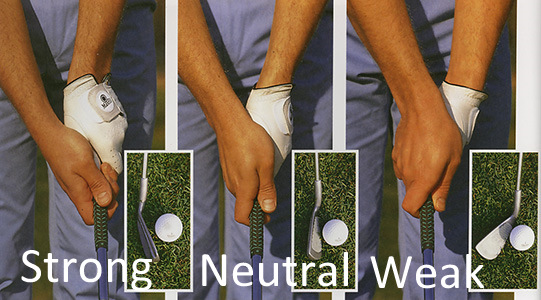
    The most common change you have to make is to the grip. Most typically young (right-handed) golfers have a strong right hand. (The left hand in the correct position, but the right hand is completely under the club, nearly useless on the backswing.) This allows most of their power to come from a strong left hand and the right hand whipping the club forward at the last second to generate maximum power and spin.

    As a result, they make the golf team on power, raw talent, and likely a decent touch around the green. And a very good freshmen will make the JV squad or even the varsity squad on this raw talent because they can muscle their way around the golf course.

    But as a coach you know that the strong right hand won’t take them consistently near par– a score which will secure them at the top level of the varsity. For 9 holes they might make it to the low 40s or the occasional 39. But to get down closer to par they are going to have to hit it straight more often and with a strong grip that will be impossible.

    So, in the middle of an active season their freshmen or sophomore year, you need to start working on their grip for their junior and senior year.

    It’s frustrating for the golfer because the change means they are less competitive. Their scores go from the low 40s to the high 40s or even into the 50s. (Scores they likely haven’t seen since 6th grade) They lose distance as they start swinging the club on a better plain, at a better angle, and the swing feels much less violent. The ball ends up places on the course they’ve never been before.

    Frustration sets in.

    And they start losing matches. Maybe falling from top of the JV squad down to the the freshmen team. Players they know they are more talented than start beating them.

    It’s a test of their self-discipline.

    Bobby Jones on GolfA grip or a swing change can take months of practice to master before it starts to pay off. It can take a lot longer if the golfer lets old habits sneak in to remain competitive. In front of the coach or on the range they will hold the club properly. But when they need to tee off on a par 5 they will switch the grip to try to power it down the fairway… and wild things begin to happen because they don’t feel natural in that swing anymore either.

    It might seem like a little thing but if you make a dramatic grip change you have to concentrate just to hit the ball squarely. I’ve even seen players completely whiff when you first introduce the change. What used to be instinctive and feel completely natural now feels completely foreign.

    As the coach you have to constantly encourage them during this change. “It will pay off. Don’t let old habits sneak in. It will feel more natural if you keep practicing it. You’ll be a better player if you stick to it.

    What you learn as a coach is that the difference between being good enough to make the team and good enough to make the all-conference team isn’t just talent. It’s the ability to practice correctly, stick to making hard changes, and to be coachable through those changes in order to realize your potential.

    Life is the same way

    A lot of my success has come because of bad habits. But, just like a young golfer, I’ve had to learn that those bad habits have plateaus for my success. I can be successful to-a-point with the talents I have. The hard reality is that most of my long-term success hasn’t just come from bad habits or talent– it’s come from working hard to get past bad habits, and intentionally taking some steps back in order to learn the skills and techniques to go 3 steps ahead.

    The same is true for you. The habits and skills you have today will only lead you to the success you know. In order to succeed further you’ll need to correct bad habits, rely less on talent and more on proven techniques. Most importantly you’ll need to remain coachable.

    Just like in golf, success is a mental game. You’ll need to push through the frustration of taking a step backwards in order to take 3 steps forward.

  • The Marin Foundation Featured on BBC

    1. Heart and Soul: God and Gays: Bridging the Gulf     

    To play the audio, click the play button

    I have huge respect and admiration for the work of Andrew Marin and The Marin Foundation. Their ministry is simple– build bridges between the LGBT community and the evangelical community.

    While Andy hasn’t been as active on the Christian speaking circuit as he was in 2008-2009, this year the influence of The Marin Foundation has stretched into high levels of government and education here in the US and around the world.

    Recently, Andrew was featured on BBC World Service show, Heart and Soul, all throughout the UK and around the world. In this 28 minute segment, you’ll hear from Andy, the history of The Marin Foundation, and their work in Chicago and around the world.

    Here’s the source for the audio.

  • The OTHER other side

    A priest happened to be going down the same road, and when he saw the man, he passed by on the other side. So too, a Levite, when he came to the place and saw him, passed by on the other side. But a Samaritan, as he traveled, came where the man was; and when he saw him, he took pity on him.Luke 10:31-33

    Sunday afternoon we left our campsite and intentionally turned the wrong way on highway 243. It’s a winding, scenic route that goes from Idylwild to Banning through the San Bernadino National Forest. Near the peak, at about 6000 feet above sea level, we spotted a vista point where we decided to stop for a picnic and take some pictures above the clouds.

    It was a perfect day and we were in high spirits exploring the rugged terrain of eastern Riverside County.

    I pulled over into the lonely turnoff parking lot and the McLane clan piled out of the car to scout a place for our impromptu meal. We raced out onto a giant patio in the sky and found a tree with some shade perfect for our intentions. The view was amazing and stretched far off into the horizon.

    Paul and I went back to the truck to grab our cooler.

    As I was pulling the cooler over the gate I heard the roar of a motorcycle engine coming up the hill. The driver downshifted which made the high performance engine whine a wheezing exhale, followed by the screech of tires. We turned our heads the other way as he flew by in a cloud of grey smoke. Then the bike dumped on its side and the rider skidded across the pavement, tumbling to a stop about 25 feet later. His shoe landed right next to us and his bike bounced off of the parking lot, over the curb, smashing into a concrete barrier before flying up into the bushes.

    I looked at Paul. Paul looked at me. “Did that just happen?

    He got up in a fit of cuss words. Throwing his gloves and ripping off his helmet. Kicking at and punching the air in anger. A few seconds later 5 of his friends on equally powerful, more prone, motorcycles pulled up. He was clearly not horrifically injured but in pain nonetheless.

    Dazed, bloodied, humbled, his excuses quickly turned into confession. He was going too fast, trying to show off, and now he was going to pay the price with his body & his precious bike.

    Not knowing what to do I picked up his shoe and walked it over to him.

    Um, here’s your shoe dude. You were pretty lucky to not go over that cliff. Are you OK?

    He didn’t really know if he was OK but told me he was fine. I gave him his shoe and started walking down the path to my family.

    When I saw Kristen I said, “Some idiot on a motorcycle dumped his bike in the parking lot. That was CRAZY!” Paul was stoked. He’d never seen anything like it. Neither had I. Neither one of us knew what to do with our nervous energy. It was terrifying and exhilarating at the same time.

    When I put the cooler down and opened it up I just couldn’t escape the reality that I should do something. How could I possibly see that accident and then a minute later sit down to eat a peanut butter & jelly sandwich with my family? What kind of man would do that?

    I guess I should go do some first aid. That dude is pretty banged up.

    I went back to the truck and dug out my first aid kit and some bottles of water. He and his friends were standing around not really knowing what to do. They shared some laughs and recalled what they had seen. One of them actually captured the whole thing on his GoPro and was joking about putting it on YouTube.

    Hey dude, I’m not a doctor but I do have a first aid kit. Want to clean up those cuts?

    And so it began. Before I knew Ryan’s name he dropped his pants and we started cleaning his road rash. His knee and thigh were scrapped up pretty bad. His shoulder bore the same fate.

    Do you think you could clean up my cuts, too? I fell a couple miles back.” Another young man walked up to me showing me his gnarly wrist, probably broken.

    Yeah, let’s clean that up. You don’t want to get it infected.” About two minutes later he too dropped his pants to show me his knee, oozing with blood and gravel. His damage was actually worse than the other guy. He said, “I’m supposed to work tomorrow. Do  you think I’ll be OK?

    I don’t know. But you should get an x-ray for your wrist and a couple of stitches… because I can see your knee cap.”

    For about 15 minutes I helped these two guys clean up their road rash. Some water to wash it off, some gauze to clean it out, some disinfectant, and more gauze taped over to keep it clean.

    We made small talk about motorcycling and their other accidents and the thrill of why they do it. I didn’t talk much, just listened to their stories and got them patched up. I told them I was sorry this had happened to them and hoped that they made it home OK. (His bike was totaled) A few more bottles of water for everyone and we parted ways.

    It just so happened that we stopped there. And it just so happened that I had a truck full of supplies from our first aid kit. Clearly, this moment had been orchestrated in advance, right?

    The Parable of the Good Samaritan and You

    Luke 10 is one of those passages that stinks to teach as a religious leader because as you’re teaching it you realize that you are the goat in the joke. Jesus sets up the story that the priest and the Levite mess it up while the outcast gets it right. His point is that religious people are often so worried about doing their religious things that they forget to love their neighbors as themselves.

    But when you are teaching it in front of people your minds rushes with times where you were exactly that priest or that Levite, too busy and self-important to do something so basic.

    It’s one of the most convicting passages of Scripture you’ll ever teach.

    For every 100 Ryan’s I encounter I only get it right 1 or 2 times. (And here I am writing about that one time I get it right to make a point? See what I mean? I’m such a hypocrite sometimes.)

    It wasn’t until later in the drive, with the accident miles behind us, that it sunk in.

    The religious leader who asked the question which started Jesus on his parable? I wonder if he changed? I wonder if the next time he saw someone injured on the side of the road if he stopped to help? I wonder if he made a conscious effort to stop being a religious snob and start being a person who actually cared about God’s people more than he cared about looking like he cared about God’s people?

    For self-reflection: How will I slow down from my “important religious stuff” enough to notice the man on Jericho’s road? And what am I going to do about Jericho’s road? (It’s a place where people get beat up while travelling.)

  • Three types of busyness

    The other day Doug Fields wrote about battling busyness in ministry and offered these 6 action steps.
    1. Declare war on busyness
    2. Go public
    3. Clean the piles
    4. Go to bed earlier
    5. Journal to find the “yes”
    6. Quit lying to yourself

    This is such a crucial topic. As I unpacked these action steps I sliced and diced a particular segment of the argument.

    Forgive the introspection. But I want to dive deeper. Specifically, I think there are three different types of busyness in my life.

    1. Seasonal busyness. When I was a youth pastor FT, that was September & December. September because we launched everything, December because it was Christmas and that’s always crazy in a church. Every type of career faces these… I think they are pretty normal.
    2. Legitimate busyness you just have to push through. This last season was like that for me. Summer 2011 will go down as my most busy ever. But it might also go down as the biggest season of blessing our family has ever experienced. God blessed our socks off for no good reason. It’s been my task just to keep up.
    3. Illegitimate busyness. Where I’m staying busy to hide from something else OR looking crazy busy so people think I’m important.

    As I peal back the onion one more layer and look at busyness types 1 & 2– Pride isn’t the right word for describing how I feel about these. But there’s a certain level of satisfaction in pushing through something and acknowledging hard work for what it is.

    Then there is #3. For me, that’s where the shame and accountability come into play because I can convince myself that I am so busy for such a good purpose. I’m thankful I have friends in my life who call my crap. I try to label 3 as 1 & 2 sometimes… but a true friend knows the difference and doesn’t let me get away with it.

    One thing I know about busyness. I hate when people start a conversation with: “I know you’re busy, but…” I always want to reply by saying, “I’m not hat busy, really.” But then I always wonder… “Why do I look so busy? What is it about my demeanor that makes people think I’m busy even if I’m not?

    What do you think? Are there legitimate and illegitimate types of busyness? Or am I just trying to slice/dice this to justify my behavior? 

  • Mini-Vacation

    Fried eggI’m fried.

    The past 4 months were exhilarating and exhausting at the same time. Here’s a summary of the stuff I’ve been up to.

    • We changed churches
    • I helped launched 2 businesses, mountains of paperwork and 27 trips to the bank, and hundreds of hours of “other crap.”
    • I wrapped up 3+ years of time with Youth Specialties, working like crazy to “finish strong.” (See the bullet point above, that’s a phrase I now don’t want to hear until 2025.)
    • McLane Creative launched 2-3 major sites for clients.
    • The Youth Cartel launched 3-4 major sites for clients.
    • I wrote several very important articles including the feature for the Nov/Dec edition of Immerse Journal.
    • I built new sites for McLane Creative, The Youth Cartel, my blog & Marko’s blog.
    • Started a whole slew of initiatives for The Youth Cartel
    • Put together tons and tons of proposals for The Youth Cartel & McLane Creative
    • Done initial work on the first major projects for these two businesses.
    • Found a new office.
    • Bought lots of really expensive software & hardware.
    • Gosh, I need a nap before I finish this list. There’s way more.

    The last 4 months have felt like a years worth of work– most of which I was consumed by having a full-time job at YS and  trying to do the rest at night.

    Normally we vacation for at least a week in the summer. But the summer of 2011 that didn’t happen.

    So we’re kicking off fall 2011 with a little mini-vacation, camping in the forests above Palm Springs.

    Our family has a rule that it’s not vacation if daddy brings a computer. So all of our electronics are staying home. Macbooks, iPads, Nintendo DSs… and I’m even turning off the email function on my phone. We’re disconnecting for a few days and heading for the hills to recupperate. And if this isn’t enough? We’ll do it again.

    My brain is on empty. My soul is weary. And I’m the kind of tired a good nights sleep won’t fix. We need to get away… and read, rest, play… do nothing.

    So that’s the deal.

    Friday morning we’re packing up a big ole` pick-em-up truck (thanks Brian!). All of us. Mom, dad, Megan, Paul, Jackson, and Stoney. And we’re going to enjoy some pure California fun.